

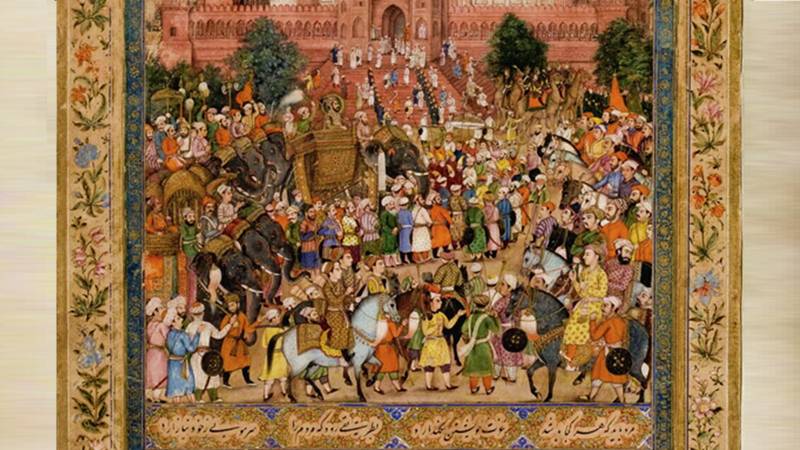
The history of the South Asian Subcontinent is often presented through two competing political propositions: the Indian National Congress's claim that India constituted one nation, and the All-India Muslim League's assertion that Hindus and Muslims constituted two nations. The Partition of British India in 1947 is consequently viewed by many as the ultimate triumph of the Two-Nation Theory.
But there is another way of looking at the history. Pre-Partition India was neither the homeland of one homogeneous nation nor a polity inhabited by only two internally homogeneous nations. It was a deeply plural society comprising multiple ethnic, linguistic, religious, regional, caste, and sociocultural identities.
This does not mean that Hindus and Muslims were identical or that their religious and social differences were insignificant. They clearly possessed distinct religious traditions and, at various stages, different political interests. The question is whether these differences justify reducing the extraordinarily diverse Indian society to either a single national identity or a binary Hindu-Muslim national framework.
Sir Syed Ahmad Khan's Complex Vision
It is frequently asserted by both Hindu and Muslim writers that Sir Syed Ahmad Khan was the pioneer of the Two-Nation Theory. His actual political thought, however, was considerably more complex.
Sir Syed did describe Muslims as a qaum, but on several occasions, he also emphasised the common homeland of Hindus and Muslims. In his speech at Gurdaspur on the 27th of January 1884, he stressed that despite their different religions, Hindus and Muslims shared the same homeland. At Lucknow in 1887, he referred to the diversity of the peoples inhabiting India and questioned the assumption that all Hindus constituted a single homogeneous national identity. On another occasion, he famously portrayed Hindus and Muslims as the two eyes of the beautiful bride that was India.
Jinnah's description of Hindu-Muslim differences was therefore a powerful political argument, but it should not automatically be treated as a complete sociological description of Indian society
Sir Syed's social outlook also deserves consideration. He was an aristocratic Muslim reformer whose political vision was largely shaped by the interests of the Muslim elite. His preference for cooperation with high-caste Hindu elites, together with his disparaging observations about Bengalis and people whom he regarded as socially inferior, makes it difficult to portray him simply as the champion of an egalitarian and unified Muslim nationhood.
Thus, whatever changes occurred in Sir Syed's political thinking, the historical record does not support an uncomplicated description of him as the unequivocal pioneer of the Two-Nation Theory.
The Hindu Nationalist Contribution
The second misconception is that the idea of two nations was exclusively a Muslim creation. Historical evidence does not support that claim either.
Several prominent Hindu politicians and reformers advocated political separation between Hindus and Muslims. Lala Lajpat Rai, in 1924, proposed dividing India into Hindu- and Muslim-majority areas. VD Savarkar, in his presidential address to the Hindu Mahasabha, explicitly described Hindus and Muslims as two nations. Bhai Parmanand, associated with the Hindu Mahasabha and Arya Samaj, also advocated the separation of Hindu-majority and Muslim-majority areas.
The activities of the Arya Samaj, particularly its Shuddhi and Sangathan campaigns, further demonstrate that the politicisation of religious identities was not confined to Muslim organisations. These movements sought to consolidate Hindu society and respond to, and compete with, Muslim communal mobilisation.
Therefore, attributing the entire intellectual and political origin of the Two-Nation Theory exclusively to Muslims presents only one side of a much more complicated historical process.
Jinnah and the Sociological Reality
Muhammad Ali Jinnah undoubtedly became the most influential political advocate of the Two-Nation Theory. His argument was that Hindus and Muslims were not merely followers of different religions but distinct social and political communities, possessing different traditions, cultures, laws, institutions, and political interests.
In his presidential address at Lahore on the 22nd of March 1940, Jinnah argued that Hindus and Muslims belonged to different religious philosophies, social customs, and literatures, and famously referred to the fact that they did not inter-dine or inter-marry.
Yet this argument becomes difficult to sustain as a literal description of Indian society. If the absence of inter-dining and inter-marriage is sufficient to constitute separate nations, then the same test raises questions within Hindu society itself. Did Brahmins and Shudras historically constitute a single social community in the sense implied by Jinnah's argument? Were all Hindu castes inter-dining and inter-marrying?
More importantly, Indian society also contained extensive interaction between Hindus and Muslims. There were shared languages, music, poetry, architecture, clothing, Sufi and Bhakti traditions, and numerous forms of everyday cultural exchange. Mughal rulers themselves had marital relationships with Hindu families, and several Mughal emperors were born to Hindu mothers.
Even apparently simple cultural symbols illustrate the difficulty of drawing an absolute Hindu-Muslim boundary. The sherwani, for example, became associated with both Muslim and Hindu political elites. It would be difficult to identify a particular style of sherwani as inherently Muslim or Hindu merely because it was worn by Jinnah or Nehru.
Jinnah's description of Hindu-Muslim differences was therefore a powerful political argument, but it should not automatically be treated as a complete sociological description of Indian society. Political rhetoric can emphasise differences that are historically real while simultaneously overlooking the complex commonalities and internal divisions that exist within society.
Beyond the Binary
The historical reality of pre-Partition India was therefore considerably more complex than either the One-Nation or Two-Nation formulation suggests.
India contained Hindus and Muslims, but it also contained Sikhs, Christians, Buddhists, Jains, Parsis, and numerous other communities. Within Hindu and Muslim societies themselves existed enormous differences of caste, sect, language, ethnicity, region, and social status. Bengali, Punjabi, Sindhi, Tamil, and Marathi identities could not simply be reduced to a single cultural identity; nor could all Muslims or all Hindus be treated as internally homogeneous political communities.
The central point, therefore, is not to deny the historical differences between Hindus and Muslims. Nor is it to deny the possibility of a common Indian political nation. It is to recognise that society itself cannot be reduced to the political categories created by competing nationalisms.
The Congress sought to construct a unified Indian nationalism, while the Muslim League increasingly sought to construct a separate Muslim political nation. Hindu nationalist organisations also contributed to the politicisation of religious identities. These were political projects that interpreted and mobilised existing identities; they were not simply neutral descriptions of an already homogeneous social reality.
The Partition of 1947 was undoubtedly a monumental political outcome. But the success of a political project does not necessarily prove that every argument used to justify that project accurately described the society from which it emerged.
India was neither simply one nation nor simply two nations. It was, and remains, a plural society of multiple and overlapping identities. The history of the subcontinent is better understood when we move beyond the binary of One Nation versus Two Nations and examine the complex social realities that existed beneath competing political claims.