

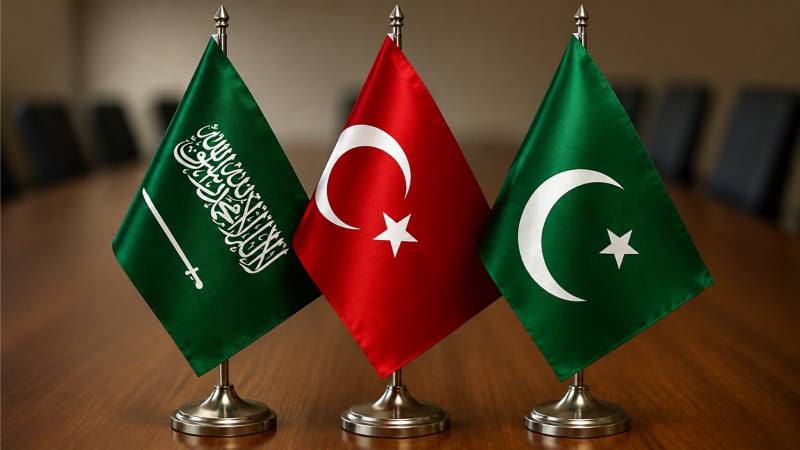
The formalization of the historic Mecca Joint Defence Agreement on the sacred grounds of Mecca has heralded a brilliant new dawn across the geopolitical horizon of the Middle East, South Asia, and the wider Islamic world. Signed by Saudi Arabia, Türkiye, and Pakistan, this binding, NATO-style collective security pact has redrawn the strategic canvas of a vast region stretching from the sunlit shores of the Eastern Mediterranean to the surging waters of the Indian Ocean. Far from being a mere diplomatic formality, a fleeting tactical compromise, or a routine communique issued for public consumption, this epoch-making pact stands as a masterstroke of grand strategy—a harmonious and unprecedented convergence of three distinct, complementary powerhouses. In a single, unified posture, it brings together the unyielding financial capital and energy dominance of Saudi Arabia, the cutting-edge defense-industrial machinery, aerospace innovation, and NATO-standard operational prowess of Türkiye, and the battle-tested military vigor, strategic depth, and proven nuclear deterrence of Pakistan.
At the very core of this formidable alliance lies an ironclad collective defense clause establishing that an armed aggression against any single signatory state shall be unequivocally deemed an attack against all. This core covenant serves as a ringing declaration that the Muslim world is no longer content to remain a passive bystander in its own backyard, nor will it continue to outsource its existential survival to the fickle whims, shifting priorities, and patronizing guarantees of Western capitals. Instead, it is marching decisively toward absolute strategic self-reliance, national dignity, and sovereign defense autonomy. This historic breakthrough is not merely a political alignment; it is a visionary harbinger—the vital first drop of rain that promises a transformative downpour of security and unity for a long-tormented region. In the annals of modern Islamic history, this unprecedented alliance holds the inherent potential to lay the bedrock for an all-encompassing, global Muslim collective defense architecture. Should this umbrella expand to shelter other regional states—most notably the resilient and besieged nation of Palestine—and should its foundational principles be enforced in their true spirit, the entire geography will transmute into an impenetrable fortress against which the waves of imperialist overreach, foreign hegemonies, and arbitrary interventions will shatter completely.
By deploying joint naval patrols, synchronized air defense networks, unified command platforms, and real-time intelligence-sharing protocols, the pact effectively neutralizes threats from piracy, foreign naval interdiction, state-sponsored sabotage, and non-state drone or missile warfare.
The underlying architecture of this tripartite pact rests upon deep, mutually reinforcing strategic synergies that deliver profound, long-term dividends to each constituent nation. For Saudi Arabia, a sovereign state that historically bore the vulnerability of relying on external defense umbrellas to safeguard its critical energy infrastructure, mega-projects, and vital sea lanes, this alliance offers a robust, multi-layered defensive shield. It aligns seamlessly with Riyadh’s ambitious Vision 2030, accelerating localized arms manufacturing, domestic technological transfers, and sovereign defense capacity that reduces dependence on erratic foreign arms supplies. For Türkiye, its burgeoning aerospace, naval engineering, electronic warfare, and unmanned aerial vehicle industries secure a massive, stable, and high-value export market across the Gulf, cementing Ankara's strategic footprint from the Red Sea to the Horn of Africa while driving its domestic industrial expansion. For Pakistan, formalizing this military bond provides indispensable strategic ballast at a critical juncture in its geopolitical trajectory. Beyond gaining direct access to Türkiye’s state-of-the-art military technologies and tactical systems, Islamabad firmly anchors itself within the diplomatic and financial orbit of the Gulf, opening vital avenues for bilateral investment, long-term credit facilities, energy security, and economic safety nets that reinforce its national survival and institutional strength.
Transcending individual state benefits, this collective defense bloc establishes a formidable land and maritime barrier across the world’s most crucial trade chokepoints—including the Bab-el-Mandeb, the Strait of Hormuz, the Red Sea, and the Arabian Sea. By deploying joint naval patrols, synchronized air defense networks, unified command platforms, and real-time intelligence-sharing protocols, the pact effectively neutralizes threats from piracy, foreign naval interdiction, state-sponsored sabotage, and non-state drone or missile warfare. On the global diplomatic stage, this unified front bestows upon the trio unprecedented leverage, enabling them to navigate complex international crises through independent, sovereign decision-making rather than waiting submissively for cues, permissions, or intervention frameworks from foreign capitals.
If this treaty is pursued to its logical conclusion and expanded to encompass the wider Middle East, the global political matrix will undergo a fundamental paradigm shift. The integration of Palestine into this collective defense fold would immediately grant the Palestinian people a structured, formidable, and internationally backed deterrence umbrella, rendering Israel’s decades-long campaign of territorial aggression, illegal expansion, blockades, and systemic oppression utterly unviable. Under such an overarching security framework, any unprovoked strike or annexation attempt would risk triggering a coordinated response from three major military powers, thereby imposing an insurmountable cost on unilateral aggression. Furthermore, the United States, which has long exploited Middle Eastern divisions to project unilateral power and dictate regional outcomes through military outposts and coercive diplomacy, will find its leverage entirely neutralized in the face of a self-determined Muslim defense coalition. Simultaneously, Iran will be compelled to recalibrate its regional posture, curtailing its reliance on asymmetric proxy networks, as any disruptive activity against the coalition’s sphere of influence would face a synchronized, insurmountable barrier. Ultimately, Tehran would find its best interests served by aligning with this overarching regional stability rather than opposing it, transforming potential friction into constructive regional coexistence.
This core covenant serves as a ringing declaration that the Muslim world is no longer content to remain a passive bystander in its own backyard, nor will it continue to outsource its existential survival to the fickle whims, shifting priorities, and patronizing guarantees of Western capitals.
Naturally, the emergence of such a potent alliance has sent shockwaves through major power centers across the globe. In Tehran, strategic planners view this triad—fortified by Turkish military-industrial technology and Pakistani nuclear depth—as a structural encirclement, recognizing that it places firm boundaries on Iranian proxy expansion and alters the regional balance of power. While Iranian leadership has publicly maintained a diplomatic tone emphasizing pan-Islamic solidarity and the necessity of inclusive regional security, privately Tehran faces a delicate balancing act to avoid triggering a joint military response from its neighbors. In Tel Aviv, defense establishments and intelligence analysts are watching with acute anxiety. The reality of a nuclear-armed Pakistan operating alongside a bold Turkish leadership on a single, binding defense platform upends Israel’s long-term military calculus, complicates its air superiority assumptions, and dismantles its core strategy of piecemeal regional normalization through bilateral deals. Riyadh’s decision demonstrates unequivocally that the Kingdom no longer views a Washington security guarantee or a compromise with Israel as its sole route to survival. In Washington, foreign policy architects are caught in a pragmatic dilemma; while they welcome regional partners bearing their own security burdens as America pivots toward broader global challenges, they privately mourn the definitive end of America’s half-century security monopoly in the Middle East.
However, the true test of this historic pact will lie in its operationalization and long-term institutional resilience. Building an integrated defense framework across thousands of miles requires bridging disparate military doctrines, establishing secure command and communication architectures, and standardizing hardware across army, navy, and air force domains. Moreover, Türkiye’s dual role as a NATO member adds a layer of diplomatic complexity, requiring Ankara to navigate potential friction between its Western treaty commitments and its obligations under the Mecca Agreement. Yet, these technical and diplomatic challenges are far outweighed by the imperative of collective survival in an increasingly volatile, multipolar world order. By demonstrating the political courage to transcend historical divisions and align their core national security interests, the leadership of Saudi Arabia, Türkiye, and Pakistan has provided a masterclass in strategic foresight.
In the final analysis, the Mecca Joint Defence Agreement represents far more than a routine military pact; it is a monumental, revolutionary leap that redefines the global balance of power in favor of the Muslim world. By weaving together capital wealth, industrial innovation, operational mastery, and formidable military prowess, this alliance creates a resilient anchor for regional self-determination, sovereignty, and peace. If the Muslim world seizes this momentous turning point, honors its foundational spirit, and nurtures this first drop of rain into a full shower of lasting unity, this landmark initiative will permanently cleanse the Middle East of foreign interference, ushering in an era of enduring stability, sovereign dignity, and an unshakeable, secure future for generations to come.