

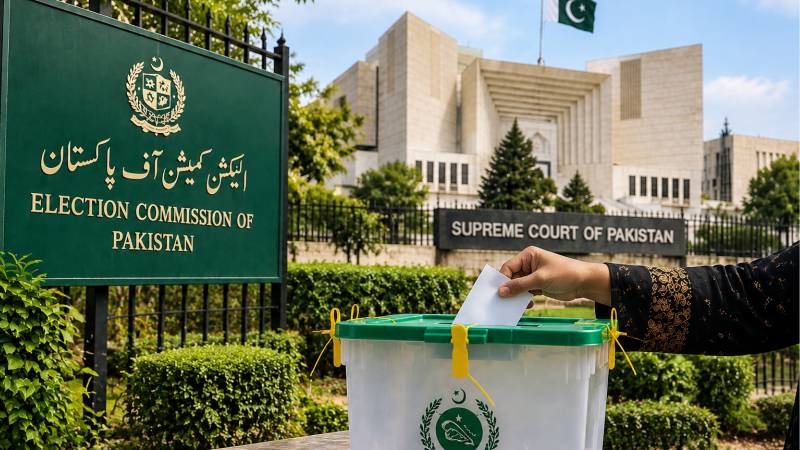
The continuous delay of local government elections in Pakistan exposes a profound structural defect within the nation’s democratic architecture. At its heart lies a constitutional contradiction: while grassroots democracy is explicitly guaranteed as a mandatory tier of governance, its practical realization remains subordinate to the political calculations of provincial and federal elites. This vulnerability was starkly illustrated by the Ministry of Parliamentary Affairs’ rejection of regulatory amendments proposed by the Election Commission of Pakistan (ECP). Seeking to prevent late-stage institutional restructuring from repeatedly derailing scheduled polls, the Commission proposed amending Article 140-A of the Constitution and Section 219 of the Elections Act, 2017. The core safeguard was straightforward: a mandatory one-year moratorium on substantive legislative and boundary changes before the expiry of a local government’s term. The Ministry rejected the proposal, maintaining that temporal limits on statutory amendments would infringe parliamentary sovereignty.
But this raises a fundamental constitutional question: can legislative power be exercised in a manner that frustrates constitutionally mandated electoral timelines? When governments repeatedly alter municipal structures, ward boundaries and council compositions on the eve of elections, such intervention ceases to resemble ordinary democratic reform. It becomes a legal mechanism for deferring political accountability and preserving bureaucratic control over local affairs and public resources.
Electoral processes require procedural predictability. The ECP needs substantial lead time to update voter rolls, delimit constituencies, establish polling infrastructure and train administrative staff. When legislatures alter structural frameworks midway through these preparations, months of work can be nullified and substantial public resources wasted.
The history of local-government non-governance within the Islamabad Capital Territory offers a concrete illustration. Following the expiration of the capital’s local government term in February 2021, municipal elections have been repeatedly stalled. The Commission was forced to undertake multiple, resource-draining delimitation exercises, only for subsequent amendments to the local government law to invalidate the framework each time. This administrative waste reflects an entrenched pattern across Pakistan, where changes to local government laws can trigger administrative resets and prolong electoral uncertainty.
By restructuring municipal boundaries and institutional frameworks mid-process, the federal and provincial legislatures are repeatedly forcing the ECP into administrative resets and litigation, effectively reducing a constitutional guarantee to a discretionary political choice.
A similar pattern emerged in Khyber Pakhtunkhwa following a July 2026 amendment to Section 5(e) of the provincial Local Government Act. The amendment drastically raised the population threshold for Village and Neighbourhood Councils from 5,000 – 15,000 to 30,000 – 40,000. However, the failure to make corresponding adjustments to the number of councils specified in the statutory schedule created a legal anomaly that disrupted the electoral process. By then, delimitation had already been completed in 23 districts. The mismatch not only undermined months of preparatory work but also forced the ECP to halt delimitation in seven additional districts, pushing the electoral process into further uncertainty.
The worst case is Punjab, where the last local government elections were held in 2015. The tenure of those elected bodies was cut short in May 2019, when the provincial government dissolved them to introduce a new local-government act. Although the Supreme Court subsequently restored the councils and directed that they complete their statutory term, which ended on December 31, 2021, no new local government elections have been conducted in Punjab since 2015, largely because of repeated legislative changes.
These practices undermine the constitutional requirement for elected local government and the statutory obligation to hold local polls within 120 days of the expiry of a local government’s term. By restructuring municipal boundaries and institutional frameworks mid-process, the federal and provincial legislatures are repeatedly forcing the ECP into administrative resets and litigation, effectively reducing a constitutional guarantee to a discretionary political choice.
The consequences extend far beyond administrative inconvenience. Prolonged vacancies transfer political authority to unelected bureaucrats, insulating municipal development and public-resource allocation from citizen oversight. They also deprive the political system of a crucial mechanism for cultivating grassroots leadership, allowing provincial and national elites to retain control over political power and patron-client networks while delaying the emergence of alternative political bases.
Resolving this conflict requires neither stripping Parliament of its legislative prerogative nor elevating the ECP above the legislature. Framing the issue as a choice between parliamentary sovereignty and electoral predictability is a false dichotomy. Parliament’s power to legislate is fundamental, but it cannot be exercised to nullify other core guarantees of the constitutional order.
Under the doctrine of harmonious construction, competing constitutional mandates must be reconciled so that both remain effective. Parliament or Provincial Assemblies can retain its authority to amend local-government laws while accepting reasonable temporal limits on when substantive changes can disrupt an electoral cycle. This would preserve legislative sovereignty without allowing legislative intervention to undermine the operational independence of the ECP or frustrate timely elections.
A durable solution lies in a dual-track regulatory model separating substantive lawmaking from electoral execution. Major structural changes, such as boundary revisions, alterations to voting systems, or redesign of local council tiers and constituencies, should be subject to a strict statutory deadline and take effect at least one year before the expiry of a local government’s term. Amendments enacted after that cutoff should apply to the subsequent electoral cycle rather than disrupt an ongoing one. Routine administrative corrections or changes required by judicial orders could remain permissible closer to polling day, provided they are made in formal consultation with the ECP and do not compromise the electoral timetable.
Establishing clear temporal safeguards and protecting the ECP’s operational independence would prevent political expediency from repeatedly overriding grassroots democracy and turn the constitutional promise of local self-government into a functioning democratic reality.