

Just days after Pakistan’s army chief, Field Marshal Asim Munir, led a delegation that reportedly concluded a defence export agreement worth over $4 billion with forces aligned to Libya’s eastern commander Khalifa Haftar, tragedy struck the other side of Libya’s fractured military landscape.
Libya’s Chief of Staff, General Mohammed al-Haddad, along with several senior officers, was killed on Tuesday in an air crash near Ankara following an official visit. The timing was striking. Those who perished were closely associated with Libya’s UN-recognised transitional authorities, backed politically and militarily by Türkiye and Qatar, while the reported Pakistani arms deal was concluded with a rival faction supported by the UAE and Egypt.
The dominant public reaction in Pakistan was celebratory. Social media commentary highlighted the economic promise of defence exports, the growing visibility of Pakistan’s military-industrial capabilities, particularly in aircraft, drones, and missile systems, and the sense that Pakistan was finally asserting itself beyond South Asia. Much less attention was paid to Libya’s internal fragmentation or to the diplomatic sensitivities of engaging one side of a deeply polarised conflict.
That contrast between enthusiasm at home and complexity abroad captures the broader dilemma now facing Pakistan: how to convert rising diplomatic momentum into gains without drifting into conflicts shaped by rivalries that Islamabad neither controls nor fully shares.
Pakistan’s current diplomatic upswing is real. Since the four-day military confrontation with India in May, Islamabad’s regional and global standing has visibly improved. Its military performance and deterrence posture—supported by indigenous capabilities and Chinese-origin platforms challenged long-held assumptions about South Asian power balances. This shift coincided with renewed American interest in recalibrating relations with Pakistan under President Trump, who has also reassessed India’s strategic relevance to counter China in the Indo-Pacific, besides imposing harsher tariffs against the erstwhile close US ally.
At the same time, Pakistan’s partnership with China has remained steady, with renewed emphasis on continuity through CPEC-related discussions framed as “Phase 2.0”, reinforcing the strategic narrative even amid economic constraints. Defence ties with Saudi Arabia have also reached new heights, underscored by explicit mutual-defence understandings immediately following the Israeli attack on Doha. Together, these developments have created a sense—both within Pakistan and among external partners—that Islamabad has entered a period of expanded diplomatic space and renewed relevance.
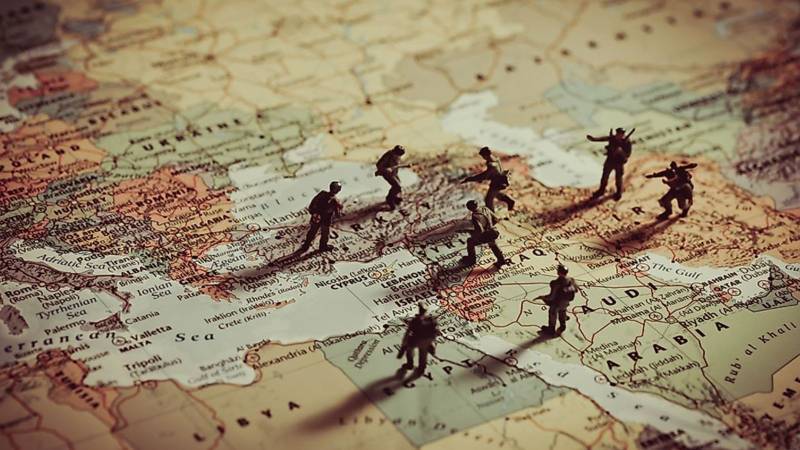
Such moments, however, come with temptations. Rising visibility often encourages states to demonstrate presence, influence, and capability across multiple theatres. For Pakistan, the Middle East and North Africa (MENA) appear especially attractive: Muslim societies, defence markets, labour links, and longstanding political goodwill. Yet this is also a region defined by unresolved conflicts and competing regional agendas. Engagement here is rarely neutral, and missteps can carry long-term costs.
Pakistan’s historical strength in the Arab and Muslim world has been its ability to maintain balanced relations and avoid taking sides in internal Arab disputes
Libya: Commerce or Alignment?
Libya points towards this danger clearly. The country is not simply a post-conflict state in need of reconstruction; it is a contested political space sustained by rival claims to legitimacy and by external patrons after Gaddafi’s fall. The UN-recognised authorities in the west rely heavily on Turkish and Qatari backing, while the eastern forces under Haftar are supported by Egypt and the UAE, with varying degrees of international tolerance. In this environment, defence cooperation cannot be treated as a purely commercial transaction. Arms deals, training agreements, and security partnerships signal political preferences, whether intended or not.
Pakistan’s historical strength in the Arab and Muslim world has been its ability to maintain balanced relations and avoid taking sides in internal Arab disputes. That posture earned goodwill precisely because Islamabad did not entangle itself in rivalries it could not resolve. Entering Libya now through major defence agreements risks eroding that advantage. It may please some partners, but it can unsettle others whose cooperation Pakistan also values, particularly Turkey and Qatar. Even if the economic case is sound, the diplomatic cost may surface later, when alignments harden or international scrutiny intensifies—especially given Libya’s continued exposure to UN sanctions frameworks and arms-embargo narratives.
Gaza: The Far Greater Risk
If Libya is a warning, Gaza is a far more serious test. Pakistan’s possible role in a post-war stabilisation force has surfaced repeatedly in discussions involving Jordan, Egypt, Saudi Arabia, and Indonesia, including exchanges on the sidelines of the UN General Assembly and at the Sharm el-Sheikh consultations. Pakistan’s civilian and military leadership has also held direct meetings with President Donald Trump, alongside engagements with counterparts in Riyadh, Cairo, and Amman. Visits to Islamabad by King Abdullah II of Jordan and President Joko Widodo of Indonesia have further indicated that Pakistan is being treated as a serious potential contributor rather than a peripheral participant.
Yet Gaza is unlike traditional peacekeeping environments. The Palestinian conflict is decades old, emotionally charged, and politically unresolved. The core issues are not technical matters of patrols or checkpoints but fundamental questions of authority and legitimacy: who governs Gaza, who controls armed force, and what political outcome is being enforced. These questions remain unanswered.
If a stabilisation force is tasked with disarming Hamas, it immediately becomes a party to the conflict. For Hamas, disarmament is not a procedural step but an existential threat. Resistance would be inevitable. If, instead, the force avoids disarmament and focuses only on monitoring ceasefires and facilitating aid, it risks being dismissed as ineffective by those who want decisive change, while still being viewed with suspicion by armed groups on the ground. Either way, the mission begins under strain.
The practical environment compounds the problem. Gaza is densely populated, politically mobilised, and constantly under global media scrutiny. Incidents do not remain local; they become international flashpoints within minutes. A single misjudgement, a civilian casualty, a confrontation at a checkpoint, a perceived insult—can delegitimise an entire mission. Unlike classic peacekeeping deployments, there is no clear separation between opposing forces, no stable political authority with a monopoly over violence, and no agreed final settlement to underpin the mission.
Expectations are also uneven. Led by far-right extremists, Israel has thus far proven to be a dishonest player. If it retains broad freedom to conduct air strikes or raids—as has continued even during ceasefire periods—the stabilisation force risks appearing powerless, absorbing public anger without the ability to prevent violations. If, on the other hand, the force is expected to restrain Israel in practice, it would require strong political backing and enforcement mechanisms that are unlikely to materialise. In such situations, peacekeeping missions often become scapegoats for failures they cannot control.
The mark of a rising power is not the number of conflicts it touches; it is the discipline with which it chooses its engagements
For Pakistan, the domestic implications are especially sensitive. Pro-Palestinian sentiment is deep and emotional. Any deployment perceived as coercive toward Palestinians—or as facilitating an imposed political outcome—would trigger immediate backlash. At the same time, a deployment seen as ineffective or complicit in continued violence would also provoke anger. Extremist narratives thrive on such symbols. Pakistan’s internal security environment, already strained, cannot easily absorb the shock of a controversial overseas military role.
Regionally, Gaza also intersects with Iran’s strategic outlook and its relationships with armed groups across the region. Even a neutral Pakistani role could be interpreted by others as participation in a US-anchored or Arab-led security architecture aimed at reshaping regional balances. That perception alone could complicate Pakistan’s western border calculus and introduce new pressures into an already delicate neighbourhood.
Pakistan’s challenge is not unique. Other regional powers have faced similar choices. Saudi Arabia’s recent regional posture offers a useful comparison. Despite its resources and influence, Riyadh has increasingly prioritised mediation, reconciliation, and de-escalation—from Yemen to Sudan—rather than deep military involvement in Arab conflicts. This reflects a strategic judgement that large states with complex domestic responsibilities cannot afford open-ended external entanglements.
Pakistan’s circumstances are comparable. Its diplomatic reach is expanding, but its domestic political and economic foundations remain fragile. External commitments that appear manageable in the short term can quickly become liabilities if conflicts drag on or shift direction. Balance, not bravado, has historically served Pakistan best in the Arab and Muslim worlds.
There is also a lesson in China’s approach. Beijing has expanded its economic and diplomatic footprint across the Middle East while largely avoiding military entanglement in regional conflicts. It engages all sides, promotes dialogue where possible—including Saudi-Iran normalisation—and resists being drawn into local rivalries. Pakistan, as China’s closest strategic partner, would do well to reflect on that model.
None of this argues for withdrawal or isolation. Pakistan has genuine opportunities in the MENA region—particularly in economic cooperation, reconstruction contracts, training partnerships, and carefully structured defence exports. These avenues can generate revenue, strengthen ties, and enhance Pakistan’s profile without locking it into factional disputes.
The key is selectivity. Defence exports should pass a political risk test, especially in fragmented states under international scrutiny. Peacekeeping or stabilisation roles should only be considered where mandates are clear, political frameworks are credible, and exit strategies are defined. Prestige alone is not a sufficient reason to deploy. Rather than entangling itself in another geopolitical trap akin to Afghanistan, Pakistan must clearly articulate its concerns and core interests to the Trump administration and ensure these are addressed before committing to the deployment of any initial batch of planned troops in Gaza as part of a multilateral force.
Ultimately, the country’s rising diplomatic clout is an achievement, earned through resilience, capability, and timing. But the mark of a rising power is not the number of conflicts it touches; it is the discipline with which it chooses its engagements. In a region as divided as MENA—where even Pakistan’s closest partners often disagree—prudence is not hesitation. It is a strategy.
Pakistan has its moment. Preserving it requires knowing where not to step.