

State Engineers A Soul
Pakistan came into being on 14 August 1947. It was a brutal birth, triggered by escalating violence between India’s Hindu, Sikh, and Muslim communities, and accelerated by the exhaustion of a British colonial power drained by a world war and the rising tide of anti-colonial movements. The traumatic, two-way migration of Hindu and Muslim populations across the newly carved borders left a devastating trail of casualties, charred buildings, and harrowing accounts of rape and pillage at the hands of rampaging mobs driven by a primal thirst for vengeance. Amidst the chaos, reason and humanity simply vanished.
The newborn nation's two primary urban centres, Karachi and Lahore, rapidly filled up with Muslim migrants fleeing India. These refugees were largely Punjabi or Urdu-speaking Muhajirs. While the Punjabi migrants quickly integrated into the Punjabi-speaking majority of Punjab, most Urdu-speakers settled in Sindh, a province with a predominantly Sindhi-speaking population. The Muhajirs soon formed a majority in Karachi, which, despite being the traditional provincial capital of Sindh, was designated as the federal capital of the country. Hailing from India’s urban and peri-urban regions, the Muhajir community quickly occupied key early positions within Pakistan’s nascent bureaucracy and economic sectors.
This institutional setup soon diverged from that of neighbouring India. While India's founding party, the Indian National Congress, immediately set about establishing resilient civilian institutions, even blurring the lines between the ruling party and the state, Pakistan’s founding party, the Muslim League, rapidly splintered. This political fragmentation left a vacuum, ultimately allowing the military and the bureaucracy to dictate how the country’s economy and politics would evolve.
In August 1947, the founder of Pakistan Muhammad Ali Jinnah defined Pakistan as a Muslim-majority nation, asserting that Islam and Hinduism were distinct not merely in belief, but as fundamentally different cultures. This ideology of cultural separatism was built upon the foundations laid by the 19th-century scholar Syed Ahmad Khan and the early 20th-century philosopher-poet Muhammad Iqbal. Together, they formulated a framework of 'cultural secularism', a concept that did not seek to separate religion from politics, but rather detached Islam's cultural dynamics from its theological dimensions.
By framing Islam as a meta-ethnic identity marker in the public sphere while simultaneously sidelining theocratic imperatives, the founders effectively minimised performative religiosity in their governance. Jinnah vehemently rejected the notion of a theocracy, maintaining that modern-day political and social principles were inherent to Islam. Furthermore, he envisioned Pakistan as a sanctuary and a refuge designed to shield minorities from what he perceived as the inevitable hegemony of Hindu majoritarianism in India.
Following Jinnah's death in 1948, the state apparatus moved to modify this narrative as its political and economic influence expanded. With this growth, the state began to actively shape the nation's overarching culture. However, because this project operated within a fragile political framework, the state failed to forge a consensus among the country’s diverse ethnic and sectarian communities. Despite their shared Muslim faith, these groups remained deeply attached to their specific regional and sectarian identities, creating a disconnect between the state’s centralised vision and the diverse reality of its population.
Instead, the military and bureaucracy allied with a select group of nationalist intellectuals to launch a project to define Pakistan as a modern Muslim-majority state. They sought to promote a ‘modern’ interpretation of Islam that would actively bypass communalism, sectarianism, and ethnic politics. Ethnic nationalism, religious fundamentalism, and communism were all branded as destabilising forces. The ruling elite believed the fragile new nation could not be left to an elected parliament, but instead required the firm stewardship of a centralised integrated gentry composed of military officers, bureaucrats, and an emerging capitalist bourgeoisie.
This centralised vision stood in stark contrast to the demographic reality of the country. The vast majority of Pakistanis resided in the villages and small towns of West Pakistan, across Punjab, Sindh, Balochistan, and the North-West Frontier Province (now Khyber Pakhtunkhwa), as well as the Bengali-majority East Pakistan. For centuries, these areas had nurtured distinct folk cultures and traditions that remained largely insulated from British colonial modernity, despite the economic shifts brought by modern railways and irrigation.
Modernity had instead taken root in the major cities, which had served as the intellectual cradle for the Pakistan movement itself. Muslim nationalism was, therefore, fundamentally a product of urban modernity, framing Islam as a timeless faith capable of embracing modern progress without compromising its core spiritual tenets.
Initially, both the state and the urban bourgeoisie viewed Islam through this modernist lens. They maintained that Pakistan's advancement hinged on the economic and social modernisation of its urban centers, a transformation they intended to export to the rural heartlands. The goal was to bind the nation into a homogenous, centralised government, economy, and culture, a process that either actively discouraged or entirely ignored localised folk traditions.
Yet, far removed from this top-down cultural engineering, millions of citizens continued to flock to Sufi shrines just as their ancestors had for centuries. Within these sacred spaces, they prayed at the tombs of ancient saints, lost themselves in the spiritual rhythms of qawwali, danced to the beat of the dhol, and performed the ecstatic, whirling movements of the dhamal.
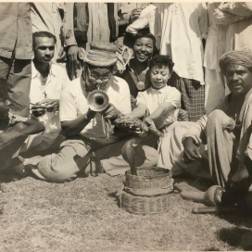
These vibrant rural expressions failed to capture the interest of Pakistan's early urban cultural patrons, who viewed them as fundamentally at odds with the state's nationalist narrative and the sophisticated identity sought by the urban bourgeoisie. This cultural blind spot was starkly illustrated by the plight of traditional entertainers. For instance, snake-charmers from the deserts of Sindh frequently traveled to the cities looking for curious audiences, yet they were entirely ignored by the mainstream press until the legendary American jazz musician Dizzy Gillespie visited Karachi. Only when he was photographed jamming with a traditional pungi-playing snake charmer in a public park did the local media take notice.
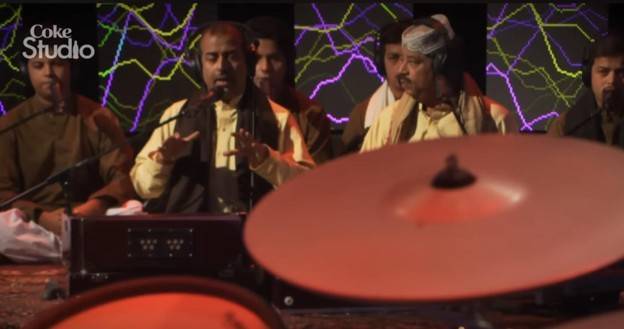
Stripped of its political utility and spiritual rebellion, qawwali was ultimately domesticated, relegated to a casual fixture on music streaming lists, music shows, and wedding playlists
This aesthetic preference heavily influenced early state broadcasting. Between 1947 and the early 1950s, the airwaves of the state-owned Radio Pakistan were dominated by Urdu/Hindi film soundtracks, Eastern classical music, and patriotic anthems. Regional folk traditions, whether Punjabi, Sindhi, Baloch, Pashtun, or Bengali, were largely sidelined due to the state's deep-seated anxiety that highlighting regional expressions would fuel "provincialism." On the rare occasions when folk music was permitted, its structure, tone, and lyrical content were strictly regulated by state officials.
The qawwali faced a similar exclusion. Deemed incompatible with the state’s vision of a refined, modern Muslim identity, it was rarely broadcast on national radio. Because the genre was traditionally performed in Punjabi and remained firmly anchored to its origins within the Sufi shrines, it struggled to find a foothold in the state-sanctioned cultural terrain of the era.
However, as the state actively sought to re-engineer regional ethnic music to align it with an evolving sense of Pakistani nationalism and identity, qawwali gradually found a doorway into national broadcasting. Its introduction was catalysed by a political crisis. In 1953, the state used military force to crush a violent anti-Ahmadiyya movement spearheaded by radical Islamist outfits. To counter the flood of fundamentalist literature emerging from grassroots agitators, the government distributed pamphlets penned by the modernist Islamic scholar Khalifa Abdul Hakim. His writings aimed to demonstrate that the philosophical vision of Muhammad Iqbal was entirely incompatible with the orthodox, rigid Islam championed by the clergy and the ulema.
Shaken by the brutality of the riots, particularly across Punjab, Radio Pakistan moved strategically to introduce qawwali to the airwaves. This was a calculated ideological maneuver, leveraging Iqbal’s intellectual concepts of Islam and Muslim nationalism to dismantle the political and theological narratives of the Islamist groups. By 1955, the government directed the state broadcaster to commission qawwalis composed and performed exclusively in the national language, Urdu, incorporating Iqbal’s poetry into their lyrics.
This initiative marked the first time qawwali was presented to a mass urban audience on a national scale. However, this state-sanctioned variant was stripped of its traditional, esoteric mysticism. In its place, the state injected a manufactured lexicon of nationalistic themes and imagery. It was only toward the late 1950s that Radio Pakistan began to ease these boundaries, finally permitting the recording and broadcast of Urdu qawwalis that explored more mystical themes.
The genre surged in popularity following the 1958 coup d’état that brought military chief Ayub Khan to power. The political shift triggered some of the earliest major waves of rural-to-urban migration in Pakistan, as the Ayub regime launched an ambitious industrialisation drive. This economic change drew vast numbers of rural workers into major urban hubs, including Karachi and Lahore in West Pakistan, and Dhaka in East Pakistan.
During the first seven years of the Ayub dictatorship, the country experienced unprecedented economic growth and a significant rise in agricultural output. Alongside these material changes, the state vigorously championed 'Islamic modernism' as an official creed. This doctrine encouraged theological flexibility, urging the interpretation of Islamic decrees to match the demands of the 20th century.
The urban public was expected to adopt the regime's version of modernity. As the state co-opted landed elites and rural-to-urban migration intensified, the government sought to actively reshape the cultural traditions that these rural migrants brought into the cities.
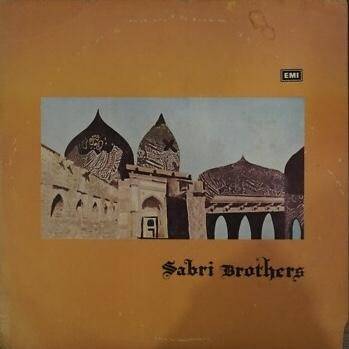
The evolution of qawwali provides a clear example of this cultural engineering. The expansion of the Urdu qawwali was significantly boosted when EMI-Pakistan, the country’s largest record label, took a commercial interest in the genre. Qawwali groups such as the Sabri Brothers adopted the spiritual imagery and concepts of traditional Punjabi qawwalis, which had been performed at shrines for centuries, and fused them with the accessible, rich sentimentality of popular Urdu poetry. This fusion effectively shaped the modern Urdu qawwali genre. In 1960, with the encouragement of the Ayub regime, Radio Pakistan co-opted the centuries-old tradition of Thursday night shrine performances by broadcasting live qawwali sessions, primarily featuring the Sabri Brothers, every Thursday evening.
However, state patronage came with strict conditions: the performances had to be delivered in Urdu, and the lyrics were required to avoid any phrasing that conflicted with the regime's version of Islamic modernism. Initially, the popularity of this new Urdu qawwali was concentrated almost entirely in Karachi, while the traditional Punjabi strand remained rooted around the Sufi shrines of Punjab.
Nevertheless, a new audience emerged among the expanding urban middle and elite classes. Although mostly, affluent classes still refused to visit actual shrines, they embraced the regime's modern religious narrative and began hosting private 'qawwali evenings' in their homes and halls. This dual market forced young, aspiring qawwals like Aziz Mian to balance two completely different worlds: performing raw, traditional Punjabi qawwalis at the historic shrine of Data Ganj Bakhsh in Lahore, while delivering polished Urdu sets at private gatherings for corporate executives, bureaucrats, and military officers.
The Ayub regime operated under the conviction that it had engineered a flawless economic, political, and social order that could be tightly managed from the top-down. By the late 1960s, however, this framework faced fierce resistance from those who felt marginalised, as well as from an aspirational middle-class whose upward mobility was blocked by the ruling elite. In 1968, the regime's celebrated economic narrative collapsed completely. Lacking institutional democratic outlets, the country's long-suppressed ethnic, political, and sectarian diversity erupted, often violently, onto the streets. It was an internal implosion of an ageing, monolithic establishment, and by 1969, Ayub Khan's decade-long rule vanished into history.
The State Becomes The Soul
The subsequent campaigns for the country’s first proper parliamentary elections were boisterous affairs, alive with fiery rhetoric, music, and dance. Covering a Pakistan People’s Party (PPP) rally at Karachi’s Nishtar Park, a reporter for the Urdu daily Jang remarked that the festive energy typically found outside Sufi shrines on a Thursday night had spilled directly into the political arena.
Working-class citizens and college students, galvanised by passionate speeches attacking the wealthy, repeatedly rose to perform the dhamal to the sound of Hei Jamalo, a popular 19th-century Sindhi folk song, blaring from the loudspeakers. The journalist noted that these unprecedented scenes stood in stark contrast to the far more subdued campaigns of the Islamist parties and competing Muslim League factions.
The style of political communication shifted dramatically. The PPP chairman, Zulfikar Ali Bhutto, shattered traditional public speaking norms by roaring against capitalists, landed elites, and religious orthodoxies using colloquial Urdu and street humour, actively encouraging the crowds to sing, dance, and chant slogans. The Jang reporter observed that the police officers stationed at the venue appeared entirely bewildered by this raw display of political populism, a force previously unseen in mainstream Pakistani politics.
When the historic 1970 elections took place, the results split the country along regional lines. The Bengali nationalist Awami League won an outright majority in East Pakistan. Meanwhile, in the ethnically diverse Western wing, the PPP swept the polls across Sindh and Punjab, while an alliance of Pashtun and Baloch nationalists, the Islamist Jamiat Ulema Islam, and a faction of the Muslim League divided power across Balochistan and the North-West Frontier Province.
Because East Pakistan held the majority of parliamentary seats, the Awami League's decisive victory there entitled it to form the country's first elected government. However, when the West Pakistan establishment delayed the transfer of power, growing political resentment in East Pakistan quickly transformed into an all-out rebellion against West Pakistan. The dictator Yahya Khan deployed the military to crush the uprising, a heavy-handed move that severely worsened the situation and sparked a brutal civil war in the eastern wing.
India soon entered the conflict in support of the Bengali nationalists. By December 1971, besieged by both Bengali militants and the Indian armed forces, Pakistani troops in East Pakistan gave up the fight on 16 December 1971, leading to the secession of the wing and the creation of Bangladesh. Amidst widespread casualties and atrocities committed on all sides, Yahya was forced to resign. Zulfikar Ali Bhutto was subsequently sworn in as president, his party having secured the largest number of seats in what remained of Pakistan.
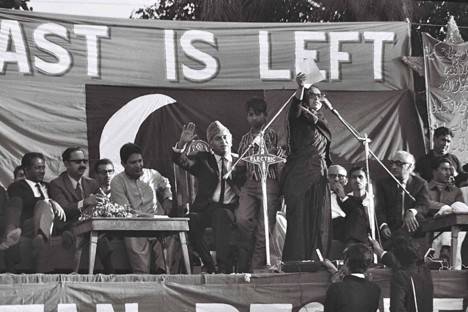
While the Ayub regime had championed an ‘elite version’ of 'Islamic modernism, the Bhutto government sought to remodel state ideology into a populist framework termed 'Islamic socialism'. This doctrine fused left-wing economic concepts with 'Islamic egalitarianism' and the traditional 'folk Islam' practiced by the rural majority.
This ideological move opened unprecedented avenues for regional folk artistes and qawwali singers to enter the urban mainstream, finding a welcoming home across the music and film industries, as well as on state radio and television. Both Radio Pakistan and the state-owned Pakistan Television (PTV) enthusiastically integrated Sindhi, Punjabi, Baloch, and Pashtun performers, many of whom had honed their craft at local Sufi shrines.
Folk music, once sidelined as a provincial threat to a centralised state identity, was realigned with a new vision of Pakistani federalism that celebrated pluralism. In truth, there was nothing inherently subversive about these regional art forms. They simply featured men and women singing traditional Sufi poetry in languages other than Urdu. These performances quickly captured the imagination of urban, middle-class audiences, particularly through televised broadcasts. Fueled by the regime's populist embrace of folk cultures, EMI-Pakistan released numerous albums of the Urdu qawwali that were recorded entirely at the recording label’s studios in Karachi.
The two premier exponents of the genre during this era were the Sabri Brothers and Aziz Mian. This period also witnessed the true crystallization of urbanised folk genres or what can be termed as ‘Pop Sufism’. This cultural phenomenon was largely driven by a wave of folk singers and qawwals who became fixtures on television and radio, captivating urban audiences with vibrant performances of Sufi poems centred on themes of love and loss.
Rather than being anchored in specific historical periods, these songs drew upon mythologies preserved for centuries through oral and poetic traditions. The strategic packaging of these performances for broadcast media projected an idealised vision of rural Pakistan, framing it as a pastoral expanse deeply rooted in love, innocence, and spiritual purity, thereby inviting urbanites to explore and enrich their own inner lives.
This cultural shift represented a broader dynamic: rural traditions successfully carving out a space for themselves within modern urban milieus. The early 1970s witnessed a noticeable rise in the number of young urbanites visiting Sufi shrines. However, because this brand of folk music portrayed a highly romanticised version of Sufism, the urban middle-classes experienced it as an entirely impressionistic construct, viewed strictly through the ahistorical imagery and lyrical themes projected on television and radio.
Yet, much like the Bhutto regime's ideological project, the emerging phenomenon of Pop Sufism maintained an inherently progressive character, largely because the urban media professionals promoting these folk traditions held distinct socialist leanings. A subtle difference in intent existed, however. While the Bhutto administration framed historical Sufi saints as early champions of socialism, the urban patrons of folk culture frequently stripped away the more overt religious themes within the ancient poems. By reinterpreting these works as secularised meditations on spirituality, they transformed traditional devotion into a modern form of mainstream entertainment. This would go on to be a staple exercise decades later on music shows in the 2000s.
Although most folk songs originated as devotional Sufi poems, the 1970s saw them transported from their rural roots into secular urban spaces, where they were refashioned into modern idioms of spirituality tailored to urban sensibilities. This transition formed the very crux of Pop Sufism, finding its most potent expression in the consolidation of the Urdu qawwali genre. The immense traction this music gained effectively transformed the Sabri Brothers and Aziz Mian into pop stars of sorts.
Another genre appropriated by the Bhutto regime was the naat. While its historic origins remain vague, the genre exists primarily in South Asia as poetry written and melodically recited in praise of Islam’s holy figures, traditionally without musical accompaniment. The modern naat likely developed in late-19th-century India, particularly within the Sunni Barelvi sub-sect. Though long recited at private religious gatherings, these performances were virtually absent from television and radio broadcasts until the early 1970s.
In 1974, PTV broadcast a landmark naat by Qari Waheed Zaffar titled Allah Hoo Allah, recorded and filmed at the channel's Karachi studios. Although performed traditionally without musical instruments, the track became an immediate sensation after a PTV producer applied echo and reverb effects to Zaffar’s vocals, lending his delivery a deeply hypnotic quality. The lyrics, a rich tapestry of Arabic and Urdu, were designed to induce a trance-like state, and the style was quickly adopted as a staple of milad gatherings in urban homes across the country.
When Giants Squabbled, Music Soared
This period marked the true golden age of qawwali in Pakistan, with Aziz Mian and the Sabri Brothers sparking a cross-class fascination with the genre and achieving unprecedented commercial success. Aziz Mian was a frequent visitor to Lahore’s historic shrine of the Sufi saint Data Ganj Bakhsh, where he was often seen pacing the grounds as if lost in contemplation. With his long, unkempt hair and vibrant kameez-shalwar, he mirrored the appearance of the spiritual vagrants (fakeers) who had frequented the shrine for centuries.
Yet, he was no ordinary fakeer. Audiences recognised him as a formidable young talent, and his early fans knew he held advanced academic credentials. In 1973, on the grounds of the Ganj Bakhsh shrine, he scribbled a new composition on a crumpled piece of paper, a piece that would ultimately elevate his career to legendary heights. Unlike most traditional qawwali performers, Aziz Mian almost always authored his own material, and the verses he penned that afternoon became the foundation for his epic and defining qawwali, Sharabi.
Upon its release, the track became an immediate commercial sensation, establishing Aziz Mian as a formidable rival to the Sabri Brothers. Born in 1942 to a lower-middle-class family in Delhi, he had migrated to the newly created state of Pakistan during the 1947 partition. His artistic journey began at the age of ten, when he started learning the art of qawwali at the Data Ganj Bakhsh shrine.
From an early age, he developed the habit of consuming strong, tobacco-laced betel leaf (paan) and later alcohol. Yet, despite possessing a restless, volatile, and highly argumentative temperament, he excelled academically. In the early 1960s, he went on to earn master's degrees in Urdu, Persian, and Arabic literature from the University of the Punjab in Lahore, anchoring his performance style in a deep scholarly understanding of classical poetry.
Although he had performed live and recorded several albums during the 1960s, it was the 1974 release of Sharabi by EMI-Pakistan that propelled Aziz Mian into actual stardom. With this track, he established a definitive writing, composing, and vocal style that would characterize his entire career. Drawing inspiration from the volatile fakeers and Sufis of antiquity, who engaged in intense, emotional dialogues with the Divine through paradoxical questioning, his performances followed a distinct structural rhythm.
He would begin slowly, build into an infectious chorus backed by his ensemble, and then abruptly halt the music to deliver a blistering, rapid-fire spoken argument directly to God. In these dramatic interludes, he would passionately complain about unrequited divine love, or question why an absolute, perfect entity would choose to create an inherently flawed creature like man.
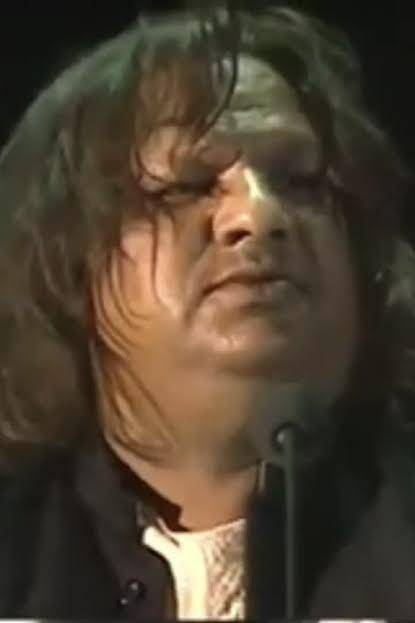
As a heavy drinker, Aziz Mian frequently utilised the state of intoxication as a metaphor for the overwhelming effect of divine love on the human soul, echoing the classical traditions of ancient Sufi poets. However, he was equally comfortable praising alcohol on its own terms. He deliberately worked his audiences into an emotional frenzy, driving many to lose all outward inhibitions. He framed this induced state of ecstacy as a necessary emotional threshold and/or a launching pad from which listeners could take a spiritual leap toward a direct, unmediated connection with the Almighty.
Reviewing a 1975 Karachi concert, one cultural writer famously dubbed Aziz Mian "the Nietzschean Sufi." As mentioned, Aziz Mian’s rise was propelled by the Z.A. Bhutto regime’s cultural policies, which regularly broadcast folk music and qawwali on state television and radio, most notably via the weekly show Lok Virsa.
This boom equally elevated the Sabri Brothers, whose melodic and hypnotic style began drawing massive crowds. However, a fierce rivalry soon ignited between the two acts. The Sabri Brothers frequently mocked Aziz Mian for lacking a sense of melody, yet he remained undeterred, continually honing his fiercely unique delivery. While both stood for the same regional Sufi traditions, the Brothers deeply disapproved of Aziz Mian’s overt, ecstatic praise of wine in his qawwalis. Ironically, while alcohol was frequently consumed by audiences at the Sabri Brothers' own concerts, the brothers themselves strictly abstained from it.
The rivalry escalated sharply in 1976 when both acts dropped monumental hits. Aziz Mian expanded his track "Sharabi," adding 30 minutes to transform it into a nearly 50-minute epic. Released by EMI-Pakistan, the record sold out within months. That same year, the Sabri Brothers released Bhar Do Jholi, which achieved impressive commercial success after being featured in the Urdu film Bin Badal Barsat. The Brothers even appeared in the movie, performing the qawwali at a shrine where the protagonist and his wife plead for a child, giving the plea to "fill the bag" a literal maternal meaning.
Aziz Mian, however, dismissed the Brothers as too conventional, believing his own spiritual connection to the Almighty was far more potent. His stature was further cemented in 1976 when Prime Minister Bhutto invited him to perform in Islamabad. Riding high on the success of Bhar Doh Jholi but stung by Aziz Mian's criticisms, the Sabri Brothers retaliated with a thinly veiled musical taunt titled O Sharabi, Chhor De Peena (Oh Drunkard, Stop Drinking). Delivered in their signature steady, hypnotic style but laced with tongue-in-cheek humour aimed at "drunkards," the track became an instant sensation.
Aziz Mian wasted no time in striking back, writing and recording the 30-minute epic Hai Kambakht, Tu Nein Pe Hi Nahi (Unfortunate Soul, You Never Even Drank!). In it, he openly embraced his love for the drink while mocking the Sabri Brothers for failing to grasp that wine was merely a metaphor for divine intoxication. He lambasted moralist teetotalers as hypocrites and relentlessly taunted the Brothers for their lack of worldly experience. By the qawwali's intense climax, Aziz Mian’s mockery sharpened into fury, dismissing his rivals as spiritually shallow and incapable of understanding his profound love for the Almighty. This fierce musical warfare captivated the public. According to EMI-Pakistan, the combined sales of Aziz Mian and the Sabri Brothers surpassed two million LPs and cassettes in 1977 alone.
The Reengineering
However, the cultural zeitgeist shifted dramatically in July 1977 when a reactionary military coup led by General Zia-ul-Haq toppled the Bhutto regime. Zia vowed to transform Pakistan into a "true Islamic state" and promoted a more stringent form of Islamism. Yet, recognising that the Sufi-inspired Barelvi Sunni sub-sect formed the country's majority, he did not ban Sufism outright as had been done in Saudi Arabia. Instead, Zia sought to reshape it to fit his own narrative. While Ayub Khan had framed Sufism as an ancient expression of Islamic modernism, and Bhutto had celebrated it as a populist, indigenous extension of that same modernism, Zia redefined Sufis not as ecstatic mystics, but as orthodox Islamic scholars and imams strictly rooted in the Sharia.
Zia maintained state patronage for folk music, but its soul was fundamentally altered as the Urdu qawwali genre began to recede. Folk artists were largely redirected toward singing state-approved patriotic anthems. For instance, the legendary Sindhi folk singer Allan Fakir famously appeared on PTV to perform Tu Ne Pakistan Diya, a song thanking the Almighty for the creation of Pakistan. Through this shift, Sufi music was further stripped of its traditional esoteric traits and then of its 1970s populist edge, resulting in a genre that was entirely nationalised.
After its steady decline throughout the 1980s, Urdu qawwali experienced a steady resurgence in the 1990s, capturing a brand-new global audience. Nusrat Fateh Ali Khan had been performing since the 1970s but had long been overshadowed by the towering presence of Aziz Mian and the Sabri Brothers, later struggling for mainstream traction as state and fan patronage dwindled during the Zia era.
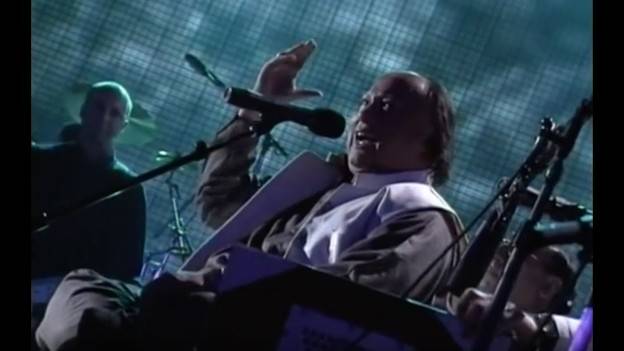
His breakthrough came in 1988 when British rock musician Peter Gabriel featured Nusrat’s vocals on the soundtrack for Martin Scorsese’s film The Last Temptation of Christ. The mesmerising performance captivated international audiences, catapulting Nusrat into global stardom. Following this breakthrough, Nusrat recorded a string of wildly successful Urdu and Punjabi qawwalis, finding himself courted by Western pop icons as well as Pakistani celebrities who frequently organized high-profile events graced by Nusrat's legendary performances.
This Sufism, too, was a way to showcase a version of it reimagined for the urban middle and upper-middle classes and westerners. This specific interpretation didn't require followers to physically visit shrines, allowing them to balance a contemporary lifestyle with their faith, free from the guilt that modernity in this context was inherently secular. Though Nusrat’s passing in 1997 temporarily rekindled public interest in the art form, qawwali as a mainstream force would never truly recapture the towering, culturally dominant heights it enjoyed during its 1970s golden age.
Conclusion
Originating in 13th-century South Asia, qawwali evolved into a fixture of Sufi shrines by the 18th century and reached peak popularity among rural populations by the early 20th century. However, as it flourished in rural areas, it was increasingly abandoned by urban middle-classes. Pakistan's early ruling elites, focused on a specific brand of "Islamic modernism," initially left no room for qawwali in their cultural blueprint. This changed in the early 1950s, when violent agitations by Islamist groups compelled the state to weaponise the genre on state-owned radio to neutralise anti-modernity Islamist narratives.
To make the music palatable to the urban middle-class, the state and economic elites fundamentally redesigned this ancient tradition into a sanitised national genre. The state engineered a variant delivered entirely in Urdu that replaced traditional Sufi lyrics with the philosophy of Muhammad Iqbal, focusing on khudi (self-striving), and songs glorifying orthodox rituals like the Hajj.
By nature, qawwali is a populist art-form that traditionally pits an "us" (the simple masses) against a "them" (hypocritical clerics and elites), but the state watered this down. The defining track of this state-aligned era was the Sabri Brothers' Tajdar-e-Haram, an orthodox ode to the keeper of the sacred grand mosque in Saudi Arabia. Control was split between state-owned broadcasting mediums and private economic entities who generated massive profits by distributing these recordings as LPs, cassettes and later CDs.
The sands shifted dramatically under the left-leaning, populist regime of Z.A. Bhutto, where qawwali was allowed to reclaim its raw, populist edge to serve the government's political interests. PM Bhutto portrayed himself as a champion of the masses fighting the elite, and his party framed his persona as a modern-day qalandar (a rebellious, deeply spiritual Sufi saint).
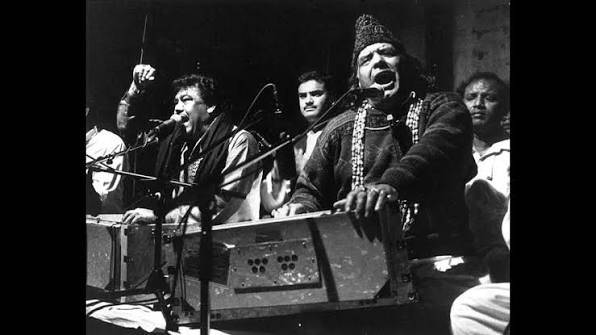
When Aziz Mian and the Sabri Brothers injected fierce lyrical punch into their tracks, their verses became thinly veiled allusions to Bhutto himself. This music also functioned as a state-sanctioned emotional pressure valve for a public traumatized by the loss of the 1971 war and the secession of East Pakistan. However, this was cultural populism managed from the top-down. While the regime identified with qawwali to project a connection with the masses, it strictly policed the lyrical boundaries. Since the state maintained an absolute monopoly over television and radio, qawwals had to toe the official line to remain in the spotlight.
The golden age of qawwali collapsed in the early 1980s with the rise of General Zia-ul-Haq’s Islamist dictatorship. The state completely rewrote the meaning of Sufism, reinterpreting ecstatic Sufi saints not as mystics, but as orthodox ulema who had struggled to impose Sharia law. This ideological shift fractured the genre's superstars. Aziz Mian was entirely unequipped to interpret or adapt to this narrative, while the Sabri Brothers managed to survive by safely rehashing their older, strictly religious qawwalis, though their mainstream fame steadily eroded.
In the ensuing decades, qawwali lost its relevance as a cultural tool of the state. Its major non-state patrons fractured. Some migrated toward a more authentic, anti-commercial strand of Sufism entirely removed from state influence, while others adopted puritanical strands of Islam that reject Sufism altogether. Stripped of its political utility and spiritual rebellion, qawwali was ultimately domesticated, relegated to a casual fixture on music streaming lists, music shows, and wedding playlists.