

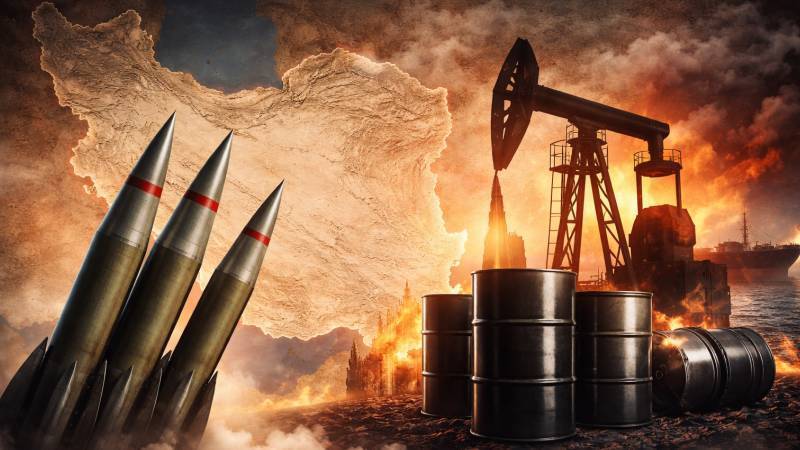
The issue of energy security is proving to be one of the most troublesome challenges faced by the global economy. A reliable and affordable energy supply is absolutely necessary for industries, transportation, agriculture, and households. However, access to such energy can be jeopardised by geopolitical tensions, which disrupt supply routes, damage energy infrastructure, and bring uncertainty to international markets. Moreover, the repercussions of such events are felt not only by the countries that take part in them. Thus, higher prices for oil and gas make production more expensive, stimulate inflation and economic slowdown, and increase pressure on states and consumers worldwide.
The International Monetary Fund’s October 2026 report, World Economic Outlook: Resilience Under Strain, Urgent Choices, underscores the magnitude of this problem. The paper discusses how geopolitics affected energy markets, stating that the conflict of 2026 in the Middle East effectively closed the Strait of Hormuz, which led to nearly a fifth of global oil supply being halted. In turn, oil prices reached $126 per barrel at the end of March 2026. Even with rising production from other parts of the world, the release of emergency stocks, and changes in consumption working to relieve some of the strain, the incident showed how fragile the entire energy supply chain is. The report also mentions how fast some events in geopolitics can send ripples through pricing and confidence in energy markets.
The main issue, however, is not only about the ups and downs of energy prices. It is about the ability of countries to provide reliable energy security in times of crisis, as well as their ability to overcome market instability and protect their economies from outside shocks. The results from the October 2026 report prove that energy insecurity can easily have negative consequences for the economies of countries. Armed conflicts in regions of strategic importance may lead to an increase in inflation, a rise in uncertainty in trade and investment, and a slowdown in economic growth in countries that may be far from the conflict zone.
Geopolitical Conflicts and the Growing Threat to Global Energy Security
The network of energy systems in the world encompasses a complicated system of pipelines, production plants, shipping lanes, warehouses, and international trade partners. This interconnected network can enable trade between countries, but it also brings many risks. When an important supplier or transport route suffers from conflict, this can cause negative consequences across international markets.
The Middle East conflict of 2026 serves as a good example of that. In March 2026, the war closed the Strait of Hormuz, and oil and liquefied natural gas coming from the Persian Gulf could not be delivered to international markets. The disruption created a shortage of approximately 20 per cent of the world’s oil supply. Oil prices peaked at about $126 per barrel at the end of March due to the negative effects of the loss of availability of oil shipments. The strategic significance of the Strait of Hormuz results from the amount of energy commodities passing through it. Once shipping through this corridor almost came to a halt, it posed an immediate problem for global markets. Oil-producing countries located outside the Persian Gulf started to boost production, including Brazil, Kazakhstan, and the USA. The release of emergency reserves and existing stocks also compensated for the shortfall in supply, while decreased demand, especially in China, alleviated pressure on the market.
These events prove that energy security is not determined just by production capabilities. The ability to transport energy and keep it in sufficient volumes is equally important.
By the beginning of June 2026, the price of oil reached about $100 per barrel and stabilised at this level. However, there was still a supply deficit in the market of about 1.9 million barrels a day. Reserves were quickly running out and were being utilised to fill the deficit. When the Strait of Hormuz reopened for some time in mid-June, an amount of oil equal to a stockpile of approximately 90 million barrels left the Gulf. This led to a temporary surplus and a drop in prices to about $68 per barrel.
However, the positive development did not eliminate bigger concerns. The global oil market remained tight, and inventories decreased continuously. According to the forecast, world oil reserves decreased by about 2.7 million barrels a day, resulting in stocks approaching the levels at which even slight disturbances might lead to serious changes in prices. In this context, it is necessary to mention a considerable weakness that characterises world energy security. While emergency stocks or alternative supplies may serve as a temporary means of protection, they are by no means a permanent solution to the problem of supply disruptions.
These events prove that energy security is not determined just by production capabilities – the ability to transport energy and keep it in sufficient volumes is equally important
The natural gas markets also remind us that geopolitical factors can have different impacts on different regions. European gas prices rose by 18 per cent between March and August 2026, reaching $20.9 per million BTUs. The increase in prices was driven by damage to Qatar’s gas facilities, a low gas storage level in Europe, and several summer heatwaves. On the contrary, US gas prices fell by 9.2 per cent to $2.8 per million BTUs, since domestic supply was large enough. The gap between those two markets stresses the significance of local production, storage, and alternative sources. Countries with enough local supply may be less vulnerable in the event of a disruption in gas supplies, while countries that are dependent on gas imports may be affected the most.
Apart from that, it is important to point out that geopolitical risks may affect gas prices even before a crisis. Markets react not only to a reduction in supplies, but also to the anticipation of future disturbances. If there are fears of war, shipping limitations, or damage to infrastructure, demand may rise and prices might go up even before an actual shortage occurs. Thus, it is very important to know the difference between normal supply risks and real supply disruptions. A sudden increase driven by the fear of future disruption will have different financial implications from an actual shortage of supply. Awareness of the difference will allow governments and central banks to manage supply chain challenges more efficiently.
Energy Price Shocks, Inflation, and the Cost of Economic Growth
Energy security is intrinsically linked to economic stability since energy is a key input to virtually all main sectors of the economy. Oil and gas are used in transport, electricity production, manufacturing, etc. When energy prices increase, costs for businesses grow, and they eventually pass the increase in costs on to their customers in the form of higher prices for goods and services.
These effects are especially significant for economies heavily dependent on energy imported from abroad. Higher international oil and gas prices will lead to rising import costs and an expanding current account deficit. Moreover, governments may be put under pressure to subsidise households and businesses.
The outlook for inflation globally, within the forecasts for 2026 made in October, suggests that prices continue to be under strain. Global consumer price inflation is expected to stand at 4.7 per cent in 2026 and 4.1 per cent in 2027. It is predicted that inflation in developing countries and emerging markets will be higher than that in developed countries: in particular, 5.7 per cent versus 3.1 per cent in 2026.
Energy prices are not the only source of inflationary pressures; geopolitical constraints can exert additional pressure on the economy. Rising energy prices make it difficult to transport goods and produce them due to elevated fuel costs. High power and gas prices affect the cost of manufacturing and of other productive activities and services. The consequences of these processes are not limited to inflation. Rising energy costs can reduce GDP growth. With more money spent on fuel and energy, companies may not have enough money left for investments, expansion, and jobs. Households trying to cope with higher fuel bills can resort to cutting expenditure on different goods and services.
The effect of an energy shock on the economy depends on the length and type of the shock. A short-lived spike in prices may have little impact if the supply shock is resolved fairly quickly. A longer-term shock, on the other hand, creates lasting strain on both production and households’ wealth and income.
The paper presents an alternative simulation with oil prices being 17 per cent higher than the baseline in 2026 and 40 per cent in 2027, made possible by tight conditions in the bond market. In addition to high oil prices, there is also an increase in natural gas benchmark prices in Asia and Europe above the threshold level in 2026 (+17 per cent) and 2027 (+26 per cent).
If these hypotheses were to hold true, there would be a decline of 0.2 percentage points in global economic growth in 2026, and of 0.5 percentage points in 2027. Global inflation would also be higher—these rises are estimated to be 0.4 and 1.1 percentage points in 2026 and 2027, respectively. Disruptions in oil and gas markets are viewed as the main contributor (around two-thirds of the total decline) to the forecast drop in the global economy.
The numbers mentioned provide a summary of what may happen in a risk case and demonstrate that, without altering one’s assumptions, it is possible to project important effects of future economic circumstances.
The events in the Strait of Hormuz demonstrate the importance of economic flexibility. The drop in oil supply caused losses equal to 0.9 percentage points of global growth in 2026. Nevertheless, due to the emergence of alternative oil production, supply redirection, and inventory releases, the loss has been reduced to 0.4 percentage points. Additionally, the decline in the oil intensity of the economy, which decreased by approximately 20 per cent since the mid-2010s, has allowed for a further reduction of losses to 0.3 percentage points.
This conclusion is important because it reveals that the world economy has become progressively less sensitive to some energy shocks. Advances in energy efficiency, reorganisation of the economy, and energy source diversification imply that the economy needs less oil to generate output. Nevertheless, that does not reduce the potential risks posed by major disruptions to supply.
When energy prices go up, central banks face some difficult choices, as higher energy prices can increase overall inflation and depress economic activity at the same time. Higher interest rates may be useful to prevent inflationary pressures from spreading, but they may also result in an increased cost of borrowing and an additional slowdown in economic activity.
When responding to shocks, it is necessary to take the causes and duration of such shocks into consideration. Consequently, if the rise in prices is triggered only by geopolitical tensions and does not result in any supply shortages, it will be temporary, and aggressive monetary tightening will be unnecessary and might even worsen the situation. On the other hand, if supply interruptions persist and a rise in prices leads to changes in wage and inflation expectations, more decisive policies have to be introduced.
This dilemma is quite challenging for the government. On the one hand, it should ensure price stability while not destroying the economy in the process. On the other hand, the conclusion can be drawn that energy security encompasses both preventing shortages of supply and reducing the adverse consequences of such shortages.
Building a More Resilient Energy System for the Future
The energy crisis of 2026 reveals that to achieve energy security, one should not rely on short-term solutions only, but should seek to ensure continuity of energy supplies in the long run. This calls for systems that can withstand disruptions and guarantee the efficiency of energy supply operations.
One of the first priorities in energy security should be the diversification of sources of energy supply. Relying on a limited number of suppliers has the capacity to raise the level of political risks and threats faced by countries. This can be avoided by looking for alternative suppliers as well as enhancing energy cooperation with partners and investing in transport infrastructure. New routes and terminals are likely to perform better if traditional ones are interrupted.
There are also some other important things related to energy storage as part of resilience. Governments have the capacity to stockpile reserves of oil and natural gas so that they can quickly respond to a temporary disruption in supply. Still, the situation in 2026 shows that stocks are limited. Drawing down oil and gas reserves indefinitely will exhaust their ability to provide temporary cover to countries facing supply disruptions. Therefore, energy security plans must include elements aimed at ensuring the availability of sufficient reserves followed by their careful use.
Strengthening energy efficiency is also one of the ways to reduce vulnerability. Countries that require less energy to produce goods are less exposed to the risk of price fluctuations in the global market. The reduction in oil intensity described in the report illustrates that improvements and changes in the structure of the economy can help mitigate negative effects caused by disruptions in supply. More improvements in the areas of industrial processes, transport, and consumption of electricity will offer additional measures of protection against unfavourable developments in supply.
The International Monetary Fund document titled World Economic Outlook: Resilience Under Stress, Urgent Decisions (October 2026) points out the necessity of increasing investment in renewables, improving electrical grids, and investing in storage and interconnection infrastructure. These actions can help to decrease the level of dependence on imported fossil fuels, as well as help to meet climate goals. The production of renewable energy supported by reliable electricity networks and appropriate storage can be seen as another source of energy security for a country.
The link between energy security and energy transition is significant. Growth necessitates investment in renewables, storage, and efficiency. These investments provide for economic activity in the short term and reduce vulnerability in terms of future disruptions of the energy supply chain. However, the benefits will not be equally apparent across different countries.
Dependable electricity is becoming more and more necessary with the rise of digital technologies and data centres. As such activities need a steady and affordable power supply, energy security can be understood as extending beyond industries and transportation, and is also related to a country’s ability to adopt innovations and invest in new technologies.
Cooperation is also required at the international level, since uncertainties in energy supply might induce governments to impose restrictions on exports or favour their domestic consumers through trade barriers. Although such measures may seem to be effective for protecting local markets in the short run, they can cause problems for partners, destabilise international markets, and create distortions in the world economy.
Thus, ensuring the security of energy and transport routes is an international issue.
This issue is especially difficult for low-income countries and those without the capacity to borrow in external markets. When energy prices rise, there will be increased import costs, pressure on exchange rates, and additional funding needs. High inflation can also have an impact on poverty and food security, especially in economies where many low-income households spend a large portion of their income on necessary goods.
Therefore, promoting energy security requires a coherent combination of sound economic policies, infrastructure development, and diversification of supply. In order to reduce vulnerability to potential shocks, countries should focus on supply diversification, efficiency improvements, the development of local renewable resources, and the provision of adequate reserves.
As a result, one conclusion from the crisis of 2026 is that energy security is inseparable from economic resilience. The capacity to deliver stable energy services affects inflation, output, investments, and the standard of living. Alternative and reserve sources of energy can reduce the effects of shocks on the economy, but long-term resilience can be achieved through increased sophistication of the energy system.
The global economy has made progress in minimising dependence on oil, while geopolitical issues still highlight the weaknesses of the international energy system. Future stability hinges upon the ability of countries to effectively utilise the lessons from these disruptions. Providing affordable and reliable sources of energy is the priority in the energy sector and the necessary prerequisite for the sustainable development of the global economy.