

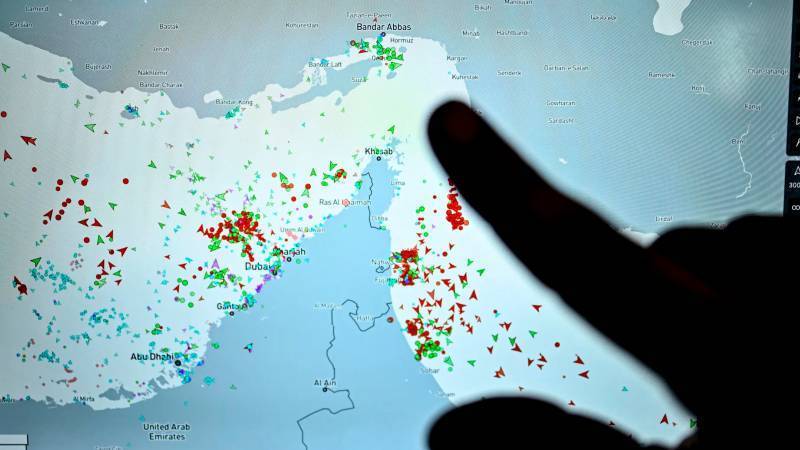
When the people of Pakistan turn on a light switch or purchase a bag of fertilisers, most of them do not know that the Strait of Hormuz affects their lives. It is a small body of water situated between Iran and Oman. The ongoing war in the Middle East disrupted the supply of LNG to Pakistan among other countries this year. The International Energy Agency (IEA) published the new findings that reveal the problems.
Liquefied Natural Gas (LNG) involves condensing natural gas into its liquid form for shipping purposes. LNG shipment has also experienced tremendous growth in the last ten years. Currently, the majority of LNG sales take place in the spot market, where suppliers can choose their customers based on the highest bidders. The world's gas markets have become interconnected as a result. Previously, gas prices in Europe and Asia were correlated moderately (0.67). However, nowadays, gas prices move in unison (0.95).
Speaking of the situation in 2026, the war that started in February affected the functioning of the LNG market significantly. Qatar ceased its production of LNG on the 2nd of March, since its plants were under attack. On the 18th and 19th of March, missiles were fired at Ras Laffan, the largest LNG plant in the world, causing damage to two of its production units. According to QatarEnergy, it may take three years for the plant to be repaired. Moreover, it was reported that ships did not pass through the Strait of Hormuz since then. In 2025 alone, about 95 tankers went through this strait every month, but between April and September, only about 10 managed to do so.
This represents the largest LNG market disruption in history. In the span of ten months, LNG sales from the UAE and Qatar reduced significantly, falling by 63% (62 bcm). Global community efforts helped to recover the losses brought about by this drop.
New LNG facilities opened in Africa, the US, and Canada, while older plants operated more efficiently in Nigeria, Malaysia, and Oman. Overall, non-Gulf LNG output has been up 14% in the first ten months of the year, compensating for about two-thirds of the volume of gas that has been lost.
Nonetheless, this is not a sufficient level of production to prevent it from dropping even more. It is suggested that LNG supply will fall by 3% in 2026, or by nearly 20 bcm, which is expected to be a historical record as far as yearly decreases are concerned.
As gas supplies dwindled, prices increased. From March to October, Asian spot LNG averaged US $21.5 per million British thermal units (MBtu), which is an increase of nearly 80% compared to last year. Prices in Europe have surged nearly 70% to around US $20. These rates mark the highest prices since the energy crisis of 2022–23. The increased prices have made people consume less gas. According to projections, global gas consumption will decrease by approximately 1.5% in 2026, which is the third drop since 2020. Several Asian countries switched from using gas to coal for power generation.
Countries that had wider supply options have been able to better cope. The new contracts for LNG supply allow buyers to determine the final destination of their cargoes. The percentage of those contracts increased from 29% in 2016 to over 50% in 2025, which became possible thanks to American LNG. Asian customers used this opportunity to approximately double their imports of LNG from the Atlantic Ocean, especially from the United States, between March and October.
Pakistan: One of the Hardest-Hit Countries
There’s a simple reason for the crisis in Pakistan. The country relied heavily on one supplier. Qatar provided 98% of the country’s LNG in 2025. When Qatar stopped supplying liquefied natural gas, Pakistan did not have alternatives.
Evidence proves it. It was indeed a shock. LNG import numbers prove that. During the period from January to October, LNG imports decreased by 56%, which amounts to around 4.5 bcm. It is the second-largest decline in Asia. Between March and September, LNG deliveries decreased by more than 70% compared to the previous year.
The whole country has felt the impact of what is happening. Natural gas consumption in Pakistan decreased by about 10% during the first nine months of 2026, as gas was used less for electricity generation, while the supply to industrial enterprises was also lowered. From March to September, the share of gas in electricity generation decreased by 25%, while that of coal increased by about 35%. Agriculture also suffers. For example, between March and August, urea production fell due to the high price and scarcity of gas.
From March to September, the share of gas in electricity generation decreased by 25%, while that of coal increased by about 35%
The aforementioned statistics do not take into account domestic issues such as gas shortages or power outages. However, a general tendency can be observed where there is a decrease in gas use for energy generation and an increase in coal usage.
Bangladesh is not the only country suffering from gas shortages. In Bangladesh, total gas consumption has decreased by approximately 7%, the total usage of gas for electricity has reduced by more than 12%, while coal consumption has increased by approximately 23%. The position of Thailand was slightly better, where only 7% of its gas supply came from Hormuz in 2025, which resulted in an increase of 30% in LNG imports thanks to shipments from the US and Australia.
India is the best point of reference. It has lost Qatari gas in similar circumstances—its imports from Qatar decreased by 72% between January and September. However, India's total LNG imports went up by more than 10% because new suppliers were found very quickly. Imports from North America grew to 6.1 bcm, and African supplies were also doubled to 9.4 bcm, with Oman having emerged as a key supplier from the Middle East with volumes of 5.3 bcm. Despite having reduced its gas consumption by around 3%, India was able to protect the gas supply for households and the transport sector. The demand for gas for urban networks increased by 16%, while gas consumption has decreased by 4% in the industry and by 9% in power generation.
In my opinion, there are several lessons to be learned. First, it is a risky approach to be dependent on a single seller, even if they are trustworthy. Second, flexible contracts and the use of portfolio suppliers could mitigate the danger. These are companies which procure LNG from various countries and sell it to their customers, offering them greater options. Third, while planning, one needs to take into account emergencies. For example, in September, Japan’s state company JOGMEC signed a contract with the Malaysian company Petronas to procure LNG in emergency situations. Pakistan should consider signing similar contracts. Fourth, the issue of gas storage is problematic throughout Asia. Even China, which has invested heavily in storage facilities, is capable of storing only 6% of its annual demand.
Europe’s Winter Test and the Road Ahead
The crisis is far from being finished. A new difficulty will arise during the winter period in the Northern Hemisphere. In Europe, gas storage levels are currently the lowest since 2013. The values are 18% lower than the average for the past five years. If there are any complications like harsh winter weather and disturbances in gas supply, it is expected that the gas storage level will drop below 10% within the EU by the end of March 2027. Thus, Europe could be very vulnerable to any cold waves or technical failures.
Pakistan needs to take these matters into account because both Europe and Asia demand the same type of flexible gas. In the very beginning of the crisis, the costs of gas in Asia were about US $2 higher than in Europe, which made shipments directed towards Asia. After August, the price difference decreased to US $1, which suggests that Europe has become more active in making bids. If Europe experiences an increase in the number of orders for LNG, then Asian customers will either need to increase the price or lose potential cargo deliveries.
Two situations were observed in the winter of this year. If the strait slowly opens up starting in January, the global volume of LNG supplied from November to March will be approximately 9 billion cubic metres lower compared to the previous year, which is a 3% drop. If the strait remains shut until the end of March, the decrease will be up to 20 billion cubic metres, or 7%. There will be new production plants providing around 18 billion cubic metres of LNG during the winter, mainly from North America, which is just half of the total lack of LNG from the Gulf region.
Long-term trends in the gas market appear somewhat mixed. The ongoing war in Ukraine is expected to reduce the supply of liquefied natural gas by 150 bcm as early as 2026, accounting for about 15% of the entire supply expected that year. This indicates an expected forward market situation in 2026–2027, which may continue to remain tight for supplies. However, given investor interest in LNG, the second phase of the LNG Canada project has been approved, as well as the approval of three other major projects in North America. Given that contracts worth 155 bcm will be ending between 2026 and 2030, it provides enough room for buyers to negotiate better terms of contracts in the future. Improvements are apparent in the pricing of contracts, with contracts based on gas prices increasing from about 30% of the contracts in 2016 to 45% in 2025.
Attacks on gas-producing facilities are becoming commonplace as well. Such incidents involved missiles and drones, as well as cybercrime, from gas fields in the Gulf to Ukraine, Russia, Egypt, and across the Mediterranean. The International Energy Agency announced its plans for the first international emergency exercise of gas dealing in 2027.
There is no longer a time for thinking about gas security as a far-off concern. A war thousands of miles away disrupted gas supplies to power plants and fertiliser production facilities in Pakistan within weeks. That’s how countries that bought from multiple suppliers, concluded flexible contracts, and prepared for contingencies coped with the upheaval. Pakistan should consider the number of gas suppliers, include more flexibility in its contracts, and be ready with alternative plans ahead of the next crisis.