

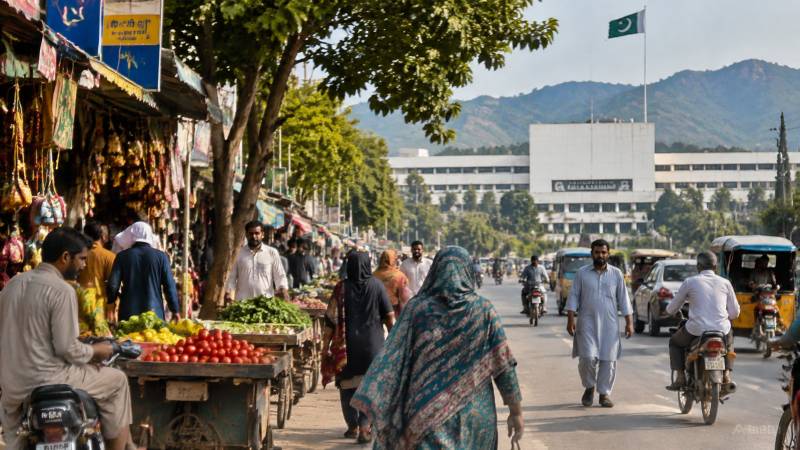
For most Pakistanis, the measure of a government is found in the price of flour, the electricity bill, the availability of work, the condition of the road outside their homes, and whether a child can access a decent school or a sick parent can see a doctor. These are the tests people apply to the state in their daily lives. The present debate, however, appears to be driven by the political elite, many of whom have been in power for decades.
Debates over provincial boundaries may matter deeply to communities such as South Punjab, which seek recognition and representation. However, drawing a new line on the map cannot, by itself, bring down the cost of living or improve access to quality public services, justice and other government facilities. Pakistan’s governance failures cannot be attributed to geography alone. It would be instructive to consider that China, with a population of approximately 1.3 billion, has only 23 provinces, each with a development model suited to its geography, resources and demography. This has enabled China to climb the ladder of development, transforming itself from a developing country into a global power in about four decades. At the other end of the spectrum, Afghanistan, a country of approximately 42 million people, has 34 provinces, yet its economy remains devastated and the state is deeply fractured. Clearly, smaller or more numerous administrative units are not a panacea for good governance.
The central challenge is whether the state has the professional capacity, integrity and economic direction to serve its people, within existing boundaries or any future ones. The constitutional process is clear. Article 48 permits a referendum on a matter of national importance after approval at a joint sitting of Parliament. However, a referendum cannot replace the process prescribed for changing a province’s boundaries. Article 239(4) requires that a constitutional amendment altering provincial boundaries be passed by at least two-thirds of the total membership of the affected Provincial Assembly before it is presented to the President for assent. Public opinion may inform the debate, but it cannot displace this constitutional requirement.
That safeguard matters because provinces are not merely administrative units. They have histories, languages and identities, and occupy a defined place in Pakistan’s federal compact. Any change to their boundaries requires serious political agreement and the consent of the affected Provincial Assembly. At the same time, defending existing boundaries must not become an excuse for ignoring the grievances that give rise to calls for new provinces.
A serious national dialogue on improving governance must begin without a predetermined conclusion that redrawing boundaries is the answer. Its purpose should be to identify why institutions fail to deliver, why development remains uneven and what arrangements would bring public services closer to citizens. Proposals for new provinces should be assessed alongside reforms that could improve administration within the existing provincial structure. The test should be whether a proposal strengthens representation, accountability and service delivery, and whether its benefits justify its financial and institutional costs. The debate should begin with people's needs and evidence, not with a map that has already been drawn.
Any decision of this magnitude warrants thorough deliberation, not a rushed announcement. It should be debated publicly, examined in detail by Parliament and the affected Provincial Assembly, and discussed with bar councils and the wider legal community. Creating a new province would require careful consideration of its costs, administrative arrangements and legal consequences, including the structure and jurisdiction of the courts, judicial appointments and the transfer of pending cases. These questions must be worked out before a decision is taken. If a change is implemented hastily or is widely perceived as having been imposed, it could deepen the cultural and linguistic fault lines it is intended to address and weaken the legitimacy of the new arrangement. The verdict of history is clear: a governance model that lacks the trust of Pakistan’s people is unlikely to endure and may prove counterproductive.
Meanwhile, the immediate needs of the people demand urgent attention. Families are struggling with rising food and fuel prices. Farmers face water scarcity in rural areas, while many urban households lack a dependable water supply. People need accessible healthcare facilities and a reasonable standard of education for their children. Public discussion and preliminary frameworks are now circulating, but a comprehensive proposal has yet to be formally placed before the Cabinet or Parliament for detailed deliberation. The country must establish what problems any proposed arrangement is intended to solve, examine its legal and financial implications, and determine whether it would improve people's lives. Deliberation is essential, but so is attention to the pressing hardships citizens face today.
Meeting these needs requires looking beyond the map to the capacity and integrity of the state. A large province may make administration more demanding, but its size does not, by itself, account for weak public services, uneven development or poor economic performance. The deeper questions concern the quality of institutions, the direction of economic policy and the ability of governments to implement decisions consistently.
Pakistan’s civil services have often been described as the steel frame of the state. The metaphor carries an expectation of professional competence, continuity and public integrity. Yet a civil service can fulfil that role only when merit matters, expertise is valued and public institutions are protected from arbitrary interference. Frequent transfers, patronage and weak accountability can hollow out institutional capacity. Reorganising territory may create new offices and administrative centres, but it cannot substitute for a capable, honest and people-oriented public service.
Professional reform must also be matched by a different allocation of public resources. Financial decisions should give far greater priority to improving the quality of life of ordinary Pakistanis: farmers who need water, research and fair access to markets; labourers who need secure employment and decent wages; artisans whose skills deserve support; and blue-collar and white-collar workers whose incomes are being squeezed by rising costs. Education, healthcare, nutrition, transport and local infrastructure are not residual items to be funded after other priorities. They are central measures of national strength.
A new province may establish its own secretariat and assembly, but those institutions will not create a competitive industrial economy unless the national conditions for investment and productivity improve.
The economy presents another set of problems that cannot be solved through administrative reorganisation alone. Pakistan has not built a sufficiently broad and diversified industrial base to provide stable employment, strengthen exports and reduce dependence on external financing. Industrialisation has been held back by policy inconsistency, high energy costs, uncertain regulation and limited investment in technology and skills. Where businesses cannot plan with confidence, production and long-term hiring suffer. A new province may establish its own secretariat and assembly, but these institutions will not create a competitive industrial economy unless the national conditions for investment and productivity improve.
Agriculture, which remains central to livelihoods across the country, faces its own deep-rooted constraints. Outdated practices, low productivity, inefficient water use, limited access to modern technology and inadequate research and extension services restrict what farmers can produce and earn. Better seeds, storage facilities, transport, water management and access to markets require sustained investment and competent administration. These challenges demand practical reforms that reach farmers and rural communities, from improving the quality of agricultural advice to upgrading the roads that take produce to market.
Pakistan’s economic debate must also make room for the country’s considerable intellectual capacity. We have brilliant economists and policy experts, yet a substantial part of the government's economic effort is repeatedly consumed by crisis management: negotiating programme reviews, meeting immediate financing targets and securing the next tranche of external assistance. IMF programmes can provide temporary support and encourage necessary fiscal discipline. However, durable prosperity cannot rest on successive rounds of emergency financing. Pakistan needs its experts to devote their energies to a domestically owned plan for expanding production, diversifying exports, raising agricultural and industrial productivity, creating jobs and broadening the tax base. Reliance on recurring aid can become a habit; breaking that dependence requires an economy capable of earning more, producing more and investing more at home.
Pakistan’s political and economic difficulties have also been shaped by its repeated entanglement in regional and global geopolitics. The country has faced serious security threats, and protecting citizens is an essential responsibility of the state. However, cycles of conflict, militancy and counterterrorism have consumed financial resources and political attention. Terrorism has damaged public safety and social cohesion, while extremist networks have found room to operate in parts of society. In a state repeatedly absorbed by security emergencies, the everyday concerns of citizens can be pushed to the margins.
The cost of that neglect is measured in household hardship. Pakistan’s latest official estimate puts poverty at 28.9 per cent in 2024–25. The World Bank’s estimate that 47.9 per cent of the population lived below its international $4.20-a-day poverty line in 2024 uses a different threshold, measured in 2021 purchasing power parity terms. The two figures should not be conflated, but both point to the pressure on families whose incomes struggle to keep pace with the rising costs of food, housing, transport and energy.
When people ask for better government, they are often asking for the basics: affordable electricity, dependable water supplies, safe roads, jobs that pay a living wage, functioning schools, accessible healthcare and affordable essential food items. These needs are not secondary to constitutional debate. They are the substance of citizenship. A government that cannot reliably deliver them will not restore public confidence through administrative reorganisation alone.
Pakistan’s infrastructure adds to the burden. Poor roads raise the cost of moving people and goods. An outdated electricity system, unreliable supply and high energy prices weigh on households and businesses alike. These conditions reduce productivity, discourage industrial investment and make everyday goods more expensive. They require sustained attention from elected governments and state institutions, including the political leadership and the establishment. Better connectivity, reliable power and affordable energy are not luxuries; they are essential foundations for productive work and a decent quality of life.
The country’s recurring security concerns and policy uncertainty also affect how it is perceived abroad. Investors weigh many factors, including security, regulation, contract enforcement, infrastructure, energy prices and the predictability of economic policy. A reputation for instability can discourage investment, but it can improve only when Pakistan offers a safer environment, consistent rules and credible opportunities for productive investment. Greater investment can bring jobs and technology, but it depends on confidence that the rules will endure and businesses will be able to operate safely.
Strengthening local government offers one way to bring decision-making closer to citizens without immediately reopening the constitutional map. Elected local bodies need reliable funding, clearly defined responsibilities and the authority to plan and deliver services. Their mandates should not be arbitrarily suspended by provincial governments. Municipal and district institutions, accountable to local voters, can address many practical concerns that otherwise contribute to perceptions of neglect. They cannot solve every problem, but they can make government more accessible and responsive while giving citizens a direct way to hold local officials accountable.
The debate about new provinces deserves evidence, openness and constitutional discipline. Citizens should be heard, and legitimate demands for representation should be taken seriously. However, the country must also confront the deeper causes of public frustration: weak institutions, limited professional capacity, low productivity, inadequate infrastructure, insecurity and the high cost of living. A serious reform agenda would examine how each of these failures can be addressed and measure success by results citizens can see in their homes, workplaces and communities.
For ordinary Pakistanis, the first question is rarely where a boundary should be drawn. It is whether they can afford food, find work, keep the lights on and secure a better future for their children. Any serious political programme must begin with those concerns. Article 239(4) sets out the constitutional path for changing provincial boundaries. Political acrimony among various stakeholders on television talk shows does not generate serious, informed debate; rather, it poisons the political environment and makes meaningful dialogue more difficult. The broader national task is to build institutions and an economy that serve the people, and to make bread and butter, not boundary lines, the measure of whether governance is working.