

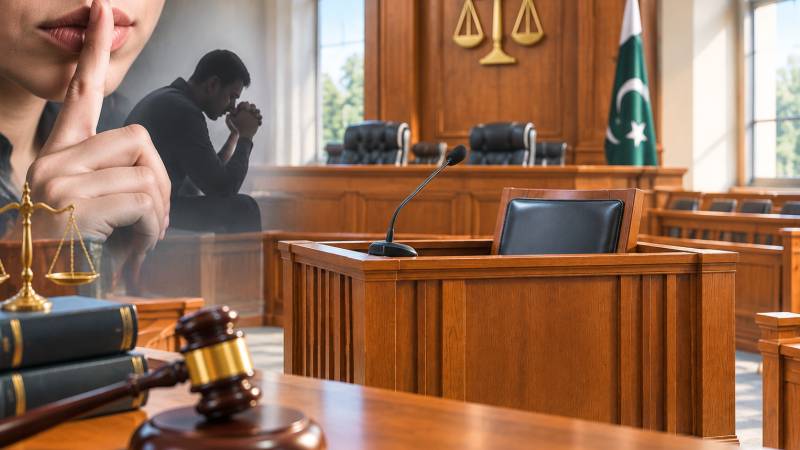
Every courtroom has a witness box. It is neither the largest object in the courtroom nor the most imposing. It rarely attracts attention from those who enter seeking justice. Yet, within that modest space, lives can change, liberty can be protected and truth can prevail. A witness does not merely recount events; a witness gives the law the opportunity to distinguish fact from allegation. But when the witness box remains empty, or when the person standing inside it is unable or unwilling to speak the truth, justice faces one of its greatest challenges.
The criminal justice system depends upon evidence, and witness testimony has always been one of its most important foundations. Investigations may uncover documents, forensic experts may present scientific findings and lawyers may advance persuasive legal arguments, but in many cases it is the testimony of an ordinary citizen that enables a court to reconstruct what truly happened. Witnesses bridge the gap between an incident and the courtroom. They transform isolated facts into a coherent narrative capable of being tested through the judicial process. Without that testimony, even the strongest allegations may remain legally unproven.
Yet the reality is that witnesses do not always reach the courtroom with confidence or certainty. Some are reluctant because they fear retaliation. Others lose faith after repeated adjournments and prolonged proceedings. Memories inevitably fade with the passage of time, while the emotional burden of participating in criminal litigation often becomes overwhelming. There are also witnesses who simply wish to move on with their lives, believing that continued involvement in legal proceedings will only prolong personal hardship. Whatever the reason, the absence of reliable testimony creates a void that no amount of speculation can fill.
When a witness fails to appear or withdraws from an earlier statement, public reaction often focuses upon the outcome of the case rather than the reasons behind it. Questions are raised about acquittals, investigations and judicial decisions. However, a court cannot create evidence where none exists, nor can it substitute suspicion for proof. Judges decide cases on the material lawfully placed before them. If crucial evidence never reaches the courtroom, the law cannot compensate for that absence by relying upon assumptions or public sentiment. This is not a failure of judicial duty; it is a reflection of the limits within which every court must operate.
Witnesses therefore occupy a unique position within the administration of justice. They are neither prosecutors nor defenders. They are not expected to secure convictions or obtain acquittals. Their responsibility is far simpler, yet profoundly important—to assist the court in discovering the truth by giving honest and reliable testimony. When that responsibility is fulfilled, courts are better equipped to reach decisions that command public confidence. When it is abandoned, the search for truth becomes significantly more difficult.
This reality should encourage a broader conversation about strengthening public confidence in the justice system. Citizens are more likely to participate as witnesses when they believe that their safety will be respected, their time valued and their testimony treated with dignity. Efficient trials, professional investigations and respectful courtroom procedures are not merely administrative improvements; they reinforce the willingness of ordinary people to assist the justice system. A legal process that inspires confidence encourages participation, and participation is essential for justice to function effectively.
The witness box is where truth finds its voice; when that voice is absent, the law loses one of its strongest means of discovering the truth.
Modern justice systems have invested heavily in forensic science, digital evidence and technological innovation. These developments have undoubtedly strengthened the administration of justice. Yet even the most advanced technology cannot entirely replace the human element. A witness who truthfully describes what was seen, heard or experienced often provides context that no document, photograph or forensic report can fully capture. Technology may support the search for truth, but it cannot always speak with the voice of human experience.
The empty witness box should therefore be seen not merely as an empty space within a courtroom, but as a reminder of what the justice system loses whenever truth remains unheard. It symbolises the distance that can arise between an incident and its lawful proof. It reminds us that justice depends not only upon judges, lawyers and investigators, but also upon ordinary citizens who are willing to fulfil their civic responsibility by telling the truth without fear or favour.
A fair justice system is measured not only by the quality of its laws or the independence of its judiciary, but also by its ability to create an environment in which witnesses feel secure enough to speak. When truth enters the witness box, justice has an opportunity to prevail. When that box remains empty, the silence speaks louder than any argument advanced in court.
The witness box is more than a place from which evidence is given. It is where truth finds its voice. When that voice is absent, the law does not lose its purpose but it loses one of its strongest means of discovering the truth. A courtroom may continue without a witness, but justice rarely can.