

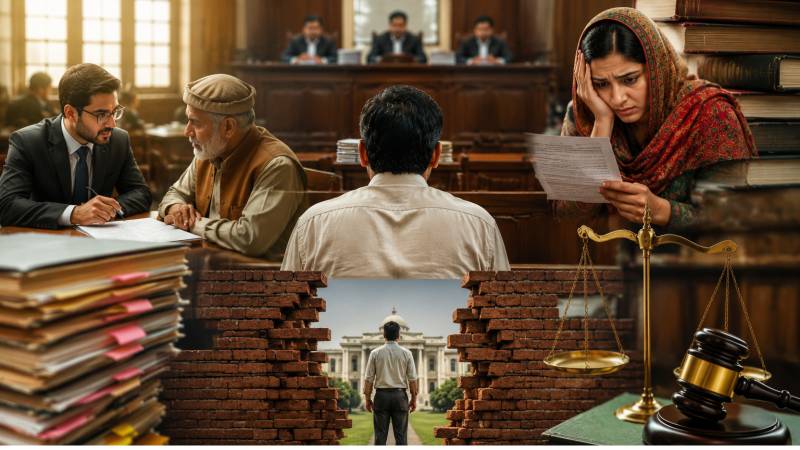
A courtroom is built upon words. Rights are asserted through pleadings, facts are established through evidence, arguments are presented by counsel and judgments are delivered after careful legal reasoning. Every stage of litigation depends upon language. Yet, for countless litigants in Pakistan, the language of the courtroom is not the language they speak or understand. They stand before the law seeking justice, but often struggle to comprehend the very proceedings that determine their rights. They are not silent because they have nothing to say. They are silent because the language of the legal system rarely speaks to them.
For generations, English has remained the principal language of legal drafting, judicial precedents and superior court judgments in Pakistan. Advocates are trained in legal English, statutes are interpreted through English terminology and judicial reasoning is frequently expressed in a language unfamiliar to many ordinary citizens. While this tradition serves historical, constitutional and professional purposes, it also creates an invisible barrier between the justice system and the people it exists to serve.
The average litigant is not a lawyer. He may be a farmer from rural Sindh, a shopkeeper in Punjab, a labourer in Khyber Pakhtunkhwa or a widow seeking inheritance rights in Balochistan. Their daily lives are lived in Urdu, Sindhi, Punjabi, Pashto, Balochi and other regional languages. Yet when they enter a courtroom, they often find themselves surrounded by legal terminology they cannot understand. Pleadings are drafted in English, legal authorities are cited in English and many judgments are written in English. Although advocates faithfully represent their clients, the litigant is frequently unable to follow the discussion taking place about his own case.
While this tradition serves historical, constitutional, and professional purposes, it also creates an invisible barrier between the justice system and the people it exists to serve. The average litigant is not a lawyer when they enter a courtroom, they often find themselves surrounded by legal terminology they cannot understand.
This language gap should not be mistaken for a criticism of lawyers or judges. Legal language exists because precision matters. A single word may influence the interpretation of a statute or determine the outcome of a dispute. English also provides consistency with constitutional provisions, legislation and decades of judicial precedents. The challenge is therefore not whether English should disappear from legal practice, but whether justice can become more understandable without sacrificing legal certainty.
Justice is most meaningful when those seeking it understand not only the outcome but also the process that leads to it. A litigant who leaves court without understanding what occurred during the hearing or why a case was adjourned carries more than legal uncertainty. That individual carries a sense of exclusion from a system intended to protect his rights. The law should never become so technical that the citizen whose future depends upon it feels like a stranger in the courtroom.
Bridging this divide does not require abandoning established legal traditions. It requires strengthening communication between the justice system and the public. Lawyers should make every effort to explain legal proceedings to their clients in clear and accessible language. Courts can encourage greater use of Urdu or regional languages while addressing litigants, particularly when explaining procedural developments. Plain-language summaries of judgments, where appropriate, could help litigants understand decisions that profoundly affect their lives. Such measures would not diminish the authority of the law; they would enhance public confidence in it.
Around the world, justice systems are increasingly recognising that accessibility extends beyond physical access to courts. True access to justice also means access to information, understanding and meaningful participation. A litigant who cannot understand the language of proceedings remains dependent upon others for every explanation, every development and every decision. While professional legal representation is indispensable, understanding one's own case should never become a privilege reserved for those trained in the law.
The relationship between the citizen and the justice system is founded upon trust. That trust grows when people believe they have been heard, treated fairly and kept informed throughout the legal process. It weakens when legal proceedings appear distant, technical and incomprehensible. Courts may deliver legally impeccable judgments, but justice achieves its highest purpose only when those directly affected can understand why those decisions have been reached.
The silent litigant is therefore not merely a person waiting patiently for justice. The silent litigant represents every citizen who enters a courtroom seeking answers but leaves with questions because the language of the law has become a barrier rather than a bridge. A justice system earns public confidence not only by delivering fair decisions, but also by ensuring that the people whose rights it determines can genuinely understand the journey towards those decisions.
Justice should never be measured solely by the correctness of its judgments. It should also be measured by whether the ordinary citizen can understand the process through which those judgments are reached. When the language of the law becomes the language of the people, the silent litigant finally becomes an informed participant in the pursuit of justice.