

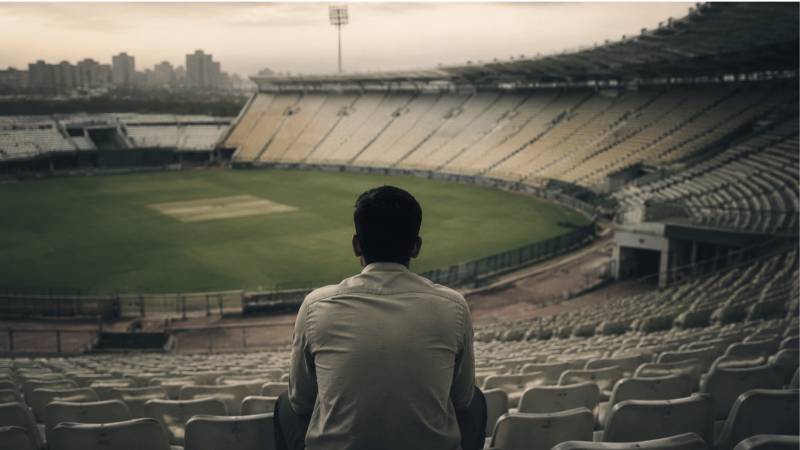
Jobs economy is hiding in plain sight, locked behind gates, guarded by officials, and used occasionally for cricket, political rallies, convocations or ceremonies. Pakistan is searching for jobs in all the usual places: industry, exports, agriculture, IT, construction, remittances, government schemes, donor projects and PSDP pipelines.
Pakistan has stadiums built by the PSDP by politicians who want to show . It has expo centers. It has convention halls. It has youth. It has cities. It has music, sport, food, drama, comedy, YouTubers, podcasters, school teams, college leagues, women athletes, freelancers, event managers, caterers, sound technicians, camera crews, editors and millions of young people looking for work. What it does not have is a serious entertainment economy because these entertainment places developed at great expense are controlled by a government bureaucracy run on colonial lines with no commercial orientation. That is the missed opportunity.
A rough public inventory suggests Pakistan has about 56 major stadiums with capacities above roughly 2,000, with combined seating capacity close to 850,000. This excludes hundreds of smaller school, college, district, club, cantonment and private grounds. Add to this Karachi Expo Centre, Lahore Expo Centre, Jinnah Convention Centre, Pak-China Friendship Centre, Aiwan-e-Iqbal, Hyderabad Expo Center, China center in Islamabad and new or planned expo facilities in Peshawar and Quetta. The hardware is there. The problem is that the software is missing. These assets are not run as platforms. They are run as buildings.
Most stadiums are controlled by sports boards, development authorities, government departments, municipalities, public agencies or politically connected bodies. Their use is episodic. Cricket occasionally activates some of them because cricket no because cricket has a commercial model but because it has VIP backing. We never learn of the proceeds from ickets, broadcast rights, sponsorships, food stalls and media coverage. None of these places have any financial reporting because they are government controlled.
Expo centers do somewhat better because exhibitions have market logic: firms rent stalls, visitors come, vendors work, hotels fill, transport moves and deals are made. But most stadiums remain dead capital most of the year. That is not a harmless inefficiency. It is an economic failure. A stadium is not merely a sports facility. It is an urban production machine. It can generate tickets, food sales, parking, advertising, naming rights, streaming content, merchandise, coaching academies, local tourism, women’s leagues, school tournaments, esports, concerts, comedy nights, food festivals, book fairs, startup expos, creator conventions and city festivals. A convention center can do the same for business, culture, design, education, technology, health, crafts and local industry. But only if we stop treating these places as official compounds and start treating them as markets.
The demographic pressure
Pakistan cannot afford idle assets because it has no shortage of idle youth. The 2023 Census puts Pakistan’s population at around 241 million. Roughly a quarter of the population is aged 15–29. The new Labour Force Survey shows a labor force above 80 million, with unemployment rising and educated unemployment especially troubling. The World Bank president warned in 2026 that Pakistan needs 25–30 million jobs over the next decade—roughly 2.5–3 million jobs a year.
That is the scale of the challenge. No single sector can absorb it. But the answer cannot be only more government hiring, more construction schemes, more protected industry, or more donor-funded training workshops. Pakistan needs many labor-absorbing markets. Sport, entertainment, events, content, tourism and live culture are among them. The youth economy is no longer only about factories and offices. It is also about audiences. Sport is an audience. Music is an audience. Food is an audience. Esports is an audience. Podcasts are an audience. Comedy is an audience. Festivals are audiences. Content creation is audience aggregation. Countries that understand this turn culture into employment. Countries that do not keep producing unemployed degree holders and frustrated migrants.
Most stadiums remain dead capital most of the year. That is not a harmless inefficiency. It is an economic failure. A stadium is not merely a sports facility. It is an urban production machine.
What if stadiums became businesses?
Let us do a crude scenario.
Take only the 56 major stadiums. Ignore smaller grounds, universities, parks, cinemas, auditoriums and private halls. Suppose 50 stadiums are made commercially usable. Suppose each hosts only 40 paid event days per year. That is less than one event per week. Suppose average attendance is 5,000 people per event. Suppose average spending per visitor is Rs 1,500, including ticket, food, transport, parking, merchandise and nearby spending.
That gives: 50 stadiums × 40 events × 5,000 visitors × Rs 1,500 = Rs 15 billion
That is only direct visitor-linked spending. Add venue rentals, sponsorships, concessions, advertising, parking, streaming rights, academies, merchandising and vendor fees, and even the conservative case can move toward Rs 25–30 billion per year. Now take a more serious activation scenario. Suppose 56 stadiums host 75 commercial event days per year. Suppose average attendance is 8,000. Suppose average spending is Rs 2,000.
That gives:
56 × 75 × 8,000 × Rs 2,000 = Rs 67.2 billion
Add sponsorships, venue rentals, broadcast, food contracts, naming rights, seasonal leagues, advertising and merchandise. Direct activity could plausibly reach Rs 100–120 billion annually. Add local spillovers through transport, hotels, restaurants, vendors, security, printing, staging, logistics and content production, and the wider city economy impact could reach Rs 150–200 billion. These are rough estimates, not audited forecasts. But they make the point. The issue is not whether stadium activation alone can solve unemployment. It cannot. The issue is why existing public assets are producing so little work.
The jobs logic
Live entertainment is labor-intensive. Every event needs ticketing staff, ushers, guards, cleaners, technicians, camera operators, stage hands, food vendors, ambulance services, traffic staff, digital marketers, designers, announcers, photographers, editors, social media teams, stall managers, sponsors, transport operators and maintenance workers. Then add athletes, coaches, referees, trainers, commentators, scouts, agents and academy managers. Add musicians, comedians, actors, influencers, livestreamers, podcasters, food entrepreneurs and merchandise sellers.
The conservative scenario could support perhaps 15,000–25,000 full-time-equivalent jobs once permanent venue staff, event-day labor, vendors, academies, media crews, logistics, food and security are included. A more serious activation model could support 50,000–80,000 jobs. If expo centers, convention centers, universities, parks, city squares, private halls and digital content production are added, a broader entertainment economy could plausibly support 100,000–200,000 jobs over 5–7 years. Again, these are crude estimates. But crude estimates are useful when the alternative is zero imagination.
The bureaucracy problem
The central obstacle is not land. It is not youth. It is not demand. It is governance. Most public venues are managed as administrative assets. A board controls access. Booking is opaque. Pricing is unclear. Maintenance is reactive. Calendars are not public. Political events crowd out commercial use. Security becomes a veto. VIP culture distorts access. A stadium becomes a locked compound.
An entrepreneur needs certainty. Can I book the venue? At what price? For which dates? Can I sell tickets? Can I bring food vendors? Can I sell sponsorship? Can I livestream? Can I advertise? Can I organize a women’s league, a school tournament, a music night, an esports competition, a city food festival? If every answer requires permission from a committee, a deputy commissioner, a police office, a sports board, a development authority and a minister’s mood, the market will not emerge. Pakistan has built assets but not markets.
The reform
The first step is a National Urban Entertainment and Sports Venue Asset Registry. Every stadium, expo center, convention center, major auditorium and public ground should be listed with ownership, capacity, condition, management authority, annual event days, revenue, operating cost, maintenance backlog, booking process and commercial restrictions. Then publish the calendars. A public venue with no public calendar is not a public asset. It is a locked privilege.
The second step is to separate ownership from operation. The government can own the land and buildings. It does not need to run the calendar. Stadiums and expo centers should be offered through transparent management concessions to professional venue operators, event firms, sports entrepreneurs, universities, city governments or private managers.
The contract should be clear. The operator earns from ticketing, rentals, sponsorship, food concessions, parking, naming rights, advertising, academies, livestreaming, merchandising and vendor fees. In exchange, the operator maintains the facility, meets safety standards, publishes accounts, provides community-use days, supports women’s participation and meets minimum annual event targets.
Each major stadium should be required to reach 50 event days in year one, 75 by year three, and 100 by year five. Not all events need to be large. A 3,000-person university derby matters. A 2,000-person women’s football final matters. A 5,000-person food festival matters. A 1,500-person esports event matters. A school league matters. A local music night matters. A comedy festival matters. A creator convention matters.
The point is rhythm. The city must know the venue is alive. Pakistan does not need another stadium policy written by bureaucrats. It needs entrepreneurs, calendars, audiences and platforms. No new stadium should be approved without a business plan. No public venue should remain idle without explanation. No sports board should be allowed to sit on dead capital. No city should be denied an entertainment economy because officialdom fears crowds, music, youth or private initiative.
The state’s job is rules: safety, transparency, competition, cleanliness, insurance, emergency services and public order. The entrepreneur’s job is to fill the seats. Pakistan needs jobs. It needs hope. It needs urban energy. It needs alternatives to government employment, migration dreams and low-quality degrees. The assets are already there. The seats are there. The youth are there. The missing thing is enterprise.