

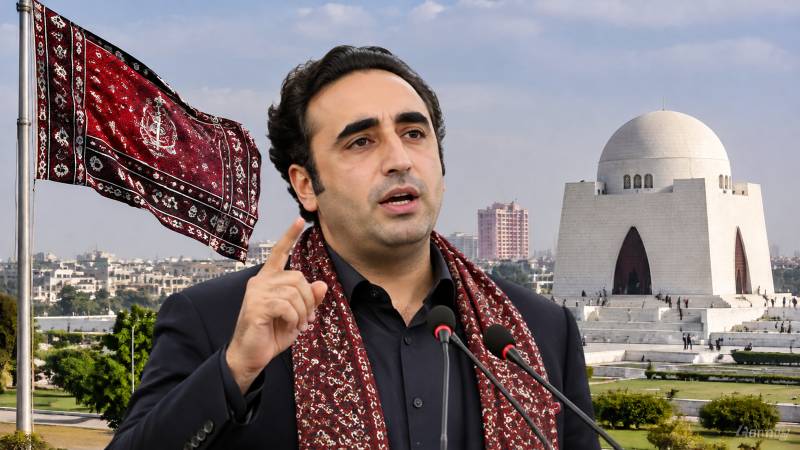
There is something deeply troubling about the language of intimidation entering a debate that ought to be governed by constitutional reasoning, democratic consent and the public interest. Bilawal Bhutto-Zardari’s warning that forcibly dividing Sindh could cause bloodshed on the streets of Karachi and Hyderabad is one such instance. However strongly he opposes new provinces, invoking people taking up arms is an irresponsible way to conduct a constitutional argument.
The issue is not whether Sindh must be divided, or whether the federal government may redraw provincial boundaries at will. It is whether Pakistan can discuss its administrative architecture without allowing threats of violence, ethnic anxieties or the political interests of governing parties to foreclose debate.
I have argued in my writing on devolution, civil-service reform and redesigning the state that boundaries are instruments of governance, not sacred ends. Where provinces become too populous, geographically unwieldy or administratively remote, additional units merit consideration on grounds of governability, economic viability, accessibility, efficiency and democratic consent not ethnic competition or political convenience. Yet creating provinces without transferring power further downwards would merely relocate patronage. Pakistan needs empowered district, municipal and local governments, not simply more provincial capitals.
The Constitution Is Not Silent: Bilawal’s objections to the proposed referendum call for a distinction that political argument too often obscures. Article 48(6) provides a constitutional mechanism by which the Prime Minister, with the approval of a joint sitting of Parliament, may refer a question of national importance to a Yes-or-No referendum. It offers a route to seek popular endorsement, not a shortcut around the Constitution.
A referendum cannot itself create a province or alter its boundaries. Articles 238 and 239 require constitutional amendments to secure two-thirds of the total membership of each House of Parliament. Under Article 239(4), an amendment changing a province’s limits also requires approval by two-thirds of the affected Provincial Assembly. Popular endorsement and constitutional amendment can therefore complement one another; the former cannot displace the latter. Nor should a nationwide vote be treated as a device to override the constitutionally mandated consent of the affected province. A referendum may inform the political debate, but it cannot extinguish provincial safeguards.
This distinction is consistent with my earlier arguments on devolution and constitutional redesign. Change must be debated publicly and scrutinised clause by clause, never imposed by decree, military intervention or constitutional improvisation. Bilawal is entitled to question the referendum’s timing, wording, motives and credibility, and to oppose any proposed change in Parliament. But rejecting a constitutional mechanism outright is not a substitute for engaging with its purpose and limits.
Electoral victories confer mandates, not ownership. Opposing the PPP does not make anyone an adversary of Sindh, just as challenging federal overreach does not entitle a provincial party to monopolise the province’s future.
From Constitutional Disagreement to the Politics of Fear: The sensitivity of Sindh’s boundaries is undeniable. Its history, language and identity command respect, and an imposed settlement against the wishes of affected populations would be profoundly dangerous. Yet a warning against coercion is different from portraying armed confrontation as the foreseeable consequence of constitutional disagreement. The distinction matters when words spoken by national leaders can inflame already fraught relationships.
Political leadership should reduce tensions, not magnify them. Karachi and Hyderabad must not become rhetorical hostages in a struggle over political authority. Sindh belongs to its people, not to any party; equally, no federal government possesses an unfettered right to divide it. Both principles must stand together. Citizens should be able to debate their constitutional future without intimidation from Islamabad or those claiming an exclusive mandate to speak for the province. That debate must include those who fear losing their historical identity as well as those who believe existing administrative arrangements have failed them. Democratic consent requires listening to both.
The Political Subtext: Bilawal’s speech extended well beyond provincial boundaries. He addressed the 18th Amendment, provincial financial entitlements, the federal government’s performance, institutional decline, Imran Khan’s incarceration and the need for a political reset. He acknowledged a share of responsibility for the system’s deterioration and invited the Prime Minister to dialogue. Such breadth invites a political question: was this only a defence of provincial autonomy, or also an attempt to reposition the PPP amid uncertainty?
The PPP–PML-N understanding rests on parliamentary necessity and a delicate balance of interests. Bilawal’s sharp criticism of the federal government, alongside conciliatory signals towards PTI and remarks on political incarceration and reserved seats, may indicate a more complicated phase in that relationship. It could reflect a genuine recognition that polarisation has become untenable. Equally, it could be an effort to preserve the PPP’s options should the governing arrangement weaken. These remain interpretations, not proven motives; nevertheless, political speeches cannot be separated from the circumstances in which they are delivered.
Sindh is not the property of the PPP. Pakistan is not the property of Islamabad. And the Constitution is not the property of those who happen to hold power.
Governance Cannot Be Escaped Through Nationalism: The more pressing question is the PPP’s record in Sindh. Having governed the province for years and repeatedly received electoral mandates, it has both the authority to govern and the obligation to answer for outcomes. Across Karachi, Hyderabad and rural Sindh, citizens continue to face failures in sanitation, drinking water, transport, education, healthcare, planning and municipal services. These are lived realities, not abstract criticisms. A defence of territorial integrity cannot absolve a government of its responsibilities to the people living within that territory.
The 18th Amendment was a major achievement for provincial autonomy. But devolution cannot mean that authority leaves Islamabad only to accumulate in provincial capitals. Article 140A requires provinces to establish elected local governments and devolve political, administrative and financial responsibility and authority to them. The constitutional promise remains inadequately realised. Provincial autonomy loses much of its democratic force when the province itself withholds meaningful powers, resources and administrative control from elected local institutions.
The contradiction is especially stark in Karachi. A metropolis of immense economic importance and administrative complexity cannot function effectively when responsibilities are fragmented, decision-making is centralised and its elected local government lacks adequate authority and predictable finances. The same principle applies beyond Karachi: a citizen’s proximity to government matters more than the geographical location of the next provincial capital. Functions, funds and functionaries must move together. This is why the unfinished fiscal dimension of devolution matters as much as territorial restructuring: constitutionally credible, predictable transfers to local governments would make accountability possible where public services are actually delivered. Without such arrangements, the vocabulary of autonomy conceals the persistence of provincial centralisation.
It is therefore legitimate to ask whether increasingly emphatic appeals to Sindhi nationalism also divert attention from governance failures. Provincial identity is neither artificial nor expendable; it merits protection. Nor is every defence of Sindh’s territorial integrity a political manoeuvre. But when the language of existential threat eclipses questions of public services and accountability, nationalism risks becoming a shield for those in power rather than a voice for citizens.
A Province Is Not a Political Inheritance: No resident of Karachi, Hyderabad or rural Sindh should be denied the right to consider whether alternative arrangements could improve representation, access and accountability. Equally, no constitutional proposal can succeed merely because its sponsors proclaim administrative efficiency. Its viability, public legitimacy and constitutional safeguards must be tested openly. If the public rejects it, let democratic argument prevail. If it is legally deficient, let the constitutional process expose that deficiency. Threats of bloodshed settle neither question.
Electoral victories confer mandates, not ownership. Opposing the PPP does not make anyone an adversary of Sindh, just as challenging federal overreach does not entitle a provincial party to monopolise the province’s future. The debate is larger than preserving or dividing a particular territory: it concerns a state that remains overcentralised, cumbersome and too distant from its citizens.
Bilawal has called for a political reset. A meaningful reset would begin by acknowledging that no party, family, institution or dynasty owns the state or its constituent units. Sindh is not the property of the PPP. Pakistan is not the property of Islamabad. And the Constitution is not the property of those who happen to hold power. Sindh’s future must be shaped by its people through lawful procedure, informed debate and democratic consent not political intimidation, inherited claims or the spectre of blood in the streets.