

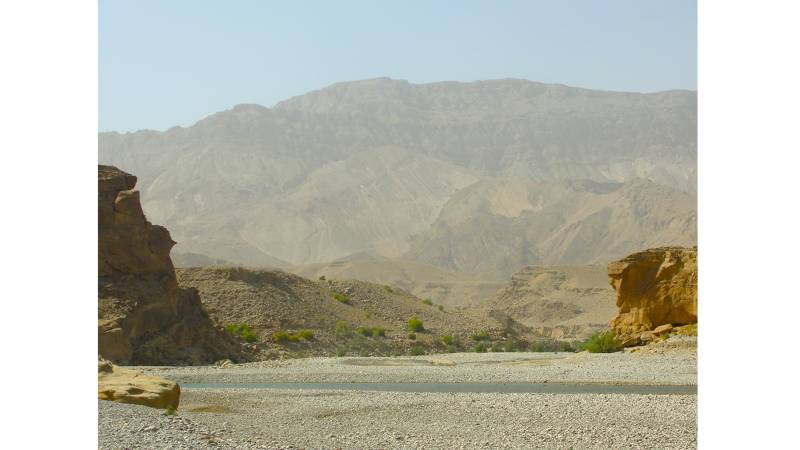
Travelling through the Khirthar Range opens up a fascinating world of Sindh’s prehistoric and historic rock art heritage. Among the most magnificent prehistoric rock art depictions in the Gaj Valley are the bull engravings, while Buddhist stupa images are most prominent among the historic carvings. During my explorations, I documented Buddhist stupa engravings in several valleys, from Makhi to Mazarani to Mol, Nali to Naing, Gaj to Gidran Waro Gharoto, Khashani to Khurbi, and Seeta to Sallari. Of all these valleys, Gaj is abundant in stupa engravings, found in almost every dhora (a tributary of a Nai) and dhori (a tributary of a dhora).
For more than two decades, I have documented the rock art of the Gaj and Nali valleys for my forthcoming books, Petroglyphs of the Gaj Valley and Rock Carvings of the Nali Valley, respectively. During my fieldwork in both the Gaj and Nali valleys, I also discovered a few ancient shrines. One of the most interesting is a rock-cut shrine in the Nali Valley, engraved with geometric signs that offer glimpses into the beliefs of the community that once inhabited the area. Similar shrines are also found beyond the Nali Valley.
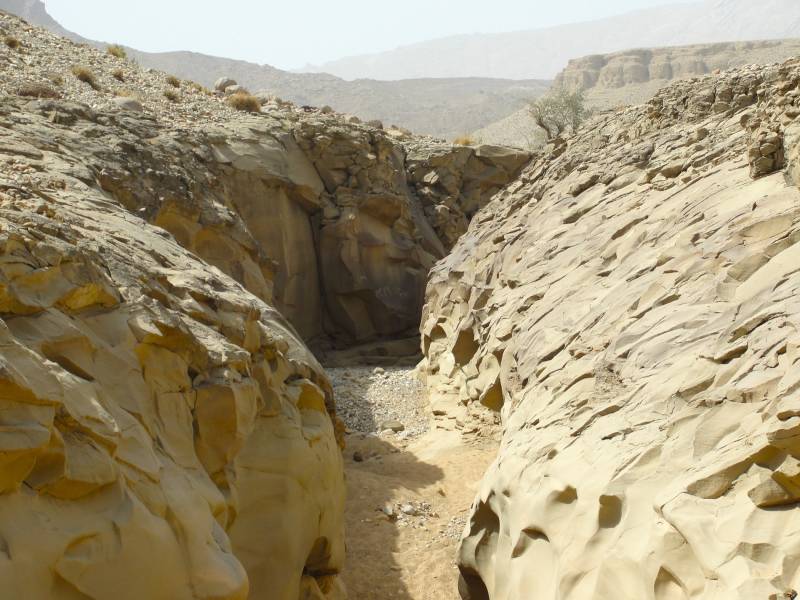
My over two decades of fieldwork in Gaj and other valleys in Sindh’s mountains have brought new perspectives on rock art research that were previously undocumented and had escaped scholars’ attention, even though a few of these were found. Stupa images in the Gaj Valley reflect the presence of a Buddhist community in Khirthar and beyond.
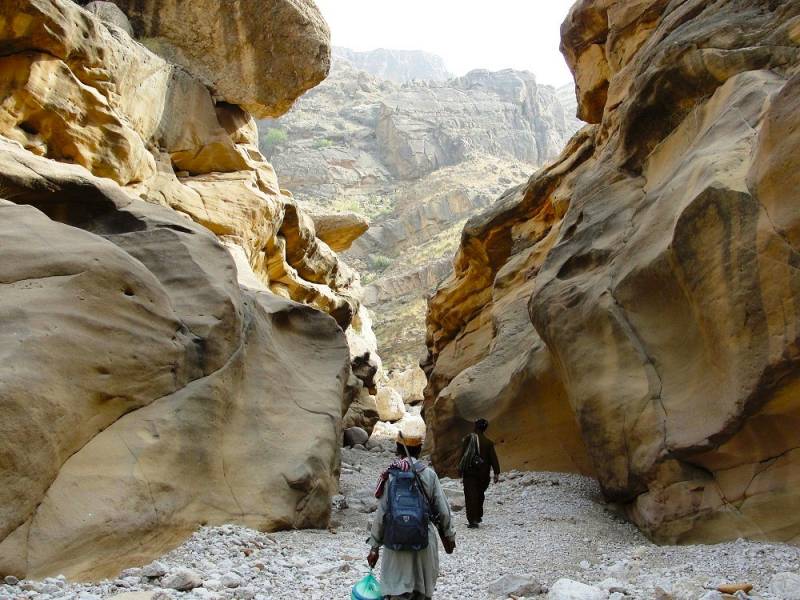
In pre-Islamic Sindh, Buddhists had a sizeable population, and their stupas and monasteries were located in different parts; their remains can still be seen in many districts. However, their representation in rock art shows that they left behind many symbols in these remote valleys of Sindh.
The Stupa Engravings of Chiti
I have earlier written several articles on the Gaj Valley, including a few on stupa images. One of the most notable rock art sites for stupa engravings is Chiti in Shakloi Dhoro. About twelve stupa images are engraved on the cliff and rock outcrop, ten of which are on the cliff. The first stupa on the southern panel is a three-storey structure with a dome (anda) surmounted by a harmika and finial. A decorated streamer hangs from its left side, featuring six circular motifs and a rhombus-shaped design.
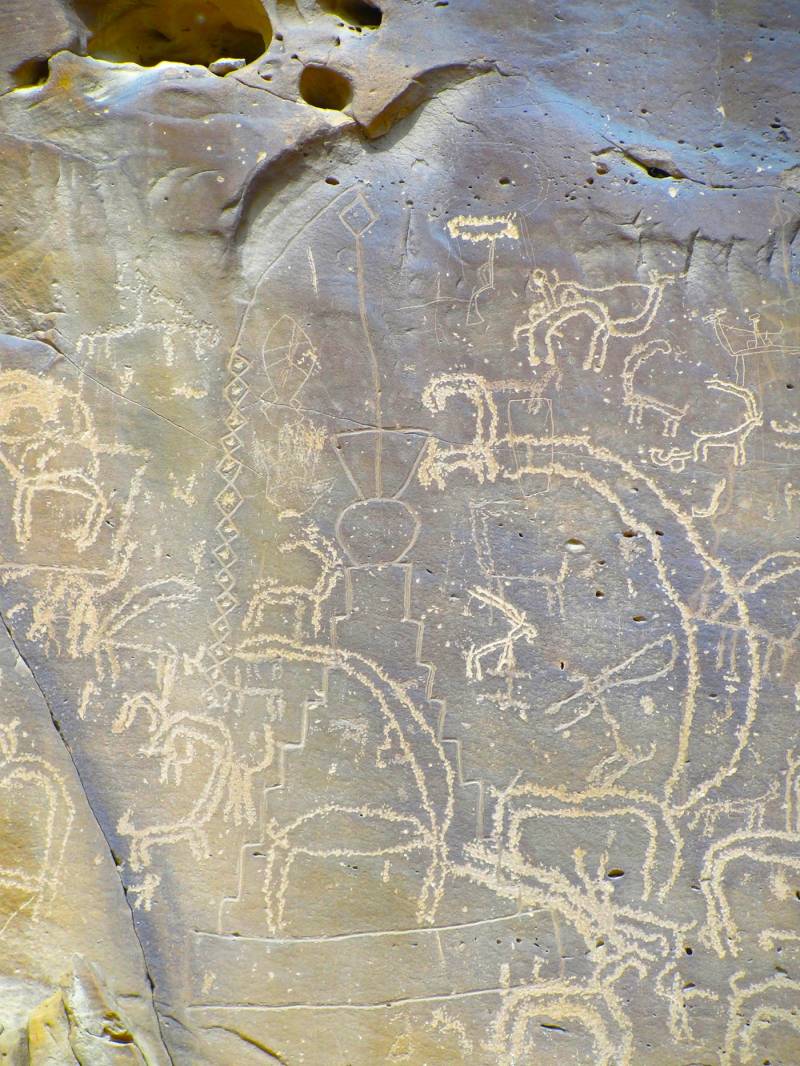
Nearby is a smaller, two-storey stupa crowned by a dome and finial. Another prominent engraving depicts a tower-like stupa with seven storeys. Its four lower storeys are equal in size, while the three upper storeys gradually narrow. The dome is surmounted by a harmika and finial, with a streamer extending from it. Nearby is another seven-storey stupa with an irregular outline, apparently shaped by the limited space available beside a crack in the cliff. Unlike the more elaborate examples, this stupa has a simple design topped by a finial. Adjacent to it are two stupas engraved side by side, each consisting of two storeys crowned by a finial.
These carvings are important material evidence of a religious past about which little is known from written sources
Another stupa stands on a rectangular platform and has six storeys that progressively decrease in size towards the top. Its dome is surmounted by a harmika and finial, accompanied by a decorative streamer bearing fourteen ornaments. The sharp, clearly defined lines suggest the engraving was executed with a metal chisel. Similar stupa representations are found at several rock art sites in the Gaj and Makhi valleys. These multi-storeyed stupas, particularly those with elaborate streamers, are distinctive features of the Buddhist rock art of the Gaj Valley. I have not seen such stupas elsewhere in Khirthar and beyond.
Explorations Across the Makhi and Nali Valleys
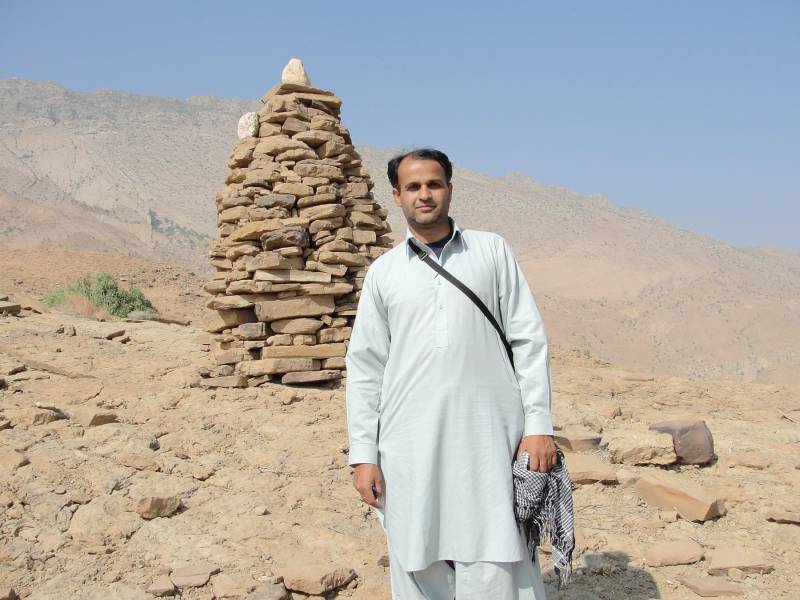
During my explorations, I also visited the Makhi Valley several times to study and document stupa petroglyphs. I discovered several rock art sites in the Makhi Valley. While travelling from Gaj to Makhi, I came across stupa engravings at different locations along the route, most prominently at Zahargani Thal. Some of these stupas are simple in design, while others are elaborate multi-storeyed structures with domes, harmikas, finials, and decorated streamers. I was mainly interested in the different forms of these stupas, especially those with six or seven storeys and streamers bearing ornamental designs. Similar stupa engravings are found at several rock art sites in the Gaj and Makhi valleys. During these journeys, I also came across a few commemorative towers, locally known as Chura, which are part of the cultural landscape of the Gaj Valley. These repeated visits were helpful in finding more stupa images and comparing them with stupa images that I documented in other valleys, including the Makhi and Nali valleys.
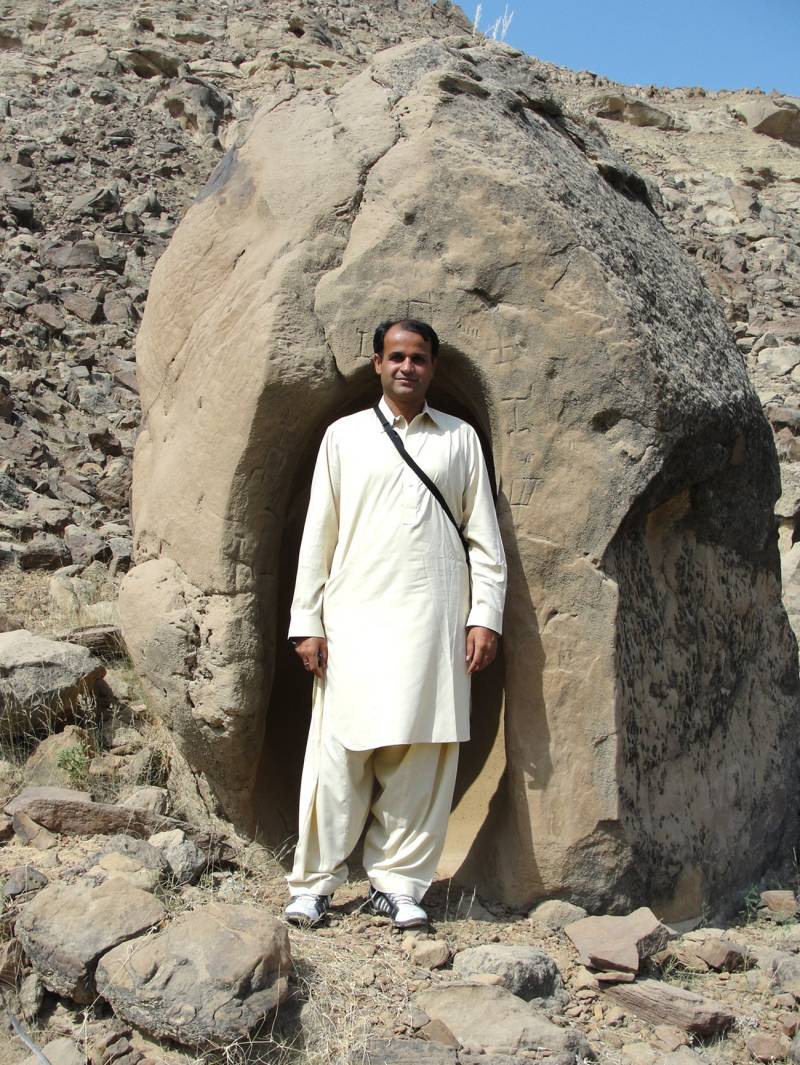
Like that of the Gaj Valley, the rock art of the Nali Valley features several themes, but two stand out prominently: depictions of bulls and intricate engravings of Buddhist stupas. These themes provide insight into the historical and cultural narratives of the people who inhabited this area. The presence of Buddhist stupas, in particular, highlights Buddhism’s significance in Sindh’s history.
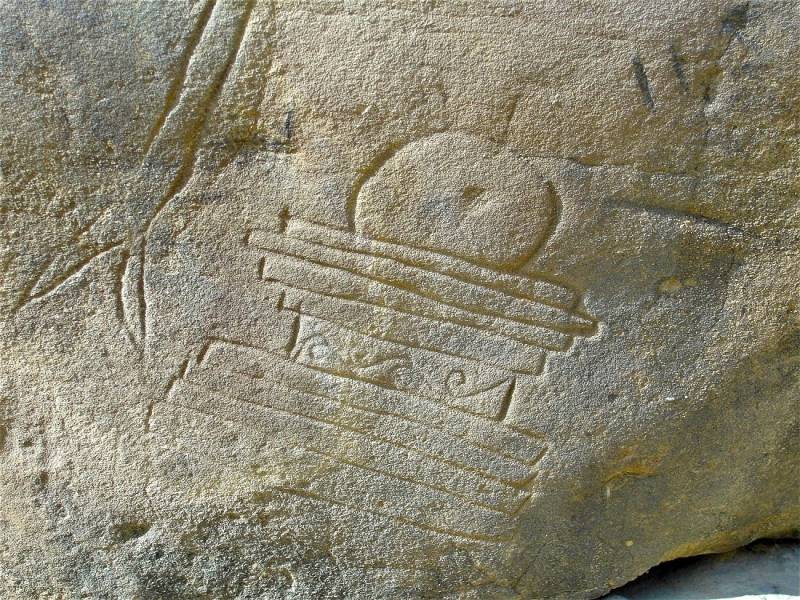
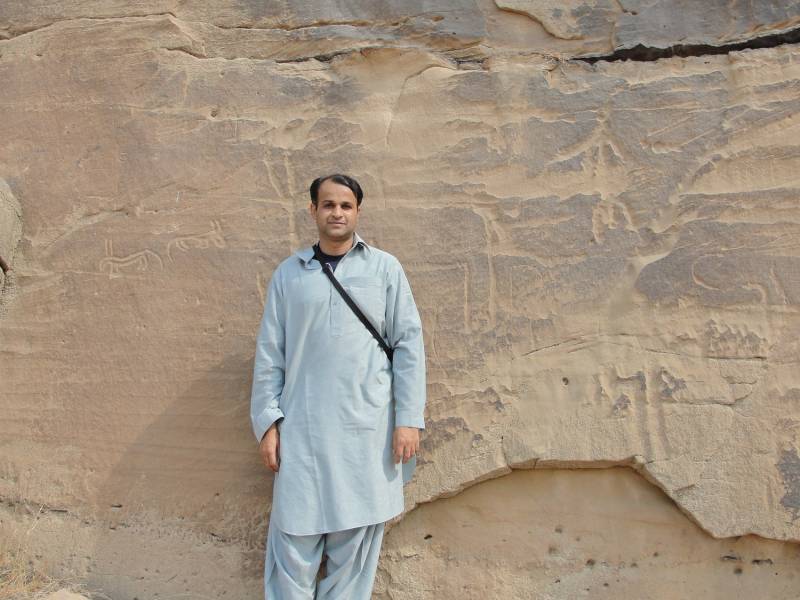
Some of the most notable sites where these stupa engravings can be observed include the Sado Mazo, Hur Dhoro, Chiti, Gaptar, Nai Jhudri, Khotho, and Chuchar rock art sites. Each location offers unique insight into the artistic styles and symbolic meanings behind the creations. Each rock art site is more than just a collection of engravings.
Religious Significance and Cultural Connections
The stupa engravings in the Gaj Valley provide valuable insights into the Buddhist religious traditions and architectural forms of pre-Islamic Sindh. Their elaborate designs, predominantly the multi-storeyed structures with decorated streamers, suggest that the artists were familiar with Buddhist architectural traditions. The representations of stupas on rock surfaces may have carried religious meanings beyond depicting architectural monuments.
The presence of these carvings on cliffs and rock outcrops also raises questions about the religious significance of the places where they were engraved. Were these images expressions of Buddhist devotion, representations of sacred monuments, or marks left by travellers passing through the valleys? Although their original meanings cannot be established with certainty, they suggest that Buddhist imagery had a place in how people perceived and represented their surroundings. The distribution of stupa engravings along routes connecting the Gaj and Makhi valleys is equally interesting, as it points to possible connections between local communities, travellers, and the wider Buddhist world.
The recurrence of similar stupa designs in different valleys also raises questions about the transmission of religious imagery and artistic traditions among communities connected with these mountainous regions. These carvings are important material evidence of a religious past about which little is known from written sources. My documentation of these engravings at different sites shows that the remote valleys of the Khirthar Range deserve greater attention in understanding the religious and cultural history of pre-Islamic Sindh.