

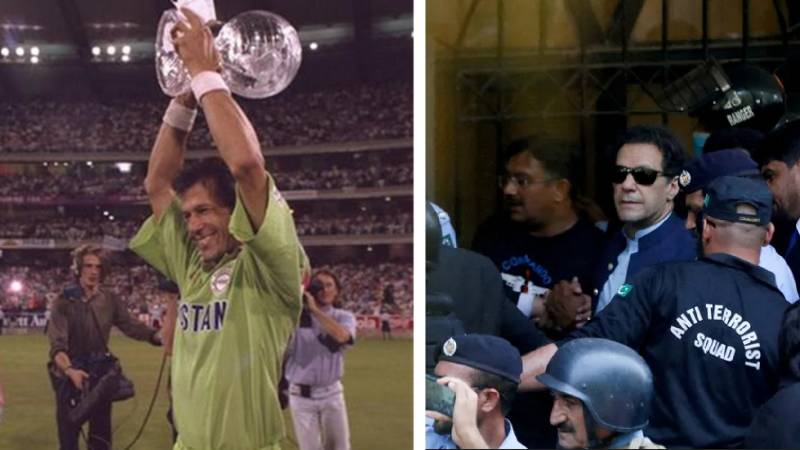
Rise To Stardom
Imran Khan’s remarkable cricket career spanned over two decades, beginning in 1971 when he was just eighteen years old and concluding with his retirement in 1992 at the age of forty. Though his debut for the Pakistan national team was largely forgettable and his early years as a medium-fast bowler were defined by struggle, he eventually transformed himself into the nation’s premier strike bowler and a world-class all-rounder. Upon being appointed captain in 1982, he elevated his game even further, establishing himself as one of Pakistan’s most successful and influential sporting figures.
He was also perhaps the country’s first true international superstar, despite the fact that the Pakistan hockey team was then ranked among the world's top three and squash legends such as Jahangir Khan had begun to dominate global rankings. Given that international cricket was played by only a handful of nations until the 1980s, it was not sporting prowess alone that cemented Khan’s status as a global celebrity. He became a fixture of the British and local tabloids.
He moved seamlessly through the upper echelons of British high society and was a regular at London’s most exclusive nightclubs like Annabel’s and Tramp. This lifestyle created a stark duality. In London, he was often dubbed ‘Playboy of the East,’ regularly seen with women from the British aristocracy.
Meanwhile, in Pakistan, from 1977 onwards, the social fabric was being tightened under the conservative dictatorship of General Zia-ul-Haq. Khan thus existed in two parallel universes: the hero of a supposedly ‘conservative’ republic and the glamorous socialite of the West. This duality made him a figure of fascination and, occasionally, deep resentment.
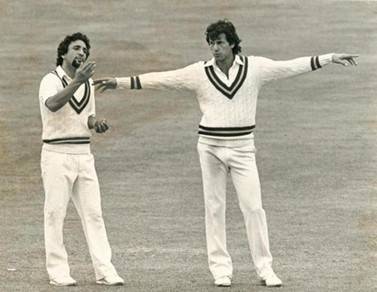
Khan's rise to cricket stardom began when he picked up 12 wickets in the third test match of the 1976 Pakistan-Australia series. Pakistan were one-down when they arrived in Sydney. They stunned the home team by winning the game and equalising the series. Khan seemed to have gained extra speed and bowled long hostile spells in both the innings.
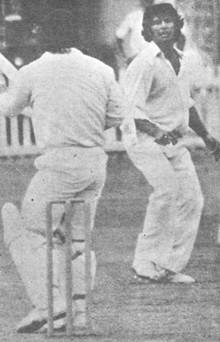
bouncers at Sydney during Pakistan’s 1976 tour of Australia
In 1982 he was appointed as the Pakistan cricket team’s captain. By then he had already risen to become a premier all-rounder. In the eyes of certain sections of the Pakistani press, though, Khan’s style of captaincy was frequently described as dictatorial and rife with favouritism.
As an Oxford University graduate from an upper-middle-class Lahore family, he spent a lot of time in England. He possessed a cosmopolitan air that many of his teammates found deeply intimidating. This cultural chasm was particularly pronounced when dealing with players from lower-middle-class or working-class backgrounds, who often struggled to relate to his aloof and authoritative persona.
Khan understood the psychological dynamic perfectly: as long as he delivered victories, his authority remained untouchable
As captain, his word was absolute and final. This total authority was largely earned through his ability to lead from the front, as the responsibilities of captaincy seemed to bolster rather than hinder his individual prowess with both bat and ball. Consequently, even the most powerful figures within the Pakistan Cricket Board (PCB) hesitated to contradict him, allowing him the autonomy to hand-pick his squad without interference.
However, this unchecked power meant that Khan would often exclude players he personally disliked, regardless of their inherent talent. His selection process frequently sidelined those who questioned his personal rules or those who took exception to his leadership style. It often included unleashing a barrage of profanities at players he deemed under-performers. In Khan’s dressing room, dissent was rarely tolerated. If a player dared to complain, they often found themselves cast out of the side, never to represent Pakistan again.
The case of Qasim Umar serves as a poignant illustration of this uncompromising environment. An exceptionally gifted batsman, Umar was subjected to a brutal dressing down by Khan after playing a reckless shot during a 1986 tour of Australia. Offended by the captain’s scathing tone and choice of words, Umar stood his ground, only for Khan to inform him that he was no longer welcome in the side.
Upon the team's return to Pakistan, Umar held a press conference, accusing Khan and other teammates of habitual drug use and of bringing women back to their hotel rooms. Khan met these accusations with a stony silence, and it was ultimately Umar who suffered the consequences. He was handed a lifetime ban by the PCB and eventually joined an Islamic evangelical group (Tableeghi Jamat).
In 1987, another batsman, Younas Ahmed, repeated these allegations and met a similar fate. Interestingly, the Pakistani public was already well aware of the lifestyle Umar was decrying, as tabloids frequently ran stories regarding Khan’s colourful social life and escapades.
However, because the team was performing well, the fans remained largely indifferent to the players' off-field conduct. Khan understood this psychological dynamic perfectly: as long as he delivered victories, his authority remained untouchable.
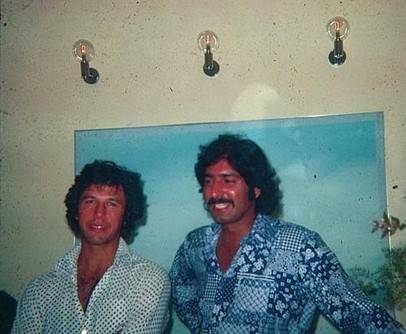
From 1974 onwards, Khan cultivated a deep friendship with the team’s towering swing bowler, Sarfaraz Nawaz. Having made his debut in 1969, Nawaz possessed the volatile temperament of a brawler, yet he took the young Khan under his wing. It was Nawaz who initiated Khan into the "art of swing bowling," while simultaneously acting as a guide to the premier clubs of England.
Their bond was as much social as it was professional. When Sarfaraz first considered retirement in 1983, Khan worked tirelessly to coax him into continuing. To Khan, Sarfaraz was far more than just a skilled teammate; he was an indispensable ally whose experience and friendship were vital during the early years of Khan’s captaincy.
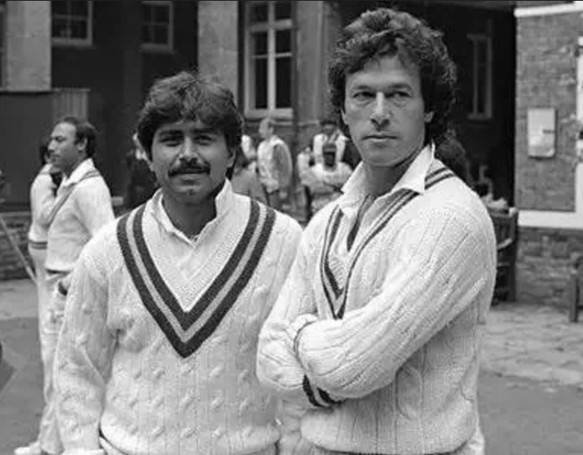
Then there was Javed Miandad. Between 1976 and 1992, Miandad and Khan remained the two immovable pillars of the Pakistan cricket side. Yet, they frequently found themselves at odds. Their friction was often a byproduct of their vastly different origins. While Miandad hailed from a lower-middle-class family in Karachi and honed his ‘street-smart’ batting skills on the dusty local club grounds of that city, Imran’s journey began on the manicured fields of Lahore’s prestigious Aitchison College and the elite Lahore Gymkhana. Imran then departed for England to study at Oxford, where he continued to refine his game.
Miandad was famously talkative and possessed a razor-sharp wit, though he could not speak a word of English when he made his debut in 1976 at the age of nineteen. He was nurtured by the captain of that era, Mushtaq Mohammad, a fellow Karachiite who saw his immense potential. By 1980, Miandad was appointed the team’s captain at the age of just twenty-four, but his tenure was short-lived. In 1982, a major rebellion was staged by ten players who claimed that Miandad was immature and crude in his treatment of senior teammates.
The uprising was orchestrated by Imran’s cousin and the team’s premier opening batsman, Majid Khan, with Imran himself joining the ranks of the rebels. Although PCB initially sided with Miandad, the young captain eventually agreed to step down, provided that Majid Khan did not succeed him. Seeking a compromise that would stabilise the fractured squad, the PCB ultimately opted for Imran.
As captain, Khan was successful in almost immediately turning the team's fortunes around. Through his own performances, he commanded the instant respect of his peers. Khan’s primary influence was Ian Chappell, the Australian batsman who had captained his country in the early-to-mid 1970s. Chappell’s leadership was famously aggressive and often provocative, and Khan deeply admired the Australian's penchant for playing ‘mind games’ with the opposition. A tactic Khan was quick to adopt himself.
For example, during his inaugural series as captain, Khan insisted on the selection of Abdul Qadir, a gifted but discarded leg-spinner whose career appeared to be over by 1981. The series took place against England on their home soil, and Khan was convinced that the English batsmen would struggle to read Qadir’s variations, especially as right-arm leg-spin was becoming an extinct art in the English game.
When the PCB voiced its disagreement, Khan remained steadfast, eventually threatening to resign the captaincy before it had even begun. The board relented, and Qadir joined the touring party. Just before the team’s departure, Khan instructed Qadir to grow a goatee, a request that confused the bowler, though he dutifully obliged.
During a press conference in London, Khan stoked the curiosity of the British press by claiming he possessed a "secret weapon," describing Qadir as a "wizard" with the ball. It was only then that Qadir understood the purpose of the goatee. Khan wanted him to look the part of a mysterious sorcerer. Khan’s intuition proved correct: the English batsmen were frequently bamboozled by Qadir’s bowling, and the leg-spinner subsequently became a mainstay of the Pakistani side.
In Khan’s dressing room, dissent was rarely tolerated. If a player dared to complain, they often found themselves cast out of the side
Emboldened by the success of the Qadir stunt in England, Khan became increasingly vocal as captain, often making grand and occasionally bizarre claims to unsettle his rivals. During a One Day International series in Australia, he boldly informed the local press that Manzoor Ilahi was the most powerful hitter of the cricket ball in the world.
This was a startling assertion, given that the era was defined by legendary hitters such as the West Indian Viv Richards, England’s Ian Botham, and India’s Kapil Dev. While Ilahi was undoubtedly a clean striker of the ball on the flat tracks of Pakistani domestic cricket, he was certainly not the world’s premier basher. Although he managed to clear the ropes a few times in Australia, he failed to live up to the lofty billing.
This was a classic example of Khan’s penchant for exaggeration as a psychological weapon. While Qadir possessed the genius to sustain the "wizard" persona, Ilahi lacked the consistency to Khan’s hyperbole.
In 1988, Khan took this provocative style even further, suggesting to an Indian reporter that the long-standing Kashmir dispute between Pakistan and India should be decided on the cricket field. The Indian press was understandably baffled. While Khan’s tongue was firmly in his cheek, the underlying message was potent: he was framing India-Pakistan matches as a form of non-kinetic warfare.
This psychological pressure weighed heavily on the Indian squad, particularly as Pakistan had dominated the majority of their Test and ODI encounters with India throughout the 1980s. Despite this dominance, Khan’s career appeared to reach an abrupt end following the 1987 Cricket World Cup.
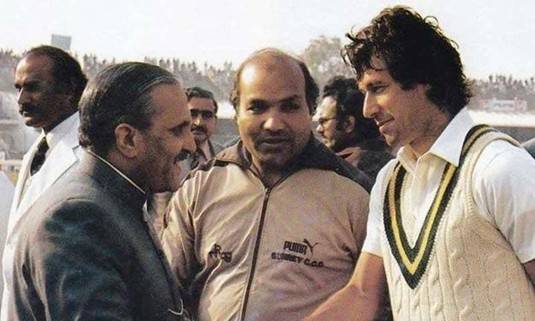
His side had been the firm favourites to lift the trophy on home soil, but they suffered a heartbreaking semi-final defeat at the hands of a less-fancied Australian team. Distraught by the loss, Khan immediately announced his retirement from the game. However, his departure was short-lived. A few months later, as the national side prepared for a challenging tour of the West Indies, the country’s military dictator, General Zia-ul-Haq, personally requested that Khan rescind his decision and return to lead the team once more.
Zia-ul-Haq frequently utilised the successes of the national cricket team as a tool for negotiating settlements with Pakistan’s arch-rival, India. At the time, Zia was navigating a complex geopolitical landscape, overseeing an insurgency against Soviet troops in Afghanistan at the behest of the United States and Saudi Arabia.
Both nations provided billions of dollars in aid, which was channelled through the Zia regime to host, arm, and train Islamist opponents of the Soviet-backed government in Kabul. Consequently, Zia could not afford the distraction of serious tensions on the country’s eastern border. He sought to neutralise the perceived Indian threat to concentrate fully on the conflict in Afghanistan. It was a campaign that, bankrolled by Washington and Riyadh, had become a vital lifeline for his increasingly unpopular and repressive dictatorship.
To maintain this delicate balance, Zia often employed what became known as "cricket diplomacy" during the Pakistan-India series. Imran Khan was a pivotal component of this diplomatic manoeuvring, serving as a charismatic figurehead on the pitch while remaining, at least superficially, oblivious to the manner in which Zia was instrumentalising his fame.
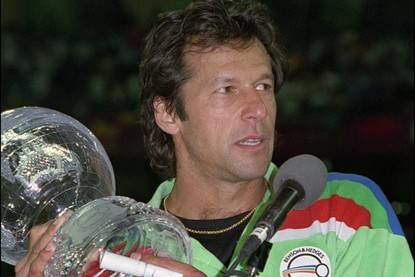
Imran Khan’s cricket career reached its zenith in 1992 when Pakistan secured their first-ever Cricket World Cup. The victory was nothing short of miraculous. Just as the team’s prospects seemed to have evaporated, they staged a dramatic comeback, winning a series of back-to-back matches to scrape into the semi-finals. After overcoming a formidable New Zealand side in a tense encounter, Pakistan defeated England in Melbourne to lift the trophy.
However, the national euphoria was somewhat tempered by a wave of media criticism following Khan’s victory speech. To many observers, the address felt overly self-centred. He failed to praise or even acknowledge the teammates who had rallied behind him when all hope seemed lost.
Players such as Javed Miandad, Wasim Akram, Inzamam-ul-Haq, Aaqib Javed, Aamir Sohail, Mushtaq Ahmed, and Moin Khan had all delivered exceptional performances during the team’s late winning streak. While Khan himself had struggled for form throughout much of the tournament, he did provide a vital contribution in the final, forging a steadying partnership with Miandad after the early loss of the opening batsmen.
Khan clarified that his singular focus on victory was driven by his mission to build a state-of-the-art cancer hospital in Lahore. He confessed that had Pakistan failed to reach the final, or had they been defeated, he would have faced an uphill struggle to attract the substantial donations required for such an ambitious philanthropic project.
Funds began to pour in even before Khan and his squad had touched down on Pakistani soil. The political landscape of the country had shifted dramatically during his final years on the pitch. Zia had perished in a plane crash in August 1988, leading to the October elections where Benazir Bhutto’s Pakistan People’s Party (PPP) formed the first post-Zia government. However, by 1990, her regime had been dismissed by President Ishaq Khan on charges of “corruption,” paving the way for Nawaz Sharif to become Prime Minister.
When Khan returned to Pakistan with the World Cup trophy, it was Sharif who greeted him. A protégé of Zia, Sharif had been groomed by the late dictator to serve as his civilian successor. After receiving the team at Lahore airport, the Prime Minister quietly invited Khan to join his party, the Pakistan Muslim League (PML). Khan politely declined the offer, later telling an interviewer that he was not cut out for politics. He wasn't even certain of his retirement from the sport. The PCB was keen for him to continue playing, specifically with an eye toward a five-match Test series against England.
During a televised interview on the state-owned PTV, Khan finally announced his retirement from the sport. His long-time deputy, Javed Miandad, was subsequently appointed as his successor, marking the beginning of a new era.
This period also witnessed the breakdown of Khan’s long-standing friendship with Sarfaraz Nawaz. Following his own retirement in 1985, Sarfaraz had entered the political arena by joining the PPP. Although he narrowly lost his election bid in Lahore, Prime Minister Benazir Bhutto appointed him as a sports adviser in her government.
During a joint interview on PTV, a notable friction emerged when Khan began to criticise the quality of Pakistan’s first-class cricket structure. Sarfaraz was visibly unimpressed, pointedly reminding Khan that while he may have spent his career playing on the refined grounds of England, the vast majority of Pakistan’s talent had been forged within the domestic circuit. Khan argued for a transition toward more competitive Australian or British models, but Sarfaraz stood his ground, noting that the very players who had secured the 1992 World Cup were products of the existing local system.
The Wilderness Years
Even in retirement, Khan remained a figure of immense media interest, frequently sought out for his commentary on the game while he neared the completion of his hospital project. During Pakistan’s 1992 summer tour of England, he hosted a private gathering for selected members of the squad.
Notably absent from the guest list was Javed Miandad, who had served as Khan’s loyal deputy for years and played a pivotal role in the World Cup victory. Instead, the invitations were extended to Khan’s protégés, the formidable fast-bowling duo of Wasim Akram and Waqar Younis. Miandad was unsettled by a public statement from Khan suggesting that Akram possessed the qualities of an excellent captain. Although Pakistan triumphed in the Test series, the honeymoon period for the world champions was brief, as they were soundly defeated in a triangular ODI tournament in Australia later that year.
Javed Miandad was unceremoniously stripped of the captaincy after Wasim Akram and Waqar Younis publicly criticised his tactical approach. A livid Miandad accused Khan of orchestrating the rebellion from behind the scenes. While Miandad raged that he had previously saved Khan from a potential player revolt during the World Cup, Khan dismissed these claims as fabrications.

Khan’s cancer hospital was finally completed in December 1994, amidst a backdrop of renewed political upheaval. The government of Nawaz Sharif had collapsed in 1993 following a dismissal by President Ishaq Khan, only for the subsequent elections to return Benazir Bhutto to power for her second term as Prime Minister.
In 1995, Bhutto expressed a desire to visit the newly opened hospital, but in a move that stunned many, Khan refused to meet her, failing to even appear during her visit. Until this point, Khan had maintained a strictly apolitical public image. However, his snub of the Prime Minister served as a clear signal of his personal distaste for her administration.
Unbeknownst to many at the time, Khan had begun cultivating a working relationship with the former spymaster, General Hamid Gul. As the head of the Inter-Services Intelligence (ISI) during the late 1980s, Gul had been a central figure in the anti-Soviet insurgency in Afghanistan, managing the vast flow of American and Saudi funds used to train and arm Islamist fighters.
Following Zia’s death in 1988, Gul had become increasingly paranoid that a PPP victory would dismantle Zia’s legacy, leading him to seek out new allies who could preserve the ideological direction of the state. He was dismissed from the ISI by Benazir during her first stint as PM.
At that stage, Khan was a political novice who, as an adult, had spent considerably more time in the UK than in his own country. In a book he authored in 2012, he confessed that his knowledge of Pakistan had been merely superficial. It was only years after his retirement from cricket that he claimed to have become aware of the mechanisms through which Zia had consolidated power and extended his dictatorship.
During the years when Khan was immersed in London’s elite social circles and thriving in its nightlife, he remained largely ignorant of the fates of dozens of journalists and activists who were publicly flogged, or the hundreds of young men and women tortured or executed by the Zia regime.
Furthermore, he appeared to have little grasp of how Islam was being instrumentalised as a political tool during the Zia years. Though Khan later maintained that he only began to understand these complexities after leaving the sport, he curiously chose Hamid Gul, one of Zia’s most loyal henchmen and confidants, as his first political mentor.
It remains a matter of debate whether Khan sought out Gul or if Gul, recognising Khan’s potential, chose him. Initially, Khan was approached by a group known as Pasban, or "The Guard." This organisation was largely composed of former members of the mainstream Islamist party, Jamaat-e-Islami, signalling the beginning of Khan’s shift toward a new, more ‘ideologically’ driven identity.
Pasban claimed to stand as a safeguard for the political and economic interests of the middle-classes. The group argued that this demographic was sandwiched between a "corrupt" ruling elite and a vulnerable, ill-informed populace that remained gullible enough to repeatedly vote for established parties, specifically the PPP and the PML-N.
Tellingly, there was no mention of the military establishment, despite the fact that, till then, it had held direct power for nearly twenty-three years. Although corruption within the military, the bureaucracy, and politics had increased manifold during the Zia dictatorship, Pasban avoided any criticism of Zia or the armed forces.
In 1995, Khan agreed to join a ‘lobby’ formed by Gul and Pasban, designed to recruit influential individuals and exert pressure on the second Benazir Bhutto government. This lobby sought to popularise a presidential system of government and, if necessary, encourage the military to seize power once more. While the military had enjoyed indirect political influence since Zia’s demise, this group aimed to formalise a more "patriotic" agenda, backed by various influential folk, including businessmen and CEOs of multinational companies. One of the figures approached to facilitate this movement was the renowned philanthropist, Abdul Sattar Edhi.
Based in Karachi, Edhi had established a vast network of charity services across Pakistan. Despite his organisation receiving millions in annual donations, he continued to live in a modest, dilapidated home in an impoverished district with his family. Celebrated for his selflessness and empathy, Edhi was frequently targeted by clerics and Islamist charities, who accused him of being an atheist or a communist because he maintained that humanitarianism was the highest form of religion.
Though a practising Muslim, Edhi was vocally critical of the clergy. It remains unclear why a right-wing lobby would approach a man who held such cordial relations with Benazir Bhutto and her party. The overture backfired almost immediately. After being approached by members of the lobby, Edhi publicly accused Khan and Gul of plotting to overthrow the Bhutto regime.
He informed the press that when he refused to participate in the "plan," the two men threatened him. He alleged that Gul had attempted to kidnap him. While Khan vehemently denied these claims, they carried significant weight coming from a figure as universally respected as Edhi. In the fallout, Pasban distanced itself from the episode, claiming in February 1995, that no such lobby existed, but rather a movement intended to empower the people through education. It appeared that Pasban was uncomfortable with Gul’s involvement, suggesting that the ill-fated idea to contact Edhi likely originated from the businessmen and CEOs who, as regular donors to Edhi’s charity, mistakenly believed he could not refuse them.
Pasban placed the blame for the Edhi debacle squarely on Khan’s "naïveté" and Gul’s "arrogance." That same year, Khan married Jemima Goldsmith, the twenty-one-year-old daughter of the British tycoon Sir James Goldsmith. Although Jemima’s father was Jewish and her mother, Lady Annabel, was Christian, she had never been particularly demonstrative regarding her faith. Nevertheless, she agreed to convert to Islam upon marrying Khan.
The union sat uncomfortably with Gul, who feared that Khan’s marriage to the daughter of a prominent Jewish/‘Zionist’ figure would irreparably damage his political prospects. Much like Pasban, Khan had begun to view Gul as a liability, and as their interactions dwindled, Gul found himself excluded when Khan launched his own party, the Pakistan Tehreek-e-Insaf (PTI), in 1996.
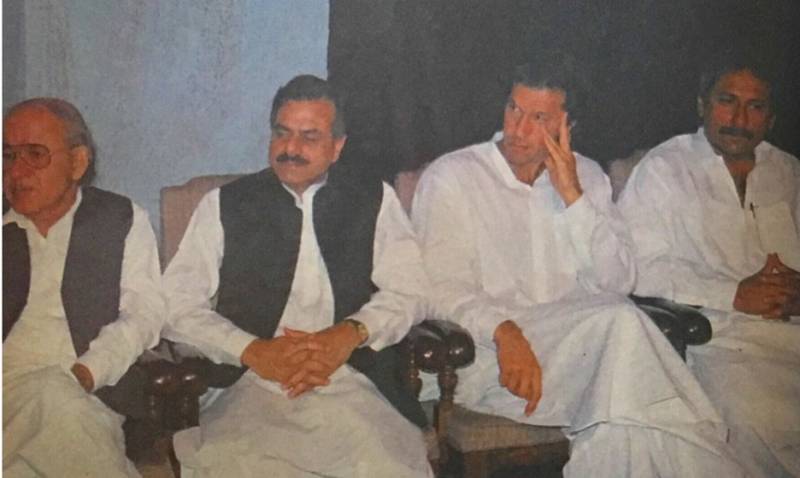
Interestingly, while some of the party’s founders described the PTI as a "centre-left" outfit, Khan himself looked elsewhere for inspiration. He professed a deep admiration for the revolutionary Iranian sociologist Ali Shariati. In November 1996, the political landscape shifted once more when Benazir Bhutto’s second government was dismissed by her own hand-picked president. Khan and the PTI immediately began preparations for the general elections scheduled for February 1997.
Positioning itself as a "third force" and a viable alternative to the PPP and the PML-N, the PTI struggled to gain traction. Khan found himself unable to draw the vast crowds that had famously supported his charity campaigns in the early 1990s. The small audiences that did gather appeared confused by his platform. He often seemed nervous and inarticulate.
During one speech, he declared that his would not be a small campaign due to a lack of funds, yet he simultaneously assured the media that his party was poised for a landslide victory. This served as an early political example of the outlandish claims and psychological tactics he had once successfully deployed as captain of the national cricket team.
As he progressed, Khan developed a narrative that initially lacked cohesion, shifting through various themes until he finally settled on the concept of "justice." He promised that his party would implement sweeping judicial reforms, ensuring that the poor could receive instant redress from the courts. This became his central rallying cry, sparking a burst of euphoria within the party.
However, the result of the 1997 election was a crushing blow. The PML-N swept to power with a two-thirds majority, while the PTI failed to secure a single seat, capturing a mere 1.% of the total vote. Khan suffered a personal defeat as well, receiving only 4,595 votes in a constituency in his hometown of Lahore.
As the party shrank and rumours of his political retirement began to circulate, a dramatic turn of events in October 1999 provided a lifeline. When Nawaz Sharif’s government was toppled in a military coup by General Pervez Musharraf, Khan rebounded by vocally hailing the ouster.
Musharraf was a self-confessed fan of Khan; or, more specifically, Khan the cricketer. In his 2006 autobiography, Musharraf recounted that while he frequently met and entertained the former captain, he was often taken aback by his political outlook. According to Musharraf, with both Nawaz Sharif and Benazir Bhutto driven into exile and out of the political picture, Khan insisted that he should be "made" Prime Minister. Musharraf, however, advised him to wait until fresh elections were called in 2002.
Musharraf observed that Khan frequently sounded like a confused individual, espousing ideas one might typically expect from a member of an Islamist party. This mindset was the product of a transformation Khan had undergone since his retirement from cricket. Having become convinced that divine intervention alone had rescued his team during the 1992 World Cup, he sought out Islamic scholars who began to draw him back toward the faith.
In his later writings, Khan confessed that there had been a period in his life when he was on the verge of adopting atheism. However, his post-retirement rhetoric increasingly became a hodgepodge of political Islam, anti-colonialism, and socialism, all filtered through a romanticised vision of a "perfect Islamic State" modelled on 7th-century Arabia.
These musings were a collection of half-digested ideas, borrowed intermittently from the works of Abul Ala Maududi, Ali Shariati, Muhammad Iqbal, and Noam Chomsky. Most of these concepts were plucked out of context and blended with a newfound interest in Sufism. Musharraf thought that Khan was better suited to being a member of Maududi’s Jamaat-e-Islami than a national leader.
Despite this, the PTI entered the 2002 elections with significant fanfare and hope. By then, the political landscape had been reshaped by Musharraf, who had facilitated the formation of the PML-Q. Supported by the full weight of the state machinery, the PML-Q secured the highest number of seats in the 2002 elections, while the PPP surprised pundits by finishing second.
The Muttahida Majlis-e-Amal (MMA), an alliance of Islamist parties, took third place, establishing a stronghold in the North-West Frontier Province (now Khyber Pakhtunkhwa). In stark contrast, the PTI’s performance was abysmal. The party managed a mere 0.72% of the total vote, securing only a single seat.
Despite his party's failure, Khan managed to enter Parliament by winning his individual seat in Mianwali, Punjab. This electoral setback triggered a sudden pivot in his politics, as he turned sharply against the Musharraf administration. His political relevance was largely sustained by Musharraf’s own media liberalisation policies, which led to a surge in private news channels.
The Talking Head
Khan became a ubiquitous presence on political talk shows, finding a new platform just as the tide began to turn against the Musharraf regime following the devastating 2005 earthquake and an increase in Al-Qaeda-linked militancy. Critics used these channels to accuse Musharraf of playing a "double game", targeting certain militants to satisfy international allies while allegedly sheltering others for strategic use in Kashmir and Afghanistan.
Khan championed the view that Musharraf was only pursuing militants because the United States was bankrolling Pakistan’s involvement in the post-9/11 "War on Terror." Adopting the persona of a staunch anti-colonialist, Khan argued that the only way to resolve the country's security crisis was to exit the American-led conflict entirely. This stance aligned him closely with the Islamist parties of the MMA, particularly the Jamaat-e-Islami (JI).
This burgeoning alliance was on full display during a 2006 broadcast on Geo TV, where Khan praised the JI as the country’s "cleanest and most democratic party." His claim was immediately challenged by a PPP representative, who reminded him that the JI had been a key partner in General Zia’s first cabinet and had overseen the recruitment of fighters for the Afghan insurgency on the behest of the US.
Khan became a celebrated talking head on television. While the PTI remained a marginal force, his personal charisma and populist rhetoric ensured he was a constant presence on talk shows. He raged against the Musharraf regime, characterising it as a "puppet" of the United States and accusing it of attempting to impose "Westernisation" and modernity in Pakistan.
Interestingly, since he was now seated on the opposition benches alongside the PML-N and the PPP, his criticisms of the two mainstream parties became noticeably sparse. During this period, he also became a vocal critic of ‘blasphemy’ incidents in the West.
Khan consistently framed the escalating atrocities committed by militant Islamists not as inherent extremism, but as a direct consequence of the "neo-imperialist" policies of the US and its "enslaved" Muslim allies. In 2007, the PTI joined the All Parties Democratic Movement (APDM) following the eruption of the "lawyers’ movement" against Musharraf. Although the PPP was active in the protests, it declined to join the APDM.
Khan found it difficult to compete for media attention with Nawaz Sharif and Benazir Bhutto, who, upon their return from exile, were greeted by thousands of supporters, dwarfing any crowd Khan could muster.
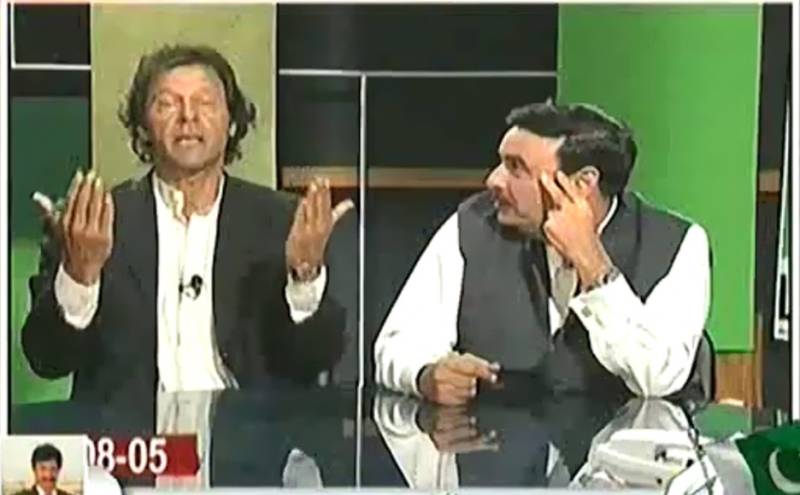
As Musharraf announced new elections for early 2008, the APDM initially called for a boycott unless the President resigned. However, Benazir Bhutto persuaded Nawaz Sharif that such a move would be disastrous, as it would allow Musharraf to fill the assemblies with pro-government loyalists.
Consequently, the PML-N and the Pashtun nationalist Awami National Party (ANP) withdrew from the APDM to contest the polls. Khan, however, remained steadfast in his decision to boycott, as did the Jamaat-e-Islami. Ironically, the JI was still part of the MMA government in the NWFP at the time. With polls predicting a total rout for the MMA due to its poor governance in NWFP, the JI used the boycott as a convenient exit strategy, while publicly maintaining that their absence was a principled stand against Musharraf.
Khan sought to remain relevant by throwing himself into the lawyers’ movement. Yet, the Musharraf regime never truly viewed him as a credible threat. Musharraf’s primary concerns remained Benazir Bhutto and Nawaz Sharif, both of whom had begun to draw immense crowds.
In October 2007, Bhutto narrowly survived an assassination attempt when suicide bombers attacked her homecoming rally in Karachi, killing at least 180 people and injuring over 500. In the aftermath, she pointedly hinted that Islamist extremists were being instrumentalised by Musharraf’s intelligence agencies to eliminate her. Bhutto had previously vowed that, if elected, she would dismantle all militant groups, ending the alleged policy of propping up certain factions while targeting others.
Tragedy struck on 27 December 2007, when an assassin and a suicide bomber targeted Bhutto as she departed an election rally in Rawalpindi. The attack claimed over 130 lives, including her own. Her husband, Asif Ali Zardari, accused the Musharraf administration of criminal negligence regarding her security. Nawaz Sharif, her one-time bitter rival, rushed to the hospital and was visibly distraught as he addressed the media.
In contrast, Khan’s response to the tragedy was lukewarm and sparked significant controversy. He stopped short of a full condemnation of the murder, suggesting instead that Bhutto should have exercised greater caution given the known threats against her. Following her survival of the first attack in October, Khan had even insisted that the incident was her own fault.
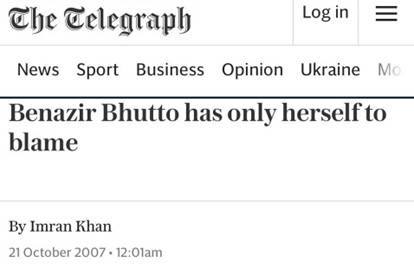
The 2008 elections were subsequently won by the PPP, now under Zardari’s leadership, with the PML-N securing the second-largest share of seats. After briefly forming a coalition to force Musharraf’s resignation, the two parties fell out. Zardari then assembled a new coalition with the MQM and the ANP. Yousaf Raza Gillani was elected Prime Minister, and Zardari succeeded Musharraf as President.
The new administration inherited a fractured economy and a terrifying surge in terrorism, primarily driven by the newly formed Tehreek-e-Taliban Pakistan (TTP). To complicate matters, the populist Chief Justice, Iftikhar Chaudhry, frequently hampered the government by interfering in parliamentary affairs and entertaining almost every petition filed against the regime.
The new military chief, General Ashfaq Parvez Kayani, was initially hesitant to aid the Zardari regime in its struggle against Islamist militants. He only sanctioned decisive action in 2009, when the TTP occupied Swat and threatened to march on Islamabad, a mere 201 km away. While the militants were eventually cleared from Swat, many retreated to the rugged tribal areas or established covert cells in major cities.
Relations with the United States, which had been relatively stable under Musharraf, plummeted during Kayani’s tenure as COAS. This transition frustrated the Zardari administration, which remained desperate for US aid to halt an economic decline that had begun in 2006/7.
Kayani, conversely, viewed the US as attempting to manipulate Zardari into compromising Pakistan's strategic interests in exchange for financial support. In 2011, amidst peak militant violence and economic turmoil, Imran Khan made the audacious claim that he would hold "Pakistan’s largest-ever political rally" in Lahore.
While many dismissed him as a maverick, it became increasingly clear that he was being propped up by the military establishment, allegedly through the then-ISI chief, Lieutenant General Shuja Pasha. Khan, already a regular fixture on television, served as a primary mouthpiece for the establishment’s narrative against Zardari. Khan echoed Pasha’s stance, arguing that domestic terrorism was merely a byproduct of the US presence in Afghanistan, and drone strikes on the border.
The Making of a Constituency
Musharraf had successfully cultivated a constituency among the urban middle classes. Pasha cleverly diverted this demographic toward Khan, moulding him as a civilian replacement for the former dictator. To demonstrate their commitment to his ‘planned’ rise, the military establishment shared a concocted conspiracy with Khan involving Pakistan's ambassador to the US, Husain Haqqani.
During his Lahore rally, which, indeed, was large, Khan "revealed" that Haqqani was lobbying the US government to neutralise the Pakistan military. The media and the PML-N jumped on the bandwagon, forcing Zardari to dismiss Haqqani. Veteran commentator Najam Sethi was one of the few to see through the ruse. It was an utter farce and no evidence was ever found.
Leading up to the 2013 elections, both Khan and the PML-N attacked the PPP as "corrupt US stooges" who were murdering their own "brothers", a term they used for the Islamist militants who had by then already killed over 40,000 Pakistanis.
Khan insisted the militants were merely "misguided brothers" who required dialogue rather than force. However, the election results shocked Khan. The PML-N swept the polls, leaving the PTI in third place. Within a year, Khan began claiming the election was rigged, despite having previously approved the interim administration.
When the courts and the Election Commission found no evidence of foul play, Khan launched a sit-in in Islamabad. By this time, General Raheel Sharif had become the army chief and Zaheer-ul-Islam the head of the ISI. Rumours circulated that the ISI was compelling industrialists to fund the sit-in while pushing media anchors to amplify Khan’s narrative. This political theatre was halted only by the horrific 2014 TTP attack on an army school in Peshawar, which killed over 140 people, mostly children.
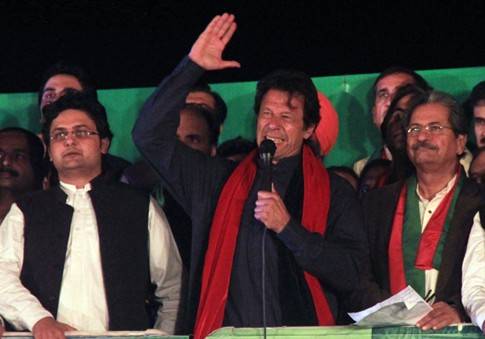
General Raheel, facing pressure from his own ranks, finally arm-twisted a hesitant Nawaz Sharif and a staunchly anti-operation Khan into signing a consensual agreement for a military offensive. Khan eventually relented, but only after promising his supporters he would return to topple Nawaz.
The resulting operation eliminated thousands of militants over two years. Despite its success, Nawaz Sharif, wary of Raheel due the ISI’s support for Khan, refused to grant the General an extension, marking yet another chapter in the volatile relationship between Pakistan’s civilian and military leadership.
Nevertheless, by 2017, a recovering economy and a noticeable decline in terrorism saw Nawaz in a relatively secure position, gradually shifting the PML-N’s ideological stance from the centre-right towards the centre. However, in April 2016, the release of the "Panama Papers", a massive leak of documents detailing offshore wealth held by global elites, provided Khan with the perfect opportunity to reboot his campaign.
Although Nawaz's own name did not appear in the documents, some members of his family were mentioned, which was enough for Khan to ignite a fresh political firestorm. The first indication that the military establishment remained interested in ousting Nawaz came when Raheel Sharif issued a statement urging a thorough investigation into the allegations.
Seizing the moment, Khan announced he would take the matter to the Supreme Court, demanding an inquiry into the Prime Minister himself. Khan threatened to storm Islamabad and forcibly remove Nawaz from power. In 2017 Nawaz appointed General Qamar Javed Bajwa as the new military chief. However, the Supreme Court disqualified Nawaz and removed him from office.
Khan's Core Constituencies
| Segment | Primary Motivation | Core Characteristic |
|---|---|---|
| Urban Professionals | Meritocracy & Efficiency | Seek a "corporate-style" governance to bypass traditional political systems. |
| Lifestyle Liberals | Modernist Image | View the leader as a culturally relatable, Westernised figure despite conservative policies. |
| Religious Nationalists | Identity & Sovereignty | Driven by the promise of an "Islamic Welfare State" and anti-colonial rhetoric. |
| Global Diaspora | Cultural Authenticity | Seek a sense of national pride and a "pure" identity while living abroad. |
Summary:
-
-
-
- Ideological Diversity: The support base is not a single unit but a coalition of groups ranging from secular cosmopolitans to religious conservatives
- Common Thread: Despite their differences, these segments are unified by a shared rejection of the traditional Pakistani political parties
- The "Strongman" Appeal: A recurring theme is the desire for a decisive leader who can implement reform through direct authority rather than slow-moving democratic consensus
-
-
While many legal experts criticised the verdict as a stretch of judicial authority, Khan rejoiced. Curiously, although the Supreme Court had been investigating the Panama Papers for evidence of Nawaz’s involvement in offshore accounts, no such link was ever established. Instead, in a decision that stunned the legal community, the judges dismissed him for failing to declare a salary from his son’s business in the UAE; a salary his lawyers insisted he had never actually withdrawn.
Nawaz was gone, but the PML-N government remained intact under a new PML-N Prime Minister. Khan, however, claimed full credit for the ouster and once again began predicting a landslide victory for his party in the 2018 elections. With the military establishment, the judiciary, significant portions of the media, and a growing urban middle-class constituency all seemingly aligned with his interests, the stage was set.
In Power
Yet, despite this, PTI failed to win a clear majority. Khan was forced to stitch together a fragile coalition with smaller parties and independents, many of whom had been reportedly coaxed into the alliance by the military establishment. Major opposition parties, including the PPP, PML-N, and JUI lamented the overt role played by the military and judiciary in engineering Khan’s ascent. Khan, however, remained unperturbed, secure in the knowledge that no opposition force was powerful enough to dislodge a regime that enjoyed such explicit institutional backing.
Rather than a statesman, he began to behave like a jilted lover, unable to reconcile with the fact that those who had constructed him had ultimately dumped him
As the military establishment and technocrats took control of foreign policy and the finance ministry, Khan focused his energy on cultivating his image as a relentless crusader against ‘corruption.’ He mobilised state agencies to target his rivals, leading to a series of high-profile arrests that kept the opposition entangled in endless court proceedings.
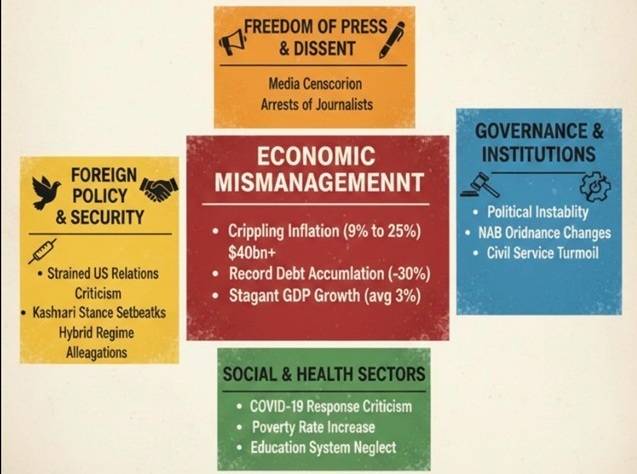
Meanwhile, as the economy faltered, the military urged Khan to seek an IMF bailout. He stalled, naively believing he could bridge the financial gap through donations from overseas Pakistanis. By the time he finally relented and approached the IMF, the economy was already in a downward spiral.
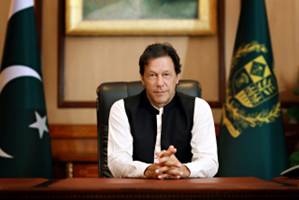
Throughout his nearly four-year tenure, Khan’s administration appeared incompetent and volatile. He responded to mounting crises by leaning into the persona of a besieged hero. His lack of diplomatic tact strained vital relationships with the US, Saudi Arabia, the UAE, and even China. The military establishment, having invested so much in his ascent, began to worry. They belatedly realised that the man they had propped up was too erratic to govern effectively. This raised questions about the military's own foresight.
Asif Ali Zardari was quick to exploit this growing institutional nervousness. He formed the Pakistan Democratic Movement (PDM), a broad opposition alliance including the PML-N and JUI-F, with the strategic goal of distancing the military from Khan. Once the "neutrality" of the establishment was secured, Zardari planned to oust Khan through a no-confidence motion.
While Nawaz Sharif and JUI’s Fazalur Rehman initially favoured resigning from the National Assembly, a move that Zardari considered a tactical error, they eventually found common ground. The momentum shifted in mid-2021 when the military replaced the staunchly pro-Khan ISI chief, Faiz Hamid, with Nadeem Anjum. Khan’s attempt to block this appointment permanently soured his relationship with General Bajwa.
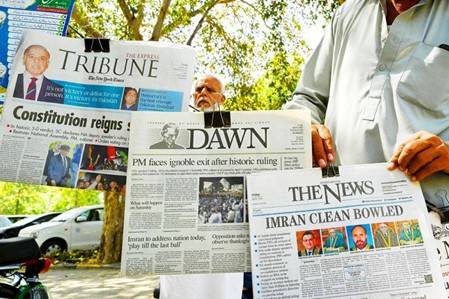
By April 2022, the PDM had secured the necessary numbers. Even 48 hours before the vote, Khan remained convinced he would survive. On the day of the motion, he instructed the Speaker to delay proceedings. As the deadlock stretched into the night, the pressure became physical: A military helicopter hovered over Khan’s residence, and police vans arrived at the assembly. Faced with the resignation of the Speaker and Deputy Speaker, an acting chair eventually held the vote. Khan was ousted.
Khan has been both adored and ridiculed for his "audacious claims." These included promises to:
- Transform Pakistan into a country where citizens of wealthy nations would seek work
- Make the Pakistani passport one of the world's most powerful
- Recover billions in offshore wealth, and provide millions of homes and jobs
- Create a welfare state that blended Scandinavian social security with the principles of the 7th-century Caliphate
As Prime Minister, he came nowhere near fulfilling these lofty ambitions. Furious at his removal, Khan fell back on his old tactic of incredible claims, alleging a US-led conspiracy involving the opposition and the military. He threatened a "long march" of millions, but when the evidence failed to materialise and the crowds proved smaller than promised, the tactic faltered. He was forced to backtrack, leaving his re-energised supporters stranded, while a litany of corruption allegations began to surface involving himself, his third wife, her relatives, and his own ministers.
Jilted
While Khan’s admirers maintain that Pakistan has never seen a political leader quite like him, others are convinced he is one of the most self-destructive figures in the country's political history. He began his premiership with every possible advantage: a global profile and immense charisma that were systematically nurtured by a powerful military establishment. They marketed him as an incorruptible, ultra-patriotic visionary destined to create a "Naya Pakistan" (New Pakistan), purged of the "degenerate" influence of the PML-N and the PPP. A tremendous amount of planning went into using state institutions, and social, electronic and print media to frame him as a messianic character, particularly for the urban and peri-urban middle classes, who now constitute nearly 40% of the population.
The objective was to engineer a "hybrid regime" fronted by an iconic, "handsome" figure ‘handled’ by those who had manufactured his political rise. His opponents were systematically demonised, and the military and judiciary worked tirelessly to keep his government afloat despite its increasing incompetence.
Yet, Khan was unable to convert these advantages into lasting success. As Prime Minister, he became a volatile mixture of ego, complacency, and outlandish outbursts that frequently left his mentors embarrassed. Following his ouster in April 2022, he successfully regenerated his popularity, but he treated this new wave of support with the same recklessness that had defined his time in office.
Showing no patience for a strategic waiting game, Khan set about burning his boats by lashing out at his former creators. Rather than a statesman, he began to behave like a jilted lover, unable to reconcile with the fact that those who had constructed him had ultimately dumped him.
His actions increasingly aligned with what the late scholar Arnold Beichman termed the "anti-leader." Beichman described this type as a charismatic politician who subverts himself and, in doing so, seeks the subversion of an entire society.
According to Beichman, the anti-leader is an individual who evokes grand memories even as he/she sounds an uncertain trumpet for a foredoomed charge. Constantly flirting with self-destruction, the anti-leader live their private nightmares in public view, often planning their own defeat even while winning. The anti-leader requires the limelight to demonstrate a daily destructiveness, yet in their own mind, their every word and deed remains fundamentally moral.
Khan’s politics, both during his premiership and after his removal, matches these characteristics. While his early life as a celebrity cricketer and "playboy" fit the archetype of a sybaritic socialite, his political persona evolved into that of an anti-hero of sorts: a flawed, conflicted figure whose charisma is derived from his non-conformity. Realising that his outsider status drew the loudest cheers, Khan became one-dimensional and self-indulgent, self-mythologising his refusal to play by the rules.
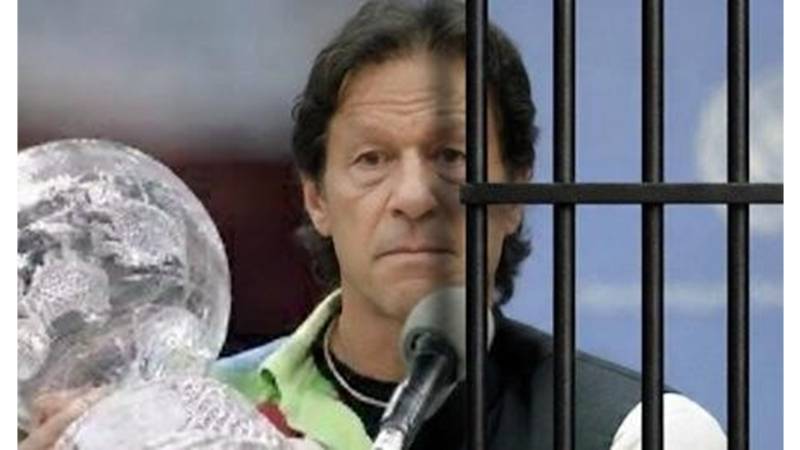
Where mainstream politics demands pragmatism and flexibility, the anti-leader moves in the opposite direction. Having spent years getting away with digressions that would have ended other careers, Khan developed a sense of invincibility. He remained in denial even as his ouster became a certainty, believing he was irreplaceable to a military establishment that was, in fact, already cutting him down.
Instead of negotiating to safeguard his position, he plunged into a posture of defiance that state institutions eventually view as an existential threat. It was an exercise in indulgence, one that created excitement but was ultimately self-destructive, threatening to pull the rest of society down with him.
Charges and Convictions
| Case Name | Sentence | Current Status |
|---|---|---|
| Toshakhana (Latest) | 17 Years | Active (In Prison) |
| Al-Qadir Trust | 14 Years | Active (In Prison) |
| Cipher Case | 10 Years | Acquitted (June 2024) |
| Iddat Case | 7 Years | Acquitted (July 2024) |
| Toshakhana (1st & 2nd) | 3 & 14 Years | Suspended |
| 9 May Riots | Multiple | Ongoing Trials / Bail Granted in some |
Conclusion
This exploration of Imran Khan’s journey, from the triumphs of cricket to the volatile climax of his political career, reveals a narrative defined by the blurring of lines between myth and reality.
Tactics and mindset which served him so brilliantly on the cricket pitch, became his ultimate undoing. By framing himself as a messianic outsider in politics, he captured the imagination of a burgeoning middle-class, yet the same uncompromising ego that fuelled his rise eventually alienated the very institutions that had facilitated his ascent.
The current military establishment and the regime are systematically dismantling the fielding that Khan’s now erstwhile makers had set in the judiciary, media and within the military itself, to plot his rise.
Ultimately, Khan’s story serves as a profound case study in the nature of modern populism and the "anti-leader" archetype. His is a failure grand tragedies are made of.