

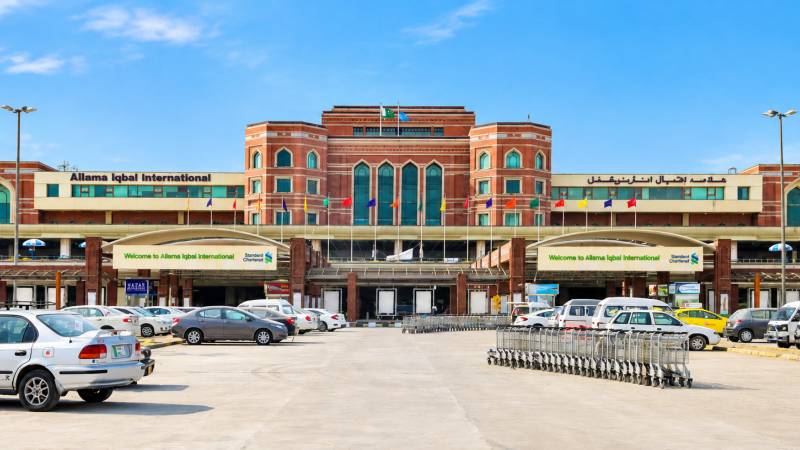
Air travel is one of the defining, romanticized rituals of the 21st century. I vividly recall boarding my first long-haul flight to the United Kingdom in 2007 from Lahore’s Allama Iqbal International Airport. My departure from Lahore was unremarkable, but my arrival at Manchester Airport delivered a profound shock. Visiting a developed, "first-world" nation for the first time, I expected a high-tech, futuristic aviation hub. Instead, Manchester Airport resembled an enlarged, glorified bus stop. The corridors were dimly lit, the infrastructure was bare-bones, and the overall experience was underwhelming. On the taxi ride to our accommodation, a wave of unexpected civic pride washed over me. In Lahore, we possessed a cleaner, grander, and vastly superior airport than a major industrial hub in the United Kingdom.
The Lahore airport as we know it today was born out of the Nawaz Sharif government’s ambition in the late 1990s to modernize an outdated setup that had served the city since 1962. A multi-billion rupee overhaul yielded an entirely new passenger terminal, modern boarding bridges, and expanded parking over a vastly larger footprint. When operations commenced in 2003 under President Pervez Musharraf, the facility stood as the benchmark for Pakistani aviation - a clean, spacious, and efficiently managed infrastructural showcase. Two decades later, however, that legacy has crumbled into systemic dysfunction, leaving travelers to navigate a facility severely outmatched by modern demand.
I first noticed the decay a decade ago during routine pickup runs, spending endless fuel circling a jammed complex in search of parking. While the aviation authority eventually mitigated this by commissioning a basement structure and expanding the overhead parking lot, a far more severe structural flaw emerged: intense arrival-hall gridlock during peak hours. The airport operates just a single functional terminal for all incoming international and domestic flights - with the Hajj terminal reserved exclusively for seasonal use. This single-roof bottleneck, compounded by the surge in overseas migration, creates an unbearable crisis at the exit gates. The heat becomes suffocating and the air unbreathable, driven largely by an unmanaged social culture where extended families arrive thirty-strong - spanning three generations - to welcome a single passenger. Adding to this absurdity is the performative nature of gate security. While small, urban families face immediate friction, endless questioning, and delays for simply having two people in a car, security routinely looks the other way as massive crowds packed into vans stream inside without resistance. While a hard cap of two receivers per vehicle seems ideal, it risks creating massive tailbacks at the outer checkpoints as security gets bogged down in endless arguments. A more effective financial lever would be implementing a per-person entry ticket on top of standard parking fees - priced high enough to discourage large entourages, yet low enough to remain negligible for rule-abiding citizens.
The departure terminal suffers from this same operational breakdown. Dropping off a family member - a process that should take two minutes - frequently stretches into an hour-long ordeal. Unregulated vehicles park indefinitely along the drop-off lanes while large crowds loiter around the departure halls, creating artificial gridlock that punishes rule-abiding citizens trying to make a swift exit. A possible solution is the establishment of an off-site transport and staging complex on the underutilized land immediately outside the airport boundary. Under this setup, non-passengers and private vehicles would be restricted from approaching the departure curbside directly. Instead, a dedicated shuttle fleet would transfer departing passengers to the terminal gates, categorized to maintain order: standard family shuttles, dedicated women-and-children units, single-passenger express vans, and accessible transports for senior citizens - alongside a contingency loop for aborted departures. Moving the secondary crowd away from the departure zone offers a practical way to restore operational speed to the terminal itself.
Beyond physical congestion, the operational culture inside the airport further degrades the traveler experience. Arriving passengers are greeted by excruciatingly slow baggage carousel operations, alongside a persistent culture of excessive questioning and redundant checkpoints. This friction is compounded by a visually hostile atmosphere dominated by guards heavily armed with automatic weapons. Rather than reassuring travelers, this high-pressure environment intimidates visitors and foreign tourists - standing in stark contrast to international aviation hubs where security is integrated discreetly to maintain a welcoming, efficient environment.
While state authorities have significantly improved outer connectivity by linking the complex to the Ring Road network, the immediate approach and exit routes remain severely compromised. The access road to the main gate is frequently poorly illuminated or obstructed by barriers, creating unnecessary hazards for night travelers. Departing the complex presents a similar hurdle: poorly positioned directional signage routinely confuses even frequent visitors, forcing drivers onto incorrect Ring Road loops or adjacent service lanes. Rectifying these issues does not demand capital-intensive infrastructure projects; they are straightforward, administrative fixes that require only basic civil oversight to elevate the passenger experience.
The Lahore airport was once the pride of Pakistani aviation, but two decades later, its operations have degraded into the operational chaos of an unregulated mela. Resolving this decline does not require pouring billions of taxpayer rupees into concrete mega-projects or entirely new terminal construction. Instead, it demands low-cost, high-impact administrative governance, implementing smart spatial management, economic disincentives for overcrowding, and basic operational oversight to restore dignity, speed, and efficiency to Lahore’s primary gateway.