

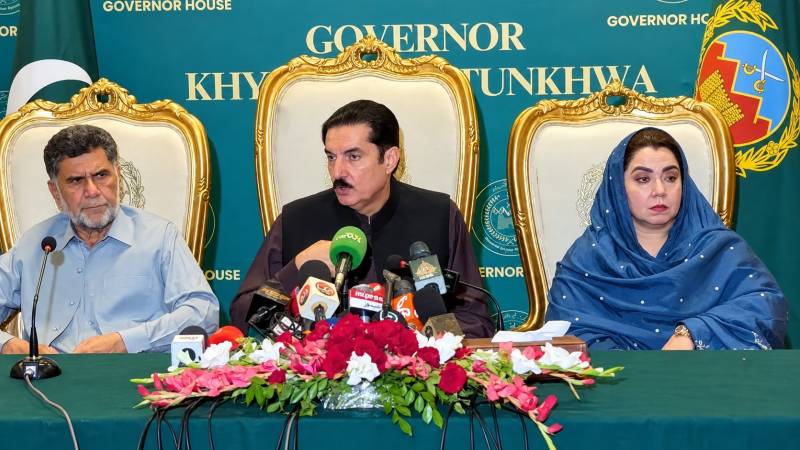
Pakistan’s decision to impose an emergency and Governor’s Rule in Khyber Pakhtunkhwa is not simply an administrative response to terrorism. It is a consequential political intervention in a province governed by Imran Khan’s Pakistan Tehreek-i-Insaf (PTI), the principal opposition party at the federal level. The decision must be judged on three grounds: whether the constitutional conditions have been met, whether the intervention can improve security, and what it means for a federation already strained by conflicts over power, representation and provincial autonomy.
The security threat is real and cannot be dismissed as a political pretext. But the timing is equally difficult to ignore. The intervention came amid a deepening confrontation between the federal government and PTI, including preparations for a march on Islamabad demanding Khan’s release. Hundreds of PTI activists and members of Khan’s family have reportedly faced detention as the confrontation has escalated. On the day the proclamation was issued, PTI said Chief Minister Sohail Afridi, who was leading the march, and the party’s provincial president Junaid Akbar had been taken into custody. The government has not confirmed either arrest, though Minister of State for Interior Talal Chaudhry acknowledged that some people had been detained. Telecom services were suspended in Peshawar. The government denies that its decision is intended to suppress political opposition. Yet the circumstances inevitably raise questions about whether security and political objectives have become entangled.
Interior Minister Mohsin Naqvi has said the federal government spent more than a month trying to secure cooperation from the KP administration and that counterterrorism requires a unified national approach. Law Minister Azam Nazeer Tarar cited Interior Ministry reports of a 196 per cent increase in terrorism and extremism incidents over the past two to two and a half years. Information Minister Attaullah Tarar has alleged that the PTI government in KP was ‘hand in glove with terrorists’ and that police stations in some districts had been ‘sublet to the Taliban’, and says ‘irrefutable proof and evidence’ is available. He cited Intelligence Bureau and law enforcement reports but made none of it public. These are serious claims. If the evidence is irrefutable, it should be placed before Parliament and subjected to independent scrutiny. A sharp increase in attacks establishes the gravity of the security crisis; it does not, by itself, prove that an elected government has ceased to function constitutionally.
The scale of the violence is alarming. Security assessments recorded militancy-related incidents across 24 to 27 of KP’s districts in 2025, depending on the database and its definitions. The TTP and allied groups have been particularly active in the former tribal districts and adjoining southern districts, including North and South Waziristan, Bannu, Tank, Lakki Marwat and Dera Ismail Khan. Their operations have spread beyond their traditional strongholds. There have been reports of roadblocks, intimidation and militant movement in areas where the state’s presence is weak.
But a district in which attacks occur is not necessarily a district controlled by the TTP. Nor should the presence of armed groups be confused with the disappearance of all state authority. Precision matters because the government must explain what it means when it claims that the provincial administration has lost control. Which districts, institutions or functions have become ungovernable? What specific failures of cooperation have occurred? What will the federal intervention do differently?
The KP government has argued that Islamabad has excluded it from important security decisions and that counterterrorism policy cannot succeed without provincial consultation. The provincial assembly has previously called for consultation before major military operations, while local opposition to operations has reflected fears of civilian casualties, displacement and the economic destruction of communities already battered by years of conflict. The choice is not between doing nothing and suspending an elected government. Effective counterterrorism requires intelligence, policing, prosecution, coordination with local communities and a political strategy that can command public confidence.
Pakistan’s long history of centralisation
Pakistan’s tensions between the Centre and the provinces did not begin with Ayub Khan or Zulfikar Ali Bhutto. They were present from the country’s earliest days. The dismissal of Dr Khan Sahib’s Congress-affiliated ministry in the then North-West Frontier Province in August 1947, the disputes surrounding the accession of Kalat in 1948, the separation of Karachi from Sindh and the early conflict over the status of Bengali all reflected a deeper struggle over the distribution of power and the political character of the new state. The history of Kalat remains contested. The ruler asserted independence in August 1947, and the state’s accession to Pakistan followed in March 1948 amid pressure and disagreement over the circumstances. Whatever interpretation one adopts, the episode became part of Baloch political memory and continues to inform debates about autonomy, consent and the legitimacy of federal authority.
Sindh offers another instructive example. Ayub Khuhro, the province’s first chief minister, was dismissed in April 1948 amid allegations of maladministration and corruption. That first dismissal was not followed by Governor’s Rule. Khuhro returned to office in March 1951, but after his second dismissal in December that year, Governor’s Rule remained in place until May 1953, when Pirzada Abdul Sattar became chief minister. Khuhro returned for a third term in November 1954, before the One Unit scheme abolished the separate provincial structure of West Pakistan in October 1955. These distinctions matter. Pakistan’s history should not be reduced to a succession of identical interventions, and individual dismissals had different circumstances and justifications. The broader pattern, however, is unmistakable: central authorities repeatedly treated provincial political arrangements as subordinate to their own priorities.
Governor’s Rule was also imposed in Punjab in 1949 following the dismissal of Nawab Iftikhar Hussain Khan of Mamdot. In Balochistan, Bhutto’s dismissal of the elected National Awami Party government led by Sardar Attaullah Mengal in 1973 was followed by a prolonged and devastating conflict. The dismissal of the provincial government in the then NWFP in 1975 further intensified political confrontation. Governor’s Rule returned to the NWFP in 1994 against Pir Sabir Shah’s government, to Punjab in 2009 against Shahbaz Sharif’s, and to Balochistan in 2013, when Aslam Raisani’s government was dismissed after the Hazara bombings in Quetta. These later interventions showed that the practice was not confined to one party or one period. The lesson is not that every federal intervention is necessarily illegitimate. It is that the repeated use of central authority to resolve political disputes can weaken trust in the federation. When a province’s voters believe their choices can be overridden whenever they elect a party disliked by the Centre, constitutional government begins to look conditional rather than secure.
Pakistan cannot defeat militancy through security operations alone, and it cannot build a stable federation by treating political opposition as a security problem.
What the Constitution permits
The current measures invoke Articles 232 and 234 of Pakistan’s Constitution. These provisions are distinct. Article 232 concerns a proclamation of emergency under specified conditions, including internal disturbance beyond a provincial government’s power to control. Article 234 addresses a failure of constitutional machinery in a province and provides for the assumption of provincial executive functions and the exercise of provincial legislative powers within constitutional limits.
The federal government has announced that the provincial government’s powers have passed to the governor, with an 11-member advisory council assisting him. It has also announced a separate secretariat under the governor and chief secretary to administer 12 districts directly under the federation, alongside the deployment of troops under Article 245 to assist the civil administration. By Naqvi’s own account, the provincial side had agreed in the first round of talks to an emergency in those 12 districts. If a narrower arrangement was on the table, the government must explain why it suspended the elected government across the whole province. These arrangements make it especially important to explain the intended scope of federal control, the division of responsibilities and the route back to elected government.
A proclamation under Article 234 must be approved by a joint sitting of Parliament within two months, may be extended two months at a time, and cannot remain in force for more than six months. Article 232 sets a stricter test. Since the 18th Amendment, an emergency imposed because of internal disturbance requires a resolution of the provincial assembly concerned, and the PTI-controlled KP Assembly has passed none. Where the President acts on his own, the proclamation must be approved by each House of Parliament within ten days. The government says the President acted on the Prime Minister’s advice; whether that satisfies the Constitution will have to be settled by the courts. Sessions of the National Assembly and the Senate have been summoned for Tuesday. Invoking these provisions is not proof of illegality, but neither does a proclamation establish that every constitutional condition has been satisfied. Parliament and the courts must be able to examine the government’s reasoning and evidence.
Former prime minister Shahid Khaqan Abbasi has criticised the intervention on X and argued that the matter should have been debated in Parliament. He had warned last December, when Governor’s Rule was first floated, that it would be ‘an extreme step’, and that if poor governance justified it in KP, the same logic would apply to other provinces. PTI chairman Barrister Gohar Ali Khan has called it ‘an extremely alarming and grave political mistake and an undemocratic measure’, warning that neither peace nor stability can be achieved by creating conflict between the federation and the province. Jamiat Ulema-e-Islam (Fazl) chief Maulana Fazlur Rehman, who says the government had asked him to mediate with PTI, rejected the decision ‘word for word’ and asked why, if security was the test, Balochistan, where he says the situation is worse, has not faced Governor’s Rule. The Tehreek-i-Tahafuz-i-Ayin-i-Pakistan has condemned the move and said it will challenge it through the courts, assemblies and public forums. Governor Faisal Karim Kundi, by contrast, has defended the intervention as necessary to establish peace in the province.
These are competing political positions, not substitutes for constitutional adjudication. The government should disclose the evidence for its allegations, explain why less intrusive alternatives were inadequate and establish measurable objectives for the intervention. If the provincial administration has obstructed counterterrorism, the evidence should be made public to the extent consistent with operational security. If there has been a failure of constitutional machinery, the government must explain precisely what has failed.
India’s experience
India’s Article 356 allows President’s Rule when a state government cannot be carried on in accordance with the Constitution. The Union government assumes state executive functions, while Parliament exercises the powers of the state legislature. The provision has been used repeatedly in India’s history, often amid fierce partisan conflict. In 1959, the elected Communist government in Kerala was dismissed. In 1977, after the Janata Party came to power at the Centre, nine Congress-led state governments were dismissed. In 1980, Indira Gandhi’s returning government dismissed nine state governments associated with the Janata Party. President’s Rule was also imposed for extended periods in Punjab during the militancy of the 1980s and early 1990s.
Jammu and Kashmir illustrates the profound consequences that can follow the collapse of representative government. After the BJP withdrew from its coalition with Mehbooba Mufti in June 2018, Governor’s Rule was imposed, followed by President’s Rule in December. In August 2019, the Indian government revoked Jammu and Kashmir’s special constitutional status and reorganised the former state into the Union Territories of Jammu and Kashmir and Ladakh. An elected government returned in Jammu and Kashmir after the 2024 assembly elections.
India’s experience also shows that institutional checks can constrain the misuse of emergency powers. In its landmark 1994 S.R. Bommai judgment, the Supreme Court held that a proclamation under Article 356 was subject to judicial review. Where a government’s legislative majority is in doubt, a floor test is ordinarily the appropriate way to establish whether it retains that majority. The judgment did not eliminate political misuse, but it made clear that the Centre’s decision could not simply be treated as beyond scrutiny. The comparison is not exact: India’s constitutional provisions differ from Pakistan’s, as do the circumstances of individual interventions. Nevertheless, the central lesson is relevant. Emergency powers may be necessary in exceptional situations, but when they become routine instruments for displacing political opponents, they undermine the credibility of the constitutional order they are supposed to protect.
The danger to Pakistan’s federation
The question now is whether Governor’s Rule will make KP more secure or deepen the political alienation that militants can exploit. The federal government has promised a more coordinated response. It should therefore be judged by outcomes: whether attacks decline, civilians and security personnel are better protected, policing and intelligence improve, displaced families can return safely, and local communities regain confidence in the state. The mere removal of an elected cabinet is not a security achievement. There is a wider political danger that Islamabad should not ignore. Pakistan’s ethnic, regional and constitutional fault lines are unusually sensitive. It is worrying that the federal government, dominated by PML-N and PPP—parties with their principal political bases in Punjab and Sindh is now associated with overriding the elected mandate in KP. Balochistan’s situation is not identical, and the PPP’s role in its provincial government complicates any simple claim that the same intervention is occurring there. But Balochistan’s long history of conflict, contested representation and grievances over provincial autonomy makes the perception of unequal treatment particularly consequential.
The political message matters. If people in smaller provinces come to believe that the parties and institutions dominant at the Centre can determine which provincial mandates are allowed to stand, the result will not be greater national cohesion. It will reinforce the belief that power is concentrated elsewhere and that constitutional promises are selectively applied. Pakistan’s experience offers ample warning of the costs of allowing such perceptions to harden into political reality. This is not an argument for excusing provincial governments from their responsibilities. The KP administration must answer legitimate questions about its counterterrorism record, its cooperation with federal agencies and its ability to protect citizens. But accountability should be based on evidence and constitutional procedure, not on the political identity of the government under scrutiny. The same standards should apply to every province and every party.
Pakistan cannot defeat militancy through security operations alone, and it cannot build a stable federation by treating political opposition as a security problem. The federal government must demonstrate that this intervention is constitutionally justified, produces tangible improvements in public safety and leads to a credible restoration of representative government. Otherwise, a measure presented as a response to instability could intensify the regional and political divisions that have repeatedly weakened Pakistan. The ultimate test is not whether Islamabad can take control of KP. It is whether the state can protect its citizens while preserving the legitimacy of the federation. Pakistan’s history shows that centralisation is often presented as the cure for instability. Too often, it has become one of its causes.