

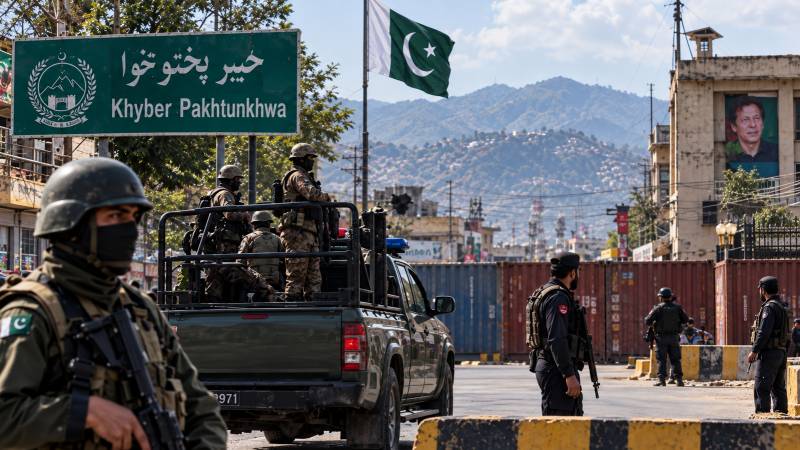
On October 11, the Aiwan-e-Sadr announced that President Asif Ali Zardari had signed the Prime Minister’s advice. According to reports, this advice pertains to Articles 232 and 234 of the Constitution, thereby signaling the commencement of extraordinary measures in Khyber Pakhtunkhwa. The debate that had been simmering for months has shifted from "what if" to "what now." The core question is no longer merely about who holds authority, but whether this step satisfies constitutional mandates and whether it will genuinely make citizens safer.
The security crisis is indisputably real. According to the Pakistan Institute for Conflict and Security Studies (PICSS), 2,786 fatalities associated with militancy and counter-terrorism operations were recorded during the first seven months of 2026. July proved to be the deadliest month of the year, witnessing 606 casualties and eight suicide attacks—the highest monthly toll in over a decade. Beyond the merged districts, fatalities in the settled areas of the province rose to 154 compared to 75 in June. In the face of such grim statistics, claiming that "all is well" is impossible.
The federal government’s argument cannot be dismissed lightly either. The federal cabinet maintains that the provincial government deliberately remained indifferent to the war against terrorism and that the Chief Minister consistently opposed military operations. If the police, intelligence agencies, and the armed forces do not operate in complete alignment, this war cannot be won. The demand for a unified command is not merely a quest for power; it can be an operational necessity. However, operational necessity does not automatically confer constitutional validity. The federal government’s stance must be scrutinized on the basis of tangible evidence, policy records, and ground results, rather than political allegations alone.
The Constitution offers two distinct avenues in such situations. Article 232 governs the proclamation of an Emergency, and following the 18th Amendment, a resolution from the concerned provincial assembly is mandatory to invoke an emergency on the grounds of internal disturbance. Article 234 deals with situations where the provincial government cannot be carried on in accordance with the provisions of the Constitution, requiring the President to be satisfied of such a breakdown. Both avenues carry strict time limitations. Under Article 232(7), a proclamation ceases to exist if it is not approved by a joint sitting of Parliament within two months, and a majority of the total membership of both houses can also disapprove it. Under Article 234(3), subsequent extensions after approval can only be granted two months at a time, with the total duration not exceeding six months. Conflating the conditions and consequences of these two distinct constitutional paths is legally incorrect.
This brings us to the central question that ought to anchor this entire discourse. In a house of 145 members, the PTI holds 93 seats in the Provincial Assembly. Expecting such an assembly to pass a resolution against its own government seems improbable. If the emergency is indeed grounded in internal disturbance, let this resolution be presented; if not, it must be clearly specified which constitutional provision underpins the proclamation. With sessions of the National Assembly and the Senate convened for October 13, the role of Parliament becomes paramount. Parliament is not meant to act as a rubber stamp; it carries the solemn duty to examine the constitutional justification, necessity, and consequences of the measure. Intriguingly, back in September 2024, Pakistan Peoples Party Chairman Bilawal Bhutto Zardari characterized Governor’s Rule as a last resort, noting that the 18th Amendment had rendered its imposition exceptionally difficult.
When transfers, liabilities, and expenditures are all disputed, it is impossible to definitively conclude whether the Police and Counter-Terrorism Department (CTD) were weakened by a shortage of funds or by financial misallocation. This can only be settled through an independent, transparent audit, not an emergency decree.
The doors to judicial review have also been deliberately narrowed by the constitutional text itself. Article 236(2) provides that the validity of any Proclamation or Order issued under Part X shall not be called in question in any court. When the avenue for judicial review is restricted by the text, the onus of parliamentary oversight increases manifold. It remains our firm demand that judicial scrutiny should at least remain open regarding compliance with fundamental prerequisites, such as the requisite assembly resolution.
Historical precedents offer little encouragement. Governor’s Rule in Khyber Pakhtunkhwa lasted for 76 days in 1975 and 58 days in 1994. In Punjab, the Governor’s Rule imposed on February 25, 2009, stemmed from political conflict rather than security concerns and had to be rolled back within five weeks under intense political pressure. In Sindh, on October 30, 1998, all executive powers were transferred to the Governor, dismissing the Chief Minister and the cabinet; the military courts established during that period were subsequently declared unconstitutional by the Supreme Court. While the contextual backgrounds of these past events varied, none of these experiences can be cited as a successful template for counter-terrorism strategy.
The fiscal dispute constitutes the other half of this crisis, comprising three distinct questions: how much the center transferred, what the province claims as outstanding dues, and what the financial audit reveals. According to the Federal Ministry of Finance, from July 2010 to November 2025, the province received Rs. 5.87 trillion as its share in divisible pool taxes and Rs. 705 billion allocated for the war on terror, alongside Rs. 704 billion transferred for the merged districts since 2019. Conversely, in December 2025, the provincial government claimed that Rs. 2,200 billion under Net Hydel Profits and Rs. 1,375 billion as the share for merged districts remained unpaid, with the Provincial Finance Minister placing total outstanding dues at approximately Rs. 4 trillion. Meanwhile, a report published in The News pointed out that no comprehensive audit had been conducted for the roughly Rs. 700 billion disbursed under the war on terror head. When transfers, liabilities, and expenditures are all disputed, it is impossible to definitively conclude whether the Police and Counter-Terrorism Department (CTD) were weakened by a shortage of funds or by financial misallocation. This can only be settled through an independent, transparent audit, not an emergency decree.
In the merged tribal districts, state authority cannot be established through security operations alone. The local populace requires justice, education, healthcare, livelihoods, political representation, and rehabilitation following displacement. Expanding administrative control while undermining civil rights and local participation will fail to build trust between the state and the public. Integrating these socio-economic dimensions into the counter-terrorism strategy is the only way to ensure lasting peace.
Our stance is unequivocal: suspending an elected government that commands a clear majority across the entire province and handing over executive powers to the Governor is unwarranted under current circumstances. The political cost of overriding the mandate of a parliamentary majority through an executive order will far outweigh any potential security dividends. However, if a limited emergency in a few severely affected districts is truly unavoidable—and reports indicate that the cabinet gave separate consideration to twelve specific districts—it can only be deemed acceptable upon fulfilling five strict conditions:
a) A formal resolution from the Provincial Assembly where required by the Constitution, b) A clearly defined, limited geographic scope and a specified time duration, c) Timely parliamentary approval following genuine debate in accordance with constitutional procedures d) Open avenues for legal examination regarding basic constitutional prerequisites, e) Pre-announced, measurable performance outcomes.
These outcomes must include verified reductions in attacks and casualties based on data from independent bodies like PICSS, enhanced operational performance of the Police and CTD, and a joint audit of both federal and provincial funds. If these benchmarks are not met upon the expiration of the initial period, the rationale for any extension ceases to exist. National security and provincial autonomy are not mutually exclusive. A strong federation is one that simultaneously protects the life and liberty of its citizens and respects the sanctity of their vote. Success in this critical test will not be determined by proclamations alone, but by strict adherence to constitutional mandates, robust parliamentary oversight, and measurable results achieved in the months ahead.