

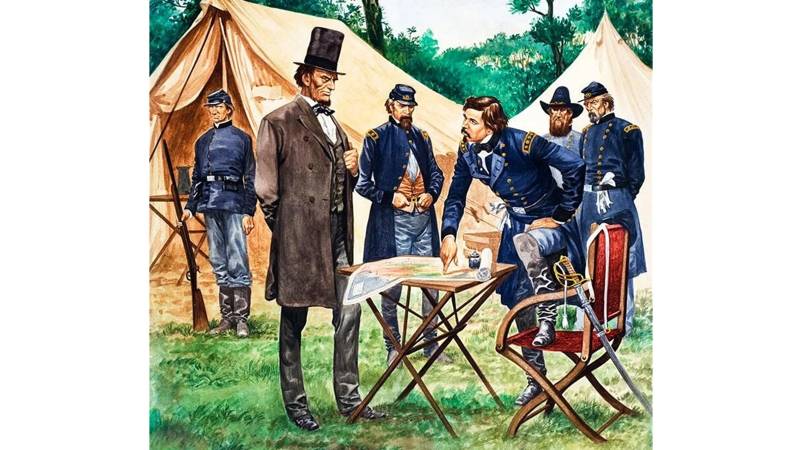
While Abraham Lincoln is consistently regarded by Americans, according to polling, as being their greatest ever president,[1] many Americans may not be aware of the esteem and regard in which he is held abroad. In his own time, and particularly after his death, the world embraced Lincoln in an unprecedented manner for an American president, an adulation that has persisted. Admirers of Lincoln have included global heavyweights such as Leo Tolstoy, Sun Yat-Sen, Giuseppe Garibaldi, Vaclav Havel, Kwame Nkrumah, and Karl Marx. Nelson Mandela found inspiration and resonance in Lincoln as South Africa faced its own struggle for freedom, while Mahatma Gandhi hailed Lincoln’s morality and sacrifice. Lincoln, Gandhi said, was “the greatest President of America” who “sacrificed his life in order to put an end to the suffering of others.”[2]
Another great founding father of his nation, Muhammad Ali Jinnah of Pakistan, similarly admired fellow lawyer Lincoln as a role model and took inspiration from him in creating the nation of Pakistan. S.S. Pirzada, Jinnah’s assistant, spoke of how much Jinnah enjoyed the Hollywood film Young Mr. Lincoln (1939), which showcases Lincoln’s humility, compassion, and sense of fairness and justice. When Bill Milam, the US ambassador to Pakistan in the years immediately preceding 9/11, told me, at a private lunch where I was the only guest, of his concern over anti-American sentiment in Pakistan and the bad press, I advised him to underline what is common between Pakistanis and Americans, and suggested he give the example of Jinnah and his admiration for Lincoln. “What does Lincoln have to do with Jinnah?” he replied, perplexed. I explained that Jinnah, the most revered Pakistani, viewed Lincoln as a heroic figure—Lincoln’s honesty, diligence, and simplicity and austerity were all things Jinnah valued. Later, I received a call from Milam saying that he had discussed Lincoln and Jinnah in a gathering widely reported in Pakistani media, which now praised the ambassador as someone who understood Pakistan. He now knew, he told me, both the reverence for which Jinnah is held in Pakistan, and the important link with America in Lincoln.
Lincoln is indeed a bridge between America and the world. His many achievements have assured his place in history. At the time of greatest peril for the United States, when the nation descended into a bloody and vicious civil war over the issue of slavery, Lincoln rose to the occasion. Not only did he lead the nation to victory and defeat the Confederate forces which sought to preserve and expand slavery, but he succeeded in amending the US constitution which ensured that slavery would be henceforth banned and democracy upheld. The humbleness of his background as juxtaposed with the heights to which he rose have enhanced the legend of the man often known as the “Great Emancipator.” While Lincoln barely had a year of formal schooling, his speeches such as the Gettysburg Address would be regarded as among the greatest in the English language.[3]
Lincoln’s talents went even further. A prominent lawyer in Illinois before assuming the presidency, he was also a champion wrestler, poet, and inventor. He is the only US president to hold a patent, in his case for a device which lifts boats over obstructions in rivers. There are two American federal holidays associated with Lincoln, Presidents’ Day which commemorates his birthday along with George Washington’s, and Juneteenth, which celebrates “our country’s second independence day”[4] following Lincoln’s Emancipation Proclamation liberating African Americans in the Confederate states from slavery. Lincoln is one of the most iconic US presidents, ranking with Washington and Thomas Jefferson, and all three of them, along with Theodore Roosevelt, are carved into Mt. Rushmore. Lincoln is the essential bridge between the early America struggling to emerge from British colonial rule and the modern nation it would become after the Union triumphed in the Civil War—indeed, Lincoln’s life overlapped with both Thomas Jefferson and Woodrow Wilson.
There are some 16,000 books on Lincoln, making him among the most written-about people in the world alongside figures such as Jesus and Napoleon,[5] and over 1,000 musical works about him.[6] He has been celebrated in verse by authors such as Walt Whitman and Herman Melville, and depicted on film by luminaries including Henry Fonda, Gregory Peck, and Daniel Day Lewis. Internationally, artistic celebrations of Lincoln include the twentieth century Iranian poet Basij Khalkhali’s epic poem in honor of Lincoln, The Woodcutter’s Epic, which runs some 14,000 lines of Persian verse.[7] Of Lincoln, Khalkhali said, “his heart was filled with love to and concern for humanity…it was his profound, pure spirit which fascinated me.”[8] Later, Mohammad Khatami, the president of Iran, paid tribute to Lincoln as a “martyr.”[9]
For us, Lincoln is a great Mingler, connecting all of humanity and its different races, religions, cultures, and ethnicities. Lincoln approaches Mingling through two main sources, the Bible and Christian tradition, and the Declaration of Independence issued by the Founding Fathers of the US which asserted that “all men are created equal.” Yet in addition to his pluralism—his adamance that the Declaration of Independence applied to Black Americans and all people—his loving, empathetic, and compassionate nature for people of all backgrounds expressed through his statements and actions assure him the status of a great Mingler. Additionally, his courage and stated willingness to die for his principles deeply touch the human heart.
Here, we will present Lincoln’s ideas concerning the “Other,” people who differed from him and the majority white American community by religion, race, or ethnicity. Considering Lincoln’s stance on human equality can provide us guidance when facing the world’s current problems which include a plethora of acrimonious and often violent racial, ethnic, political, religious, and national conflicts. In this environment, Lincoln remains an inspiring beacon, a guide towards achieving greater human harmony and coexistence.
The Life of Lincoln
Abraham Lincoln was born in 1809 in rural Kentucky to a family of English descent, in humble circumstances in a one room log cabin. At the age of seven, Lincoln’s father, pursuing land opportunities, relocated the family to Indiana, which Lincoln described as “a wild region, with many bears and other wild animals still in the woods.”[10] Lincoln, who worked as a manual farm laborer, thus grew up in the difficult environment of the American frontier. He characterized his early life in one sentence: “The short and simple annals of the poor.”[11]
While he largely lacked a formal education, Lincoln was a voracious reader and was fascinated with books. He scoured the countryside in search of books and read everything he could find.[12] When he was able to escape work, he lay with his head against a tree and read.[13] Hence he was largely self-taught in his education, for example, in addition to reading literature, he taught himself Euclidian geometry, and further studied “astronomy, political economy, and philosophy.”[14]
Lincoln’s early life was marked by tragedy, which likely heightened his sensitivity towards those who are suffering. First, his infant brother died, and then his mother when Lincoln was nine years old. Subsequently, Lincoln’s older sister, who cared for him after their mother died, died in childbirth as a young bride. In his early twenties, Lincoln was also reportedly devastated when a woman he was in love with died, experiencing a bout of what would be now called clinical depression, a condition he faced for the rest of his life.[15] Lincoln’s son Eddie died at the age of three, and later, as president, his nine-year-old son Willie passed away in the White House.
At the age of 21, Lincoln moved to the town of New Salem, Illinois, where he worked as a store clerk. He subsequently served in the Black Hawk war. His leadership qualities were already evident, as he was elected to serve as a Captain of Volunteers. While he did not see combat, he was introduced to the horrors of war. He witnessed, for example, scenes of people including children who were scalped and hung upside down, as well as dead troops which he buried.[16] Such encounters with death, and the suffering of soldiers and families experiencing pain and loss, would weigh heavily on Lincoln during the Civil War with its staggering human cost.
In 1833, Lincoln was appointed postmaster of New Salem, and in 1834 he ran successfully for the Illinois House of Representatives, serving four terms. In 1836, after training himself to become a lawyer, he successfully obtained a law license, and the following year relocated to Springfield, Illinois where he established his legal practice. Over the course of his career, Lincoln would participate in over 5,000 court cases. In 1842, he married Mary Todd Lincoln, and four years later was elected to the US congress, serving one term in Washington. Lincoln’s time in Congress coincided with the Mexican-American war, which he vocally opposed as an unconstitutional American “war of conquest,”[17] and asserted, “Mexico was in no way molesting, or menacing the U.S. or the people thereof.”[18] He then returned to Springfield, and, he said, “practiced law more assiduously than ever before.”[19]
Lincoln might have been out of politics for good at that point, had Senator Stephen A. Douglas of Illinois not passed the Kansas–Nebraska Act of 1854, opening the American west to slavery. This action aroused Lincoln to rejoin the political fray. For the rest of his life, Lincoln dedicated himself to the anti-slavery cause, beginning with the effort to stop slavery from expanding into new territories in the west. It was principally on this issue that he challenged Douglas for his US senate seat. The two staged a series of public debates which have become famous in US history, attended by thousands of people. While Lincoln lost the election to Douglas, the debates spread Lincoln’s fame. When the newly formed Republican Party sought a candidate for the 1860 election, a contest in which slavery, Lincoln said, was “the prominent and almost the only question,”[20] the party chose Lincoln.
The South responded to Lincoln’s presidential victory by announcing it was splitting from the United States to form a new country, the Confederate States of America. Rather than acquiesce to Southern demands, Lincoln dedicated himself and the country to preserving the American Union, which meant defeating the South and its commanding general, Robert E. Lee, on the battlefield. The war was devastating for the country, resulting in over 600,000—and perhaps as many as 850,000—American deaths.[21]
In the end, Lincoln and the Union triumphed. Yet only days after Robert E. Lee’s surrender to the US commanding general, Ulysses S. Grant, in April 1965, Lincoln was shot dead by an assassin in Washington, DC, bringing his life to an end at the moment he successfully led the country through what remains its most acute and traumatic crisis.
Lincoln and slavery
It was Lincoln’s fate to become principally associated with the effort to ban slavery in the United States and free its enslaved people. As he put it when he signed the Emancipation Proclamation, “If my name ever goes into history it will be for this act, and my whole soul is in it.”[22] Lincoln’s actions finally expunged from the US what Founding Fathers such as Thomas Jefferson called the country’s “original sin” and a “blot in our moral history.”[23] Lincoln did not set out early in life to assume this position, but arrived at it gradually in pursuit of his principles. It was arguably his moral conviction and his determination to take a stand against slavery, come what may—initially to stop its expansion—which led him to his ultimate position of abolishing slavery altogether.
Crucially, and this is a quality that later statesmen like Jinnah particularly admired, Lincoln insisted on working within the law. Even if he was convinced, as he said, that slavery was “a moral, social and political evil,”[24] Lincoln would not resort to violence. This was the method chosen by figures including the abolitionist John Brown, who attacked the US government in an effort to start a slave rebellion. As the US was a democracy, a democracy in which Lincoln passionately believed, he was adamant that the US must solve the problem democratically. As a politician and the nation’s president, Lincoln would guide the public towards this goal, taking into account current events and public opinion.
Lincoln spoke of central moments in his life when he fully appreciated the “evil” of slavery. One was in 1841, when he took a steamboat from Louisville to St. Louis. At the mouth of the Ohio River, Lincoln recounted, “there were, on board, ten or a dozen slaves, shackled together with irons. That sight was a continual torment to me; and I see something like it every time I touch the Ohio, or any other slave-border.”[25] In such accounts, we witness Lincoln’s empathy and compassion for others, as in this passage where he reflects on the fact that he was witnessing people who “were being separated forever from the scenes of their childhood, their friends, their fathers and mothers, and brothers and sisters, and many of them from their wives and children, and going into perpetual slavery.”[26]
In the mid-nineteenth century, we should recall, it was by no means certain that democracy would work in modern countries. Lincoln believed that it could, but only if it lived up to its principle of equality under the law, and also if it was able to withstand intense stresses and what he called “great emergencies.”[27] If the US could emerge from as great a crisis as the Civil War intact, and without its sin of slavery, it could prove that democracy was possible in modern human societies. The US could then experience what Lincoln, in the Gettysburg Address, called “a new birth of freedom.”[28] It would show that the US, its democratic system, and belief in human equality represented the “last best, hope of earth” and could serve as a model for the world.[29] Preserving the Union through victory in the Civil War would demonstrate, Lincoln said, that “there can be no successful appeal from the ballot to the bullet.”[30]
In his anti-slavery advocacy, Lincoln played the role of public educator, speaking about slavery with Americans and laying out the case against it in a historical context. As Lincoln explained,[31] the European enslavement of Africans began in the fifteenth century when the Portuguese began to capture Africans from the coast of Guinea, and sell them in southern Spain. When, after 1492, Spain took territories in the Americas, they brought enslaved Africans with them, and Lincoln placed the first African arrivals in the Americas in the early sixteenth century. Shortly thereafter, Lincoln stated, the Spanish crown officially encouraged the African slave trade. By the middle of the century, the English admiral John Hawkins, following the earlier Spanish and Portuguese example, captured and transported the first British African slaves to the Caribbean. In 1620 [1619], Lincoln said, a Dutch ship carried the first enslaved Africans to the area that became the United States, in Virginia. Soon after, African slaves were introduced in New York and Massachusetts.
In the following century, Lincoln explained, abolition efforts progressed, with the Quakers, for example, abolishing slavery within their own denomination. When the Founding Fathers declared independence from Britian, Lincoln stated, they placed the blame for slavery with the British crown, as Jefferson did in his comments on slavery which were deleted from the Declaration of Independence.[32] The first modern nation to declare its existence on the basis of human equality was thus inheriting slavery from its former colonial masters.
As Lincoln argued, while the Founding Fathers did not end slavery at independence from Britain, they recognized its evil nature and sought its eventual elimination. This was despite the fact that several of the most significant Founding Fathers such as Jefferson themselves owned slaves, and they saw and recognized this contradiction. The key to understanding their thinking was the Declaration of Independence itself which asserts human equality. The Declaration of Independence, Lincoln contended, is not only about “the separation of the colonies from the mother land,” but a document “which gave promise that in due time the weights should be lifted from the shoulders of all men, and that all should have an equal chance.”[33]
Lincoln argued that the Founding Fathers did include Black Americans in this pronouncement, along with all other humans on earth. Moreover, he pointed out that until recently, Americans were not arguing publicly that the Founding Fathers excluded Blacks in this manner. As Lincoln asserted, it “may be searched in vain for one single affirmation, from one single man [from the Founding Fathers era until only several years prior], that the negro was not included in the Declaration of Independence.”[34] To hold human beings in perpetual bondage was against the God-given principles the Founding Fathers held to be “self-evident.” At the same time, Lincoln said, even if the Declaration of Independence were somehow repealed, and the US openly embraced slavery in its totality, it would still not be morally justified. As he put it, “If slavery is not wrong, nothing is wrong.”[35] Blacks, Lincoln stated, were “suffering, in my judgment, the greatest wrong inflicted on any people.”[36]
Lincoln contended that the Founding Fathers’ attempts to end slavery could be seen in their banning slavery in new territories which became part of the US like the Northwest Territories in 1787, the banning of the international slave trade under Jefferson’s presidency, the mandating of the penalty of death for engaging in the slave trade, and the fact that the US Constitution nowhere mentioned slavery, instead using euphemisms.[37] This was not an accident, Lincoln argued, but intentional. Slavery was an embarrassment which the Founding Fathers did not intend to be part of the long-term future of the United States.[38] The result, Lincoln said, was that “the thing is hid away, in the constitution, just as an afflicted man hides away a wen or a cancer.”[39]
Taking a moral stand against slavery
The America of Lincoln’s era was a generation or more removed from the Founding Fathers. Instead of constraining slavery, the most pressing debates in the country surrounded the expansion of slavery, made possible by the opening of the western frontier to white settlement. The advocates of slavery argued that the new territories which would become states should be based in the slave system, while slavery opponents argued these territories should be free of slavery.
Lincoln was particularly alarmed at the rhetoric of prominent supporters of slavery concerning the Declaration of Independence. Statesmen such as John C. Calhoun of South Carolina, who held posts including vice president, senator, and secretary of state and war, and Senator John Pettit of Indiana, openly assailed the Declaration of Independence. For Calhoun, the idea that all men are created equal was “the most false and dangerous of all political errors,”[40] while Pettit referred to it as “a self-evident lie.”[41] Also, Lincoln was concerned that figures he considered distinguished clergymen were also asserting “that the idea of all men being created free and equal was false.”[42] Such expressions explicitly contesting the Declaration of Independence, Lincoln asserted, were new and were “not heard in the fresher days of the Republic.”[43] Lincoln noted that the US Chief Justice of the Supreme Court, Roger B. Taney, and Senator Stephen A. Douglas, Lincoln’s opponent in the 1858 Illinois senate election, both insisted that the Declaration of Independence did not apply to Blacks.
Thus, the US for Lincoln was on a distinct downward trajectory. As he put it, “Our progress in degeneracy appears to me to be pretty rapid. As a nation, we began by declaring that ‘all men are created equal.’ We now practically read it ‘all men are created equal, except negroes.’”[44] Soon, Lincoln said, alluding to increasing anti-immigrant sentiment, “it will read ‘all men are created equal, except negroes, and foreigners, and catholics.’ When it comes to this I should prefer emigrating to some country where they make no pretence of loving liberty—to Russia, for instance, where despotism can be taken pure, and without the base alloy of hypocracy.”[45]
These same Americans, Lincoln lamented, celebrate the July 4th holiday, which has come to have a hollow meaning: “The fourth of July has not quite dwindled away; it is still a great day—for burning fire-crackers!!! That spirit which desired the peaceful extinction of slavery, has itself become extinct, with the occasion, and the men of the Revolution.”[46] Lincoln memorably summed up the moment of national crisis with his famous “A House Divided” speech, delivered at the State Capital in Springfield, Illinois: “‘A house divided against itself cannot stand.’ I believe this government cannot endure, permanently half slave and half free…It will become all one thing, or all the other.”[47]
Observing the ascendency of the South, and particularly its sympathizers in the US government and in the North, Lincoln feared that slavery could soon be legal throughout the United States. This was particularly evident following the Supreme Court’s decision in the Dred Scott case, which determined that a person of African descent could never be a US citizen.[48] The South was thus poised to reinterpret American identity entirely, Lincoln felt. From its strengthening base, supporters of slavery would be poised to lead the US in reigniting the African slave trade and expanding slavery across the world.[49] The US, Lincoln believed, would then “grab for the territory of poor Mexico,” and commence “an invasion of the rich lands of South America, then the adjoining islands will follow, each one of which promises additional slave fields.”[50] The US could easily become what Lincoln described as “a universal slave nation”[51] and a “slave empire,”[52] and he detected a powerful “conspiracy” working to make it so.[53] It was on this basis that Lincoln felt morally compelled to make his stand against slavery. Lincoln resolved, he said, “to save the principles of Jefferson from total overthrow in this nation.”[54]
In Lincoln’s public efforts, he systematically challenged the justifications for slavery, including color, trying to get his audiences to think: “You say A. is white, and B. is black. It is color, then; the lighter, having the right to enslave the darker? Take care. By this rule, you are to be slave to the first man you meet, with a fairer skin than your own. You do not mean color exactly?—You mean the whites are intellectually the superiors of the blacks, and, therefore have the right to enslave them? Take care again. By this rule, you are to be slave to the first man you meet, with an intellect superior to your own. But, say you, it is a question of interest; and, if you can make it your interest, you have the right to enslave another. Very well. And if he can make it his interest, he has the right to enslave you.”[55]
This reversing of the equation, the concept of the enslaver becoming the enslaved proved to Lincoln that slavery was wrong: “although volume upon volume is written to prove slavery a very good thing, we never hear of the man who wishes to take the good of it, by being a slave himself.”[56] Slavery was a violation of the Golden Rule, to do unto others as you would have them do unto you, Lincoln held, explaining that in the case of slavery, the Golden Rule was instead rendered: do unto “a whole race of men, as they would have no man do unto themselves.”[57] For Lincoln, “he who would be no slave, must consent to have no slave. Those who deny freedom to others, deserve it not for themselves.”[58]
Lincoln called attention to the dangers of what he called “dehumanizing the negro,” warning, “when you have extinguished his soul, and placed him where the ray of hope is blown out in darkness like that which broods over the spirits of the damned; are you quite sure the demon which you have roused will not turn and rend you?”[59] “[T]he sheet anchor of American republicanism,” Lincoln affirmed, is that “no man is good enough to govern another man, without that other’s consent.”[60] While slavery might not end “within the term of my natural life,” Lincoln said, “I can not doubt either that it will come in due time…I am proud, in my passing speck of time, to contribute an humble mite to that glorious consummation, which my own poor eyes may not last to see.”[61]
As noted above, in his activism and political activity prior to becoming president, stopping slavery’s expansion was Lincoln’s immediate and most pressing goal. Lincoln focused intently on this objective, and did not involve himself in some of the campaigns and strategies pursued by others on the issue. Lincoln did not run on a platform of abolishing slavery entirely, nor on Black citizenship and social and political equality for people of all races in the US. An exception was in 1849, when Lincoln, as a US Congressman, drafted a bill to ban slavery in Washington, DC, but he dropped it, after, he said, being “abandoned by my former backers” in his Whig Party.[62] When Lincoln considered ideas on how to help resolve slavery and racial inequality in the US within the law, he expressed a longstanding interest in encouraging voluntary Black emigration from America to Africa, in large part due to the social and racial prejudices of white Americans which rendered them highly resistant to supporting equality between the races.[63] However, Lincoln’s objectives and strategy began to shift upon assuming the presidency and the outbreak of the Civil War.
Once in the White House, going through the crucible of war, Lincoln’s views on what could be done under the law to end slavery changed. While in 1862 he proposed a “compromise” of a four decade timeframe to end slavery if the South rejoined the Union,[64] the following year he resolved that the war would end with slavery abolished. After 1862 he also never again mentioned the possibility of Blacks returning to Africa,[65] and concentrated on building racial coexistence in the US. From 1863 he worked on providing government public schooling to Black and white alike.[66] The major turning point was the Emancipation Proclamation, after which, Lincoln vowed, there was to be no turning back.
Another crucially important turning point was Lincoln’s decision to enlist Black troops in the US military, and over 200,000 served. In January 1864, Lincoln stated of American Blacks, “in assisting to save the life of the Republic, they have demonstrated in blood their right to the ballot, which is but the humane protection of the flag they have so fearlessly defended. The restoration of the Rebel States to the Union must rest upon the principle of civil and political equality of both races.”[67] In early 1865, Lincoln successfully led Congress to pass the Thirteenth Amendment to the Constitution banning slavery, and in his final speech delivered in April 1865, he spoke of conferring the “elective franchise upon the colored man.”[68] Lincoln interpreted the struggles and suffering of the United States during the Civil War to be a kind of penance for the evil of slavery, for which both the North and the South, he said, had “complicity.”[69]
In taking a stand against slavery, educating the public about it and its inherent immorality, and leading the country in its cataclysmic war, Lincoln had done the seemingly impossible. An institution which arrived in the Americas with the early colonists centuries before had been eliminated for good.
God and human unity
Lincoln’s stance against slavery proceeded directly from his own worldview and outlook on life, which centered on the principle of divine and human unity. For Lincoln, all humans were created by God. He described God using terms like “the Divine Power”[70] and “the Common Father.”[71] God is not neutral for Lincoln, but is “Goodness,”[72] the “Merciful”[73] and “beneficent Creator and Ruler of the Universe.”[74] God, Lincoln affirmed, is “our beneficent Father,”[75] “the Supreme Being,”[76] “from Whom all blessings flow.”[77]
Lincoln considered the people of the world to consist of a single “human family.”[78] On one level parts of the human family may have their own distinct identities, but on another level, they are one. For example, Lincoln said, each nation consisted of a “family,” and these different families together make up a larger “family of nations.”[79] Such groups are held together by what Lincoln called “the bonds of fraternal feeling.”[80]
Jinnah, the most revered Pakistani, viewed Lincoln as a heroic figure— his honesty, diligence, and simplicity and austerity were all things Jinnah valued
With “our limited understandings,” Lincoln explained, it is difficult to understand God, which remains “mysterious and unknown to us,” but we can attempt to do so with the knowledge that God is always there, and adheres to certain principles which Lincoln described as “natural theology.”[81] Different religions and creeds, Lincoln stated, approach “the Divine Majesty” in their own ways, each “in their customary places of worship, and in the forms approved by their own consciences.”[82] Lincoln vowed as president that he would not allow anyone to be “wronged on account of his place of birth or religious confession.”[83]
While Lincoln was not a member of a formal religious denomination, he approached religion through love. As he explained, “When any church will inscribe over its altar as its sole qualification for membership the Savior’s condensed sentiment as the substance of both law and gospel, ‘Thou shalt love God with all thy heart, all thy soul, and all thy mind, and thy neighbor as thyself,’ that church I join with all my heart and soul.”[84] Lincoln’s Mingling nature can be seen in the fact that adherents of numerous religions and denominations claimed Lincoln to be one of them, including Jews, Presbyterians, Baptists, Quakers, Episcopalians, atheists, Disciples of Christ, and Spiritualists.[85]
Perhaps the best articulation of Lincoln’s worldview are these famous, central lines from the Declaration of Independence: “We hold these truths to be self-evident, that all men are created equal, that they are endowed by their Creator with certain unalienable Rights, that among these are Life, Liberty and the pursuit of Happiness.” This statement of the American Founding Fathers, Lincoln affirmed, captures what he called “the economy of the Universe.”[86] The Declaration is the “immortal emblem of Humanity,”[87] Lincoln argued, equally applying to all of its parts, including the “black, white or yellow” races.[88]
These principles apply, Lincoln said, speaking of the “Creator,” “to all His creatures, to the whole great family of man.”[89] As evidenced by the discussion of “creatures,” Lincoln extended this empathetic worldview beyond humans to animals, stating, “an ant’s hope is as sweet to the insect as ours is to us.”[90] Uncommon for someone living on the frontier, Lincoln refused to hunt, and accounts from his life tell of him rescuing animals who were in trouble.[91] The economy of the Universe held, Lincoln affirmed, that “nothing stamped with the Divine image and likeness was sent into the world to be trodden on, and degraded, and imbruted by its fellows.”[92]
Lincoln and the “Other”
Growing up in the woods of the frontier, Lincoln displayed a curiosity towards people of different races, religions, and cultures. He read The Arabian Nights and “particularly liked ‘Sinbad the Sailor,’ the story of a man from modern-day Iraq who is obsessed with ‘traveling about the world of men and seeing their cities and islands.’”[93]
As a teenager, Lincoln was hired by a local store owner to take shipments of meats and grains by boat to New Orleans, and this trip further enlarged his perspective. He was enthralled at the levels of cultural diversity he found there.[94] In New Orleans, “Locals, including large communities of refugees from Haiti, Nova Scotia, and Latin America, streamed down the cobblestone streets chattering in French, Spanish, and Portuguese. Diplomats from Brazil to Sicily to Sardinia dined on turtle steaks and other exotic fare at the Globe Coffee House on Chartres Street.”[95] In New Orleans, Lincoln came “to understand for the first time in his life that immigrants from many lands formed part of the American population.”[96]
In Lincoln’s first major political statement issued in 1832, he argued that local Illinois schools should teach more about foreign cultures—“to assure that every man is capable of reading ‘the histories of his own and other countries, by which he may duly appreciate the value of our free institutions.’”[97]
There is one particular book concerning the Muslim world Lincoln encountered as a youth which holds special relevance for his interaction with others who are different—and, crucially, his understanding of slavery. In an official campaign biography issued during the 1860 election, Lincoln named Captain James Riley’s An Authentic Narrative of the Loss of the American Brig Commerce, an account of a white American who was enslaved by Arabs in North Africa following a shipwreck, as being among a small number of books which had the most influence on him, alongside the Bible. The endorsement from Lincoln would have given the book, which had already become a bestseller in the US following its publication in 1817, even more notoriety.
In pointing Americans towards the book, Lincoln was likely hoping that they would be enriched by it as he was when he read it as a youth. A white American reader would empathize with the brutal conditions under which Captain Riley was forced to live while a slave, including being stripped naked, flogged, and forced to drink camel urine to stay alive. While in this case the enslavers are Muslims, Muslims also figure prominently in Riley’s release from slavery. Riley recounts how a kindly Muslim “Moor” named Rais bel Cossim facilitates his freedom and enables him to return to his family in the US. When Riley tells Cossim that he is in a state of despair living as a slave and “must soon perish,” Cossim responds, “No, my friend...the God of Heaven and of earth is your friend, and will not forsake you,” and explains that God “watches over all our actions, whether we be Moor, or Christian, or Pagan, or of any other religion.”[98] Riley tells his readers, “To hear such sentiments from the mouth of a Moor, whose nation I had been taught to consider the worst of barbarians, I confess, filled my mind with awe and reverence, and I looked up to him as a kind of superior being.”[99]
Later, after being freed from slavery, Riley meets a well-known Moroccan Muslim saint and great teacher, Mohammed Ilfactesba, who identifies himself as “a friend to Christians and men of every other religion,” affirms that all human beings are children of God, and calls on all humans “to treat each other like brothers.”[100] Riley includes considerable geographic and ethnographic detail on the areas he visits and the people who live there, and even presents basic lessons to teach Americans the Arabic language. His book ends with a plea to the people of the United States—Riley argues that the US is something truly unique and special in granting “personal liberty, protection, and happiness” to its citizens, and yet at the same time holds “a million of the human species in the most cruel bonds of slavery…I have now learned to look with compassion on my enslaved and oppressed fellow creatures, and my future life shall be devoted to their cause.”[101] In naming Riley’s book as a formative influence, Lincoln invites Americans to consult it to gain a greater comprehension of his own thinking and actions—concerning slavery as well as the non-American, non-white, and non-Christian “Other.” Indeed, scholars have noted the importance of the book to Lincoln’s worldview, arguing that he had an “intensive involvement” with it and drew lessons from Riley’s Narrative “that took root deep in his self.”[102]
In terms of his interactions with Muslims, Lincoln as president celebrated the American relationship with Muslim countries such as Morocco and Turkey.[103] He told the Ottoman Sultan Abdulaziz, “I recommend Your Majesty to the protection of the Almighty,”[104] and praised the “firmness, integrity and wisdom” of Mohamed Sa’id Pasha, the Viceroy of Egypt.[105] Lincoln also admired the Algerian Sufi scholar and leader Emir Abdelkader, who fought French colonialists when they first invaded Algeria. Abdelkader, a follower of the great Sufi master Ibn Arabi, eventually surrendered to the French, who later released him, and he moved to Damascus. In 1860, during civil conflict in Syria, Abdelkader saved thousands of Christians from being massacred by Muslims and Druze when he offered them protection in his home. He explained that Christians were his “brothers,”[106] and “That which we did for the Christians, we did to be faithful to Islamic law and out of respect for human rights. All creatures are part of God’s family and those most loved by God are those who do the most good for his family.”[107] To honor Abdelkader, Lincoln sent him “a pair of pistols inlaid with silver and gold, presented in a fine wood box of birds’eye maple, inscribed, ‘From the President of the United States, to his Excellency, Lord Abdelkader.’”[108]
Lincoln was additionally particularly close with the Jewish community. Lincoln professed there to be “no distinction between Jew and Gentile,” and, addressing anti-Semitic sentiments which blamed all Jews for purported crimes committed by individual Jews, said “I do not like to hear a class or nationality condemned on account of a few sinners.”[109] In their book Lincoln and the Jews, Jonathan D. Sarna and Benjamin Shapell argue, “More than any previous president, he befriended Jews, defended Jews, and promoted Jewish equality.”[110]
For the first time under Lincoln, Jews were made eligible to serve as military chaplains, and Lincoln prioritized naming Jews to positions within the US military. For example, Lincoln wrote the US Secretary of War, Edwin Stanton, appointing Cheme M. Levy as a Captain with the message, “I believe we have not yet appointed a Hebrew.”[111] Lincoln also once ordered that a Jewish man serving as an officer in the Confederacy and held by the Union as a prisoner of war, Charles H. Jonas, be released so he could visit his ailing father, Abraham Jonas.[112] Abraham Jonas, one of the first Jews to settle on the frontier west of the Allegheny Mountains, was a prominent Illinois politician and Lincoln’s close friend.[113] Rhetorically, Sarna and Shapell contend, Lincoln intentionally and consciously broadened his religious language beyond Christianity to embrace “Jews and other non-Christians as insiders.”[114] Members of the Jewish community showed their appreciation for Lincoln in the names they gave him, including “Father Abraham”[115] and “Rabbi Abraham.”[116]
Concerning Native Americans, Lincoln assumed the presidency at a time in which the US army was actively at war with Indigenous peoples, with Native Americans being confined to reservations to make way for white settlement. Lincoln found many problems in the US government’s relations with Native peoples, but his attention to fighting the Civil War meant he could not devote as much attention to the subject as he would have liked. Lincoln vowed, however, “if we get through this war, and I live, this Indian system shall be reformed,”[117] and “the Indians shall have my first care and I will not rest untill Justice is done.”[118]
In a meeting with a group of Native American leaders from tribes including the Cheyenne, Kiowa, Arapahoe, Comanche, Apache, and Caddo, Lincoln invoked his belief in the unity of humanity: “You have asked for my advice. I really am not capable of advising you whether, in the providence of the Great Spirit, who is the great Father of us all, it is best for you to maintain the habits and customs of your race, or adopt a new mode of life...It is the object of this Government to be on terms of peace with you, and with all our red brethren. We constantly endeavor to be so. We make treaties with you, and will try to observe them; and if our children should sometimes behave badly, and violate these treaties, it is against our wish. You know it is not always possible for any father to have his children do precisely as he wishes them to do.”[119]
In August 1862, the Dakota people in Minnesota, who were on the verge of starvation, launched raids on settlers and government targets, killing around 90 soldiers and as many as 600 white civilians.[120] Eventually, federal forces defeated the Dakota, who surrendered into US custody. The US army put 303 Dakota on trial and sentenced all of them to death. Lincoln, skeptical that so many men were actually guilty, ordered the records sent to him, and he personally went over them carefully. US generals and prominent politicians in Lincoln’s own party such as senators and governors urged Lincoln to carry out the executions, warning of white “vigilantism” should he not do so.[121]
When he studied the cases, Lincoln found much of the evidence to be lacking, particularly concerning army claims of Indian “indiscriminate rape” of whites.[122] Lincoln threw out 264 death sentences, the largest commutation in US history, but upheld the execution orders for 38 men “proven to have participated in massacres” against civilians.[123] This made the act also the largest execution in US history. It is notable, the historian Michael S. Green observes, that a trial was carried out at all in such a case involving Native Americans, and “Lincoln’s desire for some kind of fairness suggested a degree of respect for law not seen in previous administrations.”[124] After the 1864 election, when the governor of Minnesota told Lincoln that his share of the vote would have been larger if he hadn’t commuted the sentences of so many Dakota, Lincoln replied that he refused “to hang men for votes.”[125]
In foreign policy, Lincoln celebrated what he described as “Very favorable relations” with China and Japan.[126] Lincoln’s humanitarian impulses for people outside the US could be seen in his contribution of his own funds to help Irish people affected by the devastating famine in their country.[127] Additionally, for the first time under Lincoln, the United States formally recognized countries run by people of African descent, in this case Haiti and Liberia, an action of profound significance for African Americans.[128]
Concerning immigrants in the United States, Lincoln embraced them. Lincoln described immigration as “this source of national wealth and strength.”[129] While immigrants to the US could not trace their ancestry back to the Revolutionary War to “feel that they are part of us,” Lincoln stated, they see the words of the Declaration of Independence and have “a right to claim it as though they were blood of the blood, and flesh of the flesh of the men who wrote that Declaration.”[130]
When speaking with a member of the anti-immigrant “Know Nothing” party who claimed to represent “native” Americans, Lincoln asked, who really is a “native” American?: “Do they not wear breech-clout and carry tomahawk?…We pushed them from their homes and now turn upon others not fortunate enough to come over as early as our forefathers.”[131] Lincoln was popular among many immigrants such as Swedes, who waved banners reading “Equality without regard to native place”[132] at his campaign rallies.
Foreigners, Lincoln said, “are all of the great family of men, and if there is one shackle upon any of them, it would be far better to lift the load from them than to pile additional loads upon them…America is comparatively a new country, and the other countries of the world are old countries, there is more room here, comparatively speaking, than there is there; and if they can better their condition by leaving their old homes, there is nothing in my heart to forbid them coming; and I bid them all God speed.”[133]
An important element in Lincoln’s embrace of others different from himself was his understanding of the difficulties endured by ordinary people who had to struggle to make ends meet. This sense of empathy was shaped by his own experiences which he felt were common to humanity and were not associated with a race, religion, or ethnicity—they are part of the human experience. “I am not ashamed to confess,” he said, “I was a hired laborer, mauling rails, at work on a flat-boat—just what might happen to any poor man’s son!”[134] Lincoln expressed sympathy for those he called “the many poor”[135] and spoke of a special bond between “all working people, of all nations, and tongues, and kindreds.”[136] Lincoln felt God truly loved the common people, he said, because “He made so many of them.”[137]
Lincoln believed, as he affirmed, that “all mankind should be free,”[138] and that people should be able to dedicate their labor towards endeavors they choose in the interest of improving their conditions. “I want every man to have the chance—and I believe a black man is entitled to it—in which he can better his condition,”[139] Lincoln stated. He vowed to do “Whatever is calculated to advance the condition of the honest, struggling laboring man,”[140] “to elevate the condition of men—to lift artificial weights from all shoulders…to afford all, an unfettered start, and a fair chance, in the race of life.”[141] His motto was, “Justice and fairness to all.”[142]
Kindness in meeting others
When discussing Lincoln in the context of the “Other” it is important to note his gregarious, cheerful, warm, and open personal manner, embracing people regardless of origin and ensuring that they felt respected. For people of minority groups, such behavior, particularly in public, was deeply moving and significant. These gestures set an important example for the rest of the country in terms of how different peoples should relate to each other.
When the Union army took Richmond at the end of the Civil War, for example, Lincoln visited the city with a small, understated contingent, and was met by throngs of celebrating African Americans. When “an old negro, wearing a few rags, whose white, crisp hair appeared through his crownless straw hat” tipped his hat to Lincoln, Lincoln “lifted his own hat and bowed to the old man.”[143] This was one of several instances of Lincoln publicly bowing to African Americans, including to the Black abolitionist and former slave Sojourner Truth, and to Black US soldiers marching past the White House. Such an act, a journalist who witnessed Lincoln in Richmond stated, “upset the forms, laws, customs, and ceremonies of centuries…a mortal wound to caste.”[144] A white female resident of Richmond viewing Lincoln’s actions, it was reported, “turned away ‘with unspeakable contempt.’”[145]
Prominent Black Americans spoke of what it meant to them to have Lincoln respond so warmly. Sojourner Truth said, “I never was treated by any one with more kindness and cordiality than were shown to me by that great and good man, Abraham Lincoln.”[146] Frederick Douglass stated that Lincoln possessed a “godlike nature” demonstrating “human goodness and nobility of character,” and “was the first American President who…rose above the prejudice of his times, and country.”[147] He observed of Lincoln, “he could do nothing which would call down upon him more fiercely the ribaldry of the vulgar than by showing any respect to a colored man,” and yet he still embraced the Black community.[148] Douglass explained, “Some men there are who can face death and dangers, but have not the moral courage to contradict a prejudice or face ridicule…Mr. Lincoln did that which he knew would be offensive to the crowd.”[149] “I was impressed with his entire freedom from popular prejudice against the colored race,” Douglass further reflected, “He was the first great man that I talked with in the United States freely, who in no single instance reminded me of the difference between himself and myself.”[150] Lincoln “treated me as a man; he did not let me feel for a moment that there was any difference in the color of our skins!”[151]
Another example of Lincoln’s kindness can be seen in the welcome he afforded to Matias Romero, the Mexican envoy to Washington, who was reportedly the first Mexican person Lincoln had ever met.[152] Lincoln treated Romero with warmth and kindness as he learned more about Mexico in the context of Lincoln’s efforts to prevent the Confederacy from conquering Mexican territory in order to expand slavery, and working to offset European interference in Mexico which could aid the Southern cause.[153] Before long, Romero “become almost a part of the extended Lincoln family.”[154] He spent time not only with Lincoln, but went shopping with Mary Todd Lincoln and hosted Lincoln’s son Robert for social events at the Mexican embassy.[155] Romero, who later served as Mexico’s finance minister, described Lincoln as “immortal” and “one of the ‘greatest men I ever knew.’”[156]
One final example of the personal impact of Lincoln, this time on people thousands of miles from the United States, comes from the sentiments expressed in a grand gesture made by the working people of Manchester, England. When Lincoln, in his efforts to defeat the Confederacy, implemented a blockade of Southern goods, he cut off the supplies of cotton which drove England’s mills and much of its industrial production. Manchester, known as “Cottonopolis,” was severely impacted, and nearly half a million people were out of work and struggling with poverty and hunger.[157]
Despite these adverse effects on their own lives, the working people of Manchester reached out to Lincoln to express their “warm and earnest sympathy” for him.[158] They affirmed, “As citizens of Manchester...We rejoice in your greatness...for the many decisive steps towards practically exemplifying your belief in the words of your great founders, ‘All men are created free and equal.’”[159] Lincoln, moved by the gesture, responded, stating, “I know and deeply deplore the sufferings which the workingmen at Manchester and in all Europe are called to endure in this crisis.”[160] Lincoln praised their “heroism,” which he felt was a “reinspiring assurance of the inherent power of truth and the ultimate and universal triumph of justice, humanity, and freedom.”[161] Today, in commemoration of these events, Lincoln’s statue stands in Lincoln Square in Manchester.
The human unity of grief and hope
Lincoln was long aware that his moral stances for inclusion and against slavery could lead to his own death. Speaking upon assuming the presidency in 1861, he stated of the universal ideals of the Declaration of Independence, “I have said nothing but what I am willing to live by and, if it be the pleasure of Almighty God, die by.”[162] Lincoln additionally affirmed, “I would rather be assassinated on this spot than to surrender it” [the ideals of the Declaration].[163]
There were constant threats against him from the moment he arrived in Washington by train, after having escaped an assassination plot in Baltimore. Winfield Scott, the commanding general of the US Army, said that Lincoln’s 1861 inauguration was “the most critical and hazardous event with which I have ever been connected” due to the sheer number of death threats against the president.[164] In his first day in Washington, Lincoln received a note in his hotel room stating, “You are nothing but a Goddam Black Nigger,”[165] and people in his inauguration crowd were heard to remark, “that Illinois ape...will never come back alive.”[166]
On April 11, 1865, Lincoln delivered his final speech to a crowd gathered at the White House. In it, he expressed his support for Black voting rights. The prominent actor and supporter of the South, John Wilkes Booth, was present, and exclaimed of Lincoln’s address, “That means nigger citizenship…by God, I’ll put him through. That is the last speech he will ever make.”[167] “[T]he country was formed for the white, not for the black man,” Booth said, slavery was “one of the greatest blessings…that God ever bestowed upon a favored nation,” and “Our country owed all her troubles to him [Lincoln].”[168]
Following Booth’s assassination of Lincoln at Ford’s Theatre in Washington on April 14, 1865, the shocked nation went into mourning. No US president had ever been killed in office before. For three weeks, Lincoln’s casket made its way through the country traveling back to Springfield, Illinois, where he was laid to rest. Some eight million people, or one third of the population of the North, came to pay their respects to Lincoln.[169]
Lincoln’s Mingling nature and the way in which he touched the hearts of people across social boundaries could be seen in the diversity of humanity who mourned him. Frederick Douglass observed one Black woman weeping at the White House gates, who told him, “we have lost our Moses”—a sentiment, Douglass said, which was shared by “millions of Black Americans who ‘from first to last…fully believed in Abraham Lincoln.’”[170] Another Black female mourner in Washington, an elderly woman, was quoted by the journalist Jane Swisshelm exclaiming, “My good President! I would rather have died myself! I would rather have given the babe from my bosom!”[171] Among many grief-stricken African Americans, Lincoln was seen as “an earthy incarnation of the Savior of mankind.”[172] Reverend Stephen W. Rogers, editor of the Black Republican newspaper in New Orleans, interpreted Lincoln’s death as Lincoln having “fallen by the same spirit that has so long oppressed and destroyed us.”[173]
Among the Jewish community, the Sephardic p