

There is a unique solidarity among rickshaw drivers. If one finds himself in trouble, his peers are often the first to arrive at the scene. This immediate empathy stems from a shared reality, as I witnessed firsthand in 1987. While I was a college student, the rickshaw I was riding in came upon another rickshaw whose front wheel was wedged deep in an open manhole.
My rickshaw driver didn't hesitate. He screeched to a halt and leapt out to join four other rickshaw drivers already straining to hoist the vehicle. Once the wheel was freed, my driver returned to his seat and continued our journey.
Curiously, he spent the rest of the trip loudly cursing the man he had just helped, calling him a "scoundrel." It became clear that he didn't actually like the man personally. However, his personal distaste was secondary to a deeper, instinctive empathy for their shared predicament. Both were members of the same economic class, navigating the same daily hardships.
This interaction serves as an illustration of ‘class consciousness,’ a concept central to the work of 19th-century theorist Karl Marx. While Marxian theory suggests classes unite around shared economic interests, modern politics often proves that internal divisions and cleavages can easily shatter this solidarity. Political/ethnic/racial identity and cultural values often override class loyalty.
In the United States, the 2016 presidential election served as a primary example of this phenomenon. Michigan’s white and black working-classes, a Democratic Party constituency since the 1990s, fractured when most white voters from this class flipped to the Republican Party. The Republican Party candidate Donald Trump won the state by a razor-thin margin of 0.23% (roughly 10,704 votes). Many white working-class voters prioritised Trump’s industrial nostalgia over traditional labour platforms. He promised a return to the glory days when Michigan was a powerful industrial hub.
While Joe Biden reclaimed Michigan for the Democrats in 2020, his 2.8% margin (approximately 154,000 votes) suggests the working-class consensus remains deeply divided in the state. The Democratic Party senator Gary Peters later noted that his party had slid towards urban middle-class liberals and minority groups, inadvertently alienating the labour unions that were once the party’s bedrock.
Battle of the Middles
The middle-class is often even more prone to these internal splits. While populists such as Narendra Modi in India and Imran Khan in Pakistan rose to power on the backs of middle-class support, that support was never monolithic as such.
In Pakistan, the middle-class divide is particularly visible in the country’s largest province, Punjab. The tension between Khan’s PTI and Nawaz Sharif’s PML-N represents a clash of differing political and economic visions within the same social bracket.
While Khan found strong footing in the province of Khyber Pakhtunkhwa, the intra-class friction in Punjab proved that middle-class does not automatically mean unified political interest as such. This complexity was anticipated by the American sociologist Erik Olin Wright in the 1970s. He argued that classical Marxian definitions were too binary.
Wright proposed that large segments of the modern population occupy ‘contradictory class locations.’ These individuals are neither the bourgeoisie (who own the means of production) nor the proletariat (the manual labour force). Because they sit between these two poles, possessing some skills or managerial authority but still working for a wage, their political loyalties are often fluid and easily split.
In Punjab, the middle-class remains divided between the PML-N, led by a powerful industrial family, and the PTI, a party which, in the recent past, was visibly bankrolled by multi-millionaires. Yet, despite these deep-seated political rivalries, there are moments when a traditional Marxian sense of class solidarity overrides internal friction.
A striking example occurred during the riots of 9 May 2024, when images of PTI supporters damaging state property flooded social media. Even those middle-class observers who had previously been critical of Khan’s government, found themselves surprisingly energised by what they perceived as a ‘middle-class uprising.’
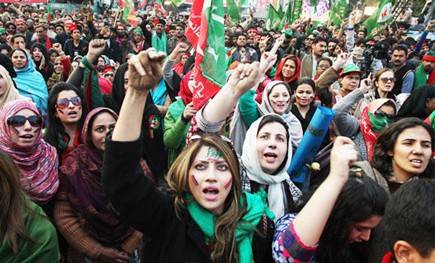
This reaction was less about political agreement and more about social recognition. The rioters were people who dressed, spoke and lived like them. This empathy, however, appears to be strictly bounded by class. Only a year earlier, when working-class members of an Islamist party engaged in similar unrest in Lahore, these same middle-class observers offered only scathing condemnation. The violence of their own social peers triggered admiration, while the actions of the working-class triggered only disdain.
This selective empathy extends into the judicial sphere as well. Thousands of impoverished women have languished in Pakistani prisons for years without garnering significant public outcry. It was only when middle-and-upper-class women associated with the PTI were detained that the ‘plight of women prisoners’ became a dominant concern for the middle-class.
Today, even those who politically opposed the PTI often find themselves sympathising with the party’s ‘besieged’ leadership. While their political goals may differ, an overarching sense of class compatibility creates a shared bond. This phenomenon can be framed as a modern middle-class consciousness. A force currently on full display across Pakistan’s social media landscape, where class identity proves more durable than political affiliation.
Yet, the current Pakistani political terrain is increasingly defined by a deep-seated rift within the middle-class that fuels national discourse. The ongoing friction between PTI and PML-N is essentially a political manifestation of social and economic tensions between two distinct factions of the same class.
While similar intra-class conflicts exist elsewhere, the Pakistani version is uniquely difficult to categorise ideologically. In Turkey, for example, the middle-class split is clearly defined by the secular-republican segment on one side and electoral Islamist manoeuvres on the other. In contrast, the ideological lines between Pakistan’s middle-class factions remain largely blurred.
The Old and New Middle-Class
Both of these factions are products of the ‘new middle class’ that began to emerge in the late 1970s. Political economists have long been fascinated by the expansion of this demographic across Asia, noting its unprecedented growth in both economic and political influence. This shift has placed these new middle-classes at the very centre of the political evolution in developing regions, making their internal tussles a decisive factor in the future of the state.
In Pakistan, the "old" middle-class was the deliberate product of state-led development economics. The post-colonial state sought to engineer a ‘national bourgeoisie’ designed to fortify the sovereignty of the new nation-state. This class was tasked with managing an economy navigated by a central bureaucracy, and as a result, its members were primarily involved in sectors directly or indirectly established by the government.
This old middle-class was entirely dependent on a state committed to specific ‘modernisation’ projects. Historically, theorists expected this national bourgeoisie to evolve into a progressive political force that could mediate the tensions between labour and capital. However, this group remained politically fragile and was frequently undermined by powerful oligarchs.
These oligarchs, who were themselves beneficiaries of the state’s national policies, deliberately sabotaged the political evolution of the middle-class. They prevented the national bourgeoisie from becoming a force for democratisation in both the political and economic spheres. Consequently, the early development projects of the 1960s were almost exclusively overseen by authoritarian leaders rather than by a robust, independent middle-class.
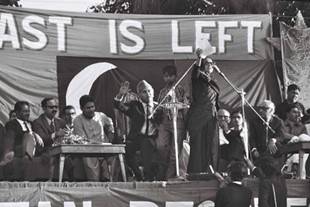
This dynamic played out vividly in Pakistan during the ‘modernist’ dictatorship of Ayub Khan (1958–69). ZA Bhutto and his Pakistan Peoples Party (PPP) identified a growing malaise among the frustrated intelligentsia of the national bourgeoisie that had emerged under Ayub. Bhutto successfully radicalised these segments, who felt marginalised and unable to convert their status into genuine political influence.
To challenge the rapid state-led industrialisation (through tilted ‘state capitalism’), ironically a process that created the national bourgeoisie, the radicalised bourgeois intelligentsia allied with the working-class, adopting a blend of leftist ideologies. However, this faced opposition not just from the state and the oligarchs, but also from the Islamist segments of the bourgeoisie, spearheaded by the Jamaat-e-Islami (JI).
While the JI was also a product of this same class, it vehemently rejected socialism. Instead, it sought to replace the ‘secular’ national identity of the bourgeoisie with an ‘Islamic’ nationalism, arguing that this class should focus on Islamising the state and the economy.
When Bhutto and his PPP took power in late 1971, it attempted to redefine the national bourgeoisie as a mediator between the state, rural peasants and the urban proletariat. Rather than continuing the patronage of the industrial elite established under Ayub, Bhutto’s government introduced accelerated nationalisation policies. This shift ultimately made the national bourgeoisie even more dependent on the state than it had been before.
The 1970s began to witness the gradual birth of a ‘new’ middle-class demographic that demanded greater economic freedom and reduced state intervention. A turning point occurred in 1974 when the Bhutto regime began facilitating the migration of thousands of blue-and-white-collar workers to oil-rich Arab countries. Upon returning, these workers possessed significant capital and a desire for lifestyle choices that had previously been strictly regulated by the state.
In an interesting development, the JI became one of the first major political forces to champion private investment for this new, emerging middle-class. By dismissing land and economic reforms as ‘un-Islamic’, the JI advocated for an Islamised version of free-market enterprise. The party envisioned the new middle-class as enterprising agents who would replace the old national bourgeoisie and build an indigenous ‘Islamic economy’ and state.
This narrative, bolstered by support from wealthy, conservative Arab monarchies, forced the Bhutto regime to pivot toward the right after 1974 in an attempt to reclaim the political initiative. Despite this shift, opponents successfully branded the government as irreligious and a threat to middle-class economic interests.
Over the next three decades, the old, state-navigated middle-class largely disappeared. The new middle-class secured their influence not through state patronage, but through capital accumulation and consumption power. This newfound economic clout was systematically synchronised with Islamist or ‘Islamic’ outlooks, merging material aspiration with religious identity.
While the stated goal of this synchronisation was the creation of an ‘Islamic’ society and state, it was actually driven by the forces of neoliberalism and globalisation. The new middle-class sought access to global markets and international experiences, which neoliberal economics facilitated.
At home this class pushed for economic liberalisation alongside the Islamisation of the state, but as migrants in the West, they often formed self-insulated communities ‘protected’ by Western secularism. Neoliberalism tolerated this cultural isolation within secular Western states as long as these groups remained active contributors to the globalised economy.
However, the new middle-class was not a monolith. A segment of it which can be described as religion-neutral, shared the desire for economic freedom but viewed state Islamisation as an impediment to both personal and national growth. This internal division is perhaps most visible in Turkey, where two ideological camps, the secular and the Islamist, compete for control over the country’s economic and social influence.
In recent decades, the Islamist camp has dominated Turkish politics. Yet, as the global promise of neoliberalism faces increasing scrutiny and failure, the secular camp is gaining traction. Their platform seeks to revive a national bourgeoisie rooted in development economics and a secular-nationalist framework, challenging the dominance of the religion-market synchronisation.
In Pakistan, the religion-neutral segment of the new middle-class is searching for a similar ideological anchor. This shift is a direct response to decades of being marginalised by their more religious/‘pious’ middle-class contemporaries. Historically, the religious-neutral group was forced to adopt Islam-inspired conditions, many of which were enshrined in the constitution and penal codes during the 1970s, 80s, and 90s, simply to remain viable economic players.
To navigate this restrictive environment, the religion-neutral segments often promoted alternative and ‘liberal’/moderate interpretations of faith, arguing that Islam demands no strict compulsions. However, this group remains politically fragmented, possessing only vague ideas of how to secure influence without relying on either the state or state-sanctioned religion.
Middle-class observers often cheer for unrest when it is led by their social peers, yet offer scathing condemnation when the same actions are undertaken by the working class
Meanwhile, the ‘Islamic’ segment of the middle-class is facing its own crisis. Having relied on the synergy between neoliberalism and ‘Islamism’ to consolidate power, they now fear that the global decline of neoliberal economics will stall their economic and political growth. Neoliberalism served this group well by prioritising private capital, market incentives and entrepreneurship over state control, allowing right-wing governments to build networks of political interdependence through business-friendly ‘Islamic’ reforms.
As the neoliberal model, which emphasises markets over government and private profit over collective action, comes under fire globally, the economic benefits it once provided to the Islamist/pious middle-class segment are evaporating. This has created a sense of desperation, as the very framework that allowed them to dominate the state and the economy is now being scrutinised as a failed idea.
The decline of neoliberalism and the slowing of globalisation have significantly curtailed the influence of the Islamic middle-class. In a desperate bid, this group has begun looking towards the state for economic solutions; ironically, the same state whose economic role they previously worked to diminish.
However, for the state to reinvent itself as a dominant economic actor, it must shed the heavy Islamist baggage imposed upon it by this demographic. This potential dilution of the state’s religious character has made the Islamic middle-class increasingly anxious, because the Islamised state served as the primary engine for their economic interests.
The Political Evolution of Pakistan’s Middle Class
To understand the rift within the country’s middle-class, one must look at the history of middle-class formation in Pakistan.
- The ‘Old’ Middle Class: A product of state-led development in the 1950s and 60s, this group was dependent on government patronage and bureaucracy.
- The ‘New’ Middle Class: Emerging in the 1970s, this group secured influence through capital accumulation and private enterprise, often fuelled by remittances from the Gulf.
Evolution of the Pakistani Middle Class
Till the mid-1970s, the old middle-class accepted state intervention, first through Ayub Khan’s capitalist lens and later through ZA Bhutto’s ‘socialist’ framework. In contrast, the new middle class championed a neoliberal model. They synchronised the state-repellent, amoral nature of neoliberalism with religious identity, essentially creating a theological apologia for profiteering and capital accumulation.
This synthesis became a mandatory social and economic currency. To remain a viable player in this landscape, one had to participate in this specific brand of Islamised commerce. However, the severe weakening of the Pakistani economy after 2007 shattered this confidence. As the economic pie began to shrink, the Islamic as well as religion-neutral factions of the middle-class began jostling for dominance within a more competitive and restricted space. This friction has come to define contemporary Pakistani politics.
A clear political manifestation of this tension can be seen in the evolution of the PML-N. In the 1990s, the party was the primary vessel for the Islamic middle-class. Yet, during its third term (2013–2018), the party attempted a strategic shift towards a more centrist position. Recognising the failure of the neoliberal promise, the PML-N tried to perform a delicate balancing act, attempting to absorb the religion-neutral segments of the middle-class without alienating its original Islamic base. This pivot was a direct response to the fracturing of the old economic order.
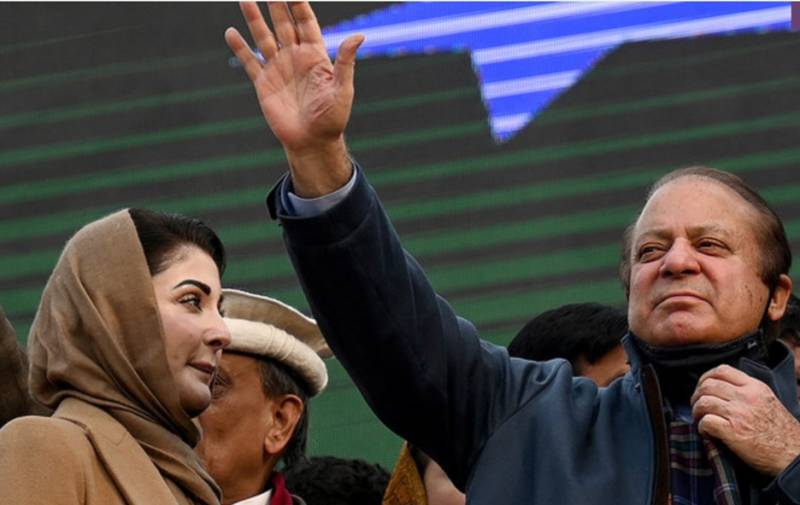
In response to the crumbling neoliberal consensus, the PML-N sought to reinvigorate the state's economic role, pivoting toward a refreshed form of development economics. This was a
significant shift for a party that had previously championed the state-repellent attitudes of the new middle-class.
The PPP, meanwhile, has continued to struggle to find a foothold among the new middle-class groups. However, during its 2008–2013 tenure, the party reintroduced state-funded welfare initiatives, such as the Benazir Income Support Program (BISP), to mitigate the fallout of neoliberal failure. While these programs primarily targeted the working and peasant classes, they also served to reassure a middle-class that was now increasingly looking towards the state for stability, even if they were not the direct recipients of the aid.
While the PPP’s initiatives resonated in Sindh, they were viewed with suspicion by non-Sindhi middle-classes, who maintained a historical perception of the PPP as a threat to their economic interests. The Sindhi middle-class, however, represents a different evolution. It is a product of the PPP’s long-standing governance in the province. It is largely religion-neutral and developed along a different political trajectory than its Punjabi, Pashtun or Mohajir counterparts.
When the PML-N attempted to replicate similar state-funded schemes and development economics in Punjab, it faced a different set of challenges. The religion-neutral segment of the middle-class outside of Sindh remained wary, fearing the PML-N would ultimately prioritise its original, more ‘Islamic’ constituency. Having failed to find a political home among the established parties, the religion-neutral faction had previously allied itself with the Pervez Musharraf dictatorship (1999–2008), which they viewed as a more suitable vehicle for their interests.
This constituency viewed the Musharraf era’s brand of neoliberalism as a religion-neutral alternative, believing it offered them a more favourable playing field than the ‘Islamic’ contemporaries who had flourished under Zia-ul-Haq and the early PML-N administrations.
Following Musharraf's departure, this religion-neutral middle-class was effectively inherited by Imran Khan’s PTI. This transition was facilitated by the military establishment, which sought to maintain its own institutional influence after being bothered by the reemergence of the PPP and PML-N, the two parties that had had a problematic relationship with the establishment in the past.
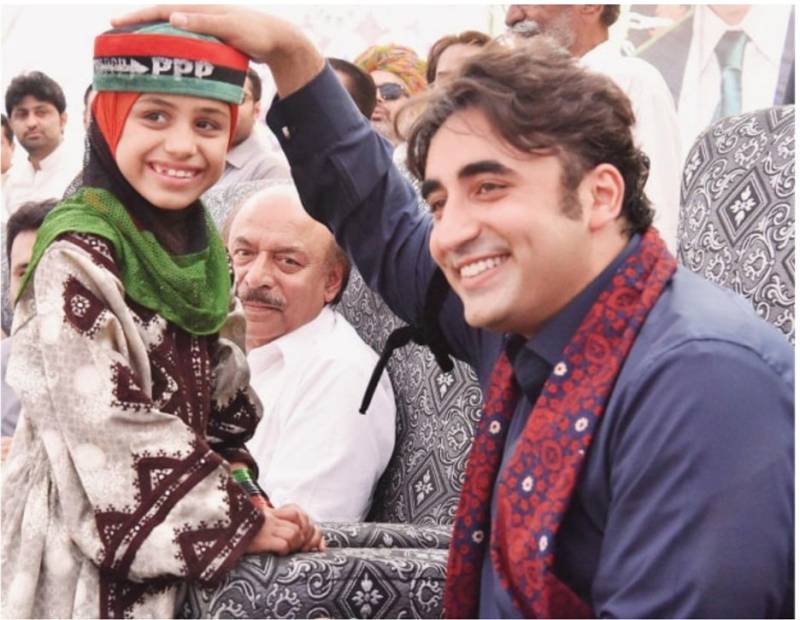
To broaden its appeal, the PTI performed a constant ideological dance around populism, centrism and Islamism. Crucially, the party adopted the alternative Islamic narrative previously constructed by the religion-neutral middle-class.
PTI wagered that this religion-neutral segment was becoming more influential than the Islamic middle-class of the 1980s and 1990s. As the national economy continued to contract, the friction between these two factions intensified, manifesting as the bitter, scorched-earth political rivalry between the PTI and the PML-N.
As neoliberalism recedes and the necessity for a dominant state economic role increases, the political tides have shifted again. By 2022, powerful state institutions, including the military, pivoted back toward the administrative experience of the PML-N and the PPP.
Comparison of Middle-Class Factions in Pakistan
This shift signals a likely corrosion of the state's Islamist dimension. With the military establishment withdrawing its support from the PTI, both segments of the middle-class — the Islamic and the religion-neutral — have retreated into a defensive, besieged state of mind. They now find themselves navigating an uncertain landscape where the state is reasserting its authority more forcefully. Both middle-class segments now face a high probability of further fragmentation.
| Feature | Islamic Middle Class | Religion-Neutral Middle Class |
|---|---|---|
| Primary Driver | Synergy of Neoliberalism + Islamisation. | Economic freedom + Moderate values |
| Political Vessel | Historically PML-N (90s); Jamaat-e-Islami | Pervez Musharraf (99-08); later PTI. Slight tilt towards PML-N. Overwhelmingly support for PPP in Sindh. |
| Ideological Anchor | "Islamic" nationalism / State Islamisation. | "Alternative" or Moderate Islam. |
| View of the State | State as an engine for "Islamic" commerce | From state Islamisation as an impediment to growth to PTI’s ‘Islamic touch.’ |
| Current Status | Anxious; fears decline of neoliberalism | Searching for a stable ideological anchor. |
| Social Narrative | "Mental Slaves" vs. "Pious Professionals" | "Authentic Liberals" vs. "Fake Liberals" |
The state’s current objective appears to be the promotion of a more pragmatic, less ideologically-driven bourgeoisie. While this shift toward economic realism should theoretically favour the religion-neutral segment, the lines remain blurred. The alternative Islamic narrative they originally developed as a survival tool has mutated over time, becoming nearly as conservative as the traditional outlook held by their "Islamic" contemporaries.
| Faction | Economic Model | Ideology | Political Affiliation | Placement |
|---|---|---|---|---|
| Old Middle Class (1950s–60s) | State-led development and bureaucracy | Modernist and nationalist | Associated with the Ayub Khan era and later radicalised by ZA Bhutto’s PPP | Bottom-Left (State-Led / Modernist) |
| Islamic New Middle Class | Neoliberalism and private capital (remittances) | Islamic nationalism; uses religion as a framework for capital accumulation | Historically linked to Jamaat-e-Islami (JI) and early PML-N (Zia era) | Top-Right (Neoliberal / Islamic) |
| Religion-Neutral New Middle Class | Neoliberalism; views state Islamisation as an economic hurdle | “Moderate” interpretations of faith, but increasingly populist | Aligned with Pervez Musharraf and later inherited by Imran Khan’s PTI and adopted populism | Bottom-Right (Neoliberal / Religion-Neutral) |
Existentialist Angst
While the new middle-classes had split their loyalties between Zia-ul-Haq’s Islamism and Pervez Musharraf’s ‘Enlightened Moderation,’ they remained the primary beneficiaries of economic liberalisation.
However, as Musharraf’s fall became imminent in 2007, both sides of this demographic fell into a state of collective anxiety. As Musharraf’s dictatorship weakened, a new breed of media personalities emerged on popular TV channels to reframe the political crisis as a cosmic struggle between good and evil.
Far from being the 'voice of reason' or the vanguard of modernity, the consumerist middle-class may ultimately become the destroyer of the very world that gave birth to it
Figures such as Zaid Hamid became staples of the airwaves, churning out elaborate conspiracy theories. He characterised mainstream politicians as puppets of international forces intent on destroying Pakistan and Islam. Hamid captivated young middle-class audiences by blending worn-out European conspiracy tropes with obscure Islamic reference bridging paranoia and argumentative Islamism.
He served as the ideological variant of the Freudian ‘id,’ providing a framework for a Manichaean struggle. Similarly, TV anchor Shahid Masood pivoted from a standard journalistic career to dramatic, apocalyptic lectures on the ‘End of Times,’ heavily borrowing from Turkish conspiracy theorist Harun Yahya.
The distorted histories, revenge fantasies and pseudo-scientific economic gibberish spouted by these men resonated deeply with middle-class groups facing a profound existential crisis. These groups feared that without a ‘strongman’ like Musharraf, they would be relegated to political obscurity or slip down the social ladder into the ranks of the classes below.
Though the personal popularity of Hamid and Masood eventually faded, they successfully tapped into the psyche of a vulnerable and influential constituency. Observers within the military establishment took note of this. While the PPP and PML-N won the 2008 and 2013 elections respectively, the military establishment continued to view these civilian parties as threats.
Consequently, the military establishment began looking for a suitable replacement for Musharraf. Someone to fill the perceived void. It was into this manufactured vacuum that Imran Khan eventually stepped.
In reality, there was no political void. The space left by Musharraf was functionally occupied by the PPP and then by PML-N. However, by this time, Pakistan's middle-class had ballooned to 84 million people. This demographic possessed significant economic clout and held key positions across major institutions, particularly in the rapidly expanding service industries and electronic media. To this group, Musharraf had been their strongman and they relied on a diet of conspiratorial tropes to explain away his downfall.
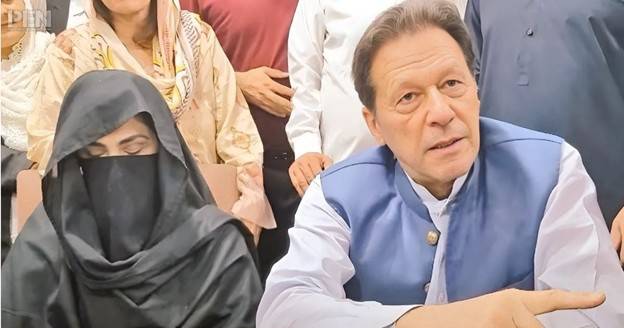
The military establishment saw in Imran Khan a figure who could be moulded into a civilian version of Musharraf. To soothe middle-class anxieties, Khan synthesised a diverse ideological palette: he co-opted Musharraf’s specific brand of nationalism and "Sufi Islam," blended it with traditional Islamist rhetoric, and added a layer of postmodernist theory borrowed from Western-based Muslim academics who framed Islamism as a valid resistance to Western modernity.
In 2018, Khan secured the lion’s share of the urban middle-class vote. However, this support was insufficient for a clear majority, forcing him to assemble a fragile coalition that he nevertheless governed with an authoritarian touch. While his passionate rhetoric remained constant, it proved powerless against a failing economy, rising crime and the fraying of diplomatic ties with the country's essential trading partners and financial donors.
As his administration faltered, his core middle-class supporters initially fell silent. But when it became clear that the military establishment was ending the experiment and the opposition was capitalising on public disappointment, these supporters entered a state of panic once more.
Having invested deeply in Khan as a paternal, even messianic figure, they reverted to the familiar comfort of conspiracy theories. These narratives were promoted by Khan himself, his ministers, and his media allies, effectively replacing his original anti-corruption platform as his own administration became mired in scandals.
In place of substantive policy, the tried-and-tested narrative of foreign intervention emerged. Despite the reality that Khan had limited international leverage as Prime Minister, he was framed as a figure so dangerous to American and European interests that they supposedly pressured the military establishment to facilitate his ouster via a no-confidence vote.
This narrative served as a psychological cushion, helping both Khan and his middle-class supporters soften the impact of a hard fall. Deep down, however, the constituency recognised that the game was over. For the second time in a decade, the specific identity constructed for them, first by Musharraf and then by Khan, was disintegrating.
I observed this sense of loss personally among a group of young supporters who began compulsively re-watching videos of Khan’s 2014 dharna (sit-in) against the PML-N regime. For his supporters these were more than political clips; they were home movies. Two members of this group had actually met and fallen in love during those protests, eventually marrying soon after. In their case, as with much of the middle-class, nostalgia became the final tool used to try and regenerate a fading identity.
In October 2022, a leftist scholar and activist noted a peculiar trend on Pakistani social media: even when ‘liberals’ and progressives heavily criticised the new government headed by PML-N for mirroring the authoritarian tactics of the ousted Khan regime, they were still met with hostility from PTI supporters. To the PTI faithful, equating the current government’s crackdown with the similar measures taken during Khan’s tenure was unacceptable.
In their view, Khan’s actions were inherently justified. To gain their approval, a critic had to condemn the current administration in isolation, strictly avoiding any comparison to the PTI’s own record.
This is essentially a defensive mechanism to safeguard the political identity constructed by the PTI and its charismatic leader. Before 2011, the majority of Khan’s urban middle-class supporters lacked a distinct political identity. Their self-perception was defined by their professions: doctors, lawyers, teachers, or corporate executives, alongside a broad sense of being Muslim and "proud Pakistanis." Many had admired Musharraf and viewed the military establishment as beyond reproach.
The ideology crafted for them by the PTI filled this vacuum with several core tenets:
- A visceral hatred for mainstream political parties, labelled as "corrupt."
- A rejection of the parliamentary system in favour of a centralised "presidential" model.
- A deep suspicion of the US and Europe as "neo-imperialist" forces hostile to Islam.
- An absolute reverence for the PTI chairman as a messianic figure.
- Khan is creating a new Islamic Welfare State inspired by the 7th century ‘Islamic state’ in Arabia.
This identity was so encompassing that it allowed individuals to hold contradictory positions. One could live as a Western citizen, or a lifestyle liberal in Pakistan, while claiming to be a ‘genuine liberal,’ and a ‘pious’ Muslim as opposed to the "fake liberals" who were branded as khooni (bloodthirsty). These "fake liberals" were accused of aiding Western powers by labelling fellow Muslims as terrorists.
Acknowledging the critiques of their leader would threaten the very foundation of this carefully constructed identity. Losing a political identity is deeply unsettling. While many eventually grow out of it, others find it impossible to let go. For them, this identity provides more than just a sense of belonging. It offers an existential purpose and the promise of potential economic benefits.
The New Middle-Class Self
During the dictatorship of General Zia-ul-Haq, Westernised Pakistanis were frequently denounced as "mental slaves," even while their education and entrepreneurial and professional skills remained highly valued. To bridge this gap, the Zia regime engineered a new identity that synthesised modern economic activity with Islamic ritualism and exhibitions of piety. Under this framework, participating in globalised commerce was encouraged, provided it was ‘balanced’ by a strict adherence to religious obligations.
This state-sanctioned identity was disseminated through national textbooks and state media, redefining the "ideal" Pakistani as a "proud Muslim" who was educated, economically productive and pious. However, this identity also demanded a specific aesthetic: the shalwar-kameez was rebranded as "Islamic dress," and outward symbols like beards and hijabs became markers of social and religious compliance.
Two decades later, Imran Khan emerged as the 21st century manifestation of this mindset. It was under his leadership that the urban middle-class fully consolidated an identity originally forged by a reactionary dictatorship in the 1980s. Like its predecessor, this identity was defined by its opposition to "the other" and/or a group comprising modernists, liberals and the so-called jahil awam (illiterate masses).
In Pakistan, the middle-class has traditionally felt most secure under military dictatorships. In contrast, the Indian middle-class successfully infiltrated the political elite by riding the wave of the right-wing BJP. In 2018, Pakistan’s urban-middle class believed they had achieved a similar breakthrough by propelling Khan’s PTI to power.
However, the military establishment’s nascent ‘democratic’ experiment with Khan imploded with his ouster. This reversal led the middle-class to revert to its old view of Pakistan’s democracy: that is a ‘rigged’ system designed to serve an elite that prioritises only the classes with the largest voting blocs.
Historically, this behaviour mirrors the middle-classes of Europe between the two World Wars. When these groups feared that the working-classes would use democracy to undermine middle-class interests, they became antagonistic toward the system. They facilitated the rise of anti-democratic forces that overthrew political elites who were, at the very least, engaged in electoral politics. Today, both Indian and Pakistani middle-classes are dismantling the very systems originally designed to protect them.
‘Politics of Expression’
Squeezed between the ‘electoral elite’ and the working classes, South Asian middle-class groups have struggled to establish a stable political identity within traditional systems. As historian Markus Daechsel suggests, this has led them toward a "politics of self-expression."
This form of politics acts as a rebellion against a mainstream system that the middle-class dismisses as "corrupt." This corruption is viewed as more than just material; it is seen as a force that contaminates the individual's inner self. Consequently, democratic instruments like the constitution and parliament are viewed not as protections, but as restraints blocking "liberation."
When Khan led his post-ouster "Azadi March" (Freedom/Liberation March) just before his arrest, the specific nature of this freedom remained unconvincing. The goal of this self-expression is not to find a place within the existing political framework, but to escape into a conceptual universe where societal constraints on the ‘middle-class self’ disappear. According to Daechsel, this desire for immediate liberation is a direct product of consumer culture, where the ‘self’ is prioritised over collective institutional stability.
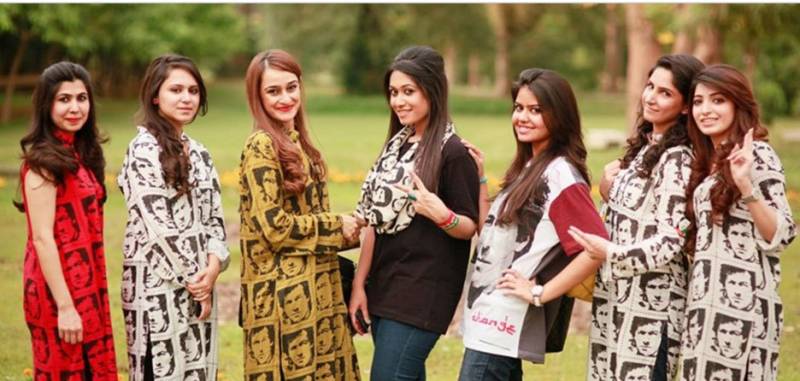
A new romantic ethic defined by emotional introspection, a constant hunger for stimulation, and a penchant for daydreaming has birthed a consumer society that sustains the modern march of capitalism. At the heart of this society is an obsession with identity. In a consumerist world, there is often no social reality beyond the relationship between the buyer and the brand. People essentially become what they consume.
In South Asia, the middle-class was persuaded by its material culture to use consumption as an outlet for its frustrated sociopolitical ambitions. Consumerism replaces genuine societal relations with a fetishistic attachment to goods. A political constituency that could not thrive within the constraints of the mainstream political set-up found in consumerism a surrogate space to establish a unified cultural consciousness.
The fundamental problem with consumer identities is their inherent contradiction: they claim to reflect a person’s innermost being while relying on mundane, garish products to do so. Consumption is rarely about grand historical deeds. It is about the choice of toothpaste or a mobile phone. Yet, marketing provides the building blocks for these identities.
Marlboro smokers are seen as rugged individualists. Coca-Cola drinkers are associated with wholesome family happiness. iPhone users are framed as savvy, "creative," “out of the box thinkers” and "fun-loving."
The politics of self-expression is essentially an attempt to make these shallow consumer identities feel serious and secure by dressing up the act of consumption as political activism.
Consequently, political language becomes a caricature of advertising. It adopts the same hyperbole found in commercials, where a heavy word like "liberation" carries about as much weight in a political speech as it does in an advertisement for clothing brands, or indigestion relievers.
In the politics of self-expression, the playful irony of modern advertising is replaced by a rigid, assumed air of prophetic certainty. This creates a political environment where language becomes a caricature of marketing which is itself a caricature of lofty ideals.
Today, a young person is far more likely to encounter a word like "Revolution" in a commercial for a product than in a serious, non-rhetorical political debate. In this exchange, advertisements and political rhetoric trade in words that eventually lose all meaning.
The middle-classes of India and Pakistan have waged war against conventional politics, fearing it is inherently biased against them. However, even in India, where these classes have successfully breached the once-impenetrable fortress of the ‘rational’ political elite, they have failed to provide a convincing alternative. Instead, their alternatives have sparked unprecedented turmoil, as they are rooted in the volatile logic of self-expression rather than institutional stability.
Rational political instruments and democratic norms are attacked through spectacles broadcast across the media universe; events that function more like marketing stunts than policy debates. Actions in this regard turn the perpetrators into political brands.
These are quite literally consumed by their followers. This is the ultimate extension of a longing for intoxication, a self-indulgent power trip that mimics the thrill of purchasing a luxury car or a high-end watch. This sensation is fundamentally different from actual political action. It is the excitement of acquiring a favourite product.
So, the middle-classes treat political leaders as brands to be marketed, sold and consumed. This explains the common, though, often hidden, practice of politicians hiring marketing firms to run their campaigns.
According to Daechsel, the development of a middle-class through the expansion of this nature of consumption offers no guarantee of a better political culture. The persistent contradictions between middle-class consumerism and other forms of social organisation stimulate a radicalism that is difficult to control. Far from being the "voice of reason" or the vanguard of modernity, the consumerist middle-class may ultimately become the destroyer of the very world that gave birth to it.