

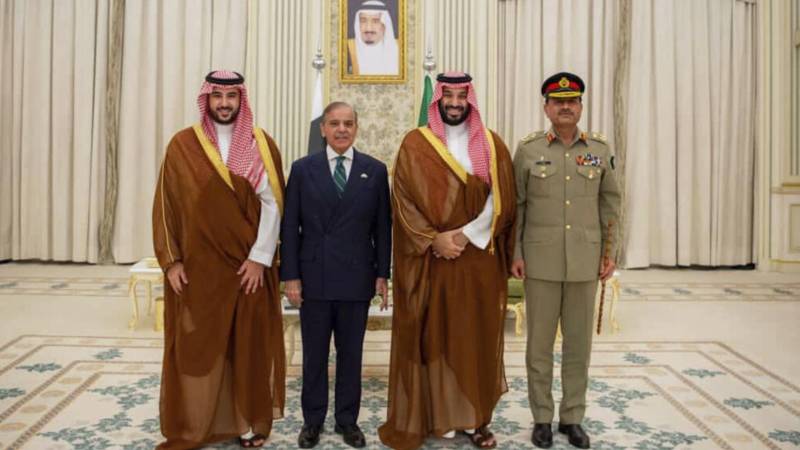
For a country long defined in Western capitals by the Afghan war and its aftermath, Pakistan spent much of 2026 doing something unfamiliar: brokering peace between great powers rather than absorbing the fallout of their conflicts. When the United States and Israel struck Iran's military and nuclear infrastructure in late February, and the war spiraled into months of missile and drone exchanges across the Gulf, it was Islamabad's civil-military leadership; Prime Minister Shehbaz Sharif and Field Marshal Syed Asim Munir, Pakistan's first Chief of Defence Forces who kept a channel open between Washington and Tehran. Pakistan hosted rounds of talks in Islamabad, shuttled envoys between Tehran, Riyadh and Ankara, and was publicly credited by both Washington and Tehran when a ceasefire finally held. It was, by any measure, a rare foreign-policy win: proof of deft diplomacy and of Pakistan's usefulness as a peacemaker.
But the war did more than showcase Pakistani diplomacy, it redrew the region's security map, and not in Washington's favour. Iran emerged bruised but unbowed, its Revolutionary Guard signalling that any Gulf host of American power projection is fair game; strikes and near-misses were reported across Bahrain, Kuwait, Qatar, Jordan, Oman and the UAE despite the presence of US bases meant to deter exactly such attacks. That has left Gulf capitals uneasy about a security guarantee that failed to secure them, even as Washington's troops and hardware remain firmly in place.
Into that gap has stepped Pakistan. Riyadh and Islamabad were already unusually close: the Strategic Mutual Defence Agreement signed by Shehbaz Sharif and Crown Prince Mohammed bin Salman in September 2025 formalised decades of quiet cooperation — Pakistani personnel training and, at times, deploying alongside Saudi forces — into a pact under which an attack on one is treated as an attack on both. The Iran war has only sharpened the logic of that arrangement, and other states are taking note. That interest has since crystallised: today, on 7 August, 2026 Riyadh, Islamabad and Ankara signed the ‘Mecca Joint Defence Agreement’, binding the three states into a mutual-defence pact under which an armed attack on any one is to be treated as an attack on all. Egypt and Kuwait may not be far behind. A country that trained thousands of Gulf soldiers over the decades is now being courted as something closer to a formal guarantor.
Sealed at Islam's holiest site by Crown Prince Mohammed bin Salman, President Recep Tayyip Erdoğan and Prime Minister Shehbaz Sharif, the Mecca agreement is the clearest sign that Pakistan's Gulf diplomacy has hardened into something more durable than goodwill. It welds together the region's most consequential military assets: Türkiye's NATO-scale army, Saudi Arabia's oil wealth and custodianship of Islam's holy sites, and Pakistan's nuclear deterrent — the only in the Muslim world. For Riyadh, battered by three years of missile and drone fire and no longer fully convinced that Washington's security umbrella holds, the pact offers a hedge that does not require choosing between American protection and regional self-reliance. For Pakistan, it is the institutional capstone of the role Islamabad has played all year: no longer simply a mediator shuttling between capitals, but a treaty-bound guarantor of Gulf security, with the obligations and the leverage to match.
This ascent did not happen in isolation. Since May 2025, when Pakistan's armed forces gave India's Narendra Modi a bloody nose in their brief but intense conflict, Islamabad has drawn a level of regional and international attention it has rarely enjoyed. Between a battlefield rebuff to Delhi and a diplomatic rescue act in the Gulf, Pakistan's civil-military leadership has, in the space of little more than a year, rewritten how the country is perceived.
It welds together the region's most consequential military assets: Türkiye's NATO-scale army, Saudi Arabia's oil wealth and custodianship of Islam's holy sites, and Pakistan's nuclear deterrent—the only in the Muslim world.
The case for Pakistan's new role, though, is not simply that it flatters Islamabad — it is that nearly everyone else benefits too. The GCC states want a credible balancer against a more assertive Iran, and Pakistan can offer one without the baggage that comes attached to American power. Iran itself has an interest in a stable, less militarised neighbourhood in which it can pursue the economic and political normalisation it fought this war to secure. China wants exactly the same stability, for the plainest of reasons: Beijing's energy security runs through a free and open Strait of Hormuz, and its longstanding aversion to military entanglement means it would rather see Pakistan absorb the diplomatic load. And the United States, however uneasy it may be about diminished credibility with its Gulf partners, still needs those partners to keep buying American weapons, hosting American bases and trusting American guarantees — interests better served by a stabilising Pakistan than by an emboldened Iran or a vacuum.
Yet there is a hard truth Pakistan's leadership cannot avoid: diplomatic clout and military goodwill are not the same as economic strength, and only the latter is durable. Translating mediation success and new defence pacts into sustainable power will require more than roll-over loans, deferred oil payments from Riyadh, or gratitude from Washington. In a century in which national power increasingly rests on innovation and technological capacity, Pakistan's civil-military leadership must apply the same spirit & discipline it showed in the Gulf to its own house — overhauling an economy still dependent on borrowed time, and addressing the social and political fault lines that undercut any claim to lasting regional weight.
Pakistan has, in short, earned a hearing it has not always had. Whether that hearing becomes genuine influence, or simply another missed opportunity, will depend less on what happens in Tehran, Riyadh or Washington than on what Islamabad does at home.