

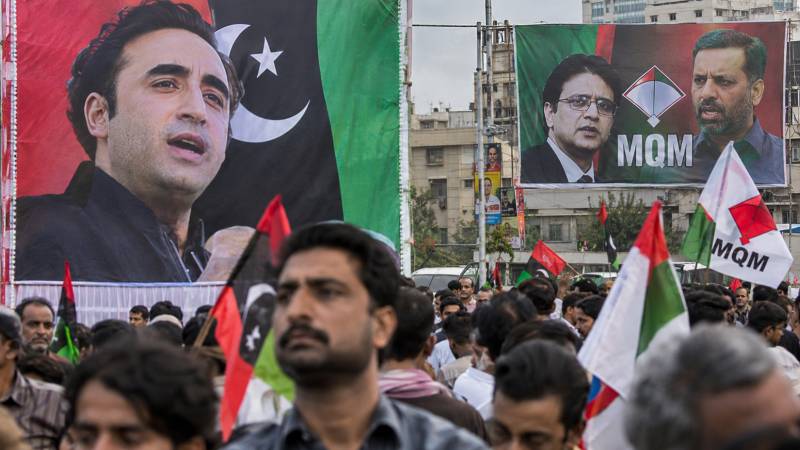
The criticism by Muttahida Qaumi Movement-Pakistan (MQM-P) of Pakistan Peoples’ Party (PPP) Chairman Bilawal Bhutto Zardari over the issue of new provinces in Sindh raises an important question about the political history, credibility and moral standing of those making such demands. While MQM-P presents the creation of new provinces as an administrative and constitutional necessity, its leaders must also be prepared to answer questions about their own political history, the ethnic divisions that damaged Karachi and the wider province of Sindh. It is easy to lecture others about democracy, representation and people's rights, but political parties must also be judged by their past actions and the consequences of their politics.
MQM-P has strongly criticised Bilawal Bhutto Zardari for warning that forcibly dividing Sindh could lead to bloodshed. Its leaders argue that creating new provinces is a constitutional matter and that the people living in urban Sindh have the right to demand better administrative arrangements. They also question why new provinces can be discussed in Punjab but not in Sindh. On the surface, these arguments may appear reasonable. Every citizen has the right to demand better governance, equal opportunities and an effective local administration. However, there is a considerable difference between demanding administrative reforms and promoting a political narrative that could reopen old ethnic wounds.
Bilawal's position is that the people of Sindh and their elected representatives must have a say in any decision affecting the geographical unity of the province. He has also made it clear that the PPP is not necessarily opposed to constitutional and democratic discussions about administrative reforms, but will resist attempts to divide Sindh through pressure or force in the name of referendum. His warning about bloodshed should be understood in the context of Karachi's painful history, where political and ethnic conflicts have cost thousands of lives. Nevertheless, political leaders on all sides should avoid language that increases tensions rather than encouraging meaningful dialogue.
The most important question MQM-P leaders must answer is whether they have genuinely moved away from the politics associated with the party's violent past. During the 1980s and 1990s, Karachi experienced some of the darkest periods in its history. Political competition increasingly turned into ethnic confrontation, particularly between Mohajirs and Sindhis, as well as other communities living in the city. Instead of promoting harmony between people who shared the same streets, markets, workplaces and neighbourhoods, ethnic identity became a powerful political weapon. The impression was created that one community's political success could only come at the expense of another. This attitude damaged Karachi's social fabric and created mistrust between communities that had previously lived together.
It would be unfair to suggest that every act of ethnic violence was committed by MQM or that the state and rival political groups had no responsibility. The police, rival factions and other political forces were also involved in serious abuses. Amnesty International's 1996 report, Human Rights Crisis in Karachi, documented killings, abductions, torture and disappearances involving different actors. It also reported allegations of torture cells maintained by MQM factions. The United States Department of State's human rights reports from the 1990s similarly documented the use of violence and intimidation by MQM elements, including allegations of extortion and politically motivated killings. These are serious historical records that cannot be dismissed as political propaganda.
Political separation does not remove the responsibility to acknowledge history. Current leaders must demonstrate through their conduct that their politics is genuinely different from the politics of intimidation, ethnic confrontation and personality cults associated with the past.
The expression “bodies in gunny bags” became associated with Karachi's years of political violence, fear and targeted killings. The discovery of murdered people, allegations of torture and the disappearance of political opponents created an atmosphere in which ordinary citizens feared for their lives. However, the responsibility for individual killings must be established through evidence and investigations rather than automatically attributed to one political organisation.
The suffering of victims and their families should never become a political slogan. Every killing deserved investigation, and every perpetrator, regardless of political affiliation, should have faced justice. It is important to distinguish between allegations, investigative material and proven criminal responsibility. The existence of reported statements does not automatically establish that every allegation is true, and such claims should not be presented as established judicial findings without sufficient evidence. Nevertheless, these controversies created serious questions about the party's leadership, financial arrangements and political relationships. A party that claims to represent millions of Pakistani citizens should welcome transparency and provide convincing answers to legitimate questions about its past.
The history of MQM also demonstrates how political power can change relationships. The party participated in coalition governments and enjoyed considerable influence during different periods of Pakistan's political history. Its leaders were part of government arrangements and held important positions, while Karachi continued to suffer from violence, poor governance, insecurity and declining public confidence. The party's association with power did not always translate into the peaceful, prosperous and well-managed city that Karachi's residents deserved.
It would be wrong to hold every present-day MQM-P leader personally responsible for every action attributed to the original organisation or its former activists. However, political separation does not remove the responsibility to acknowledge history. Current leaders, including Khalid Maqbool Siddiqui and Mustafa Kamal, should demonstrate through their conduct that their politics is genuinely different from the politics of intimidation, ethnic confrontation and personality cults associated with the past.
Mustafa Kamal, who previously served as the mayor of Karachi, has also become an outspoken advocate of administrative restructuring. His experience in Karachi politics gives him an opportunity to explain how local government can be strengthened without creating new ethnic divisions. Instead of making every political disagreement a confrontation between urban and rural Sindh, MQM-P should present practical proposals for better municipal services, employment, education, transport and accountability.
There is also a need to question the political wisdom of repeatedly presenting Karachi's problems as a conflict between Urdu-speaking and Sindhi-speaking populations. Karachi belongs to all Pakistanis who live and work there. It is home to Urdu speaking people, Sindhis, Punjabis, Pashtuns, Baloch, Kashmiris and people from many other communities. No political party has the right to claim exclusive ownership of the city or to suggest that one linguistic group deserves greater political authority than another. The same principle applies to the rest of Sindh, whose history, identity and geographical unity deserve respect.
If MQM-P genuinely believes in democracy, it should accept that the demands for new provinces must be discussed through constitutional procedures, public consultation and mutual agreement. Equally, the PPP should not treat every demand for administrative reform as an attack on Sindh's identity. Both parties have a responsibility to replace confrontation with serious political discussion.
Ultimately, the real test of MQM-P is not how aggressively its leaders criticise Bilawal Bhutto Zardari or how frequently they raise the slogan of new provinces. The real test is whether they can offer a credible political alternative that rejects ethnic hatred, political violence, intimidation and unquestioning loyalty to individual leaders. The people of Karachi have already paid an enormous price for decades of political confrontation. They do not need another generation of linguistic division or emotional slogans.
Sindh does not belong to the PPP alone, just as Karachi does not belong to MQM. Both belong to their people. Political parties should remember that their mandate is to serve citizens, not to create divisions for electoral advantage. Before questioning the democratic credentials of others, MQM-P’s leadership must demonstrate that it has learnt the lessons of its own history. The people of Pakistan deserve political leadership based on honesty, accountability, tolerance and equal citizenship, rather than the politics of fear and ethnic hatred.