

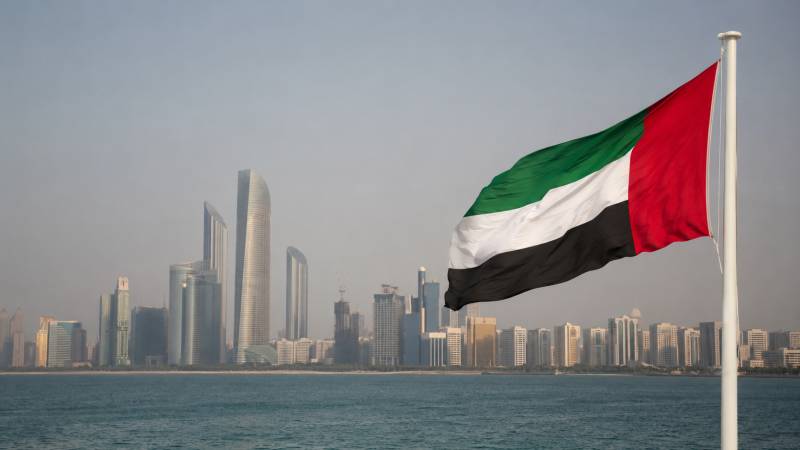
The UAE today faces an acute dilemma. It is increasingly drifting away from the very Gulf geography where its roots, prosperity and long-term security ultimately lie. The Iran-US-Israel war has exposed this reality brutally. Iran attacked the UAE repeatedly during the conflict. Emirati infrastructure and strategic assets came under pressure. Regional trade routes faced disruption. Yet instead of moving closer to the Gulf, Abu Dhabi appears to move further away from it.
In the weeks after the war, the UAE has deepened security coordination with Israel under the Abraham Accords, quietly pushed for stronger military responses against Iran and then welcomed Narendra Modi with renewed discussion about defence cooperation. This happens even though India itself struggled to maintain credible deterrence even against Pakistan during last year’s conflict. At the same time, Abbas Araghchi has publicly praised Chabahar as a gateway connecting India to Central Asia and Europe. Abu Dhabi, therefore, appears to embrace a country that Tehran itself still treats as an important strategic partner.
The contradiction becomes difficult to ignore. Israel is not the UAE’s neighbour. India is not the UAE’s neighbour. Iran, Saudi Arabia, Qatar and the rest of the GCC are. The Emirates can build relations with extra-regional powers, but its long-term security will still depend upon stability inside the Gulf rather than permanent confrontation around it.
The UAE’s anger toward Iran is nevertheless understandable. Among all Gulf states, the Emirates has remained one of the most open environments for Iranian business, commerce and sanctioned capital. Dubai has functioned for years as an economic breathing space for Iranian networks. During the war, however, Iran targeted the UAE more aggressively than many expected. A deep sense of betrayal naturally emerged within sections of the Emirati leadership and policy community. Gulf countries, including even Oman, are becoming much clearer about the dangers posed by Iranian conduct, though they differ in how they respond to it.
Even then, the wiser response should be immediate reconciliation with Saudi Arabia over the growing differences that emerged after the Abraham Accords. Yemen, Sudan, Somaliland and the Red Sea competition have gradually widened the distance between Abu Dhabi and Riyadh. The war has exposed the cost of that drift.
During the conflict, Saudi Arabia refused to fall into the trap desired by both Israel and Iranian hardliners. Despite attacks on Gulf infrastructure and intense pressure from multiple directions, Riyadh avoided being dragged into a wider war. Pakistan and Turkey quietly played an important role here as well. Both worked closely with Saudi Arabia and other Muslim countries to moderate the Arab-Islamic foreign ministers’ Riyadh statement, despite the UAE wanting a sharper military response against Iran at that stage.
That restraint created the diplomatic space through which Pakistan later helped sustain the ceasefire and the Islamabad talks between the United States and Iran. In many ways, Pakistan helped save the Iranian regime from a much wider regional escalation that could have become disastrous for Tehran itself. Ironically, Iran’s own record toward Pakistan hardly justifies such goodwill. Since 1947, Islamabad has repeatedly faced Iranian suspicion, Indian-Iranian convergence against Pakistani interests and even Iranian tolerance toward destabilising networks linked to Baloch insurgency.
Israel wants a permanently fragmented regional order because regional instability strengthens Israeli strategic centrality
The war has also made Israel’s regional objectives increasingly visible. Netanyahu repeatedly attacks Pakistan’s mediation role and accuses Islamabad of trying to create a wedge between Israel and the United States. Israeli circles leaked stories about Netanyahu’s supposed UAE visit. Abu Dhabi denied them. Yet the political effect remains the same: the perception that the UAE is moving closer to Israel while drifting further from Saudi strategic thinking.
That perception serves Israel’s interests perfectly. It does not necessarily serve Emirati interests. Every step the UAE takes away from GCC cohesion deepens the regional security dilemma it already faces. Israel wants a permanently fragmented regional order because regional instability strengthens Israeli strategic centrality. The Gulf, however, requires stability for trade, energy flows and long-term development.
The same confusion appears in Abu Dhabi’s growing fascination with India as a strategic security partner. India has largely remained a bystander throughout this conflict. Washington, Beijing and even Tehran all turn toward Pakistan when serious mediation becomes necessary. Trump repeatedly praises Pakistan’s role. Islamabad hosts talks, sustains communication channels and repeatedly helps prevent escalation. India, meanwhile, remains absent from the actual diplomacy.
India ultimately offers the UAE far less strategic depth than some Emirati enthusiasts imagine. Beyond Bollywood glamour, commercial opportunism and the regressive impulses of Hindutva politics, New Delhi shows little evidence of either credible regional deterrence capability or independent diplomatic weight during this crisis. Israel and India increasingly resemble strategic liabilities in their respective regions rather than reliable anchors of long-term stability.
Aligning too closely with Israel after Gaza is also morally damaging. It steadily narrows the UAE’s political space across the Muslim world and among global publics still sensitive to civilian suffering and questions of human rights. The attempt to build security architecture around Israel and India simultaneously risks pulling the UAE further away from the very region where its identity, geography and long-term interests naturally belong.
Yet perhaps the strangest aspect of this entire period is watching certain Emirati social media handles attack Pakistan’s neutrality during the conflict. Pakistan has become the only serious mediator trusted simultaneously by Washington, Tehran, Beijing, Riyadh, Doha, Ankara and Cairo. Pakistani diplomacy helps sustain the ceasefire, hosts the Islamabad talks, keeps channels open and repeatedly prevents escalation. Even Trump publicly acknowledges Pakistani requests for de-escalation.
Yet pro-Israel and pro-India narratives emerging from sections of Emirati discourse attempt to portray Pakistan negatively through unverified claims, selective leaks and information warfare. The CBS story regarding Iranian aircraft at Nur Khan Airbase served precisely such a purpose: to create suspicion about Pakistan’s neutrality and generate distrust between Islamabad and Washington. Simultaneously, Reuters reports implying Saudi military involvement against Iran served another political objective: to portray Riyadh as already trapped inside the war despite Saudi Arabia’s actual strategic restraint.
Such narratives benefit precisely those actors seeking division inside the GCC and distrust toward Pakistan’s mediation. Meanwhile, populist Iranophile discourse inside Pakistan complicates matters from the other side. Hyper-emotional anti-American rhetoric and irresponsible commentary regarding Gulf states create unnecessary difficulties for Pakistani leaders conducting an exceptionally delicate balancing act involving Iran, the United States, Saudi Arabia, China and others simultaneously.
Despite all this, Pakistan still shows restraint and grace toward the UAE. Last month, Abu Dhabi withdrew nearly $3.2 billion in financial commitments during the wider regional turbulence. Yet Islamabad avoided public reaction because Pakistan has historically invested deeply in the UAE’s rise and stability. Emirates’ first EK001 flight landed in Karachi. Pakistani professionals helped build Emirati banking, aviation, infrastructure and labour sectors. Institutions like BCCI symbolised an era when Pakistan and the Gulf rose together economically. Millions of Pakistani workers continue contributing to the UAE’s prosperity.
That is why Pakistan’s civil-military leadership continues engaging Abu Dhabi carefully despite the tensions generated by the war. The primary Pakistani interest remains the long-term stability and prosperity of the Gulf itself. Saudi Arabia, meanwhile, must preserve the core principle of Gulf unity despite the anger and confusion generated by the conflict. Even normally measured Emirati analysts such as Abdulkhaleq Abdulla appear swept away by wartime passions, praising the Abraham Accords one moment and denying Netanyahu’s reported visit the next.
Once the dust settles, the wiser course for all serious regional actors will be to gradually bring the UAE back toward the strategic space where its roots naturally belong: Gulf cohesion, regional stability and collective security rather than dependence upon extra-regional powers whose own interests revolve around perpetual instability.
The future security of the Emirates still lies in the Gulf. Saudi Arabia’s post-war thinking increasingly appears focused on some form of GCC-Iran non-aggression framework. That pathway may ultimately suit the UAE far better than deeper dependence on Israel and exaggerated expectations from India. Geography eventually humbles everybody. The Gulf cannot be replaced, and no amount of Israeli coordination, Abraham Accord enthusiasm or Bollywood diplomacy can permanently alter that reality.