


The political landscape of the Middle East has undergone a sweeping transformation since the 19th century, transitioning from the overarching religious-imperial framework of the Ottoman Caliphate toward the ethnic nationalisms of the 20th century, and eventually into a late-century resurgence of religious-political identity.
However, as noted by Asef Bayat in his seminal work Making Islam Democratic, the region has increasingly moved beyond binary oppositions of "secular vs. religious." This shift has resulted in an enlarging ‘grey zone’ or a complex ideological space where the traditional borders between Islamism and secularism are no longer distinct.
Modern Middle Eastern states are progressively adopting hybrid models that synthesise aggressive hyper-nationalism with traditionalist rhetoric. The grand 20th-century struggles for "Pan-Arab Unity" or "Islamic Revolution" have been largely superseded by pragmatic, state-centric concerns regarding regime stability and economic survival. This transition represents a fragmented search for a “post-ideological identity” that favours efficiency over utopia.
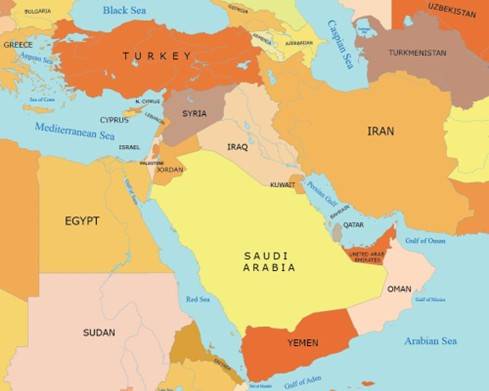
This trend is observable in Pakistan as well, which, while geographically South Asian, remains inextricably linked to the Middle East through deep-seated economic, political, and religious ties. Like many Middle Eastern countries, Pakistan too is grappling with the tension between a state-defined religious identity and the practical demands of globalised markets.
Within Iran, former ideological rivals, specifically conservatives and secular nationalists, are increasingly forming tactical alliances based on shared political and economic interests (against the Islamist regime).
In the Gulf monarchies, such as Saudi Arabia and the United Arab Emirates, a distinct "Nationalist-Developmentalist" ideology has emerged. As documented in studies like Steffen Hertog’s Princes, Brokers, and Bureaucrats, these states are prioritising rapid modernisation, digital infrastructure, and secularised mass entertainment while simultaneously tightening traditional political controls. This model seeks to provide economic prosperity and national pride as a substitute for political pluralism.
Underpinning these state-level changes is a profound generational shift toward what the French scholar Oliver Roy termed as "Post-Islamism." This movement, prevalent among the region’s youth, represents an endeavour to fuse faith with freedom and Islam with individual rights.
Modern states are adopting hybrid ideologies that prioritize regime stability and economic survival, favoring pragmatic efficiency over the utopian visions of Pan-Arab unity or Islamic revolution
Unlike the traditional Islamist slogan "Islam is the Solution," Post-Islamism emphasises (quasi)-secular governance and personal autonomy while maintaining a respect for religious heritage. This ideological evolution suggests a move away from the totalising state models of the past toward a more fluid, individualised understanding of politics and Islam in the 21st century.
Roots (19th Century)
Throughout the 19th century, the Middle East was primarily defined by the administrative and territorial dominance of the Ottoman Empire, and the Qajar Dynasty in Iran. During this era, political ideologies emerged not in a vacuum, but as urgent, defensive reactions to the existential threat of European colonial encroachment and a visible decline in Islamic institutional power.
Scholars such as William L Cleveland highlighted that this period marked the beginning of a long struggle to reconcile traditional Islamic governance with the technical and political advancements of the West.
The Ottoman state’s primary response to these pressures was the implementation of the ‘Tanzimat Reforms.’ These were initiated in 1839. These reforms birthed the ideology of ‘Ottomanism,’ which sought to create a unified imperial identity that transcended religious and ethnic affiliations.
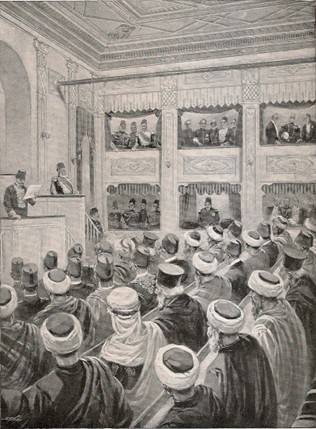
By promoting equal citizenship for all subjects, Muslim and non-Muslim alike, the Ottoman Empire hoped to neutralise the rising tide of ethnic nationalism among its Balkan and Arab- Christian subjects, thereby preventing the empire from fracturing under the weight of separatist movements.
As noted by Albert Hourani in Arabic Thought in the Liberal Age, this shift toward legal equality represented a profound departure from the traditional dhimmi system of religious hierarchy. In tandem with state-led administrative changes, a powerful intellectual current known as ‘Islamic Modernism’ began to take root.
Influential thinkers such as Jamal al-Din al-Afghani and his disciple Muhammad Abduh argued that the perceived backwardness of Islamic societies was not due to the religion itself, but to the stagnation of Islamic thought. They contended that Islam was fundamentally compatible with modern science, reason, and political progress.
By reforming Islamic education and legal interpretation, they sought to provide the Muslim world with the intellectual tools necessary to resist Western hegemony. Their work laid the foundation for nearly all subsequent 20th-century political movements in the region, ranging from secular nationalism to modern Islamism.
19th-century Middle Eastern transformations
| Phase / Category | Key Element | Details & Descriptions |
|---|---|---|
| 1. Political Framework | The Status Quo | Dominance of the Ottoman Empire (Arab world/Anatolia) and the Qajar Dynasty (Iran) |
| The Catalyst | Existential threats from European colonial encroachment and a decline in Islamic institutional power | |
| 2. Legal Transition | From Hierarchy to Citizenship | A radical move away from the Dhimmi system (traditional religious hierarchy) |
| New Concept | Introduction of Legal Equality and Universal Citizenship as the basis for the state | |
| 3. State Response | Tanzimat Reforms (1839) | A state-led effort to modernize administration and law |
| "Ottomanism" | Ideology seeking a unified identity to prevent ethnic separatism (Balkan/Arab-Christian) | |
| 4. Intellectual Current | Islamic Modernism | Led by Jamal al-Din al-Afghani and Muhammad Abduh |
| Core Argument | "Backwardness" was caused by intellectual stagnation, not the religion itself | |
| The Synthesis | Claimed Islam is fundamentally compatible with reason, science, and political progress | |
| Legacy | Provided tools for future secular nationalists and Islamists to resist Western hegemony | |
| 5. Institutional Bridge | Constitutionalism | Transitioned the region from absolute imperial rule to the modern nation-state |
| Key Examples | Young Turks (1876 Constitution) and Iran’s Constitutional Revolution (1905) | |
| Core Principles | Introduced popular sovereignty and legislative accountability to the political lexicon |
In the Ottoman Empire, groups dubbed the ‘Young Turks’ pushed for a representative parliament to check the absolute power of the Sultan, culminating in the short-lived Constitution of 1876. A similar trajectory unfolded in Iran, where the Constitutional Revolution of 1905–1911 sought to limit the arbitrary rule of the Qajar monarchs through a written code of law and a national assembly (Majlis).
As documented in Ervand Abrahamian’s Iran Between Two Revolutions, these movements represented a critical bridge between traditional imperial rule and the modern nation-state, as they introduced the concepts of popular sovereignty and legislative accountability to the Middle Eastern political lexicon.
Blood Feuds (20th Century)
The transition into the early and mid-20th century marked a seismic shift in the political consciousness of the Middle East, as the collapse of the Ottoman Empire following the First World War ushered in what historians often term the ”Age of Ideology.” During this era, the universalist religious framework of the Caliphate was dismantled and replaced by secular, ethnic, and linguistic identities.
As explored by Eugene Rogan in his work The Arabs: A History, this period was defined by the struggle to fill the power vacuum left by the Ottomans and the subsequent imposition of European mandates under the post-war Sykes-Picot Agreement.
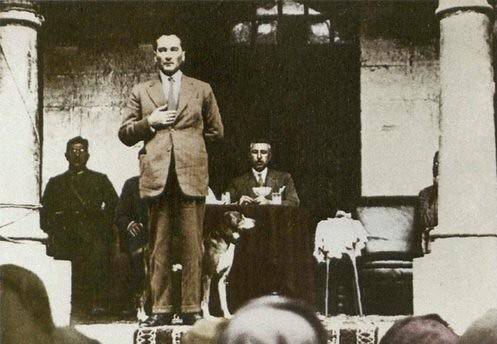
In the newly formed Republic of Turkey, this transformation took the shape of ‘Kemalism,’ a radical secular nationalist programme spearheaded by Mustafa Kemal Ataturk. Influenced by the French concept of ‘laïcité,’ Ataturk sought to modernise the Turkish state by aggressively separating religion from public life.
This involved the abolition of the Caliphate in 1924, the replacement of Sharia law with European legal codes, and the adoption of the Latin alphabet. According to William Hale in Turkish Politics and the Military, the primary objective was to forge a monolithic Turkish national identity that looked toward the West for its cultural and political inspiration.
Simultaneously, the Arabic-speaking world experienced the ascent of ‘Pan-Arabism,’ an ideology that found its intellectual roots in the 19th-century Nahda, or ‘Arab Awakening.’ This movement posited that all Arabs constituted a single nation bound by shared language, history, and culture, rather than religious affiliation.
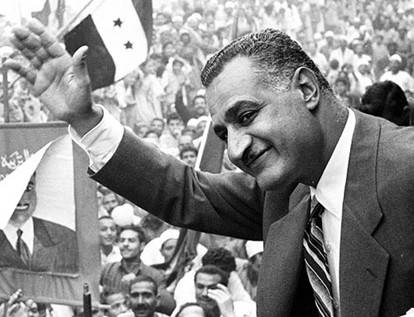
Pan-Arabism reached its zenith under the charismatic leadership of Egypt’s Gamal Abdel Nasser during the 1950s and 1960s. Nasser’s successful nationalisation of the Suez Canal and his defiance of colonial powers transformed him into a symbolic figurehead for Arab dignity. Adeed Dawisha’s Arab Nationalism in the Twentieth Century details how this movement sought to transcend the borders created by European imperialists, though it ultimately struggled with the competing interests of individual sovereign states. The failed unification of Egypt and Syria in the early 1960s is a case in point.
A more structured and ideological variant of this sentiment emerged through ‘Ba'athism.’ It was a doctrine formulated by Michel Aflaq and Zaki al-Arsuzi. Ba'athism combined secular Arab nationalism with elements of ‘Arab Socialism,’ advocating for a revolutionary rebirth of the Arab spirit. Its slogan, “unity, liberty, socialism,” became the governing philosophy of regimes in Syria and Iraq.
However, as documented by Kanan Makiya in Republic of Fear, the Ba'athist parties in both nations eventually devolved into highly centralised, authoritarian systems, with Saddam Hussein in Iraq and the Assad family in Syria using the ideology to consolidate personal rule under the guise of national unity.
In contrast to these Arab-centric movements, Zionism emerged as a powerful force for Jewish self-determination, rooted in the desire to establish a national homeland in Palestine. Following the horrors of the Holocaust and the subsequent British withdrawal from the region, the establishment of the State of Israel in 1948 created a permanent ideological and territorial focal point for regional conflict.
The clash between Zionist aspirations and Palestinian Arab nationalism became a central pillar of Middle Eastern politics, influencing almost every other ideological development in the decades that followed. According to Rashid Khalidi in The Hundred Years' War, this period solidified the role of the state as the primary vehicle for identity, often at the expense of the trans-regional religious bonds that had dominated the preceding centuries.
The 20th century in the Middle East was defined by a profound and often violent tension between secular nationalists and Islamists, as both groups offered diametrically opposed visions for the post-colonial state. This struggle was not merely over who should rule, but over the very source of political legitimacy: the will of the nation or the sovereignty of God.
As Fawaz Gerges notes in Making the Arab World, this rivalry transformed from an intellectual debate into a zero-sum struggle for survival that continues to shape the region’s domestic and foreign policies.
In the early part of the 20th century, the tension was largely foundational. Secular nationalists, inspired by modernist models, viewed the state as a vehicle for modernisation, development, and ethnic identity. In contrast, Islamist groups such as the Muslim Brotherhood, founded by Hasan al-Banna in 1928, argued that the adoption of secularism was the primary cause of Arab weakness and moral decay.
The Brotherhood’s slogan, “the Quran is our constitution,” served as a direct challenge to the nationalist attempt to relegate religion to the private sphere. By the 1940s and 1950s, as states such as Egypt and Syria gained independence, these two factions initially found common ground in their opposition to British and French colonialism, but this tactical alliance quickly shattered once power was seized.
The most iconic manifestation of this tension occurred in Egypt under Gamal Abdel Nasser. Following the 1952 Free Officers' Revolution, Nasser’s secular Arab nationalism and the Muslim Brotherhood’s religious agenda entered a period of open conflict. After an assassination attempt on Nasser in 1954, the state launched a massive crackdown, imprisoning thousands of Islamists.
It was during this period that Sayyid Qutb, the Brotherhood’s leading ideologue, wrote Milestones. Qutb argued that secular nationalist governments in the Middle East were essentially jahiliyya (societies of ignorance) which justified their removal through any means. This radicalisation, documented in Gilles Kepel’s The Prophet and Pharaoh, provided the theological framework for militant Islamism for decades to come.
A similar, albeit more sectarian, dynamic played out in Syria and Iraq under Ba'athist rule. The secular, pan-Arab Ba'ath Party viewed Islamist movements as reactionary threats to national unity and socialist progress. In Syria, this tension culminated in the 1982 ‘Hama Massacre,’ where the regime of Hafez al-Assad suppressed an uprising by the Muslim Brotherhood, resulting in the deaths of hundreds and the total exile of the movement for a generation. These events crystallised the nationalist-Islamist divide as a blood feud, one which the secular-nationalists eventually lost.
The failure of secularism in the Middle East during the 20th century was a structural collapse brought about by military defeat, economic mismanagement, and a perceived lack of cultural authenticity. While secular nationalism promised a path to modern dignity and independence from colonial influence, it often morphed into a tool for state authoritarianism.
A primary cause for this failure was the association of secularism with military incompetence, most notably highlighted by the 1967 ‘Six-Day War’ against Israel. For decades, leaders like Gamal Abdel Nasser had staked the legitimacy of secular Arab nationalism on the promise of military strength and the liberation of Palestine.
The swift and total defeat of the Arab armies by Israel shattered the prestige of the secular state. As Fouad Ajami argues in The Arab Predicament, the 1967 defeat was an intellectual and psychological turning point. It led many to believe that secular ideologies had “failed the Arab soul,” prompting a return to ‘indigenous’ religious roots as a source of strength.
Furthermore, the secularism practised in the Middle East was frequently top-down rather than a grassroots social contract. In Turkey, Kemalism was enforced through the military, and in Iran, the Pahlavi monarchy’s secularisation was often viewed as a superficial imitation of the West that ignored the country’s social fabric.
According to Ervand Abrahamian, the Pahlavi state’s “aggressive secularism” created a profound sense of "Westoxification" (Gharbzadegi), a term popularised by the intellectual Jalal Al-e Ahmad. This led to a backlash where the mosque became the only viable space for political dissent, ultimately fuelling the 1979 Revolution.
Interestingly, the mosque also became an important space for those agitating against the Z.A Bhutto regime in Pakistan in 1977. Even though the Bhutto government at the time had greatly rolled back its ‘socialist’ programmes and was actually moving to the right, his opponents accused him of imposing ‘anti-Islamic’ policies.
Economic failures also played a decisive role for secularism’s failure in the Middle East. The secular-socialist models adopted by Ba'athist regimes in Syria and Iraq, as well as by Nasser in Egypt, led to bloated bureaucracies and inefficient state-run industries.
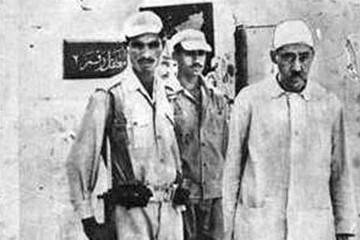
By the 1970s and 1980s, these states could no longer provide the jobs or social services they had promised. In this vacuum, Islamist organisations such as the Muslim Brotherhood stepped in to provide "Islamic alternatives" in education, healthcare, and social welfare. As Nazih Ayubi explores in Political Islam: Religion and Politics in the Arab World, the Islamist movement gained legitimacy not just through theology, but by functioning as a shadow state where the secular government had failed.
Finally, the secularist project was undermined by its own authoritarianism. To maintain power in the face of domestic opposition, secular regimes often turned into "mukhabarat" (intelligence) states, relying on secret police and the suppression of all political pluralism. This meant that secularism became synonymous with dictatorship in the eyes of the public.
On many occasions, when the secular state suppressed secular opposition, it inadvertently left the religious movements to become the only organised alternative. This dynamic ensured that when the secular nationalist dream finally exhausted itself, the only remaining ideological framework was the one the state had tried most fervently to exclude.
By the late 20th century, the failure of secular nationalist regimes to win the 1967 war or provide economic stability allowed Islamists to claim that the secular experiment had failed. This created a shift where the state began to co-opt religious rhetoric to maintain its own legitimacy, a phenomenon often called the ‘Islamisation from above.’ As Nazih Ayubi argues in Over-stating the Arab State, this period saw the two ideologies bleed into one another. ‘Secular’ regimes became more religiously performative, while Islamist movements became more political and state-focused.
Prominent examples of this include Egypt after Nasser, Pakistan during the middle period of the Bhutto regime, and the former secular-socialist regime in Sudan that suddenly adopted ‘Islamism’ in the early 1980s. This blurring of lines set the stage for the complex grey zone of the 21st century, where the old binaries of secular versus religious no longer fully capture the reality of Middle Eastern politics.
During the mid-20th century, while Egypt, Syria, and Iraq were embroiled in the fervour of secular nationalism and socialist revolutions, Saudi Arabia emerged as the primary conservative, monarchical counterweight. The kingdom’s trajectory was defined by the sudden influx of oil wealth and a strategic alliance with the United States, which allowed it to position itself as the "Guardian of the Holy Places" and a defender of Islamic tradition against the perceived "godless" secularism of countries such as Egypt, Libya, Syria, Iraq, Sudan, Somalia, Algeria, Tunisia and the erstwhile South Yemen.
The central tension of this era for Saudi Arabia was the ideological rivalry with Gamal Abdel Nasser’s Egypt, a period often referred to as the ‘Arab Cold War.’ According to Malcolm Kerr, this was a struggle for the soul of the Arab world. Nasser viewed the Saudi monarchy as a reactionary "feudal" relic of British imperialism, while King Faisal of Saudi Arabia viewed Nasser’s pan-Arabism as a Trojan horse for Soviet communism and secular radicalism. This is how the Pakistani Islamist ideologue Abul Ala Maududi had viewed the rise of Bhutto’s party in the late 1960s.
To counter Nasser’s influence, King Faisal promoted ‘Pan-Islamism,’ establishing the World Muslim League in 1962. This was a deliberate attempt to shift the focus of Arab identity away from ethnic nationalism and back toward a trans-national religious bond centred on Riyadh rather than Cairo.
The kingdom also became a sanctuary for groups that Arab secular nationalist regimes were suppressing and expelling. When Nasser launched his crackdowns on the Muslim Brotherhood in the 1950s and 60s, hundreds of Islamist intellectuals fled to Saudi Arabia. The Saudi state welcomed them, integrating them into the kingdom’s expanding education and judicial systems.
Robert Baer wrote in Sleeping with the Devil, this created a unique ideological synthesis. The Brotherhood’s political activism merged with the Saudi state’s strict ‘Wahhabism.’ This hybrid ideology would later become a powerful tool for Saudi soft power, as the kingdom used its oil revenues to fund mosques, universities, and Islamic centres globally, promoting a conservative religious identity as a bulwark against both communism and secular nationalism.
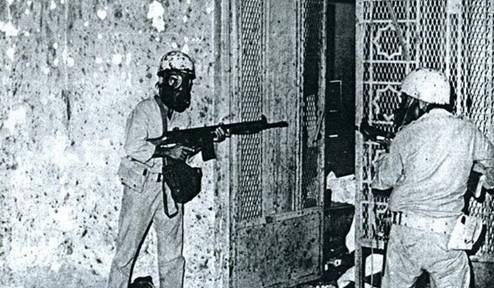
Yet, the 1960s and 70s in Saudi Arabia as well were a period of rapid and jarring modernisation. King Faisal oversaw the introduction of television and female education, moves that sparked significant internal backlash from the ultra-conservative religious establishment. The most dramatic challenge to the Saudi model came in 1979 with the Grand Mosque seizure in Makkah.
A group of militants, led by Juhayman al-Otaybi, accused the Al Saud family of moral corruption and "Westernisation." This event forced the Saudi state to move even further toward religious conservatism to shore up its legitimacy, leading to the strict social codes and the empowerment of the religious police that defined Saudi life for the following four decades.
In the context of the broader Middle East, Saudi Arabia’s success during this period was largely due to its ability to present itself as a stable alternative to the chaotic "revolutionary" states. While the secular Middle Eastern republics suffered military defeats and economic stagnation, Saudi Arabia used its "Oil Weapon" to assert itself as a global power.
This era solidified the Saudi role as the financier of the Islamic world, ensuring that even as secularism failed in various Middle Eastern countries, a well-funded, conservative religious alternative was ready to take its place.
The current era is defined by state fragility and sectarian conflict, where the grand ideological battles have dissolved into a pragmatic, often ruthless search for stability
This transition was further accelerated by the shifting dynamics of the Palestinian resistance: the perceived inability of secular Palestinian organisations, such as the various factions within the Palestine Liberation Organisation, to achieve statehood led to a loss of ideological dominance. According to Khaled Hroub, this vacuum was increasingly filled by Islamist movements like Hamas and Palestinian Islamic Jihad, which framed the struggle for liberation in religious rather than purely nationalist terms.
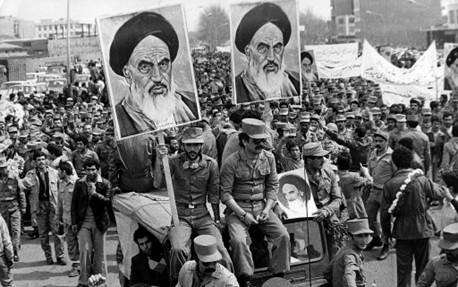
The definitive blow to the secular model, however, was the 1979 Islamic Revolution in Iran. This event served as a powerful symbol of the "defeat of secularism" in the Middle East, as it proved that a modern monarchy could be overthrown by a popular religious uprising.
According to Misagh Parsa in States, Ideologies, and Social Revolutions, the Iranian experience challenged the prevailing social science theories of the time, which assumed that modernisation would inevitably lead to the marginalisation of religion in politics. The Iranian Revolution offered a competing revolutionary template that rejected both the capitalist West and the socialist East.
20th-century Middle Eastern transformations: the Age of Ideology
| Category | Key Concept / Event | Details & Descriptions |
|---|---|---|
| Nationalist Models | Kemalism (Turkey) | Radical secularisation (laïcité); abolition of the Caliphate; westernisation of law and the Latin alphabet |
| Pan-Arabism | Led by Gamal Abdel Nasser (Egypt); focussed on shared Arab language and culture over religious identity | |
| Ba'athism | Synthesis of secular nationalism and socialism in Syria/Iraq; eventually morphed into authoritarian "mukhabarat" (intelligence) states | |
| Ideological Rivalry | Secular-Islamist Tension | Rise of the Muslim Brotherhood (1928) as a reaction to secularism; coined the slogan "The Quran is our constitution" |
| Military Pivot | 1967 Six-Day War | Arab defeat against Israel shattered the legitimacy of secular nationalism; sparked a return to "indigenous" religious roots |
| Regional Pivot (1979) | Iranian Revolution | Overthrew the Pahlavi monarchy; proved a religious uprising could defeat a modern, secular state |
| Grand Mosque Seizure | Militant siege in Mecca; forced the Saudi state to adopt stricter religious conservatism to maintain legitimacy | |
| Religious Export | Saudi Petro-Diplomacy | Utilised oil wealth to fund and promote Wahhabism globally as a bulwark against Communism and secular nationalism |
| Conclusion | The Islamist Surge | Traction gained by Islamist movements as secular regimes suffered from military defeat and economic organisational failure |
Together, the rise of Saudi petro-diplomacy, the decline of secular Palestinian resistance, and the triumph of the Iranian Revolution created a regional environment where religious identity became the primary vehicle for political expression. This period effectively ended the dominance of the secular nationalist "isms" that had defined the mid-20th century in the region.
As argued by Fouad Ajami, the Arab and broader Middle Eastern world entered a phase where the mosque became the centre of the political universe, a shift that forced the remaining secular regimes to either adopt religious rhetoric to survive or resort to increased authoritarianism to suppress the rising Islamist tide.
The Greying (21st Century)
The 21st century has seen the Middle East move into a period of extreme fragmentation, where the grand ideological battles of the 20th century, such as the clash between secular Pan-Arabism and Islamism, have given way to a more complex and often contradictory landscape.
According to Marc Lynch in The New Arab Wars, the regional order is now defined by state fragility, sectarian proxy conflicts, and a pragmatic search for stability that frequently bypasses traditional ideological labels.
The early years of the 21st century were dominated by the catastrophic impact of the 2003 US-led invasion of Iraq. This event did not just topple a Ba'athist dictator; it shattered the regional balance of power and replaced secular authoritarianism with a system of sectarian power-sharing known as muhasasa.
Toby Dodge wrote in Iraq: From War to a New Authoritarianism, this transition allowed sectarian identity, specifically the Sunni-Shia divide, to be weaponised by regional powers like Iran and Saudi Arabia. This era saw ideology instrumentalised as a tool for geopolitical influence, leading to a decade of proxy wars across Lebanon, Syria, and Yemen.
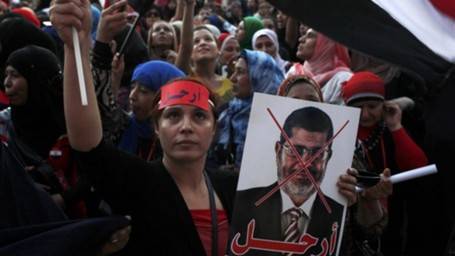
The 2011 ‘Arab Spring’ represented a brief but seismic attempt to break these old patterns. For a moment, it appeared that a new synthesis of “digital liberalism” and moderate Islamism would define the century. In Egypt and Tunisia, the Muslim Brotherhood and the Ennahda movement initially found success at the ballot box, suggesting that a "Religious Democracy" was possible.
However, as documented by Tarek Masoud in Counting Islam, the failure of these movements to manage economic crises and their perceived exclusionary tendencies led to a massive secularist and military backlash. The eventual return to authoritarianism in Egypt under Abdel Fattah el-Sisi marked the beginning of a new era of "Neo-Authoritarianism" that prioritises "security" above all else.
Currently, the region is witnessing the rise of what sociologists call "Nationalist-Developmentalism." This is most evident in the Gulf monarchies, particularly Saudi Arabia under “Vision 2030” and the United Arab Emirates. As explored by Steffen Hertog, these states are moving away from religious legitimacy (such as Wahhabism) toward a hyper-nationalism centred on economic performance, high-tech modernisation, and secular entertainment.
This model seeks to appease a young, globalised population by providing social freedoms and jobs, provided they do not demand political participation. It is a "post-ideological" social contract where the state functions like a corporation, and the citizens are treated as consumers.
Parallel to this state-led shift is the grassroots phenomenon of "Post-Islamism." As theorised by Bayat, this is a condition where the appeal of the "Islamic State" has collapsed, yet religious values remain deeply embedded in society. The protests in Iran (2022, 2026) and Iraq (2019) signify a move toward a civic nationalism that rejects old Islamism (and its economic and political products).
These movements are not necessarily secular in the 20th-century sense; rather, they advocate for a state that provides dignity, services, and human rights, regardless of the ruler’s theological credentials. This suggests that the 21st-century Middle East is caught in a profound grey zone or a space between the failed utopias of the past and a largely pragmatic future.
In the 21st-century, the divergent paths of Saudi Arabia, the UAE, and Yemen illustrate the stark contrast between the successful consolidation of new state ideologies and the catastrophic consequences of ideological and state collapse.
The UAE has pioneered a shift by promoting a model of "liberal authoritarianism." This ideology prioritises religious tolerance, female participation in the workforce, and a globalised business environment while maintaining an absolute prohibition on ‘political Islam’ and dissent. The UAE’s branding of itself as a "beacon of stability" in a chaotic region is a calculated ideological move to attract global capital and move beyond the traditional rentier state model.
Saudi Arabia’s transition under Crown Prince Mohammed bin Salman represents an even more dramatic ideological shift. The historical social contract, which was based on an alliance between the House of Saud and the Wahhabi religious establishment, has been dismantled. In its place, the state is cultivating a hyper-nationalism that celebrates Saudi heritage, including pre-Islamic history, and focuses on rapid modernisation.
As explored by Bernard Haykel in his analysis of the kingdom’s reforms, the marginalisation of the religious police and the introduction of secular entertainment (such as concerts and cinemas) are designed to redirect the energy of the Saudi youth away from Islamist activism and toward national economic contribution.
This represents a pragmatic attitude in which the state remains autocratic but becomes socially permissive to ensure its survival. In tragic contrast, Yemen serves as the primary example of what happens when these competing regional ideologies, and the states that support them, clash within a fragile domestic environment.
The 2011 Arab Spring in Yemen initially sought a transition toward a more inclusive, democratic nationalism. However, as Helen Lackner explains in Yemen in Crisis, the subsequent power vacuum led to a total fragmentation along sectarian and regional lines. The Houthi movement (Ansar Allah) represents a revivalist Zaydi Shia identity that incorporates anti-imperialist and "Resistance" rhetoric similar to that of Iran.
Meanwhile, the Southern Transitional Council (STC) has revived a dormant South Yemeni nationalism, seeking a return to a secular, independent state. The conflict in Yemen has become the ultimate grey zone of 21st-century politics, where ideology is often used as a veneer for raw geopolitical competition.
The intervention led by Saudi Arabia and the UAE was framed as a defence of "legitimacy" and Arab national security against Iranian-backed expansionism. Yet, even within this coalition, ideological differences have emerged. UAE focused on countering the Muslim Brotherhood-aligned Islah party, while Saudi Arabia prioritised the containment of the Houthi threat on its border. Yemen thus exemplifies the dark side of the post-ideological era: a state where the grand visions of the 20th century have collapsed, leaving behind a fragmented landscape of local militias and sectarian identities fuelled by external regional rivalries.
21st-century Middle Eastern transformations: Post-Islamism/Post-Ideology
| Analytical Pillar | Core Concept | Key Details & British Spellings |
|---|---|---|
| Regional Order | Extreme Fragmentation | Transition from grand 20th-century "Isms" to a landscape of state fragility and sectarian proxy conflicts |
| Geopolitics | Weaponised Identity | The 2003 Iraq invasion replaced secular rule with muhasasa (sectarian sharing), allowing powers to weaponise the Sunni-Shia divide |
| State Ideology | Nationalist-Developmentalism | Prevalent in the Gulf (Saudi Vision 2030, UAE); prioritises economic performance and hyper-nationalism over religious legitimacy |
| Social Contract | The Corporate State | A "post-ideological" model: the state provides jobs and secularised entertainment in exchange for zero political participation |
| Grassroots Trend | Post-Islamism | Prevailing youth sentiment in Iran (2022, 2026) and Iraq (2019); advocates for civic nationalism and human rights over theocracy |
| Conflict Dynamics | Ideology as Veneer | In Yemen, grand visions have collapsed into raw competition between revivalist Shia identity (Houthis) and secular southern nationalism (STC) |
| Iranian Strategy | Axis of Resistance | A hybrid "Revolutionary Export" fusing Shia identity with anti-imperialist rhetoric to justify regional expansion |
| Internal Paradox | Ideological De-coupling | Iran’s rigid theocratic elite vs. a society moving toward a vision of individual rights and non-Islamist governance |
| Survival Tactic | Hybrid Nationalism | States (like Iran) lean on Persian Nationalism and regional pride to compensate for the loss of religious legitimacy |
In the 21st century, Iran stands as perhaps the most complex example of the ideological grey zone, as the state attempts to maintain a rigid theocratic framework while its society moves rapidly toward a post-Islamist reality. While the Gulf monarchies are transitioning toward a top-down, secularised nationalism, Iran is experiencing a bottom-up push for change that is fundamentally redefining the relationship between the citizen, the nation, and the faith.
The 2003 US invasion of Iraq and the subsequent regional instability allowed Iran to expand its influence through a strategy of "Revolutionary Export." Under the guidance of the late Qasem Soleimani and the Quds Force, Iran developed a trans-national ideological network often called the ‘Axis of Resistance.’ This ideology fuses Shia religious identity with anti-imperialist, "Third-Worldist" rhetoric, creating a proxy-based security architecture that stretches from Tehran to Baghdad, Damascus, and Beirut.
As Afshon Ostovar explains in Vanguard of the Imam, this is a hybrid ideology where the religious principle of Velayat-e Faqih is used to justify regional geopolitical expansion. Internally, however, the Islamic Republic is facing an unprecedented ideological crisis. The "Green Movement" of 2009 was an early signal of this shift, as a large segment of the urban middle class demanded "Religious Democracy" and electoral transparency.
By the 2020s, this evolved into a much more radical rejection of the state's foundational ideology. The "Woman, Life, Freedom" protests of 2022, sparked by the death of Mahsa Amini, represented a move into a post-Islamist era. As Asef Bayat observes, these protests were not led by a desire to reform the Islamic Republic, but by a civic nationalism that views the mandatory hijab and religious policing as symbols of an exhausted and archaic state.
This internal tension has forced the Iranian state into its own version of the nationalist-developmentalist grey zone. To counter the loss of religious legitimacy, the state has increasingly leaned on "Persian Nationalism" and the glorification of Iran’s regional power to maintain the loyalty of its base.

This creates a strange paradox: the state uses the rhetoric of the 7th-century Islamic Caliphate to justify its laws, while simultaneously appealing to 21st-century nationalistic pride to justify its foreign wars. According to Abbas Amanat in Iran: A Modern History, this dual identity, being both a Shia theocracy and a Persian regional power, is becoming increasingly difficult to sustain as the economic costs of ideological isolation mount.
Iran’s current trajectory exemplifies the fragmented search for a post-ideological identity mentioned earlier. While the ruling elite remains committed to the revolutionary ideals of 1979, the majority of the population, particularly the youth, is moving toward a vision of Iran that prioritises individual rights, economic connectivity, and non-Islamist governance.
This domestic ideological de-coupling makes Iran a unique case in the Middle East: a state that is ideologically rigid at the top but increasingly flexible and post-Islamist at the bottom, creating a volatile grey zone that will likely define the country's political future.