

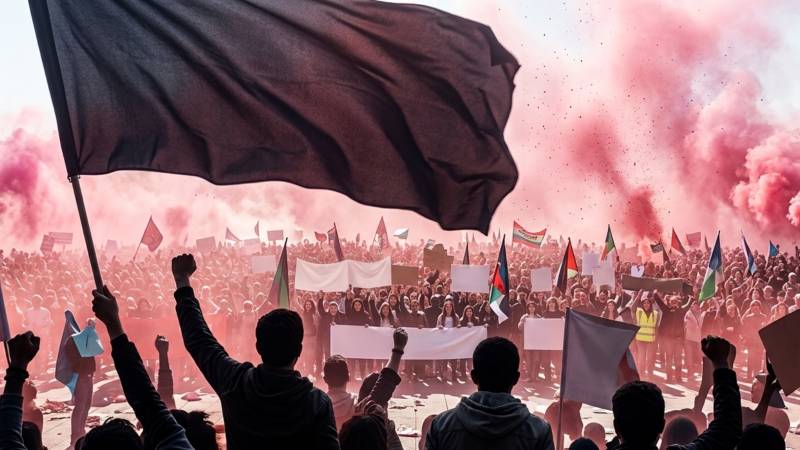
For a brief moment after the collapse of the Soviet Union, liberal democracy appeared to have won the argument. Competitive elections, individual freedoms, market economies and the rule of law were expected to spread steadily across the world. Economic growth would generate a large and secure middle class, while authoritarianism would gradually retreat into history. Three decades later, that confidence looks remarkably misplaced.
Democratic institutions are weakening, populism is spreading and authoritarian politics is once again fashionable. Even in established Western democracies, large sections of the population no longer trust political parties, governments, universities, the media or experts. The question is no longer whether democracy is advancing, but whether it can survive its present crisis.
In his new book, What Happened to Liberal Democracy?, Nobel laureate Daron Acemoglu offers an uncomfortable answer: liberal democracy was not simply attacked from outside. It undermined itself from within. Liberal democracy prospered during much of the twentieth century because it delivered something concrete. It combined political freedom with rising wages, expanding employment, public education, social mobility and improved public services. Industrial growth required large numbers of workers, and organised labour possessed sufficient bargaining power to claim a reasonable share of the resulting productivity gains.
Democracy therefore had an economic foundation. Ordinary citizens defended democratic institutions because those institutions appeared to defend them. That connection has gradually been broken. Globalisation, deindustrialisation, automation and the growing dominance of finance and technology allowed businesses to expand without generating comparable numbers of well-paid jobs. Productivity continued to increase, but wages for large sections of the workforce stagnated. Trade unions weakened, employment became less secure and wealth became increasingly concentrated among the owners of capital and highly educated professionals.
The political consequences were predictable. People who were repeatedly told that the economy was performing well could see that it was not performing well for them. They were offered impressive national statistics while confronting insecure jobs, unaffordable housing, deteriorating public services and declining prospects for their children. There is only so long one can sell "inclusive growth" when most of the inclusion happens in PowerPoint presentations.
Acemoglu's most controversial argument concerns the rise of the educated elite. Liberalism began as a challenge to concentrated political, religious and economic power. But once liberal institutions became part of the establishment, their custodians began behaving like an establishment.
Policy increasingly became the preserve of professionals, technocrats, judges, academics and corporate managers who considered themselves better qualified to decide what society needed. Expertise is indispensable, but it became confused with a permanent right to rule. Citizens were consulted less, instructed more and occasionally reprimanded for failing to appreciate what was supposedly being done for their benefit.
At the same time, progressive politics shifted much of its attention from economic class to questions of identity, language and culture. These issues were not inherently illegitimate, but they could not substitute for employment, wages, housing, education and healthcare. A politics that became highly sensitive to vocabulary while remaining comparatively relaxed about economic insecurity was bound to lose working-class support.
The political right exploited this abandonment. Populist leaders offered recognition, identity and enemies to blame. They correctly identified the anger but offered mostly fraudulent solutions. Instead of dispersing power, they sought to concentrate it in themselves. Instead of challenging economic oligarchies, many entered alliances with them. Populism therefore feeds on the failures of liberal democracy without correcting the conditions that produced those failures.
Acemoglu proposes what he calls "working-class liberalism." By working class, he does not mean only industrial labour. He means the broad majority who depend primarily upon work for their income rather than inherited wealth or returns on capital.
Such a liberalism would prioritise productive employment, rising wages, quality public services, vocational education and genuine community participation. It would direct technological development towards complementing human abilities rather than treating the elimination of workers as the principal measure of innovation.
This is especially important as artificial intelligence spreads through the economy. Technology is not an autonomous force descending upon society from the heavens. Governments influence its direction through taxation, research funding, procurement, competition policy and regulation. An economic system that subsidises machines while taxing labour should not act surprised when businesses replace workers with machines.
AI can be used to eliminate large numbers of routine jobs and concentrate wealth among a few corporations. It can also help teachers, nurses, engineers, technicians and small businesses become more capable and productive. The direction it takes will be a political and institutional choice - not technological destiny.
Acemoglu also distinguishes free expression from algorithmic manipulation. Individuals should remain free to express their views, but social-media companies should not have an unrestricted licence to use opaque algorithms to amplify outrage, misinformation and social conflict. The issue is not merely what someone says; it is the enormous power of digital platforms to decide what millions of people will repeatedly see. What does any of this mean for Pakistan?
Pakistan has not suffered the collapse of a fully developed liberal democracy because it never completed the construction of one. Elections have alternated with direct and indirect authoritarian rule. Political parties remain dominated by families and personalities. Parliament is frequently treated as a procedural inconvenience, local governments are denied meaningful authority, and the distribution of economic opportunities depends heavily upon access, influence and patronage.
It is also necessary to clarify that "liberal democracy" does not mean importing Western lifestyles or imposing a particular social culture. It means limited and accountable government, equality before the law, protection against arbitrary power, freedom of expression, representative institutions and the right of citizens to participate meaningfully in decisions affecting their lives.
Pakistan's democratic debate concentrates overwhelmingly on elections and constitutional arrangements. These are essential, but they are not sufficient. A country cannot preserve democracy through ballot papers alone while its economy systematically excludes the majority.
The Pakistani economy rewards ownership, connections and regulatory privilege far more reliably than productivity or innovation. Protected industries, state-supported monopolies, guaranteed returns, preferential tax arrangements and politically allocated subsidies transfer resources upwards. The resulting fiscal and energy-sector losses are then recovered from ordinary households and competitive businesses through higher taxes, inflation, electricity tariffs and indirect levies. The state creates the inefficiency; the citizen receives the bill.
Young Pakistanis are asked to acquire skills, but the economy creates too few productive jobs. Small businesses are expected to compete while influential sectors secure protection. Exporters face expensive energy, unpredictable taxation and constantly changing regulations, while inefficient institutions remain insulated from accountability. Success too often depends not upon what one produces but upon whom one can reach. Under these conditions, public distrust is not irrational. It is an entirely rational response to lived experience.
Pakistan's political elite compounds the problem by treating citizens primarily as voters, beneficiaries or supporters - not as participants in governance. Power remains concentrated in Islamabad and the provincial capitals. Local governments are periodically created, weakened and dissolved because national and provincial politicians are unwilling to surrender authority or resources.
Yet democracy is learned and experienced locally. It becomes meaningful when citizens can influence their schools, water supply, policing, transport, waste management and municipal development. A person who has no voice over the broken road outside his home is unlikely to be greatly impressed by speeches about democratic sovereignty. Rebuilding democracy in Pakistan therefore requires an economic and institutional settlement based on shared prosperity.
But once liberal institutions became part of the establishment, their custodians began behaving like an establishment.
That means creating productive employment through exports, industrial competitiveness, agriculture modernisation and support for genuine entrepreneurship. It means replacing discretionary privileges with transparent and stable rules. It requires investments in basic education, technical skills, healthcare and urban services - not as acts of charity, but as essential economic infrastructure.
Energy reform is central to this settlement. An economy cannot generate productive jobs when electricity and gas prices are inflated to cover theft, inefficiency, poor planning, political subsidies and guaranteed returns. Consumers and exporters cannot remain the financiers of every institutional failure. Reform must impose accountability upon utilities, regulators, government departments and protected producers rather than endlessly transferring their costs to those least able to resist.
Technology policy must similarly be designed around Pakistan's labour-abundant reality. Importing automation that eliminates employment may increase the profits of individual firms without producing broader prosperity. Public policy should encourage technologies that improve worker capabilities, raise productivity and create new tasks and occupations. The objective cannot be to preserve obsolete jobs indefinitely, but neither should job destruction be mistaken for a national development strategy.
Political parties must also change. They cannot credibly defend democracy while remaining internally undemocratic. They require policy platforms, transparent financing, internal elections and meaningful representation of workers, professionals, women, young people and small entrepreneurs. Democracy cannot flourish nationally when it is absent inside the organisations seeking to govern the country.
Acemoglu's central warning is ultimately simple: political freedom cannot be permanently separated from economic dignity. When liberal democracy ceases to provide voice, opportunity and protection against concentrated power, citizens become vulnerable to anyone promising to overturn the system.
Authoritarianism is not the answer. It may produce decisiveness, but decisiveness without accountability frequently means doing the wrong thing more efficiently. Pakistan has tested that proposition repeatedly and should not require another demonstration.
The answer is not to romanticise democracy, nor to excuse its failures, but to make it worth defending. For Pakistan, that requires three clear priorities. First, power must be devolved meaningfully to elected local governments so citizens can shape the schools, streets, services and institutions that define their daily lives. Second, economic policy must be reorganised around productive work: exports, competitive industry, modern agriculture, skills, small enterprise and affordable energy. Third, the state must dismantle the privileges, protections and guaranteed returns that reward influence over efficiency and force ordinary citizens to pay for elite failure.
That is what happened to liberal democracy elsewhere. Pakistan still has the opportunity to learn from that failure rather than repeat it. The question is whether its political leadership has the courage to shift democracy from a struggle over office to a system that disperses power, rewards productivity and restores citizens as genuine participants in national life.