

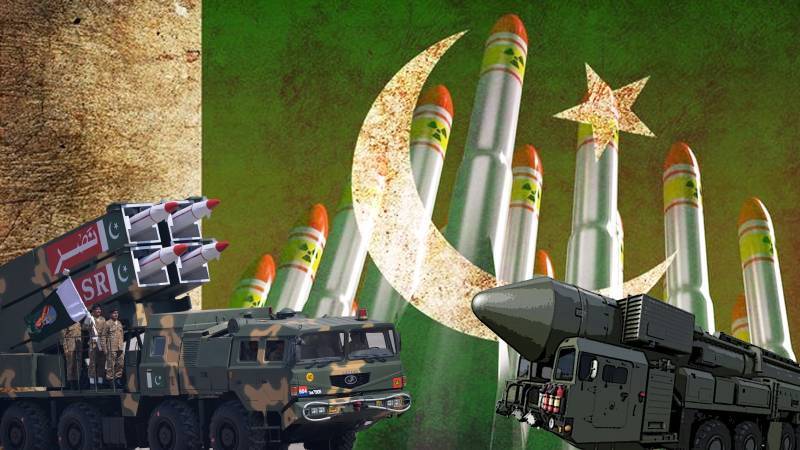
On May 12, 2025, in his first public remarks after a US-brokered ceasefire, Prime Minister Narendra Modi declared that India had “paused” its military operations but would deliver a decisive response to any future terrorist attack. He rejected broad diplomacy with Pakistan, stating, “Terror and talks cannot coexist,” and limited dialogue to counter-terrorism and Pakistan-administered Kashmir, signalling an unyielding security doctrine. Pakistan’s leadership, conversely, claimed its counterstrikes had deterred Indian aggression, emphasising strategic resilience. The April–May 2025 crisis, marked by intense but limited fighting, ended without clear strategic victories for either side. Intense US diplomacy averted nuclear escalation, but the fragile ceasefire, ongoing violations, and unresolved tensions underscore South Asia’s volatility as a nuclear flashpoint.
This analysis is divided into two parts. The first examines the conflict’s origins, escalation dynamics, and the pivotal role of US mediation in securing a ceasefire. The second critically assesses tactical outcomes, strategic weaknesses, and the enduring Kashmir dispute, which continues to threaten regional stability. By integrating diverse perspectives and credible sources, this article aims to provide a nuanced understanding for policymakers, analysts, and scholars.
PART ONE: Origins, Escalation, and Ceasefire
The crisis erupted on April 22, 2025, with a devastating terrorist attack in Pahalgam, Indian-administered Kashmir, where 26 Hindu tourists were killed. India attributed the attack to the Resistance Front, alleging links to Pakistan-based Lashkar-e-Taiba, though no conclusive public evidence was provided to substantiate the claim (Reuters, April 25). Pakistan categorically denied involvement, condemning the attack and calling for an international investigation led by the United Nations to establish the facts.
In response, India launched “Operation Sindoor” on May 6–7, 2025, conducting airstrikes on nine suspected militant sites across Pakistan-administered Kashmir (Muzaffarabad, Kotli) and, unprecedentedly since the 1971 war, mainland Pakistan (Muridke, Bahawalpur) using Rafale jets equipped with precision-guided munitions. The strikes targeted alleged terrorist infrastructure linked to Lashkar-e-Taiba and Jaish-e-Mohammed, according to India’s Ministry of Defence. Pakistan’s Foreign Ministry reported 31 civilian deaths, labelling the strikes an “act of war” and denying any role in the Pahalgam attack (Reuters, May 8). Pakistan retaliated with Chinese-supplied J-10C fighters, targeting Indian airbases in Udhampur and Pathankot, exposing vulnerabilities in India’s air defence systems, including gaps in its ageing MiG-21 fleet and radar coverage.
The clashes along the Line of Control (LoC) displaced tens of thousands, with at least 48 confirmed deaths, including civilians, soldiers, and alleged militants. India claimed its strikes eliminated over 100 militants and 35–40 Pakistani military personnel, supported by satellite imagery showing structural damage. Pakistan countered that its J-10 strikes killed 40–50 Indian troops, denied civilian losses on its side, and reported significant damage to Indian military infrastructure. These conflicting claims, unverifiable due to restricted access and the absence of neutral observers, fuelled a disinformation campaign. India ordered the removal of 8,000 X accounts for alleged disinformation, while Pakistan lifted a 15-month X ban to counter Indian narratives, further polarising public perceptions.
Both nations’ nuclear capabilities—India with an estimated 180 warheads and Pakistan with 170 —amplified the stakes. In India, Prime Minister Modi, facing domestic pressure ahead of the 2026 elections, sought to project resolve against terrorism, a cornerstone of his Bharatiya Janata Party’s platform. In Pakistan, General Asim Munir emphasised the military’s “strategic resilience,” leveraging the crisis to bolster domestic support amid economic challenges. The deployment of Pakistan’s J-10C fighters, armed with PL-15 beyond-visual-range missiles, underscored a qualitative shift in regional air power dynamics, challenging India’s traditional dominance.
Turning Point: The Nur Khan Strike
The conflict’s most alarming escalation occurred when India struck near Pakistan’s Nur Khan airbase in Rawalpindi, just 10 kilometres from Islamabad and perilously close to Pakistan’s nuclear command-and-control centres. The New York Times reported that the attack “raised fears of a direct hit on nuclear infrastructure,” given the airbase’s strategic significance. The strike prompted immediate US diplomatic intervention, driven by concerns that miscalculation could trigger nuclear escalation, especially given the short flight times of ballistic missiles (8–12 minutes) between the two nations.
Pakistan responded with a large-scale counteroffensive, targeting 26 Indian military installations, including airbases and army facilities in Suratgarh, Sirsa, Adampur, Bhuj, Naliya, Bathinda, Barnala, Harwara, Avantipur, Srinagar, Jammu, Mamoon, Ambala, Udhampur, and Pathankot. Pakistan’s Inter-Services Public Relations (ISPR) claimed “substantial damage” to Indian assets, though independent verification was limited. The escalation highlighted the absence of robust bilateral crisis communication channels, a longstanding concern among analysts like Moeed Yusuf, who have warned of miscalculation risks in South Asia’s nuclearised environment.
US Mediation and the Ceasefire
On May 10, 2025, at 5:00 PM IST, a ceasefire was announced after four days of intense fighting, brokered through US-led diplomacy. The Trump administration, initially reluctant—Vice President JD Vance had called the conflict “not America’s business”—shifted course as nuclear risks became apparent. Secretary of State Marco Rubio and Vance engaged Modi, Pakistan’s Prime Minister Shehbaz Sharif, and other officials over 48 hours, leveraging economic incentives, including promises of trade enhancements, to secure compliance. President Trump claimed credit on Truth Social, hailing the “full and immediate ceasefire” as a diplomatic triumph.
Despite the truce, violations were reported within hours. India’s Foreign Secretary Vikram Misri accused Pakistan of “repeated violations” through artillery fire in Srinagar and Jammu, ordering a “strong response”. Pakistan denied the charges, alleging Indian provocations along the LoC. Local residents reported overnight shelling, though fighting subsided by May 11. Kashmiris, wary of both nations’ adherence, expressed scepticism about the ceasefire’s durability, citing historical violations during the 2003–2019 period.
A significant point of contention remains India’s suspension of the Indus Waters Treaty, enacted days after the Pahalgam attack. A source within India’s foreign ministry told CNN that the suspension is indefinite, with no linkage to the ceasefire, which was initiated by Pakistan. The move, seen as economic coercion, has heightened tensions, as the treaty has been a rare area of bilateral cooperation since 1960.
PART TWO: Tactical Dynamics and Strategic Implications
Introduction
This section analyses the 2025 conflict using sources like The Financial Times, The New York Times, CNN, Reuters, Jane’s Defence Weekly, SIPRI, and Chinese state media to assess tactical outcomes, strategic shifts, and escalation risks. It examines: How did Pakistan’s J-10C fighters alter the regional balance? Could India’s vulnerabilities spark an arms race, increased militarisation of Kashmir, or a revanche-driven clash? Incorporating Chinese state media perspectives, Pakistan’s economic limits, and nuclear risks prompting US intervention, it provides a balanced view. Readers should approach conclusions cautiously, as the crisis remains an unresolved chapter in South Asia’s history.
The analysis examines six dimensions:
- Competing damage claims and verification challenges.
- Chinese state media perspectives.
- Pakistan’s J-10C fighter capabilities.
- India’s budgetary and capability response.
- Pakistan’s defence policy under economic constraints.
- India’s strategic response, assessing risks of an arms race, Kashmir militarisation, or revanche.
Competing Damage Claims: Narratives and Verification Challenges
The 2025 conflict is characterised by divergent casualty and damage claims, exacerbated by restricted access, disinformation, and the absence of neutral verification, which hinders de-escalation and fuels mistrust.
India’s Narrative
India’s Ministry of Defence claimed that “Operation Sindoor” targeted Lashkar-e-Taiba and Jaish-e-Mohammed camps, killing over 100 militants and 35–40 Pakistani military personnel. New Delhi released satellite imagery showing heat signatures and cratering at strike sites in Muzaffarabad, Kotli, Muridke, and Bahawalpur, asserting precision strikes. European defence analysts confirmed structural damage but noted that casualty figures remain provisional without on-ground verification, as access was restricted by both nations. India framed the strikes as a necessary response to cross-border terrorism, reinforcing its zero-tolerance policy amid domestic outrage over the Pahalgam attack.
Pakistan’s Rebuttal
Pakistan’s ISPR claimed its J-10C counterstrikes on May 10 killed 40–50 Indian soldiers, destroyed forward posts, and caused significant damage to airbases, while denying civilian casualties on its side. The ISPR reported 31 civilian deaths from Indian strikes, accusing New Delhi of targeting civilian areas to justify escalation. The United Nations Military Observer Group in India and Pakistan (UNMOGIP) documented ceasefire violations but lacked access to verify casualties or damage, citing security restrictions. Pakistan’s narrative emphasises defensive success and accuses India of disinformation to mask strategic failures.
Disinformation and Social Media
Disinformation amplified mistrust, with India ordering the removal of 8,000 X accounts for spreading alleged falsehoods. Polarised X posts complicated verification efforts. The absence of credible, independently verified data enabled both sides to sustain competing narratives, risking further escalation in public and political spheres.
Civilian and Humanitarian Impact
Non-governmental organisations, including the International Committee of the Red Cross (ICRC), reported tens of thousands displaced along the LoC, with shelling destroying homes, schools, and clinics in border areas (Reuters, April 25). The ICRC urged both nations to protect civilians, but attributing responsibility for specific damages remains challenging without neutral observers. The humanitarian toll, including disrupted access to healthcare and education, underscores the need for robust verification mechanisms to counter disinformation and support post-conflict recovery.
The S-400 Controversy: Pakistan’s Claims vs. India’s Denials
A major point of contention arose from Pakistan’s claim that its JF-17 Thunder jets, equipped with hypersonic missiles, destroyed India’s S-400 air defence system in Adampur, Punjab, during “Operation Bunyan-un-Marsoos.” Valued at $1.2 billion, the Russian-made S-400, known as “Sudarshan Chakra,” is a cornerstone of India’s air defence, capable of engaging multiple aerial threats at ranges up to 400 kilometres. Pakistan’s state media, including PTV and the Associated Press of Pakistan, hailed the strike as a significant blow, with China’s Global Times amplifying the claim. Pakistani security sources further alleged the attack targeted BrahMos missile storage and airfields, showcasing technical superiority.
India categorically denied these claims, labelling them a “malicious misinformation campaign” orchestrated by Pakistani state agencies. Wing Commander Vyomika Singh, in a press briefing, stated that the S-400 systems successfully neutralised Pakistani drones and missiles on May 7–8, with no evidence of damage in Adampur. India’s Press Information Bureau released time-stamped images of undamaged airbases to counter related claims, dismissing social media posts as “fake”. Foreign Secretary Vikram Misri accused Pakistan of exaggerating its achievements to bolster domestic morale, noting the S-400’s operational success in intercepting attacks.
The controversy underscores the challenges of verifying claims in a conflict marked by restricted access and rampant disinformation. X posts reflected polarised sentiments, with Pakistani users celebrating the alleged strike and Indian sources dismissing it as propaganda lacking credible evidence. Without independent satellite imagery or on-ground assessments, the truth remains obscured, eroding trust and complicating ceasefire efforts. This episode highlights the critical need for neutral verification mechanisms to counter state-backed narratives.
Perspectives from Chinese State Media
China, Pakistan’s principal defence partner, used state-run outlets like China Daily and Global Times to signal its strategic priorities: supporting Islamabad while advocating regional stability to protect the $30–40 billion China-Pakistan Economic Corridor (CPEC). Lou Chunhao of the China Institutes of Contemporary International Relations, writing in China Daily, framed Pakistan’s May 10 counterstrikes as a “calibrated act of deterrence” in response to India’s escalation, urging both nations to consider the “nuclear backdrop”. This reflects Beijing’s strategy of backing Pakistan as a counterweight to India while avoiding actions that could destabilise CPEC.
Global Times editorials criticised India’s “aggressive posture” but warned that prolonged hostilities would impose “mutual costs outweighing tactical gains”. The outlet praised Pakistan’s restraint and highlighted its J-10C capabilities, reinforcing China’s military partnership with Islamabad, which includes supplying 36 J-10C fighters. Simultaneously, it called for de-escalation to prevent the involvement of external powers, revealing China’s delicate balancing act: supporting Pakistan militarily while urging restraint to maintain regional stability.
Pakistan’s Aircraft Capabilities: The J-10 Factor
Pakistan’s deployment of Chinese-supplied J-10C fighters on May 10 marked a significant shift in South Asia’s aerial power dynamics. These 4.5-generation multirole fighters, equipped with active electronically scanned array (AESA) radar and PL-15 beyond-visual-range missiles, penetrated Indian air defences to target strategic airbases in Udhampur and Pathankot. The J-10C’s advanced avionics, digital fuzing, and stealth features place it on par with India’s Rafale jets, challenging India’s traditional air superiority.
Pakistan’s Ministry of Defence confirmed the use of “advanced fighters,” aligning with third-party reports. By 2025, Pakistan had acquired 36 J-10Cs, significantly enhancing its qualitative edge. Chinese logistical support, including spares and training, has ensured high sortie rates, bolstering Pakistan’s sustained combat capabilities. China supplied 80% of Pakistan’s arms between 2020 and 2024, cementing a robust military partnership that has shifted the regional balance. India’s air defences, with only 24% of systems meeting contemporary standards, were exposed as outdated, prompting calls for urgent modernisation.
India’s Budgetary and Capability Response
India’s response to the 2025 conflict reflects a determination to restore strategic superiority, though a manpower-heavy defence budget limits flexibility. The FY 2025–26 defence budget stands at ₹6.81 trillion ($78.7 billion), a 9.5% increase, but 69% is allocated to personnel costs, leaving just 31% for capital modernisation (SIPRI, 2025). This imbalance constrains investments in advanced systems needed to counter Pakistan’s J-10C capabilities and address vulnerabilities exposed during the crisis.
India’s military spending in 2024 ($86.1 billion) dwarfs Pakistan’s ($10.2 billion), supporting a larger force: 4,614 tanks, 1,338 aircraft, and 9,243 artillery systems compared to Pakistan’s smaller arsenal. However, Pakistan’s qualitative gains in air power have narrowed the gap. India is fast-tracking upgrades, including 26 additional Rafale jets, Su-30MKI enhancements, and deployment of S-400 and Akash-NG air defence systems. The Integrated Air Command and Control System (IACCS) is being expanded to reduce sensor-to-shooter time, while mobile repair units and forward depots aim to enhance operational resilience. Nevertheless, India’s structural reliance on personnel costs poses a long-term challenge to maintaining a technological edge.
Pakistan’s Defence Policy: Economic Constraints and Scenarios
Pakistan’s defence posture is shaped by severe economic constraints, with a 2024 defence budget of $10.2 billion compared to India’s $86.1 billion. With debt at 70% of GDP and IMF-imposed austerity measures, Islamabad faces trade-offs between defence, debt servicing, and social programs. The J-10C’s operational cost ($20,000 per flight hour) limits expansion, forcing Pakistan to prioritise maintenance and training over new acquisitions (RAND Corporation).
Pakistan relies heavily on Chinese support, which accounted for 80% of its arms imports between 2020 and 2024. From T-59 tanks to co-developing the JF-17 and supplying 36 J-10Cs, China’s role is pivotal. The $40 billion China-Pakistan Economic Corridor further deepens this partnership, with potential for subsidised arms transfers and technical assistance, though China’s slowing 4.8% growth may limit aid. Saudi Arabia, which provided $6 billion in bailouts in 2018–2019, may offer $2–3 billion in financial or defence support, but its Vision 2030 priorities constrain deeper engagement.
Pakistan is investing in asymmetric tools—CH-4 drones, stand-off weapons, and cyber capabilities—to raise India’s costs at low investment. Its nuclear deterrent, costing $1–2 billion annually, remains central to strategic balance, ensuring survivability against conventional threats. Covert support for insurgents in Kashmir may persist, though international scrutiny limits its scope. Pakistan’s approach will remain defensive, focusing on J-10C readiness and selective LoC engagements to preserve deterrence without provoking escalation.
India’s Strategic Response: Arms Race, Kashmir Militarisation, or Revanche?
The 2025 crisis exposed vulnerabilities in India’s air defences, raising questions about its strategic response. Historical patterns following the 1999 Kargil conflict and 2008 Mumbai attacks suggest India will pursue targeted enhancements rather than sweeping changes.
India’s $86.1 billion defence budget significantly outpaces Pakistan’s, but 69% allocation to personnel costs and competing domestic priorities (e.g., infrastructure, healthcare) limit an all-out arms race. India is prioritising selective upgrades: additional Rafale jets, S-400 deployments, and IACCS expansion to counter threats from Pakistan and China. These measures aim to restore deterrence without destabilising India’s economic growth, projected at 6.5% for 2025.
Further militarisation of Kashmir is unlikely, as India already deploys 500,000 troops in the region. Additional forces offer diminishing returns and risk international criticism over human rights, especially after the 2019 revocation of Article 370. Instead, India is likely to enhance surveillance, including drones and satellite monitoring, to tighten control.
A revanche-style offensive is improbable due to nuclear risks, with a potential exchange estimated to cause up to 125 million deaths (Science Advances, 2019). India’s restrained response after the 2019 Balakot strike and its reliance on diplomatic levers—such as trade pressure and Quad partnerships with the US, Japan, and Australia—suggest a preference for calibrated actions. India’s modernisation will focus on smarter investments, leveraging Russian and US platforms to strengthen deterrence while avoiding unsustainable escalation.
Conclusion
The 2025 conflict underscores the enduring role of nuclear deterrence, breakthroughs in military technology, and stark fiscal asymmetries. Pakistan’s J-10 fighters exploited gaps in India’s air defences and drew US diplomatic intervention. India has allocated a $86 billion defence budget focused on modernisation, while Pakistan’s comparatively modest $10.2 billion program remains heavily dependent on Chinese support.
Pakistan and India’s current ceasefire is exceedingly fragile, with neither side willing to show flexibility; repeated violations and a swirl of disinformation continue to erode what little trust exists. Looking ahead, India is likely to deepen its investments in modernisation, surveillance capabilities, and diplomatic outreach, carefully calibrated to avoid escalation given its nuclear arsenal and economic constraints. Pakistan, for its part, intends to maintain its J-10 squadrons and asymmetric warfare tools, bolstered by ongoing assistance from China and Saudi Arabia. Ultimately, only sustained, US-facilitated dialogue on the Kashmir dispute can hope to avert a catastrophic wider conflict.