

The Oil and Gas Development Company Limited (OGDCL) plans to cease operations and withdraw the Pirkoh gas plant to relocate to Zain Loti. The Loti Gas Field is also expected to be depleted within the next five to seven years, according to local engineering sources.
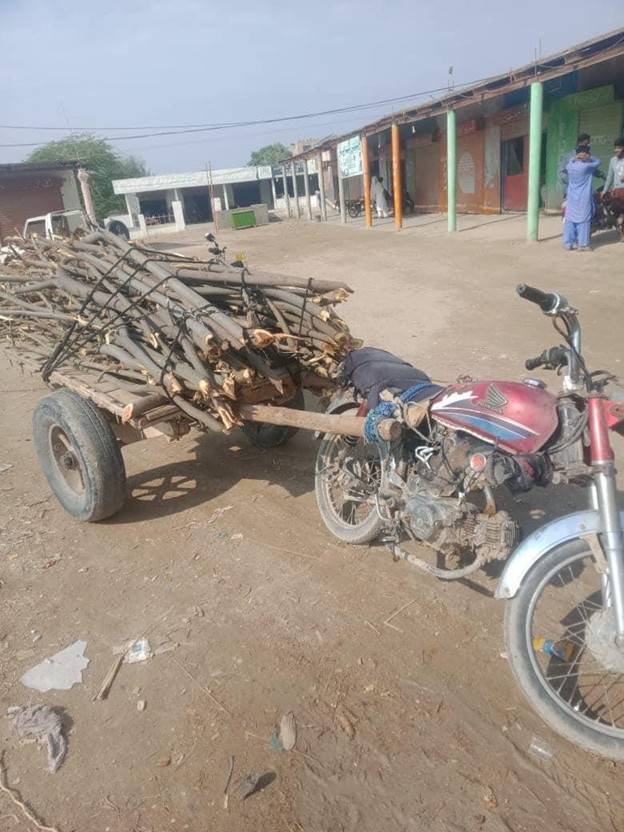
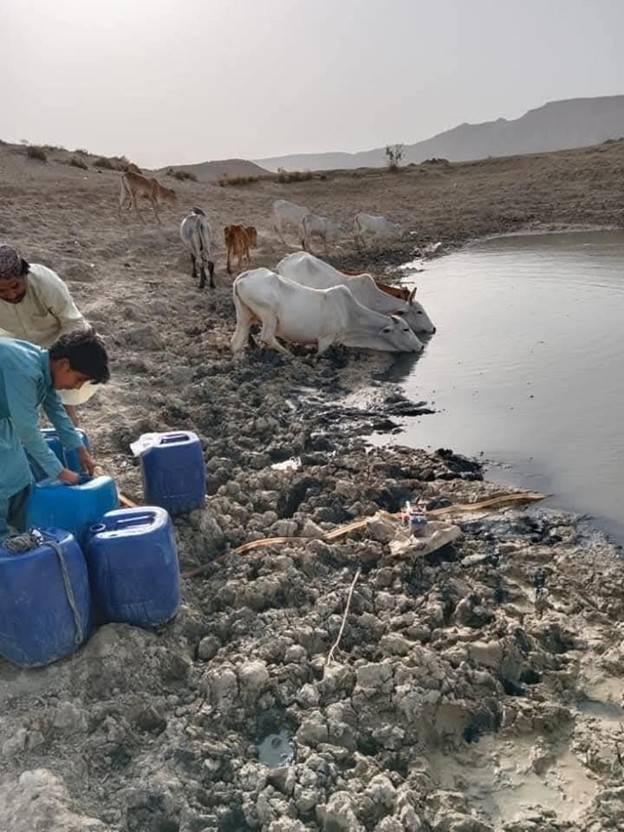
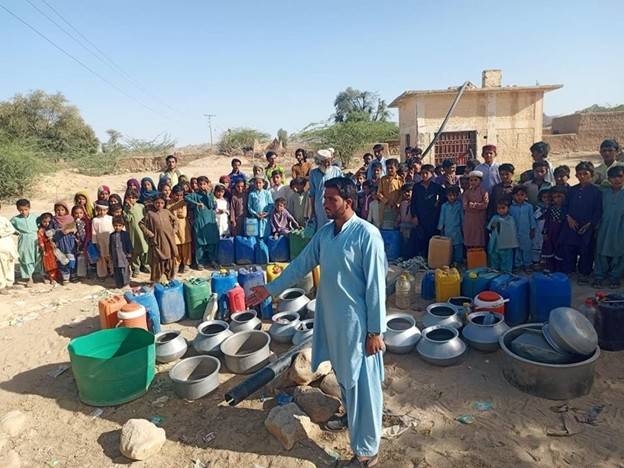
Despite the discovery of natural gas in 1952 in Sui and Dera Bugti – which had supplied energy to the nation and lit stoves in homes across Pakistan for seventy-two years – the people of Dera Bugti continue to burn wood for fuel. They remain without access to clean drinking water and are dying of thirst, deprived of their basic rights including education, jobs, healthcare, electricity, and even gas that lies beneath their own feet.
Now, as Pakistan Petroleum Limited (PPL) Sui field’s gas resources dwindle, the companies are preparing to leave. There is no indication that the exploitation, environmental damage, or unmet promises will be addressed. The people of Dera Bugti say they have always been left behind – like a drained well: used, exhausted, and forgotten.
For decades, Balochistan has been described as a region brimming with unrealised promise, its rich mineral deposits often portrayed as a catalyst for both provincial and national economic growth. Newly announced deals and resource discoveries – ranging from gold and copper to lithium and natural gas – have renewed optimism about Balochistan’s future. Yet the critical question remains: will this potential ever translate into real progress for its people?
Recruitment works like a patron-client system — 95 percent of Levies jobs go to political allies, not on merit
Sui, once the powerhouse of Pakistan – fuelling its industries, homes, and factories – still sees 90 percent of its own area lacking basic facilities. While the Chief Minister of Balochistan, Sarfraz Bugti, recently claimed to have fully utilised the provincial budget, Dera Bugti’s infrastructure, education, and healthcare systems remain in shambles.
Despite receiving a larger share in the National Finance Commission (NFC) Award – 9 percent compared to its population share of around 5 percent – Balochistan’s development indicators continue to lag far behind other provinces (Balochistan Voices). Only 19 percent of the population has access to clean drinking water, the literacy rate hovers around 42 percent, and over 70 percent of the population lives in multidimensional poverty (Dawn). Allegations of corruption, mismanagement, and weak accountability have long plagued the province, with reports from 2017 estimating that Balochistan loses up to Rs28 billion annually through manipulated or misused funds (Balochistan Voices). The question is not whether Balochistan has resources – but who benefits from them.
The argument that underdevelopment fuels separatist movements holds weight in Balochistan. When people see wealth extracted from their land while they remain impoverished, resentment naturally grows. If mineral riches were genuinely harnessed for local development, Balochistan could thrive. But history suggests otherwise – resource exploitation has too often benefited outsiders, leaving locals marginalised.
A probe into fund distribution revealed that allocations from the government treasury are siphoned off before reaching the ground. This is the work of an organised group involving politicians, contractors, and bureaucrats. When a development project is approved, its contract is typically awarded to a close associate of a politician. A large portion of the project’s value is distributed as bribes among politicians, contractors, bureaucrats, and other influential figures.
As a result, very little money is actually spent on the project – and even that is often used for poor-quality work. This is why projects remain incomplete and fail to benefit the public.
Chain of Corruption in Development Funds: A Contractor’s Account
A local contractor, speaking on condition of anonymity, claimed that MPAs or MNAs hand over government projects to their preferred individuals, and contractors must “buy” them, bypassing the tendering process entirely. The predetermined sale price is usually about 10 percent of the total project cost, and the MPA takes another share, which the contractor must pay in cash. Another two percent is deposited as CD in the bank, and 5 percent is given as “sweeteners” (bribes) to relevant office staff.
Only 19 percent of Balochistan’s population has access to clean drinking water, and over 70 percent live in multidimensional poverty
Additionally, he claimed that 10 percent is kept as security in the bank, returned after project completion. Another 12 percent goes to department officials responsible for oversight – allegedly those from the Balochistan National Development Authority, Public Health Engineering, and others. A further 10 percent goes to other powerful groups. The remaining 41 percent of the funds are released to the contractor in instalments.
He further revealed that the contractor attempts to save about 10–15 percent by completing only 25–30 percent of the work, often with substandard materials. Consequently, many projects remain unfinished. Currently, hundreds of projects in Dera Bugti are incomplete. Materials are usually brought from Punjab, doubling costs due to transportation – for instance, the freight cost of a ten-rupee brick is almost ten rupees.
The contractor’s main objective becomes to build just a boundary wall on the government-allocated land. In this entire scheme, the greatest loss is borne by the public, who remain deprived of basic facilities and suffer daily hardships.
Disenchantment of Youth
The ruling party’s systematic prioritisation of individual and political interests over collective welfare and meritocracy has caused deep disenchantment among youth.
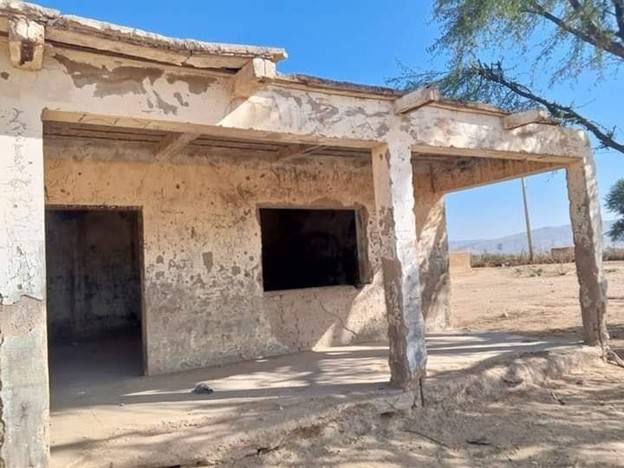
This manifests in several key areas:
- Corrupt Recruitment and Patronage System (Especially in Levies Force, Education, and Health)
Recruitment is used as political currency, operating under a patron-client system. Around 1,500 Levies jobs have been filled over the last decade, with 95 percent allocated to political allies regardless of merit. Administrations are forced to hire nominees without verifying criminal records.
NADRA complicity is another issue: age manipulation (making older candidates appear younger), issuance of multiple CNICs (up to four per person), and biometric fraud – switching fingerprints or even using footprints to bypass systems. “The Institute instead of Cracking the Nexus of Wadera System, they are promoting.”
Solution Needed: Replace patronage with open merit or a transparent tribal quota system. - Politically-Motivated Infrastructure Development (Roads)
An estimated 1,500 km of roads have been built in 20 years, but mostly for political or financial gain rather than public need.
Roads are often short (2–3 km) stretches leading to politicians’ homes, while critical routes such as the Sui–Kashmore Highway, Sui–Soubhatpur Road, Dera Bugti–Sui Road, and Dera Bugti–Singsilla Road (totaling about 400 km) remain underdeveloped despite heavy traffic.
New roads are frequently built in areas with negligible traffic (sometimes just two or three bikes a day) purely for political “mileage.”
Solution Needed: Infrastructure planning must prioritise real traffic flow and connectivity between population centres. - Irrational Distribution of Basic Health Units (BHUs)
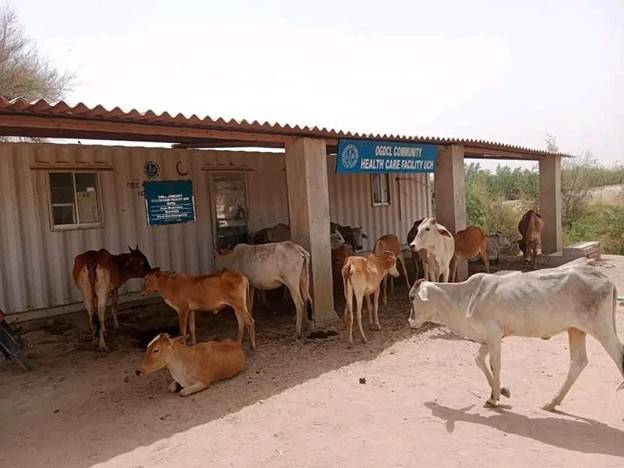
Excessive concentration of BHUs exists in specific areas such as Phelawagh and B-Loti – every two kilometres – without corresponding population growth. In contrast, critical areas like Singshela, Zinkoh, Toba, and Uch lack BHUs entirely.
The cause is blatant favouritism toward the Chief Minister’s constituency (Phelawagh), resulting in uneven and politically driven development – a pattern also evident in school upgrades. - Lack of Connectivity
Youth remain deprived of basic 3G internet in an era of AI and digital transformation. Ironically, internet services exist in more volatile regions such as Kalat, Turbat, and Mastung, undermining the “security problem” justification for Dera Bugti. The region has been relatively peaceful for the past decade, yet this lack of connectivity cripples young people’s access to education, information, economic opportunity, and global networks.
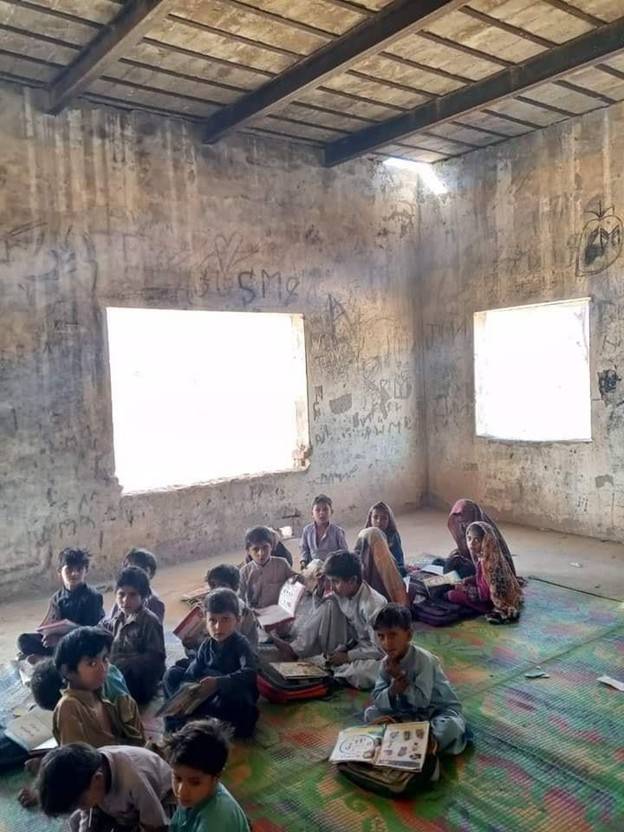
The systematic diversion of resources – jobs, infrastructure, health, and connectivity – toward political patronage and away from merit-based systems directly fuels youth alienation.
The solutions required for this are:
- Implement merit-based or transparent tribal quota systems for jobs.
- Prioritise infrastructure (roads, health units, schools) based on population needs and traffic flow, not political favours.
- Ensure equitable distribution of services such as health and education.
- Provide reliable 3G/4G internet access immediately.
- Establish accountability and transparency in recruitment (NADRA checks) and infrastructure spending.
Education and Water Services in Ruins
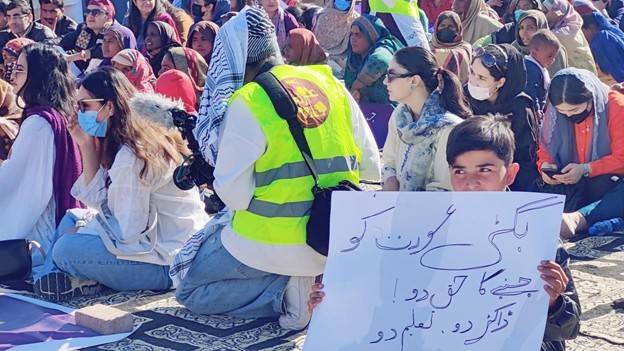
Dera Bugti’s education system is in severe decline, with a literacy rate of just 31 percent among residents aged 10 and above – far below the national average. The situation is even more dire for women, whose literacy stands at a shocking 2 percent, among the lowest in Pakistan. Over 85 percent of students drop out at all levels, while an estimated 20,000 school-age children remain out of school.
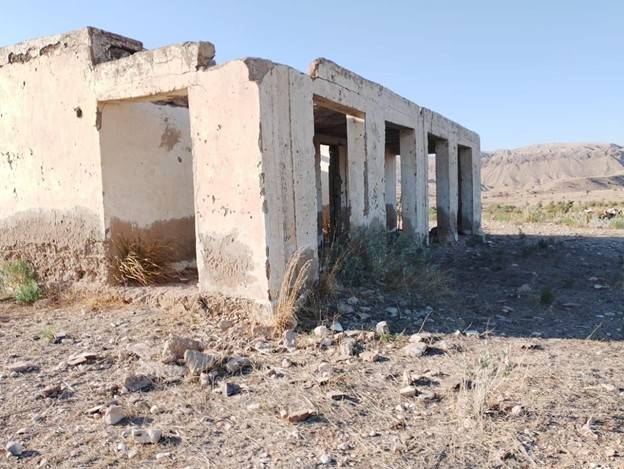
Out of 300 primary schools in the district, only 20 are operational, mostly in urban areas. The sole higher education institution, Degree College Dera Bugti, is barely functioning. Constructed in the 1980s, its crumbling building symbolises the broader decay of education in the region. The college employs only three permanent and four temporary faculty members, far short of the required 21.
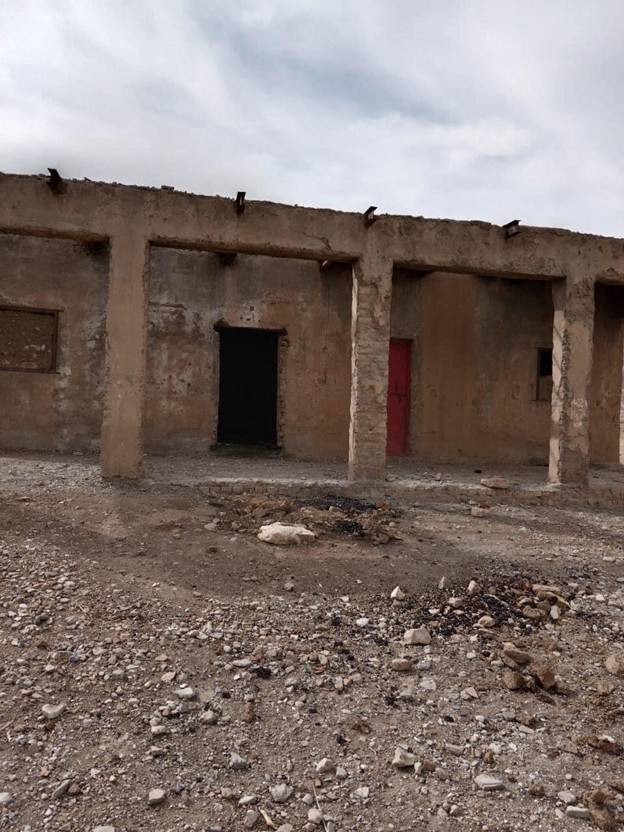
A staff member, speaking on condition of anonymity, disclosed: “Only three students have attended in the past two months – effectively, the college is non-functional. We’re just maintaining paperwork, and political pressure keeps it open.”
Gas Companies and Exploitation
The discovery of Sui gas has done little to benefit local communities. Despite sitting atop one of Pakistan’s largest gas reserves, neighbourhoods such as Tota Colony, Bohgra Colony, and parts of Muhammad Colony remain disconnected from pipelines, even near the Sui Gas Company. Corporate social responsibility initiatives, including medical camps in the Uch area, have been absent for over 20 years.
Despite a 9 percent NFC share, Balochistan’s development indicators remain among the worst in the country
Employment practices in Dera Bugti’s gas sector reveal systemic discrimination against locals. Despite constitutional guarantees and repeated agreements prioritising local hiring, gas companies continue to sideline Bugti workers.
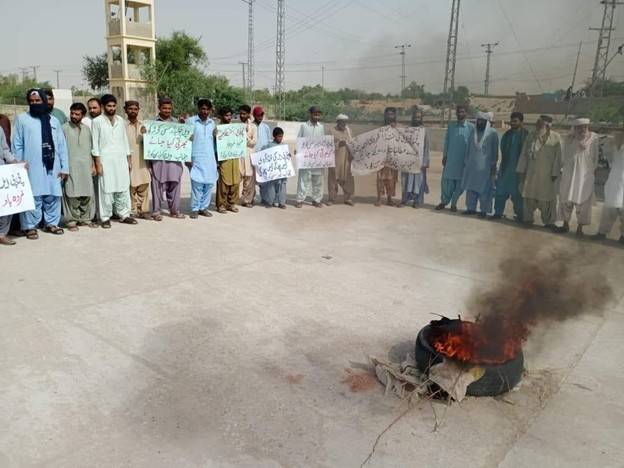
At the Uch gas field, 50 out of 200 labourers were abruptly terminated without notice, with locals barred from protesting. Overall, more than 1,000 workers have been dismissed after years of service through contractor mafias.
The OGDCL faces growing scrutiny as employee unions intensify demands for the long-delayed “Labour Son Quota” program. For over 12 years, families of retired workers have waited for promised job placements for their children – a commitment still unfulfilled.
Kamond Khan Bugti, ex-camp chairman of the Loti gas company workers’ union, voiced the community’s despair: “Our children are starving and homeless. We’ve borrowed from every relative possible – there’s nothing left. This company is our only hope, yet they’ve abandoned us.”
Critics accuse gas companies of deliberately avoiding permanent hires to bypass the 90-day employment rule set in earlier agreements. This practice perpetuates job insecurity while allowing corporations to evade obligations to local communities – a reflection of broader injustice.
Gas companies are paying Rs20,000 to landowners of the wells. “Shah Murad Bugti, the owner of two wells, stated that he visited Karachi and asked a person sitting outside a bathroom about the contractor. The person replied that they were paying twenty thousand to the government. He emphasised that the rent for our land is equivalent to the cost of using the bathroom.”
Healthcare Crisis
Dera Bugti’s healthcare system presents a humanitarian emergency. The district lacks basic medical infrastructure, particularly for women’s healthcare.
- 2018: 21 maternal deaths reported (likely underreported)
- 2023: Surge in cases, with multiple deaths each month
- Jan 2024–present: 54 women have died during childbirth
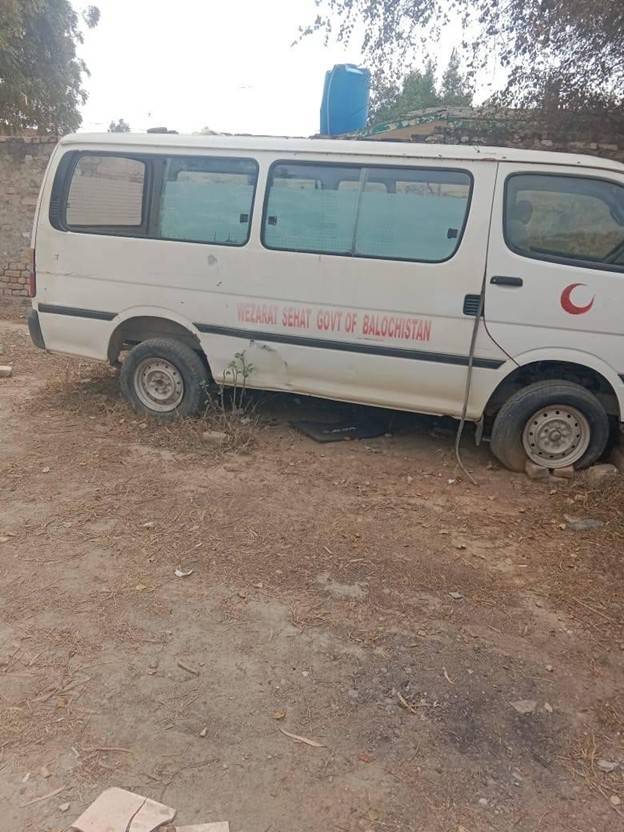
Hazar Gul Bugti, a resident of Singesila, said, “My wife, the mother of seven children, passed away at the age of 35 inside the DHQ hospital. She died during childbirth due to a lack of basic facilities during the day. We were all surrounding her when she took her last breath.”
The absence of qualified gynaecologists forces pregnant women to travel over 300 kilometres to Sadiqabad, Punjab, for treatment. Rights activists and local reporters confirm that 54 maternal deaths occurred in just 15 months, with over 5,000 women suffering from anaemia, as verified by local doctors.
Dera Bugti lacks basic amenities:
- Safe Drinking Water: Only 10% coverage vs. 86% national average
- Electricity: 25% urban electrification vs. 75% national average
- Healthcare: Inadequate facilities despite resource wealth
Economic Conditions And Their Impact
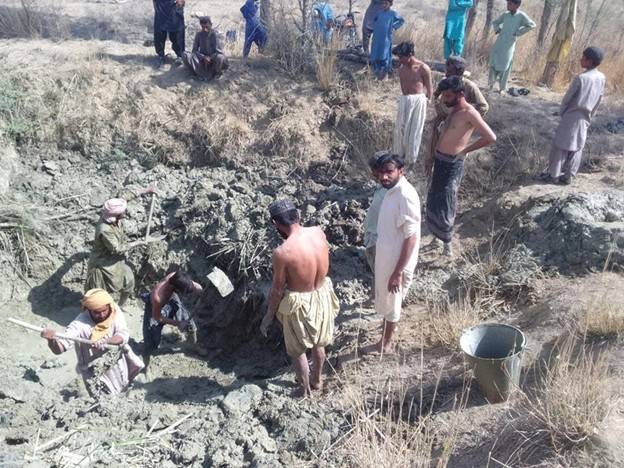
Dera Bugti’s economy relies heavily on agriculture, yet only 6 percent of its land is cultivable, and productivity remains low. The situation worsened when the provincial government disconnected electricity to nearly 150 water bores, forcing residents to abandon farms and migrate. Outside the gas sector, employment opportunities are scarce, leaving locals with few alternatives for livelihood.
The region also suffers from ongoing tribal conflicts, claiming over 50 lives each year. Despite the deployment of nearly 19,000 security personnel, violence continues to afflict the area.
Years of gas extraction have severely damaged the local environment, disrupting traditional pastoral and farming practices. No meaningful efforts have been made to rehabilitate the land or compensate affected communities.
A growing health crisis has also emerged, with an increase in cancer cases. In the past year alone, at least 12 residents of Dera Bugti have died from the disease – a likely result of prolonged exposure to industrial pollution.
The Pakistan Poverty Alleviation Fund (PPAF) initiated a Rs136.70 million holistic project (2018–2021) focusing on infrastructure, health, and education.
Corporate social responsibility from gas companies remains minimal – occasional donations of shoes, bags, and small cash stipends for girls, alongside limited school supplies.
Military-led education efforts by FC Balochistan have established schools and the Military College Sui, producing nearly 50 local Bugti officers but enrolling only 13 local students annually.
While these interventions are positive, they remain far too limited to address the scale of systemic deprivation.