

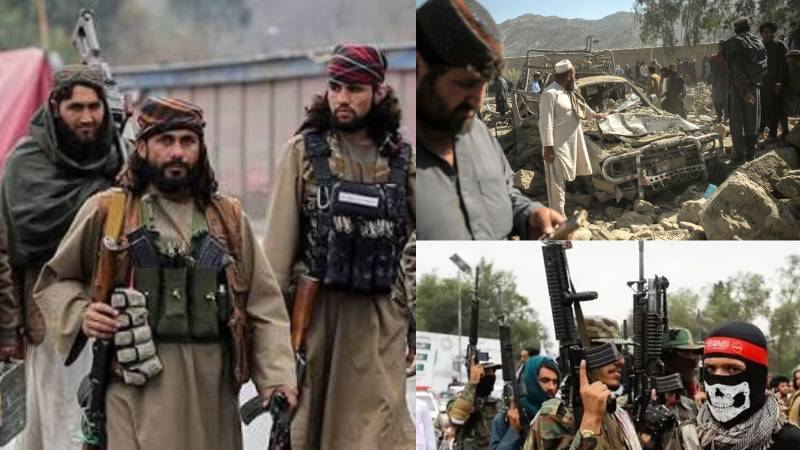
The contemporary militant matrix in Pakistan has reached a dangerous inflection point. What was once a collection of localized, ethnically driven, or ideologically isolated insurgencies has evolved into an integrated, corporate-style network. Driven by tactical pragmatism, disparate militant outfits are dropping long-held ideological barriers to pool financial, human, and logistical assets across traditional divides to maximize their asymmetric impact against the state.
Yet, as the state's asymmetric adversaries forge unprecedented operational unity, Pakistan itself is grappling with deep institutional paralysis, political warfare, and a deeply fractured citizenry. The contrast could not be starker: a converging insurgent front operating against a state divided against itself.
The defining operational shift in recent security dynamics is the formalization of a pragmatic nexus between three historically distinct actors: the Baloch Liberation Army (BLA) a secular, ethno-nationalist separatist group; the Tehreek-e-Taliban Pakistan (TTP), and Al-Qaeda.
This cross-ideological triad operates much like an asset-sharing corporate consortium. Al-Qaeda provides access to global financing networks and transnational funding streams. The TTP supplies tactical blueprints, suicide-bombing frameworks, and religious radicalization apparatuses. In return, the BLA offers localized terrain infrastructure, strategic knowledge, and logistical access across high-friction pockets of Balochistan. By pooling these core competencies, the triad generates an operational synergy that none of these groups could achieve in isolation.
Beyond financial and tactical sharing, this strategic merger focuses heavily on demographic exploitation. Insurgent planners have increasingly turned toward recruiting and exploiting educated youth and women. Security analysts note that planners view women as low-profile delivery mechanisms capable of bypassing conventional military checkposts and state security perimeters, altering traditional counter-terrorism profiling models.
Simultaneously, localized consolidation and cross-regional solidarity are accelerating. Smaller, district-level militant factions—such as groups in Pishin District in Balochistan and Nowshera in Khyber Pakhtunkhwa have formally pledged allegiance to larger umbrella networks like Jamaat-ul-Ahrar (JuA) and the TTP leadership under Noor Wali Mehsud.
This organizational streamlining is accompanied by cross-regional political posturing. The Sindhudesh Revolutionary Army (SRA) recently issued public statements describing Balochistan as being in a "state of war," explicitly urging Sindhi citizens to boycott employment and involvement in state- and military-linked development projects in the region. This signals a growing intent among various ethno-nationalist and religious factions to present a synchronized front against federal authority.
Crucially, these networks continue to leverage diplomatic and territorial safe havens across the border in Afghanistan. Reports suggest that key figures from proscribed groups—including the TTP, Hafiz Gul Bahadur's faction, Bashir Zeb of BLA, and Central Asian militants—find shelter within Kabul's diplomatic quarter, particularly Wazir Akbar Khan. The Afghan Taliban leadership continues to offer diplomatic framing that shields these actors, describing TTP members not as terrorists, but as "refugees"—a rhetorical posture reminiscent of historical "guest" designations that was once granted to Afghan Taliban in Pakistan during US operation against them.
While insurgent networks streamline and integrate their operations, the state counter-terrorism apparatus remains bogged down in severe federal-provincial political deadlock. The federal government and military high command remain locked in a bitter political dispute with the Pakistan Tehreek-e-Insaf (PTI)-led provincial government of Khyber Pakhtunkhwa (KP) over national security strategies.
At the center of this divide is a clash between a hardline kinetic mandate and provincial political resistance. Chief of Defence Forces (CDF) Munir and federal ministers maintain an uncompromising stance, asserting that no group can rationalize violence on any pretext and that targeted kinetic actions will continue across all high-friction zones.
As formal political channels paralyze, traditional local networks, mainstream religious parties, and tribal jirgas are stepping into the governance void to independently manage local stability.
Conversely, the KP provincial executive under Chief Minister Sohail Afridi has publicly rejected centralized military operations, labeling them a "failed policy." The provincial administration refuses to extend political ownership to military sweeps in areas such as Tirah, Khyber, and Bajaur, arguing that decisions made behind closed doors in Islamabad without local consultation are counterproductive and alienate the local populace.
This institutional friction has degraded into open political warfare, directly degrading operational coordination on the ground. The federal cabinet has heavily criticized Chief Minister Afridi, accusing him of acting as a spokesperson for the Afghan Taliban after he publicly demanded that Islamabad provide hard evidence before attributing cross-border attacks to Afghanistan.
This breakdown in consensus extends directly into tactical operations. In the Tirah Valley, when security forces ordered temporary civilian evacuations to isolate militant elements and prevent the use of locals as human shields, the KP Chief Minister publicly rejected the evacuation orders, framing them as forced displacements. Such public disagreements leave military units operating in complex terrain without localized administrative backup, civil political support, or a unified national narrative.
The persistent stalemate between federal authorities and provincial leadership has created a profound vacuum of state writ in the borderlands. Left without a coherent state strategy, local populations are deeply polarized, caught between the immediate threat of militancy and a profound distrust of state security sweeps.
Public sentiment toward state security operations varies dramatically depending on the immediate threat environment. In regions acutely vulnerable to lawlessness, sectarian tension, and cross-border raids such as Central Kurram; the public narrative is defined by an urgent demand for more state militarization. Local Sunni and Shia clerics, alongside tribal elders, frequently hold joint press conferences pleading for the full deployment of the Army, Frontier Corps, and police forces, viewing a visible state military presence as their only defense against foreign-instigated militancy.
Conversely, in districts like Bannu, Domel, and Bajaur, the public narrative is dominated by a deep fear of the state's kinetic methods. Communities traumatized by past displacement events view extended counter-terrorism sweeps such as Operation Sarbakaf in Bajaur as immediate threats to their socio-economic survival. In these regions, local populations routinely demand formal administrative guarantees from tribal jirgas that no large-scale, forced civilian evacuations will be ordered.
As formal political channels paralyze, traditional local networks, mainstream religious parties, and tribal jirgas are stepping into the governance void to independently manage local stability. In Bajaur, where military operations target TTP and Islamic State Khorasan (ISKP) elements, local elders and political representatives have formed mediation jirgas to negotiate directly between militant commanders and state representatives.
These jirgas, often led by respected tribal and religious leaders, present options directly to local militant leadership—such as urging commanders to retreat to uninhabited mountain areas or return across the border in a desperate effort to prevent kinetic escalation and spare civilian populations from displacement. When tribal elders are forced to independently negotiate operational boundaries with insurgent commanders to preserve peace, it underscores a troubling reality: the state's writ is being eroded not merely by insurgent violence, but by political and administrative collapse from within.
Pakistan faces an asymmetric threat that has adapted to modern counter-insurgency through pragmatic collaboration, asset pooling, and organizational agility. An adversary that active shares financial, human, and tactical assets across ideological lines cannot be effectively countered by a state whose political leadership is locked in internal conflict, whose federal and provincial tiers actively undermine each other's narratives, and whose borderland populations view state operations with deep trepidation.
Kinetic operations alone cannot substitute for political consensus and administrative cohesion. Until the state presents a unified national strategy that bridges the federal-provincial divide and earns the trust of local communities, it will remain at a strategic disadvantage against an increasingly corporate and united militant front.