

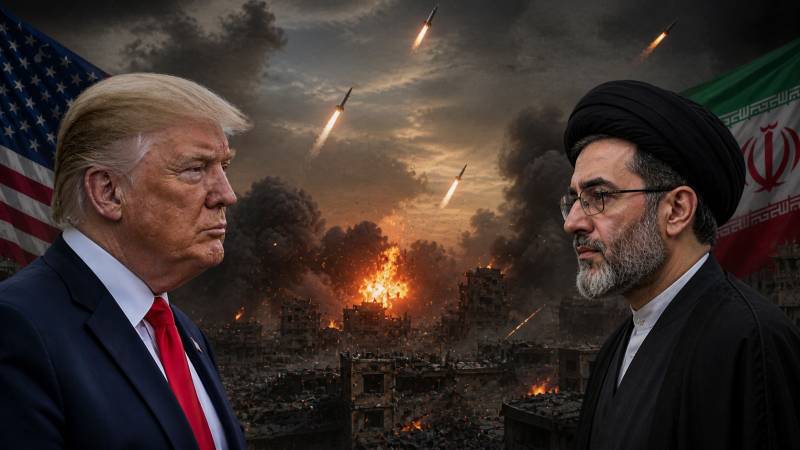
What is unfolding between Iran and the United States has evolved far beyond a conventional interstate conflict. It is now a hybrid crisis, with war, coercive diplomacy, and fragmented negotiations occurring simultaneously across multiple channels. Telephone calls, encrypted messaging exchanges, and structured backchannel diplomacy are now as central to the process as formal negotiations. In this environment, Pakistan has emerged not as a passive observer but as a crucial intermediary shaping the contours of communication between Tehran and Washington.
This mediation role is not symbolic. It is operational and increasingly structural. Pakistani diplomatic channels are being used to transmit proposals, counterproposals, and ceasefire frameworks between the two adversaries, both of whom face political and strategic constraints that limit direct engagement. In effect, Pakistan has become the principal conduit for dialogue in a conflict that has destabilised maritime security, disrupted global energy flows, and strained the broader regional order.
Recent reporting suggests that discussions between U.S. and Iranian representatives have taken place indirectly, at times through facilitated exchanges involving Pakistan, with Islamabad providing the logistical and diplomatic scaffolding to sustain negotiations. The significance of this lies not only in the content of the talks but in the fact that communication itself is now dependent on third-party mediation. In modern conflict diplomacy, control over communication channels often becomes as important as control over territory.
At the centre of this evolving dynamic is the ongoing Iran–U.S. confrontation, which escalated into active conflict earlier in 2026 and has since destabilised the Gulf region. Maritime insecurity in the Strait of Hormuz, disruptions to oil flows, and intermittent naval confrontations have all contributed to a situation in which traditional diplomatic pathways have broken down. Against this backdrop, Pakistan’s emergence as a mediating hub reflects both geographic inevitability and diplomatic opportunism.
One of the most consequential developments in this broader shift is the emergence of Pakistan as a physical transit and trade corridor for Iran. With shipping routes constrained and maritime risk elevated, Islamabad has formalised overland transit routes allowing goods destined for Iran to pass through Pakistani territory via Karachi, Port Qasim, and Gwadar towards border crossings such as Gabd and Taftan.
The convergence of diplomacy and trade through Pakistani territory reflects a broader transformation in regional security architectures
This development has transformed Pakistan from a peripheral trade partner into a critical logistics bridge between Iran and the wider region. What was once a limited bilateral arrangement is now becoming a structured corridor system, with implications that extend far beyond commerce. In many ways, trade flows are beginning to mirror diplomatic alignments.
Even more significant is a recent and structurally important shift in Iran’s external trade orientation. Reports indicate that Iran is actively redirecting a substantial portion of its import and logistics activity away from the United Arab Emirates—particularly traditional hubs such as Jebel Ali—and towards Pakistani ports and transit routes.
Historically, UAE ports have functioned as Iran’s primary commercial interface with global markets, even during periods of sanctions and political isolation. The efficiency of Dubai’s logistics infrastructure made it a natural transhipment hub for Iranian trade, including re-exports and indirect procurement channels. However, the current conflict environment, combined with maritime insecurity and shifting regional alignments, has accelerated a search for alternative pathways.
In this context, Pakistan’s ports—especially Karachi, Port Qasim, and Gwadar—are being positioned as viable substitutes within Iran’s evolving trade architecture. This is not merely a tactical rerouting of cargo. It represents a broader geopolitical recalibration in which Iran is diversifying away from Gulf Arab logistical dependence and embedding itself more deeply into overland and eastern maritime corridors.
The implications of this shift are profound. First, it signals a fragmentation of the traditional Gulf-centric trade order. The UAE, long a neutral commercial hub connecting competing regional economies, risks seeing its intermediary role diminished if trade rerouting accelerates. Second, it elevates Pakistan’s structural importance in regional commerce, not just as a transit state but as a gatekeeper of critical east–west trade flows.
Gwadar, in particular, gains renewed strategic relevance. Karachi and Port Qasim provide redundancy in the system, allowing Iran to bypass chokepoints exposed to military and political disruption.
When viewed alongside Pakistan’s mediation role in Iran–U.S. negotiations, a more integrated picture emerges. Pakistan is simultaneously functioning as a diplomatic intermediary and a logistical bridge.
The convergence of diplomacy and trade through Pakistani territory reflects a broader transformation in regional security architectures.
However, this emerging position is not without risk. Acting as a conduit between adversarial powers places Pakistan in a structurally exposed position.
Yet despite these uncertainties, the trajectory is clear: Pakistan is becoming more central to both the diplomatic and economic dimensions of the Iran–U.S. conflict.
If a durable settlement is eventually reached between Iran and the United States, the implications will extend well beyond the conflict itself.
In that sense, what is being tested today is not only the possibility of peace between two adversaries, but the emergence of a new diplomatic and economic geography in which states like Pakistan occupy the connective tissue of a rapidly evolving regional order.