


In 1992, when I joined Pakistan’s then second largest English daily The News International (as a cultural reporter), I was at once summoned by the editor to his office. I knew him from before, and it was he who had hired me, pulling me from an English weekly, Mag, where I was stationed as a political reporter since December 1990. Mag was my first journalistic stint after I couldn’t continue my pursuit for a master’s degree in political science at the Karachi University. Carrying over from my college days my penchant for putting more effort in student politics than in my academic obligations, I at once found myself embroiled in a rather violent tussle at the university.
Student politics in Pakistan had increasingly become violent from 1979 onwards; or two years after an elected government was toppled by a reactionary military general, Zia-ul-Haq. Student politics was violent during my college years as well (1983-1987), but became outright vicious in the late 1980s. It remained so even after Zia perished in a plane crash in August 1988 and democracy was reinstated.
As the violence grew more gruesome, I quit student politics (on my father’s advice), and took a train to Lahore, Punjab’s capital city. I returned to Karachi in September 1990, a month after the PPP government was removed by President Ishaq Khan on charges of ‘corruption’ and for failing to mitigate ethnic violence in Sindh’s metropolitan capital, Karachi. In December 1990, I joined Mag as a reporter.
My editor at The News was Imran Aslam. Imran was a journalist and playwright. A student activist in his youth, he first rose to prominence when he became the editor of Star — an ‘eveninger’ published by the country’s largest English daily, Dawn. Imran was just 32 when he became editor of Star. Under his editorship, Star became a leading voice against the Zia-ul-Haq dictatorship. But this cost him his job when Dawn’s management was pressured by the dictatorship to fire him. However, this didn’t stop the state-owned Pakistan Television Corporation (PTV) to telecast a play that he wrote for the channel.
The reason PTV agreed to telecast a play by a critic of the dictatorship was rather simple. The play, Khaleej (gulf), was about a passionate idealist who gradually becomes disillusioned with left-wing politics. He then becomes a cynic and ultimately a conformist. PTV’s censor board must have enjoyed the plot, thinking the play was expressing Imran’s own disillusionment with left-wing politics. Between 1987 and 1991, Imran worked closely with TV and film actor Rahat Kazmi and actress Yasmin Ismail, writing stage plays for them.
Kazmi acted in and produced Imran’s plays which were political. They largely targeted the Zia dictatorship. Kazmi often struggled to find halls to stage them. For Yasmin, Imran penned plays for children, but slipped witty political commentary in them in such a manner that the censor board always struggled to pick his wit. In 1991, Imran joined The News. I first met Imran in 1985. I was in college at the time. He became a mentor of sorts and in 1992 hired me at The News.
He didn’t want me to do political reporting anymore. Before I joined, I had already written a dozen or so pieces for The News on a Pakistani pop music scene that had begun to emerge from 1987 onwards. Imran told me to stick to ‘cultural writing.’ He argued that even though The News already had a pretty competent and established ‘cultural critic,’ the critic was ‘too old’ to understand the popular culture that had begun to develop after Zia’s demise — especially among the country’s urban middle-class youth.
Imran Aslam had observed that high culture and lowbrow populist culture were both actually products of the same people
So, when he summoned me to his office on my very first day at The News, I found the cultural critic already seated there. The gentleman must have been in his early sixties at the time. He was a refined and polite person. Imran wanted all kinds of culture covered in the paper. But the gentleman was unwilling to cover stage plays by the comedian Umer Sharif. So, Imran asked me to do it and I readily agreed.
The discussion then turned to ‘popular culture’ and ‘high culture.’ Imran believed that all kinds of culture should be given space but the gentleman disagreed, insisting that The News should stay away from “cheap cultural products.” I, however, who still fancied himself a ‘Marxist,’ and at the time went around with a ‘revolutionary beard,’ long (really long) hair, and a beret like the one Che Guevara used to wear, began to defend what the gentleman was describing as “cheap cultural products.”
“It’s culture by the people, for the people, of the people,” I rhetorically announced. “There you go,” Imran replied, pointing towards the gentleman who must’ve felt besieged. But as the gentleman began to reinforce his views, Imran interrupted: “High culture or populist culture, both are products of the same people, really.”
I had no clue what he had meant by this, while the gentleman continued to mumble that the paper should only promote “quality culture.” It was 13 years later that I finally realised what Imran was implying, even though by then I had quit The News, joined an advertising agency and became a weekly columnist for Dawn. The realisation (of what Imran had said) came when I was reading a book by the British cultural theorist Jim McGuigan. The book was Cultural Populism. First published in 1992, I stumbled upon a copy of it at a book fair in Karachi in 2005. Halfway through the book, I thought, “F**k! This is what he (Imran) had meant!”
Let me explain.
***
The spectre of populism has been haunting a lot of people across the world for well over a decade now. But there are also those to whom populism is not a spectre but a solution to decades of malpractice, corruption and exploitation by economic and political elites. Therefore, many observers once believed that populism was tailor-made for leftist forces to sweep in and take-over.
But populism as we have known it since the early 2010s, has largely emerged on the right. What is more, in the West, it has also been embraced by the urban working classes. Elsewhere though, in countries such as India, Pakistan, Turkey, Thailand, Indonesia, the Philippines, Brazil, Tunisia and Argentina, populism has largely attracted the support and votes of the middle-classes.
In the West, due to the outcome of neoliberal economics, the urban working classes and rural segments felt ignored and abandoned by urban ‘liberal’ elites who took control of the mainstream parties that previously used to strive for working class interests.
On the other hand, in regions where right-wing populism has been embraced by the middle classes, these classes bemoaned that ‘corrupt’ mainstream parties were only interested in engaging with the lower classes because these still constitute the larger percentage of the electorate.
In the US and the UK, in the 2010s, political scientists and sociologists began to deconstruct populism to explore what exactly lay at its core. This deconstruction segmented populism into three types: political, economic and cultural. There has been an increasing interest among sociologists to especially explore populism’s cultural aspects.
This is not to suggest that the three are in any significant way different from each other. Quite the contrary. Political populism carries in it rhetoric moulded from perceptions gestating in sections of society who believe that, after being thoroughly exploited, they are being sidelined and ignored by elites whose economic and political interests are not tied to the interests of these sections anymore.
Political populism’s response in this regard is ‘economic populism’ or rhetoric/action that appeals to the sentiments of those who believe they’re being exploited/ignored by the elites. It is, however, the cultural turn that the study of populism took that started to provide some fascinating insights into why populism mushroomed in the manner that it did from the 2010s. This cultural turn was the study of ‘cultural populism’ and how it provided staying power to present-day political and economic populisms.
Interestingly though, cultural populism, a term popularised in 1992 by Jim McGuigan, initially emerged from his study of popular/pop culture. According to McGuigan, popular culture products had stopped being understood in a more critical manner and were being celebrated and eulogised by sociologists as manifestations of art by, of and for the ‘masses.’
According to McGuigan, this was “a wholly illusory and ideologically naïve view” that did not take into account the political economy in which the popular culture industry operates, and the politics of those producing this culture’s products. In his 2009 book Cool Capitalism, McGuigan furthered his thesis by stating that a more critical exploration of popular culture products shows that cultural populism had little to do with any kind of cultural activism by the ‘masses’, but that it was more about “capitalism incorporating disaffection into capitalism itself.”
For example, any nature of popular art/fashion/trend exhibiting itself as being rebellious, ‘cool’ or radical is often the brainchild of cultural industries which turn subversion, rebellion, ‘coolness’ and outrage into saleable commodities that are enthusiastically consumed by specifically targeted (and passive) consumers. But what has this to do with political populism? Quite a lot.
In 2020, cultural analysts Professor Jo Littler and Marie Moran referenced Jim McGuigan’s critique in their study of cultural populism. According to Littler and Moran, there is a relationship between economics, politics and culture. For example, more than a decade ago, cultural products shaped by popular media began to heighten the presence of economic and social crises (both imagined and real).
The media strengthened a narrative in which the crisis was due to ‘exploitation’, ‘corruption’, and the failure of the established order. It found a ready market for this angry/activist strand of ‘journalism.’ The ironic bit was, those funding the proliferation of this narrative were from an economic elite (‘media barons’). This thesis restates McGuigan’s conclusion that capitalism co-opts disaffection. So, one can therefore posit that, in the last two decades, certain economic and political issues began being co-opted (as ‘issues’) by media elites in a faux-angry manner. This faux anger was then sold as a commodity to the people. This greatly helped generate support for the kind of political populism that mushroomed in various regions in the last decade and a half. Its emergence wasn’t organic. It was manufactured.
As mentioned, political populism uses economic populism to make certain pledges that include promises of sweeping economic reforms and so-called ‘pro-people’ policies. But it is cultural populism that thrills political populists and their audiences the most. Political populists often tie their populist economic promises to a mixed bag of emotive issues related to language, race, religion, ethnicity and morality.
In fact, contemporary European political populism has been more cultural than economic. It has created an ‘other’ in the shape of the violent migrant who is apparently undermining European culture and is threatening to destroy European values and the continent’s ‘Christian heritage.’
In the US as well, populism is largely cultural, despite the fact that the quintessential American political populist President Donald Trump (elected in November 2024) tried to aggressively display a form of economic populism during his first 100 days as president. But his core constituency remained to be Christian nationalists, Evangelical Protestants, social conservatives and ‘nativists’ who believe the US was supposed to be a white, Protestant Christian state built on ‘traditional American values.’
In Asia, populism’s constituency is largely middle class, which seamlessly fluctuates between modernity and traditionalism, pop culture and piety, patriotism and protest, conservatism and consumerism, and, at times, between liberalism and outright reactionary-ism. It is thus one of modern-day populism’s most unstable variants. Like populism in general, cultural populism too aims to demonise and demolish an ‘other,’ and a group of elites. However, it is most likely the co-opted product of the very elites it rails against and/or the result of one elite using populism to degrade a competing elite. Cultural populism is a major part of such equations.
So, Imran Aslam was alluding to what McGuigan was claiming. Cultural populism may come across as being pro-people and anti-elite, but it is a product of an elite or elites just as ‘high culture’ is. Maybe Imran was reading McGuigan’s book at the time. Maybe not. Because he (Imran) was a highly insightful man and in hindsight I can say, when one thought that he was slipping into cynicism, he was simply trying to navigate his own cultural products around an elite that he thought was bankrolling both high as well as popular culture. This awareness in him helped him to cleverly manoeuvre elites to finance his own cultural creations. He was a fascinating man.

Cultural populism, or the context in which I’m going to explore it in this essay, is a political by-product of ‘mass culture’ and/or ‘popular culture.’ In his 1957 book, Literature and the Image of Man, the German sociologist Leo Löwenthal wrote that mass culture arose with the rise of the market economy. To the British historian Peter Burke, mass/popular culture developed with the development of national consciousness (in the late 18th century) when some intellectuals tried to turn it into ‘national culture.’
Popular culture was contextualised by the intellectuals as cultural activities shaped by the masses for the masses, and who, by the 19th century (in Europe and North America), had been provided a national purpose and identity by nation-builders. To these intellectuals, who mostly belonged to emerging middle-classes, popular culture was the manifestation of widespread national consciousness which was evolving a national culture or the culture of a nation-state.
Popular/mass culture was a concept carved by a middle-class intellectual elite to define the cultural activities of people who had begun to flock to the cities during the Industrial Revolution, looking for work in factories. I believe the notion that popular culture was challenging elites, too, was the creation of the intellectuals because the European and American middle-classes (in 19th century) saw themselves as an economic, political and social entity that had vanquished feudalism, clericalism and the idea of ‘divine rule’ and was turning to science and economic and political modernity to establish a more enlightened order. So, they projected the iconoclastic ‘self’ that they had developed for themselves onto the ‘culture’ of the working-classes/masses as well.
In Europe, people flocking to the cities were mostly doing so from rural areas. They brought with them their rural traditions and sensibilities (‘folk culture’). But there was no place for folk culture in the modernising (though cramped and increasingly polluted) cities. The working-classes and the ‘lumpenproletariat,’ according to the middle-class intellectuals, began producing cultural products that reflected the reality that they had stepped into. More than subverting the high culture of the elites, popular culture products were shaped to provide some ‘cheap’ entertainment to those working in factories and living in cramped quarters.
Any popular art/fashion/trend exhibiting itself as being rebellious, ‘cool’ or radical is often the brainchild of cultural industries which turn subversion into saleable commodities
But who was providing them these products? The working-classes didn’t have the capital to produce them. Early tabloids, cheap liquor, sensational, racy ‘pulp’ novels, brothels, etc; these were all products of men who managed to rise from their working-class confines by making some side money (sometimes through questionable means). Thus was born the petit bourgeois entrepreneur.
He saw the working-class mass as a market, and since he too was once part of this mass, he understood its tastes and desires and also its economic limitations. So he designed and priced his products accordingly. Then there is also the claimed case of this mass apparently reminiscing about the ‘tranquil,’ and simple life that it had led in the villages. But this too was the imagination of (certain) middle-class segments.
On the one hand, middle-class intellectuals were conceptualising popular culture as activity that was being shaped by the masses for the masses, on the other hand, the more ‘idealistic’ segments of the middle-classes riled against the ‘ugly monstrosities’ of the Industrial Revolution and city life through the romanticisation of folk culture. This reflected the anxieties of a segment of middle-class in a society undergoing rapid change. It led to a desire in them to escape the realities of industrialisation and urban sprawl, and find solace ‘in the beauty’ and ideals of the past and of nature.
Middle-class poets, artists and novelists valorised village life, even though these men and women almost always returned to the cities. Here as well, an elite was shaping imaginings and longings of the working-classes. But folk culture products in this regard were largely produced for the aesthetic and even ideological consumption of the ‘romantic’ middle-classes. People who had migrated to the cities from villages were likely to have remembered the low mortality rates in their villages, the presence of diseases which could only be addressed in cities, and lack of schools or any modern tools.
Indeed, the cities that they migrated to had become cramped, dirty, and polluted, but cases of migrants returning to their villages in disgust were rare. Material standards of living were in some ways improving as more material goods were produced, so they were available at lower costs, and factories provided a variety of employment opportunities not previously available.
So, those venturing into the villages were actually middle-class ‘romantics’, but only a handful actually settled there.
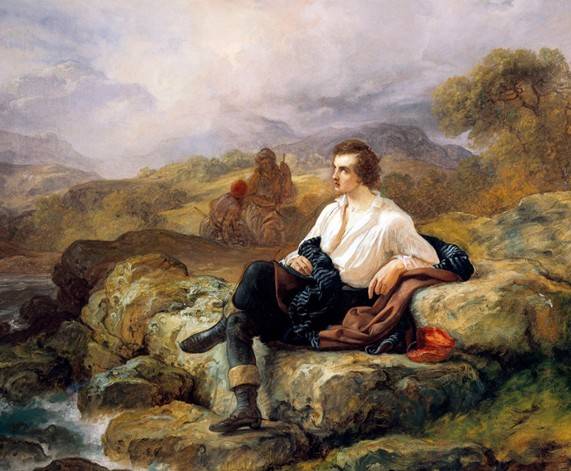
High culture was often associated with the elite or upper-classes (it still is). These classes are thought to have a more refined taste and appreciation for ‘high forms’ of cultural expression. According to the French sociologist Pierre Bourdieu, those in the upper class don’t have to worry about paying rent or providing food for their family. In turn, they can focus on things like art or opera, things that aren’t really that practical to everyday life.
In contrast, the working class must confront the needs and urgencies of making a living, resulting in a ‘taste for necessity.’ There is a general preference for things that are substantive and informal. But, as we have seen so far, there were middle-class intellectuals who were championing popular/mass culture as a culture produced by the masses with a national consciousness; and, on the other hand, there were middle-class romantics who were imagining the apparently pristine rural/folk pasts of the working-classes that had been undermined by the monstrosities of industrialisation and modernity.
But there was yet another group of middle-class men and women who sympathised with the upper-classes, and who feared that the more sophisticated cultural expressions were being threatened by ‘crude’ mass culture products. The American cultural critic and philosopher Dwight Macdonald embodied this concern in the mid-20th-century by declaring that a deep line be drawn between high and low culture so that mass culture products stopped contaminating high culture outcomes. Macdonald did recognise the fact that high culture was produced by an elite, but he didn’t see this elite being in any way exploitative or snobbish. To him, these were cultural elites that were not only producing high quality artistic expressions, but were also needed to protect these expressions.
Macdonald was a conservative in the modern set of critics who began unleashing an onslaught against popular culture from the 1940s onwards. This onslaught was mainly led by the ‘Frankfurt School:’ a school of thought in sociology and critical theory. It was formed in 1923 by a group of left-wing German intellectuals, but most of whom migrated to the United States due to the rise of Nazism in Germany. The two most prominent scholars of the school were Theodor W. Adorno and Max Horkheimer. Their critiques of popular culture were largely based on Marxist ideas, even though they also critiqued Marxism. In fact, on their arrival in the US, they largely adopted a left-leaning liberalism. According to Adorno, popular culture was “imposed upon the masses,” and the cultural industry intentionally integrates its consumers from above.
But Adorno’s critique was not only about a cultural industry that was being navigated by capitalist elites for profits. To him, this industry had an ‘ideology’ as well. An ideology to keep the masses in line, induce in them conformity and obedience in a bid to keep the capitalist system stable. The products of popular culture had become increasingly glossier when Adorno was writing this, with the arrival of film, radio, recorded music, and television.
Critics of popular culture saw the consumers of popular culture as passive. According to the sociologist Dominic Strinati, the critics lamented that cultural industries discouraged consumers from forming their own intellectual and emotional responses. Instead, the industries formed the responses for the people and therefore, also defined social reality for the mass public.
Nevertheless, those who continued to insist that popular culture was a product of the ‘masses’ and had an element of rebellion in it against elites, countered the critics by denouncing them as elitist. But critics such as Jim McGuigan did not critique popular culture itself as much as they did those who championed it. To McGuigan, the issue was in the manner in which popular culture had begun to be celebrated, glamorised and romanticised by those who were championing it as ‘the culture of the people.’ McGuigan saw this as a symptom of naive idealism about culture products which carried the ambition to create and control certain social and political narratives which were designed to mitigate any possibility of unrest in the public.
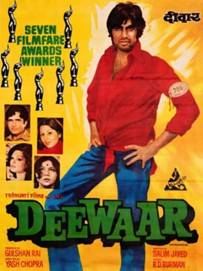
Take the example of 1970s’ ‘Bollywood’ blockbusters starring the ‘iconic’ Amitabh Bachchan as the ‘angry young man’ (AYM). In one of his most famous AYM films,1975’s Deewar (Wall), he plays an intense ‘anti-hero’ who rises from poverty to become a powerful mafia boss (through smuggling). This character gains the sympathy of the audiences by exposing the hypocrisies of society, and of the political system, on his way to becoming a rich man. He does this to impress his mother (who raised him on the cruel streets of Bombay after her labour activist husband abandoned the family). The husband had decided to vanish after a powerful factory boss wrongly implicated him on a trumped-up charge. Amitabh’s character was raised by his mother along with his younger brother (played by Shashi Kapoor). The younger brother grows up to become a police officer.
Amitabh brawls, kills, loots and smuggles his way to the top by fighting a lopsided system. Evil/greedy seths, mobsters, hoarders, and corrupt politicians are all bulldozed by the AYM, but the state is never really called into question as such. In fact it is eulogised. The state is symbolised by the honest cop-son who, despite being overwhelmed by crooks, stays steadfast in keeping the country (symbolised by the mother) afloat and untouched by the filth that is threatening to tarnish her. The brother doesn’t care if it was his own blood that he has to put in jail and the mother disowns her own (criminal) son for becoming just like the criminals who had disgraced their father.
The state won in every Bollywood AYM film, even though politicians and capitalists are lambasted and provided as punching bags for a restless mass of people. So, in the turbulent India of the 1970s, portrayal of the AYM characters was generally focused on opposing bad apples within the system, not the state or the system itself. The AYM in this regard was a cynical and flawed (but charismatic) outcome of a state that was fighting the same enemies as AYM was, but in a more lawful manner. The films did not rouse rebellious emotions simmering in the public, but worked as therapeutic outlets for an agitated polity. It was always an individual taking on all kinds of bad people, never an organised mass of people pouring out to topple the system.
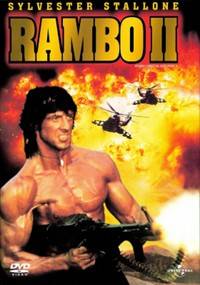
Now, let’s take a look at 1985’s Rambo: First Blood 2. Starring Hollywood action hero Sylvester Stallone as ‘John Rambo,’ the film works as a belated therapeutic exercise for a nation that was still trying to come to terms with the ‘humiliating defeat’ that the US had suffered in 1975 at the hands of the communist Vietnamese forces. Apart from 1979’s dark and rather amoral Apocalypse Now, and the same year’s Deer Hunter, Hollywood had refrained from making films on America’s harrowing experience in Vietnam. Apocalypse Now portrayed the war as humanity’s descent into madness whereas the Deer Hunter dealt with the emotional scars that the war left on US soldiers who fought in Vietnam.
The state won in every Bollywood Angry Young Man film. The films did not rouse rebellious emotions simmering in the public, but worked as therapeutic outlets for an agitated polity
Ronald Reagan (elected as US president in 1980) looked to reset the country’s mood. His team of neo-conservatives (‘neo-cons’) had blamed America’s defeat in Vietnam on rampant liberalism, cynicism, the erosion of patriotism and rise of defeatism in American society. As the Reagan administration readied itself to bolster and revive America’s international influence through an aggressive foreign policy (to ‘crush communism’), it also looked to reinvigorate American society by creating a new national ethos based on the ‘entrepreneurial spirit’ of the Americans, ‘family values,’ belief in God and on the idea that material benefits and profits were God’s way of rewarding ‘honest, hard-working’ people.
There was no room in this to even speak about humiliations such as Vietnam. However, by the mid-1980s, after Reagan’s 1984 landslide re-election, he had succeeded in at least making a majority of Americans feel exorcised and secure. The word exorcise is important. Memories of an America that Reagan and his neo-cons believed had lost its way from the late 1960s and across the 1970s, needed to be repressed, expunged, and, in some cases, avenged. Vietnam was one such memory. In 1985, Hollywood obliged. It took the character of Rambo, an emotionally-scarred former US Green Beret, and sent him back to Vietnam to secure the freedom of some US soldiers who were in the custody of communist Vietnam. Rambo is an AYM. He was humiliated by his own people when he returned from fighting in Vietnam. He hates authority and wants to be left alone. Yet, he retains the ‘special’ combat training that he had received.
On his return to Vietnam, he single-handedly vanquishes dozens upon dozens of Vietnamese and Soviet soldiers and rescues the US POWs. He then angrily pleads “the country should care about its soldiers as the soldiers care about the country.” The film was a massive commercial success. On screen at least, the Vietnam defeat had been avenged. Interestingly, the very next year in 1986, director Oliver Stone released Platoon. The film shocked a new generation of Americans by showing the cynicism with which American leaders and generals sacrificed young soldiers for political purposes and how mutinies within the US forces often erupted in Vietnam.
Platoon was anti-Rambo. But in popular imagination, it is Rambo who till today is remembered as an iconic character who played a vital cultural role in aiding the US demolish communism and the evil Soviet empire. Rambo films became a lucrative franchise. In fact, its third film (Rambo III) released in 1988 and which takes place in Soviet-occupied Afghanistan, not only generated larger profits, it was praised by President Regan. Also, the Pentagon worked closely with the producers of the film. In fact, the Pentagon and the CIA have had a long history of working with US filmmakers.
It is not only capitalist elites who produce popular culture products. The state too produces such products by working with the elites or directly through state-owned mediums. However, the state’s purpose in this regard is not profit, but indoctrination. Indeed, as Adorno suggested that capitalist elites producing popular culture products want to proliferate an ideology (obedience to the capitalist system), the state’s purpose is entirely political in nature and involves more heavy-handed ideologies.
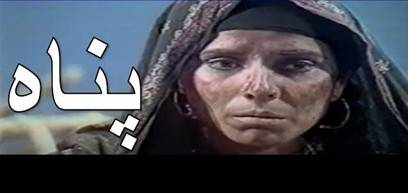
A 1981 ‘long play’ on PTV called Panah (Refuge) showed an Afghan woman (played by Uzma Gillani) battling Soviet soldiers who had attacked her village during the Soviet invasion of Afghanistan. The dictator Zia-ul-Haq had willingly allowed the United States and Saudi Arabia to turn Pakistan into a launching pad for anti-Soviet Islamist groups. These two supplied fabulous amounts of money and weapons for what Zia said was a fight between Islam and atheism. In the play, a woman’s strength was not determined by her resolve to fight for gender equality, but through her will to defend her religion and her community’s traditions against an ungodly enemy.
Ironically, middle-class intellectuals who view popular culture as the creation of the people for the people are often weary of mass culture. They equate it either with anarchy or totalitarianism. It is as if they’re always trying to differentiate between popular culture and mass culture. This is why, often, they like to depoliticise popular culture. This is what bothered McGuigan. To him, and before him to Adorno, not only were mass culture and popular culture one and the same, but were inherently political.
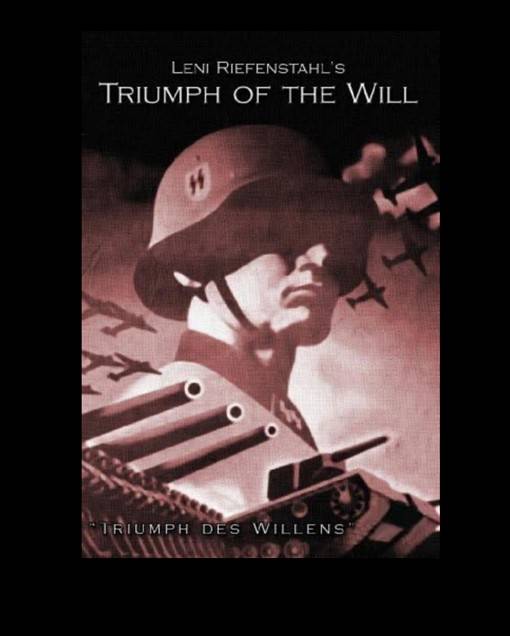
On the one end, in liberal democracies, popular culture products are shaped to produce profits and to discipline the anarchic tendencies of a society which can lead to economic destabilisation, and on the other end, in dictatorships, popular culture mediums and products are employed to indoctrinate an ideology (and vanquish opposing ideas). The latter directly involves the state and/or when the state becomes the sole producer of culture. Nazi Germany is an example. The cultural products that the Nazis shaped were of high aesthetic quality, yet the messages that they carried were simple and populist: Germans were a superior race fighting inferior races (especially Jews) and dangerous ideologies (communism, democracy) which were conspiring to destroy Germany.
‘Nazi culture’ encompassed the political, social, and artistic spheres of the Nazi regime, aiming to promote a specific worldview, and shape a homogeneous German society based on racial purity. This involved using propaganda, controlling the arts, and disseminating Nazi ideology through various means like music, film, and education. Intellectuals, sculptors, novelists, filmmakers, architects, etc., were enlisted by the Nazi state for this purpose. The purpose in this regard also included the creation of a ‘Nazi aesthetic’ which was approached from a high culture standpoint, but had enough populist appeal to attract the ‘masses.’ Meanwhile, cultural products (both high and populist) which contradicted the Nazi aesthetic and message were destroyed for being ‘decadent.’