

MOSCOW — Artificial intelligence, investment in creative industries, advanced manufacturing technologies and cultural identity were among the key themes explored as the BRICS+ Fashion Summit 2026 opened in Moscow on September 28.
The opening day brought together designers, industry executives, investors and cultural representatives from Africa, Asia, Europe and South America for 11 sessions examining the technological, economic and cultural transformations shaping the global fashion industry.
Held from September 28 to 30, the summit explored the growing role of artificial intelligence in creative processes, changing consumer behaviour, investment opportunities, production technologies and the international expansion of local fashion brands. Discussions also focused on cultural heritage, advanced materials and the relationship between brand identity and consumer values.
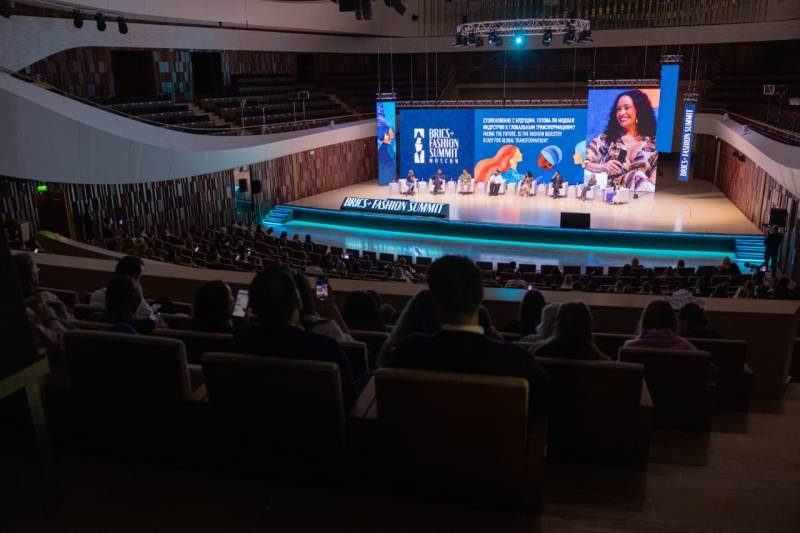
The first day's programme highlighted the challenge facing the global fashion industry: embracing technological innovation and new commercial opportunities while preserving creative individuality and cultural identity.
Fashion and the international positioning of cities
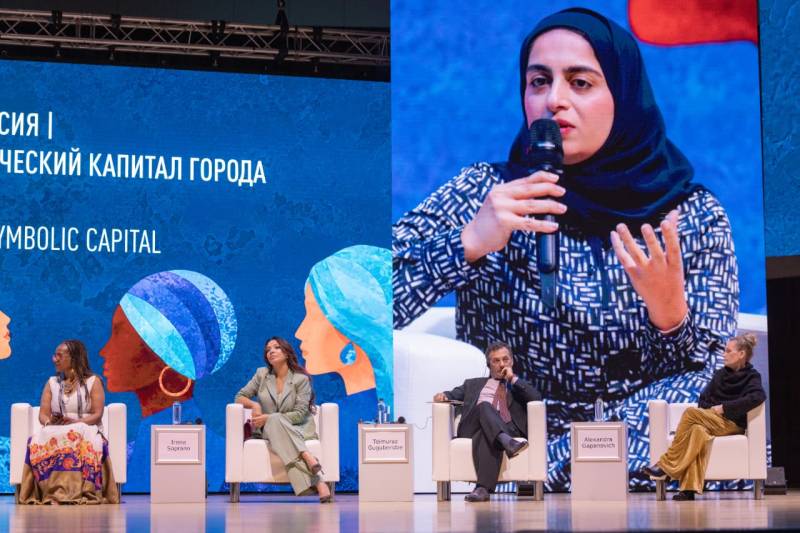
The opening day's plenary session, titled Fashion as a City's Symbolic Capital, examined how fashion could contribute to urban development, cultural identity and international visibility.
Participants discussed how designers, local materials, cultural heritage, retail spaces and the urban environment collectively shaped a city's fashion identity. Speakers noted that fashion could serve both as an economic driver and as a means of communicating a city's cultural character to international audiences.
Aizel Trudel, entrepreneur and trustee of the Fashion Fund, said Moscow was seeking to establish itself as a meeting place for designers from around the world, with museums and public spaces increasingly hosting fashion events and integrating the industry into the city's cultural life.
Irena Soprano, founder and designer of SOLANGEL, said her work aimed to present Russia's identity through contemporary design while reflecting the dynamism and diversity of Moscow. Soprano created a dress for Miranda Priestly's character in The Devil Wears Prada 2.
Artificial intelligence and the future of creativity
Artificial intelligence featured prominently throughout the opening-day programme, with experts examining its applications in research, prototyping, design development and digital marketing.
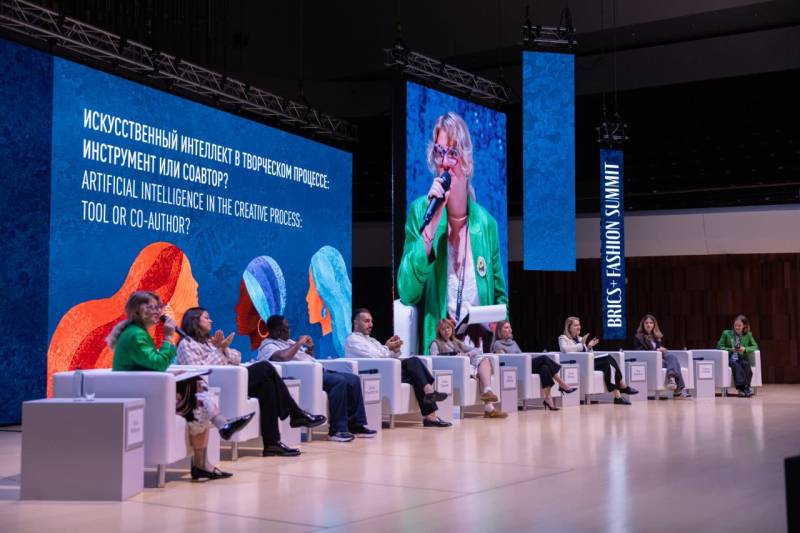
At the session Artificial Intelligence in the Creative Process: Tool, or Co-Author?, participants concluded that AI could accelerate parts of the design process but could not replace human experience, aesthetic judgement or creative vision.

Kanika Goyal, founder and creative director of India's KGL, described artificial intelligence as an assistant to designers, arguing that decisions involving the feel, placement and suitability of individual design elements still required human judgement.
The broader implications of technological transformation were explored during Facing the Future: Is the Fashion Industry Ready for Global Transformation?
Sergio Puig, director of Mediterranea Fashion Week Valencia in Spain, warned that widespread dependence on similar AI tools could undermine the distinctiveness of fashion brands, despite the technology's potential to expand their capabilities.
The session highlighted the opportunities available to smaller businesses through digital analytics, promotion and online distribution, while stressing the importance of maintaining individual brand identities.
Changing consumer behaviour was another focus. During Smart Shopping: How Brands Can Navigate the Revolution in Consumer Behaviour, experts examined how digital platforms were combining content, personalised recommendations and purchasing into increasingly integrated shopping experiences.
Huu Nguyen Canh, head of fashion at the Vietnam Design Association, said brands needed to help consumers identify their needs and discover suitable products, as online shoppers frequently began their search without a clearly defined purchase in mind.
Investment and the sustainability of fashion businesses
The financial challenges facing the industry were examined during Investments in the Creative Industries: Can Fashion Compete with Startups?
Speakers discussed the difficulty of evaluating fashion projects through conventional investment metrics, noting that commercial viability depended on more than creative concepts and design talent.
Ilya Nafeev, chief executive of Dva Myacha, said fashion businesses were more likely to develop successfully when backed by investors who understood the industry's specific characteristics.
Javiera Granja, general coordinator of Nicaragua Diseña, emphasised the importance of strategic planning to bring together talent, resources and commercial opportunities. The platform, established with the support of the Nicaraguan government, works to develop the country's fashion, art and design industries and promote them internationally.
The discussion underscored the importance of building sustainable business models capable of converting creative potential into long-term commercial growth.
Technology reshapes fashion manufacturing
The summit's opening day also examined the impact of digitalisation and automation on production processes.
At Manufacturing Technologies: What Will Change in the Next Five Years?, participants discussed advances in data management, logistics and manufacturing, alongside the growing need for specialised technical skills.
Cem Altan, a member of the executive committee of the International Apparel Federation, said the adoption of AI and process automation had accelerated delivery timelines following the COVID-19 pandemic.
According to Altan, end-to-end delivery times had fallen from six months to one month, and in some cases to just two weeks. However, he cautioned that the complexity of fabrics and materials continued to limit the potential for fully automated, robotic production.
The session High-Tech Materials: Can Pragmatism Be Emotionally Appealing? examined innovations in fabrics, fibres and synthetic materials.
Participants stressed that technological sophistication alone did not guarantee market success. New materials also needed to offer functionality, attractive design, economic efficiency and an emotional connection with consumers.
Tatyana Malofeeva, marketing director at Bioteks, highlighted the role of consumers' desire to own innovative products and feel connected to emerging trends.
Brand values and international expansion
The relationship between brand identity and consumer expectations was discussed during Value-Based Marketing: What Does Your Customer Believe In?
Speakers examined how businesses could communicate their values through their products, manufacturing practices, accessibility and customer experiences, rather than relying on marketing statements disconnected from their actual offerings.
Anfisa Khamitsevich, founder of Anfi, cautioned against placing excessive emphasis on marketing philosophies that had little connection with a brand's products.
Meanwhile, Scouting Local Brands: Risks and Opportunities explored the challenges facing designers seeking to enter international markets.
Konstantin Andrikopoulos, commercial director at BOSCO, argued that consumers were increasingly focused on the product itself rather than the brand name or price.
The discussion highlighted the importance of market analysis, professional expertise and infrastructure that could connect local designers with buyers in an increasingly fragmented global fashion market.
Fashion as a record of cultural memory
Cultural heritage formed another major component of the summit's opening-day programme.
During Fashion as a Museum Artifact: What Do Leading Museums Select and Preserve?, participants examined how museums and private collectors selected garments and fashion objects for preservation.
Speakers emphasised that an item's historical background and cultural significance, alongside its artistic qualities, determined its value as a museum object.
Thalyta Gomes Ferraz, senior adviser for institutional relations at the Brazilian Fashion Council, said fashion collections were increasingly drawing younger generations to museums, which helped preserve cultural memory while enabling audiences to understand contemporary society.
The session In Search of Inspiration: Russia's 19th- and 20th-Century Cultural Heritage explored how historical traditions could inform contemporary fashion through archival research, artistic interpretation and modern design techniques.
Elena Shanovich, director of brand management at National Media Group, stressed that historical references needed to be reinterpreted creatively to remain relevant to contemporary audiences.
Exhibition connects traditional Russian craft with contemporary design
The opening day also saw the launch of the Khokhloma × Russian Designers exhibition at Moscow's Zaryadye Concert Hall.
The exhibition showcased one of Russia's best-known traditional decorative arts through contemporary fashion and design, reflecting the summit's emphasis on connecting cultural heritage with new creative approaches.
It remained open throughout the three-day summit, from September 28 to 30, allowing visitors to explore and purchase selected products.
The BRICS+ Fashion Summit was held alongside Moscow Fashion Week, which ran from September 26 to October 1 at the Manege Central Exhibition Hall. Admission to the events was free, subject to advance registration.
The opening day's discussions set the agenda for the summit's broader examination of the global fashion industry's future, bringing together technological innovation, investment, international market development and cultural preservation as interconnected priorities for designers and businesses.