

Last week, I travelled with two environmentalist friends to Gharo, Mirpur Sakro, and Keti Bunder along the N-110 highway. After breakfast at Café Imran in Gharo, we continued our journey towards the coast. What we witnessed along the way was a telling picture of environmental neglect and agricultural distress in lower Sindh.
Like most highways in the province, the N-110 stands as a symbol of poor maintenance and flawed planning. From Gharo onwards, both sides of the road are scarred by waterlogging and salinity, which have destroyed the fertility of once-productive farmland. Ironically, what is often celebrated as “development” appears to be the root cause of this ecological damage. The construction of embankments, roads, and canals has blocked the natural flow of water, creating pockets of stagnation that now define the region’s landscape.
Even after the recent rains, their impact remains visible across the area. In some stretches, patches of cultivated land abruptly give way to saline, barren tracts — a stark reminder of how unchecked and unplanned development has disrupted the delicate environmental balance.
Amid this damaged landscape, we found vast areas under paddy or rice cultivation, a crop that, like wheat, has brought little economic relief to growers. Peasants expressed growing anxiety over falling prices and rising input costs. Reports from Badin and Golarchi confirm ongoing protests by cultivators demanding fair prices, as the market rate for rice has plunged from Rs. 3,200 to Rs. 2,200 per maund. This decline threatens the livelihoods of small farmers already struggling against debt, high costs, and environmental degradation.
Here and there, we noticed small chilli fields, along with coconut and banana orchards, but these were few and far between. Much of the land lay covered in shrubs and wild bushes, the tell-tale signs of waterlogging and salinity that have rendered thousands of acres unproductive. What was once fertile farmland is now being slowly reclaimed by the forces of neglect and mismanagement.
Keti Bunder lies within the Indus Delta, a once-thriving ecological zone now facing collapse. Because the river’s freshwater flow to the delta has been severely reduced for decades, especially downstream of the Kotri Barrage, seawater intrusion has encroached far inland. Vast tracts of agricultural land have turned into marshy, saline wastelands. Where the river meets the sea, the mix of brackish water once sustained a rich diversity of flora and fauna, including extensive mangrove forests that formed a unique ecosystem stretching from the Indus in the west to the Malir, Lyari, and Hub rivers in the east.
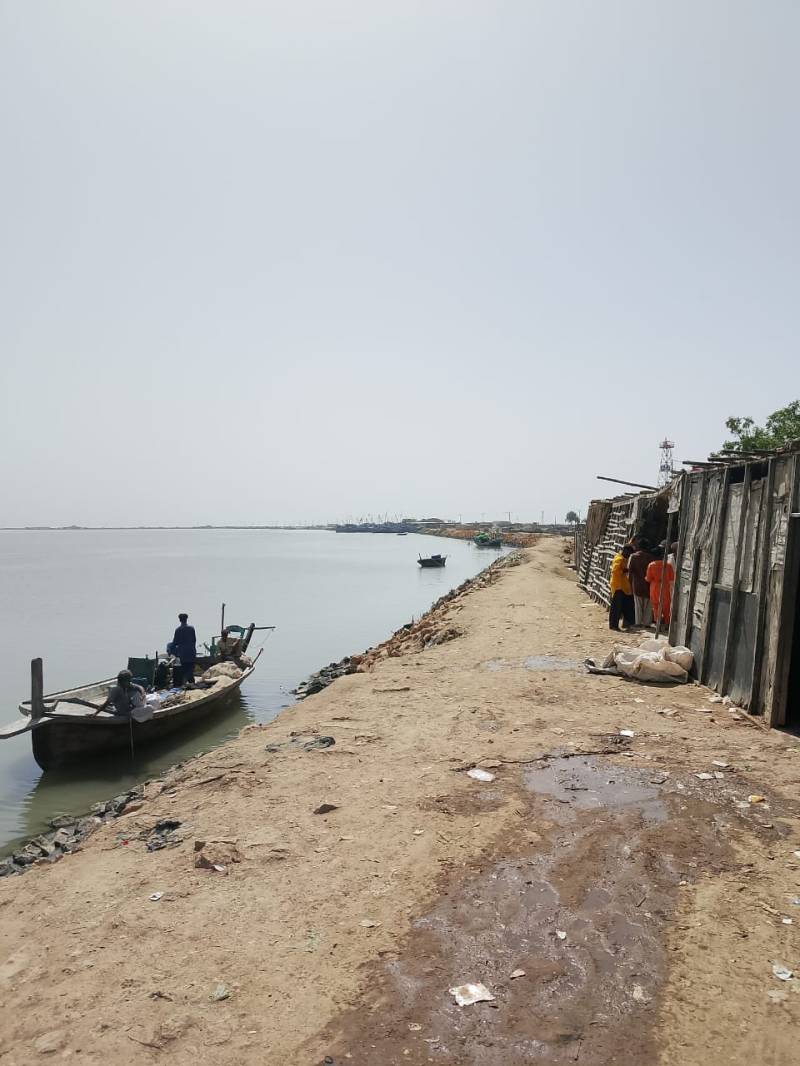
Beyond Mirpur Sakro towards Keti Bunder, poverty and ecological degradation merge into a single, haunting image
However, the Indus now runs almost dry beyond the Kotri Barrage, depriving Thatta District, including Gharo and Mirpur Sakro, of the freshwater it once relied upon for irrigation. Meanwhile, the Malir and Lyari rivers, and to some extent the Hub, have turned into conduits for industrial waste and untreated effluent discharged by Karachi’s industrial zones, commercial centres, and its population of over twenty million. The Pakistan Steel Mills, Port Qasim, and a chain of industrial estates extending up to Gharo have also devastated the delta’s fragile ecology, destroying mangroves and marine life while worsening the livelihood crisis of coastal fishing communities.
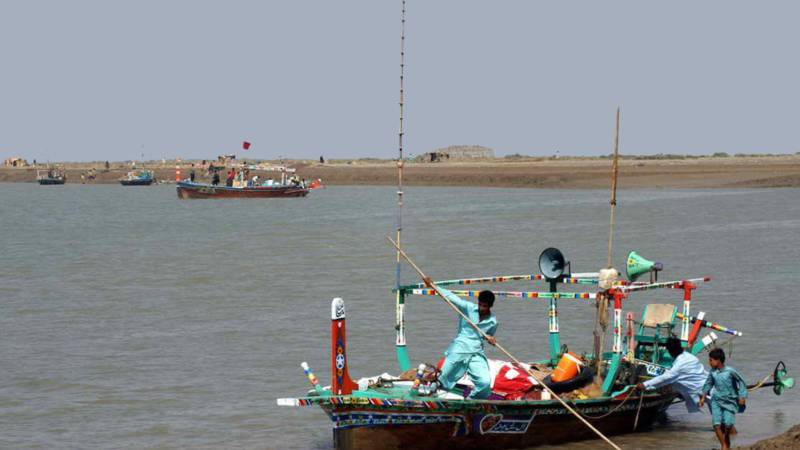
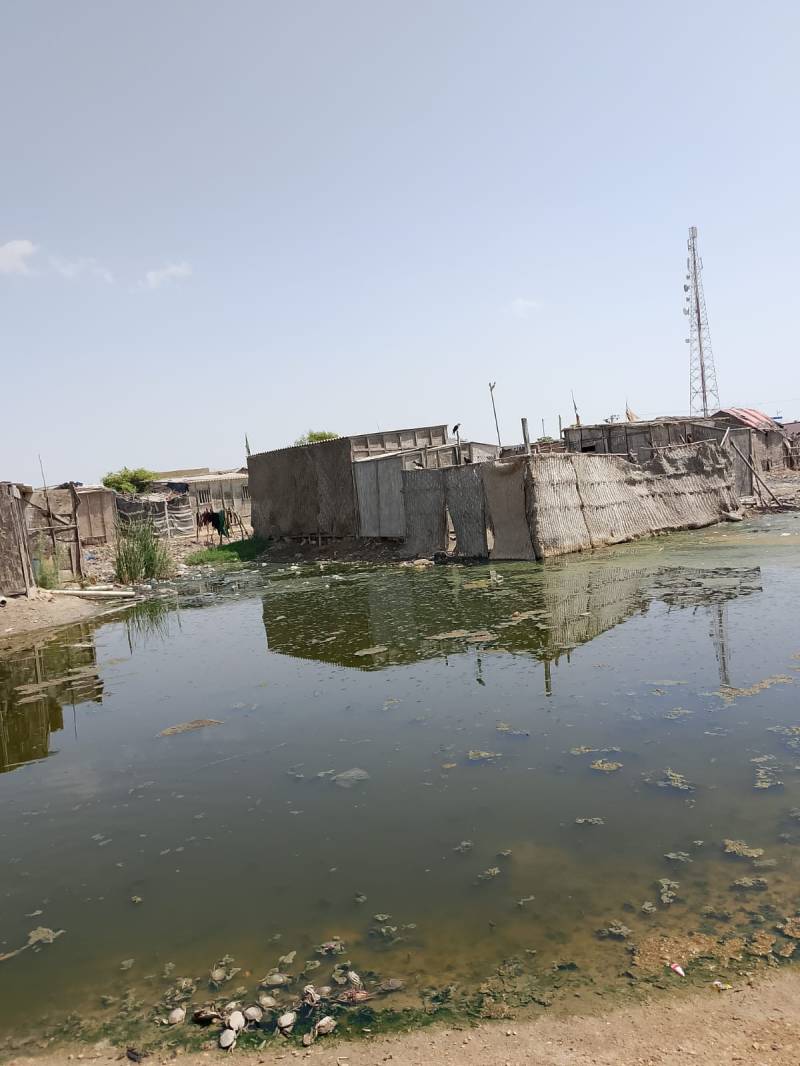
Beyond Mirpur Sakro towards Keti Bunder, poverty and ecological degradation merge into a single, haunting image. Most of the houses are made of wood and thatch, raised slightly above the ground to withstand rain and seawater. Many huts remain partially submerged or surrounded by stagnant water. These are primarily fishermen’s settlements, scattered along the roadside, where boats rest on semi-dry patches of land, waiting, perhaps, for the tides to return.
At the height of the China–Pakistan Economic Corridor initiative, the Sindh government announced ambitious plans for industrial and commercial development along the coastline from Karachi to Thatta, encouraging investors to acquire land in Gharo and Sakro. Yet little tangible progress has occurred, apart from a few farmhouses and isolated infrastructure works. The promised “blue economy” remains a distant dream.
Along the entire N-110 highway, not a single playground is visible. Children, embodiments of poverty and neglect, can be seen playing by the roadside or among the fishing settlements. Their laughter and play stand out as silent protests against the deprivation surrounding them.
Keti Bunder itself is a small fishing settlement with a few hundred huts, some government installations, and a dilapidated marketplace. Surrounded by water on three sides, it serves as a natural anchorage for fishing boats. Situated at one of the mouths of the Indus River where it meets the Arabian Sea, the town sits precariously on the fragile edge of the delta.
Protective structures such as bunds, walls, and jetties have been built to shield the area from rising tides and seawater intrusion. Yet these very defences have trapped rainwater, causing widespread waterlogging. Storms and cyclones during the monsoon season place Keti Bunder squarely in a high-risk zone. The area has a history of severe cyclonic impacts. Local and national agencies monitor coastal risks, and Keti Bunder hosts one of only two tide-gauge stations in Sindh used for early warnings of rough weather, high tides, and storm surges. However, reduced freshwater flow, degraded mangroves, and poorly maintained protective bunds have heightened the vulnerability of local communities.
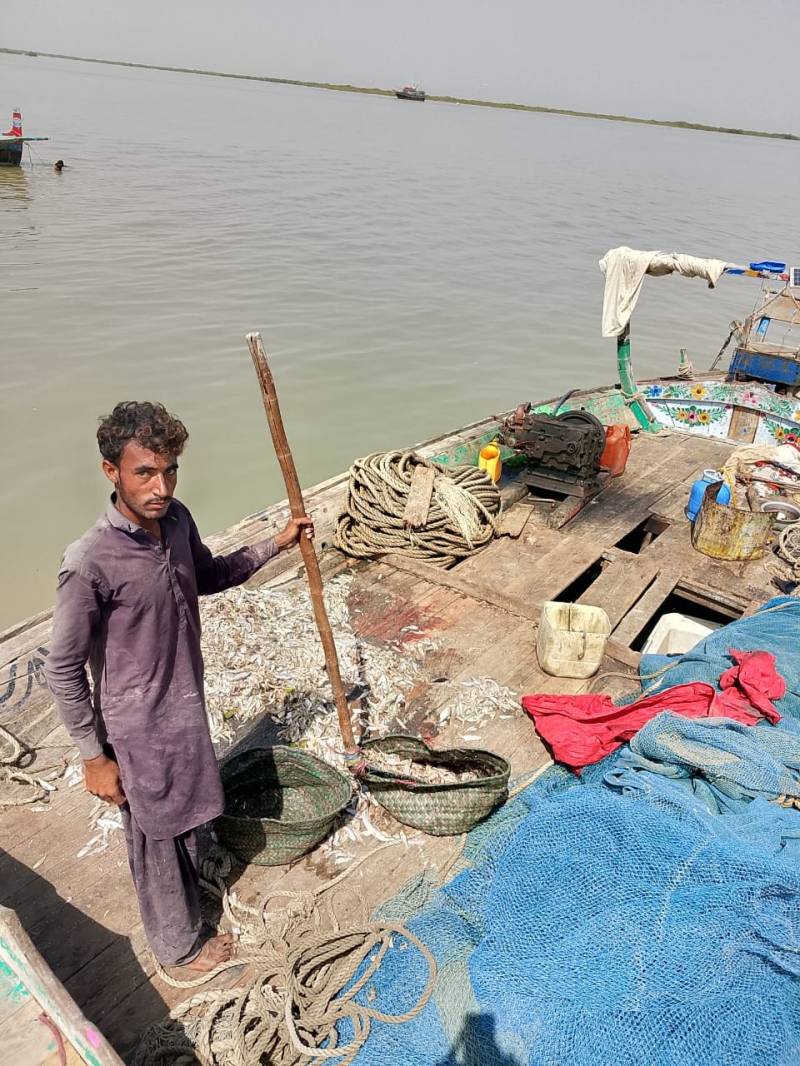
We observed both large and small fishing boats along the coast, most anchored with low-value catches, a sign that subsistence fishing dominates. The fishermen’s visibly harsh living conditions reflected their precarious struggle for survival.
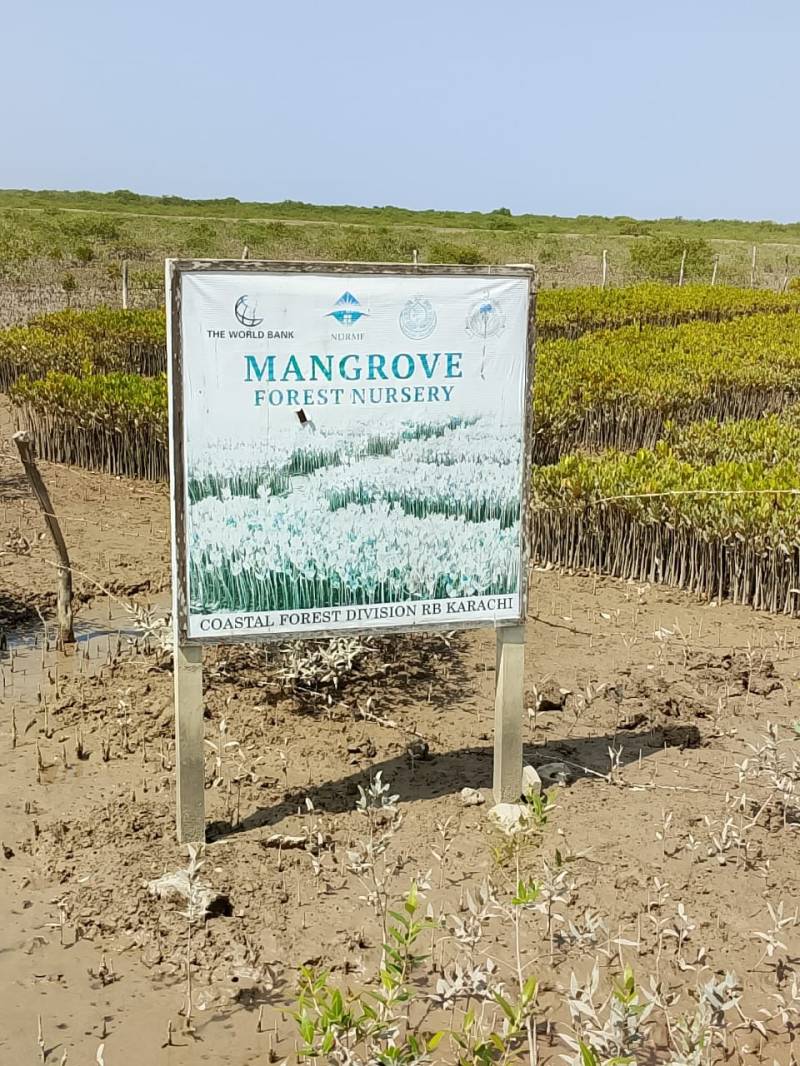
While little information is available on initiatives for the uplift of indigenous fishing communities, we did observe a mangrove nursery along the road to Keti Bunder and some recent plantation activity. A new road is under construction, flood rehabilitation projects are underway, and paver blocks have been laid along the streets of Keti Bunder town. There is also a rural health centre. Yet the fragile ecology and the deepening poverty and misery of its fishing community remain starkly visible, speaking louder than any signs of development.
I am here neither to reduce the devastation of the natural environment, carried out in the name of development and people’s uplift, to what is termed “so-called sustainable development”, as reflected in current projects, nor to deny the depth of their critique of the exploitation of human and natural resources. Rather, the aim is to affirm a vision of people-centred, democratically grounded, and environmentally just development so that the people of the area may live with dignity.