

This is the dead land, where bureaucrats and decision-makers want no more than one page, which has already collapsed, as Interior Minister Naqvi rightly said. This is cactus land. Here the dry grass sings in the wind, brittle and sharp, while a nation's immense potential lies withered under the cold weight of official silence.
The World Bank says Pakistan holds about 48 % of people living below three dollars a day across the Middle East, North Africa, Afghanistan and Pakistan. Islamabad calls this bookkeeping, rightly: a share is not a rate. Pakistan's, around 20 %, is below Afghanistan's, where roughly one in two is extremely poor. Yet bookkeeping cannot explain why Pakistan's rate rose 6.4 %age points in six years, or why this region alone has not regained pre-pandemic poverty levels.
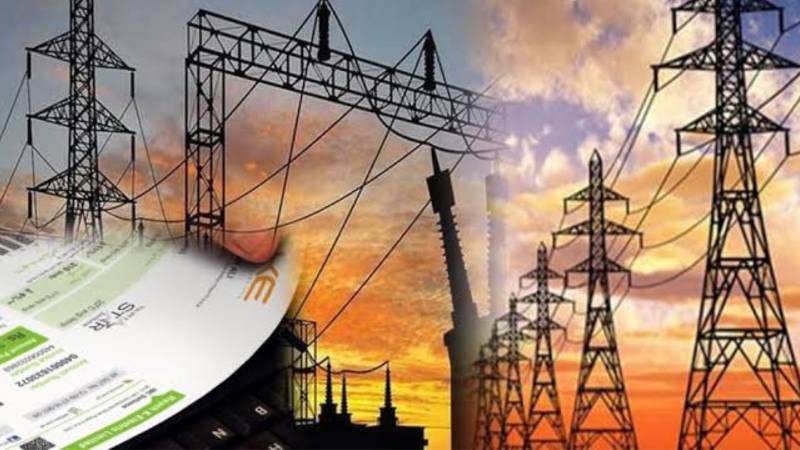
After 2013, starved of power, Pakistan was promised that new plants, many coal and many financed under the China-Pakistan Economic Corridor, would launch an economic take-off. The lights returned, with terms: dollar-indexed payment, state-guaranteed returns, fixed charges due whether or not a unit was used. The plants ran at a third of capacity. In 2016 its own Power Division projected a surplus by 2018 even if demand grew six % a year; contracts proceeded. Capacity payments near Rs384 billion in 2015 reached Rs1,807 billion in the year to June 2025, and Rs6,405 billion across 2020 to 2025. In dollars the rise is roughly 1.7 times, but a dollar-indexed bill in a falling currency feeds on its own damage: each slide enlarges payments, widening the deficit that weakens the rupee.
Industrial power costs about 12.5 US cents a unit, against roughly 7.5 in India, a two-thirds premium. Textile exports fell from $19.3 billion to $16 billion in two years; about 150 large textile units shut, each carrying thousands of jobs and smaller suppliers. Net foreign investment, above $5 billion a year around 2008, is now a third of that, just $1.64 billion last year, flowing mostly to power, where returns are guaranteed, and draining from communications, food and electronics, where firms compete.
People did what planners did not. Facing the region's highest bills, households and factories imported about 50 gigawatts of solar panels, mostly within three years, close to the national grid's size. It was the wisest economic decision in a decade, made by millions with a calculator and a roof. But it deepened the trap: each unit generated at home is one the grid cannot sell, while fixed payments remain. Tariffs rise, more install panels, and the poorest, without rooftops, pay the fixed costs of those who escaped. An economy slows this way: not in a crash, but by a monthly withdrawal.
What if that money, Rs6,405 billion, about $25 billion, had gone elsewhere? It would equal fifteen years of all net foreign investment at last year's pace, two and a half years of the entire defence budget, and more than every war year's defence budget since 1948 combined. Among the roughly 60 million people of Balochistan, Khyber Pakhtunkhwa and Azad Kashmir, it is about Rs107,000, or $415, each.
This is no paradise: as cash, it would vanish in about 140 days at the three-dollar line. The point is money consumed versus money built. A rupee paid to an idle plant returns no road, job, tax or future. A rupee invested in roads, transmission lines, dams, schools or industrial estates returns as trade, wages and revenue, funding the next project. Capital compounds. A capacity payment does not.
Every poor country has one persuasive minister, one glossy brochure and one guaranteed return from the same trap. Read the contract before you cut the ribbon: those who pay are not in the room, they are poor.
In Pakistan's first national poverty index, 71 % of Balochistan was multidimensional poor, and it remains the poorest province; Khyber Pakhtunkhwa stood near 49 %, Azad Kashmir, the lowest, near 25. Capital fills such deficits: roads, power, water, clinics, classrooms, jobs. Yet the cheapest electricity comes from the northern rivers of Khyber Pakhtunkhwa and Azad Kashmir. Azad Kashmiris say their hydropower costs Rs2.59 a unit, yet they pay the national tariff; this June dozens of activists were arrested, the internet cut, their committee banned under an anti-terror law. The costliest electricity buys idle plants; the cheapest sits in regions policed, not invested in.
Illustrative arithmetic, not a forecast: a fraction of that money in transmission lines, hydropower, roads and vocational training would have given jobless young men something to do besides wait. Insurgency and militancy have political, ethnic and strategic causes no budget can erase, but they recruit among the idle, and investors avoid unsafe places. The poorest regions got the bill, while factories that might employ their sons close in Punjab and Sindh.
Blaming the lender is a convenient mistake. Chinese banks and contractors built what was contracted, on terms Pakistan approved. Islamabad chose the capacity, the fuel, dollar-tied returns, payment regardless of demand, and who carried the risk. Planners called it a game-changer; in generation terms it was. The same logic governs the 1990s plants, where China had no part, and Qatar gas contracts for 177 unneeded cargoes, a $5.6 billion liability. Beijing now sits at the table to reprofile its debt; China's panels freed households too. The lesson is not nationality: a country shifting every risk onto its consumers will pay, whoever signs the other side.
No one is held to account. The LNG terminal deal was investigated: former prime minister Shahid Khaqan Abbasi was arrested in 2019; in April 2024 the National Accountability Bureau withdrew its case and a court acquitted him and his co-accused. No court found guilt, and none should be presumed. Corruption law asks whether someone took a bribe, not whether a ministry signed obligations for 35,000 megawatts against peak demand near 25,000, against its own forecasts, in contracts lawful in every clause and ruinous in every year. A decision can be authorised, legal and catastrophic.
Warnings in policy briefs, op-eds, television talk shows and letters to the prime minister that these projects would prove a debt trap and collapse the economy went unheeded; the system declared this writer persona non grata. After the capacity payments Pakistan fell at the IMF's feet, arguably why the petroleum levy rises, motorists and farmers filling the hole at the pump.
Reform here isn't rocket science; it's a test of political will. From my experience at NAB, PPAs and their arbitration terms are fully revisable. We must conduct forensic audits across all IPPs, including Chinese plants, and upgrade NEPRA with AI. The true roadblock is greed: capacity payments enrich the very decision-makers tasked with ending them. We need leadership brave enough to choose 260 million people over corrupt beneficiaries.
The question for this nuclear-armed quarter-billion nation is not whether it can fix its power sector, which it can, but who will find the will. Every poor country has one persuasive minister, one glossy brochure and one guaranteed return from the same trap. Read the contract before you cut the ribbon: those who pay are not in the room, they are poor, and they will not stop until someone says enough.