

Pakistan throws away two fortunes every day: the food scraps and dung that could cook its dinners, and the crop stubble and city garbage that could power its grid. What is missing is a policy that puts each to work.
Every winter it happens again. The pressure in the household mains drops to a whisper, breakfast cooks on a dying flame, and the government rushes to divert imported gas, three times the price of our own, into subsidised stoves that will never cover the bill. By early 2026 the gas sector’s circular debt had reached about Rs 3.44 trillion, a figure the IMF now wants the two utilities to write off as the loss it obviously is. We buy expensive molecules, sell them cheap, and call the gap a subsidy. It is not a subsidy. It is a company going broke in slow motion.
Raising tariffs, going after gas theft, blending a single national price: all of it is needed and none of it is enough. These measures manage the shortage without ending it. And while we argue over them, the answer is sitting in our cattle sheds, our kitchens, our fields and our rubbish heaps.
Our waste-to-energy debate keeps missing one point: waste is not one thing, and pushing all of it toward a single solution is the mistake. It comes in two kinds, each with its own best use. The wet, rotting sort, meaning food waste, kitchen scraps, animal dung and the soggy organic part of household garbage, is perfect for anaerobic digestion, where bacteria in sealed tanks break it down into biogas, a methane-rich fuel you can cook on, or clean up and send down a pipe. The dry, fibrous sort, meaning crop residue like rice straw and cotton stalk, along with whatever is left of city garbage once the wet fraction is removed, digests poorly but burns well, and does far more good in a combustion or gasification plant that makes electricity. Moisture is what decides. Send each waste to the process that suits it and you get far more out of it than by dumping or burning it.
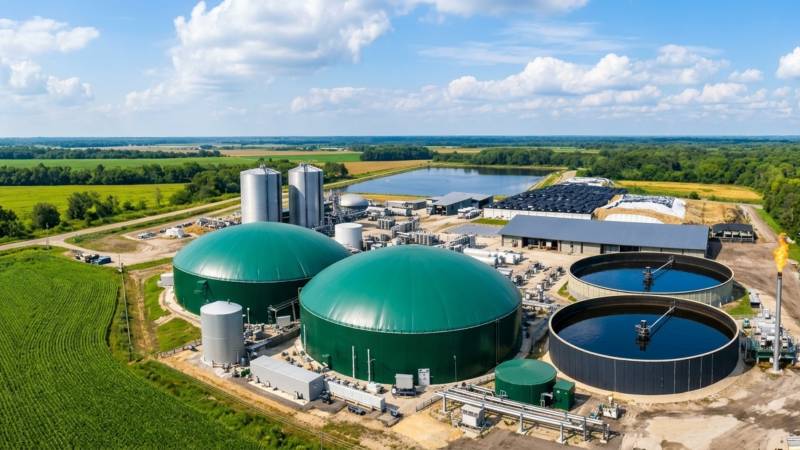
Start with the wet stream, because it goes straight to the heart of the gas problem. In one recent year Pakistan’s livestock produced an estimated 417 million tons of manure, more than half of it in Punjab. Add a fast-growing city’s food waste and the number turns serious. Researchers put the biogas potential of manure alone at close to 27 billion cubic metres a year, and SSGC’s own alternate-energy arm reckons the commercial potential is above 200 million cubic feet a day, enough to replace a real chunk of the RLNG we now pay for in dollars. This is not theory. At Karachi’s Landhi Cattle Colony, the Karachi Breeze project will gather 2,000 tons of fresh dung a day and turn it into purified biomethane to run the Red Line bus fleet, cutting roughly 245,000 tons of carbon a year and clearing away dung that would otherwise foul the city’s waterways. The technology works. What is absent is a policy that treats biogas as a real household fuel rather than a curiosity.
How that gas reaches homes should follow one simple preference: use the pipes we already have, and leave cylinders for last. Where biogas can be cleaned up to full pipeline quality, no different from natural gas, it should go straight into the existing Sui Northern and Sui Southern lines and be billed to the homes nearby. That is cheaper and safer than hauling cylinders around. Where a plant cannot reach that standard, or has no injection point nearby, the answer is still not cylinders. It is to take the plant’s own service area on the SNGPL or SSGC network and run those local pipes on its biogas directly. Cylinders stay only for the corners neither route can reach. Pipelines first, dedicated local pipelines second, cylinders last, and the policy should say so plainly.
The dry stream is really about electricity. The burnable part of municipal waste, and the enormous quantity of crop residue our farms leave behind, are wrong for digestion but ideal for combustion or gasification, and NEPRA already licenses waste-fuelled power at plants like Pak-Ethanol and Shakarganj Mills, so the route is not new. The environmental case here is strong, because much of this residue is burned in the open today. Stubble burning is a well-documented cause of the smog that chokes Punjab every winter. Send that straw to a power station instead of a farmer’s matchbox and you turn a health hazard into steady electricity, and clear the air while you are at it.
Researchers put the biogas potential of manure alone at close to 27 billion cubic metres a year, and SSGC’s own alternate-energy wing reckons the commercial potential is above 200 million cubic feet a day, enough to replace a real chunk of the RLNG we now pay for in dollars.
None of this means starting from scratch, but it would be wrong to pretend the current rules are enough. The Alternative and Renewable Energy Policy of 2019 recognises biomass and waste-to-energy, but only as fuel for grid electricity, which is half the story. It says nothing about biogas, biomethane or pipeline injection, so the whole wet-waste, domestic-gas side of this falls outside any policy we have. The National Biogas Policy that SSGC’s engineers drafted back in 2023 was never enacted, and OGRA has yet to publish a biomethane injection code. The one genuinely new piece is on the carbon side: Pakistan’s 2024 guidelines for trading in carbon markets already give us the machinery to certify and sell emission reductions, and it simply has to be connected to these projects. So the task is not to invent a framework but to finish the one we have. Stretch the electricity-only logic of the 2019 policy across to the gas side, pass the biogas policy sitting in a drawer, publish the injection code, and tie it all into the carbon guidelines.
That policy is the real work, and it has to do several jobs at once. It has to organise the collection of each waste stream, the segregated garbage, the dairy-colony manure, the baled farm residue, because a plant with no secure feedstock will never be financed. It has to link the sale of gas and electricity to carbon credits wherever a project qualifies, since captured methane and displaced fossil fuel are exactly the avoided emissions carbon markets pay for, and that money can lower the consumer tariff instead of padding a developer’s return. It has to put the offtake on a take-or-pay basis, so the grid or gas utility must buy whatever a plant produces, at an indexed price, for the life of the contract, the one assurance most likely to draw private money in. And it has to set out the rest in detail: the feedstock supply agreements binding municipalities, farmers and dairy associations, the injection code from OGRA, the tariffs from NEPRA for waste-fired power, and the way each project connects to the carbon guidelines. All of it in one document, and none of it needing a constitutional fight, because this is ordinary policy and regulation, well within what OGRA and NEPRA can already do.
The financing should match the environmental promise. Let the private sector build, own and run the plants, not something the state should do itself, on terms softer than a purely commercial venture would get, for the plain reason that these projects clean the air, capture methane and earn carbon credits. That is exactly the profile international climate finance is meant to back, and it is not wishful thinking. The Green Climate Fund has already put a concessional loan of around $37 million into the biogas plant behind Karachi’s Red Line, on top of the Asian Development Bank’s support for the wider corridor. Pakistan should go after a great deal more of the same, low-interest loans from the ADB, the World Bank, the Green Climate Fund and others, paired with a take-or-pay contract and a solid security package. A project that combines guaranteed revenue, cheap debt and carbon income stands up on ordinary commercial terms, because the environmental benefit is not a soft extra. It is the very thing that lowers the cost of capital.
The reward is double. The wet waste from our cattle and kitchens can cook the country’s dinners through pipes that already exist. The dry waste from our fields and cities can light the grid and lift the smog. Both turn a disposal headache into an asset, both trim the import bill, and both pay their way in cleaner air and saleable carbon. None of it should be taken on trust. It needs a hard look at feedstock volumes, plant economics and grid connection before a single rupee is spent. But the raw material lies out in the open, renewing itself every day. The gas is running out. The dung, the scraps, the straw and the garbage are not. It is time our policy caught up.