

If Jacques Derrida was alive, he might have chuckled at the unending controversies over the literal, metaphorical and symbolic interpretations that have lately dogged the poem “Hum Dekhenge” by Faiz Ahmed Faiz. Derrida’s work in ‘deconstruction’ also offers a critique of language- the written word and speech. He thought that words carry a chain of meanings that extend beyond any single interpretation.
When a poem rich in symbolic and literary tropes is sung on the streets as a song of protest, its words may carry a more immediate and direct emotional impact than whatever the poet “really meant’. The speaker is not fully in control of what the words will mean once they leave the mouth. Derrida would also dispute the argument that interpretations should uncover the one, true underlying meaning intended by the poet. On the contrary, he might argue that a poem can generate meanings that exceed, complicate or even contradict the author's intention.
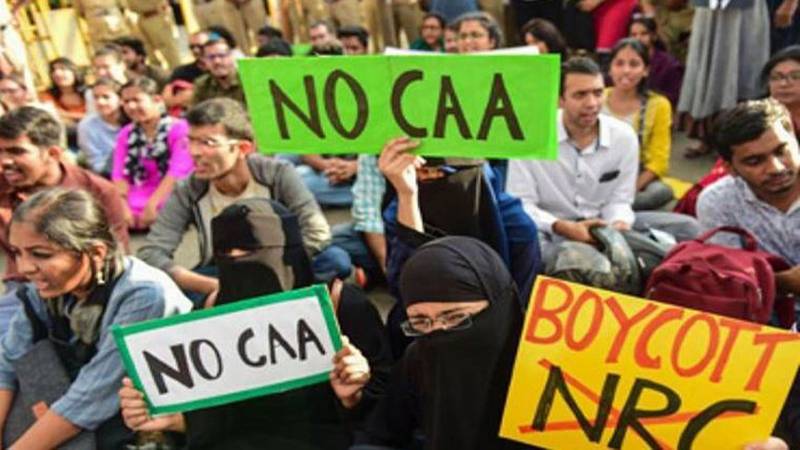
Such a fate seems to have befallen Faiz Ahmed Faiz’s poem "Wa-yabqa Wajh-o-Rabbik", or “Hum Dekhenge” as it is commonly known. The poem became an anthem of sorts for protests on both sides of the Indo-Pak border. In IIT Kanpur’s solidarity event against Citizenship Amendment Act in 2019, an assistant professor filed a complaint over the most contentious and controversial lines from the poem “Jab arz-e khuda ke ka’be se, sab but uthwa’e ja’enge followed by “bus naam rahega allah ka”. A Swarajya report on Dec 21, 2019 carried the sensational heading “When All Idols Will be Removed.. Only Allah’s Name Will Remain”. The complainant told Al Jazeera. “I don’t know what the context of the poem is but what matters is what is being said.”
A committee set up by IIT-Kanpur to investigate found it to have been “unsuitable to time and place,” reported The Indian Express; it added that the five teachers and six students who participated in the protest should be "counselled”. The liberal, educated and progressive personalities- writers, film makers and journalists- were quick to jump to the defense of the poem: its metaphors and imagery, the ideology and politics of Faiz. They unleashed a mix of scorn, ridicule and contempt on those who ‘misunderstood’ what Faiz “really meant”.Let’s call them the symbolists-rationalists. Javed Akhtar, rationalist par excellence, eyes wide open with sarcasm and disdain on India Today TV, Ali Madeeh Hashmi, Faiz’s grandson in Times of India, Historian Irfan Habib dismissed the furore as pointless, Aamir Raza Hussain, the film maker, on the NDTV debate explained how Iqbal Bano sang this poem (wearing a black Sari, banned by Zia in Pakistan) offering this as proof that this poem could not be anti-India or anti-Hindu. Al Jazeera, Indian Express, , and Quint, in India and The Friday Times and Dawn in Pakistan offered literary, political and artistic defense of the poem and answer the question: ‘Why Faiz bothers them?” Justice Markanday Katju declared the controversy over the poem as “fatuous” in the Wire.
Derrida might argue that a poem can generate meanings that exceed, complicate or even contradict the intention - the speaker is not fully in control of what the words will mean once they leave the mouth
Lined up on the other side of the debate were the emotional-literalists. In a vicious, often mendacious rant, a TV personality questioned Faiz’s credentials, citing the controversial four lines from this poem as evidence of the poem’s ‘anti-Hindu” thrust. He trashed all the apologists for the poem and the poet, suggesting they “can keep all symbolism and metaphors in their pockets”; what matters to Hindus are the words. Somewhat in a similar vein, a right-wing political analyst in the NDTV debate takes a dig at Faiz: “Faiz may have been a revolutionary, but he fired these revolutionary shots from the shoulders of the Hindu minority”.. asking rather innocently “He could have said ‘all Masjids will be destroyed.. all Mullahs banished..only Ishwar’s name will remain”. Tariq Fatah, defends Faiz and the poem’s metaphorical meaning. However, he offers a conspiracy theory argument: the ‘jihadis’ in India with ‘satanic intent’, have misused this poem’s imagery, and truly believe Islam will prevail over the idol worshippers. The poem was also used in the film Kashmir Files, except negatively- sung by a group of ‘anti-national’ youngsters. subtleties notwithstanding. In such debates, who Faiz was and what he originally or truly meant become irrelevant. Context becomes important. Derrida would agree.
Did Faiz foresee that public performances of the poem would raise fundamental questions about how poetry is experienced and interpreted? Sung in the streets as a song, it would inevitably be interpreted in the streets. In a country where idol worship is widespread, its words would resonate differently. If you are a Hindu on the streets of Delhi and Kanpur, and you hear Muslims protesting the Citizenship Amendment Act, these lines will sound alarming, the good intentions of Faiz and the metaphorical. Rather than a call for justice, equality, and an end to suffering and oppression, some of its lines might be heard literally as “anti-Hindu”, just as in Pakistan, some lines have likewise been criticised as “un-Islamic.” (In my edition of the collection of Faiz, published by Maktaba-e Karwan, Lahore, the lines “Uthe Ga Anal Haq Ka Naara” are missing).
The poem’s Islamic and Sufi imagery, its textual, publishing and performance history has been outlined by Jennifer Dubrow (Dawn, 2020 and Positions). Faiz wove a complex string of images, symbols and metaphors that leave a ‘trace’ as Derrida might have argued, back to the founding history and ideas of Islam. The original title itself is a Qur'anic phrase from Surah Ar-Rahman (55:27) meaning "And the countenance of your Lord will endure". As Derrida might argue, such metaphors and symbols carry not a single, but a hierarchy of meanings. Wine can be the drink, but also a state of intoxication, or mystical trance, a state of union with the divine, etc. Similarly, a ‘but’ can be an idol, a stone-hearted beloved, a false ideal, a tyrant, etc. However, metaphors while holding a range of symbolic meanings also hold a literal truth. The removal of the idols from Ka’ba according to Ṣaḥīḥ al-Bukhārī and Ṣaḥīḥ Muslim, refers to Prophet Muhammad (PBUH) entering Mecca after the conquest. He struck several idols around the Kaʿba with a stick while reciting Sūrat al-Isrāʾ 17:81 : “And say: Truth has come and falsehood has vanished. Indeed, falsehood is ever bound to vanish.”. Faiz inverted the elements of religious history into metaphors for a secular, modern, progressive, revolutionary call-as much a call of hope for Palestinians, the oppressed Pakistanis in the reign of Zia ul-Haq and those demanding fairness and justice in India.
The poem, a haunting, melodious composition by Iqbal Bano, will no doubt continue to be read, sung and enjoyed by people who understand poetry. The connoisseurs of all religious persuasions are unlikely to be offended by its metaphoric play. At the risk of inviting the wrath of rationalists-symbolists, I had argued that singing this poem as a song in the streets where its literal resonance overshadows its symbolic power -particularly in politically and religiously charged times- was unwise at best and foolish at worst. Since then, events have both validated and challenged my argument. In May 2025, Nagpur Police filed sedition charges against Pushpa Sathidar — wife of late Ambedkarite activist and actor Vira Sathidar- and others for the recital of Hum Dekhenge at Vira’s annual memorial. The charges under Indian penal code? “Endangering national sovereignty and integrity” and “fomenting communal disharmony”! The rationalists-symbolists remain undeterred. In July 2026, a lady sings this poem in New Delhi protests and offers a line-by-line interpretation. On lines “Bus naam rahega allah ka.. jo manzar bhi hai nazir bhi”, she pauses and quips: “The right wingers have a problem with these lines; they don’t understand; it is the highest example of Vedanta, an abstract, ubiquitous power “Tat tvam asi, aham brahamsmi”. Faiz and Derrida might both be smiling in their afterlife.