

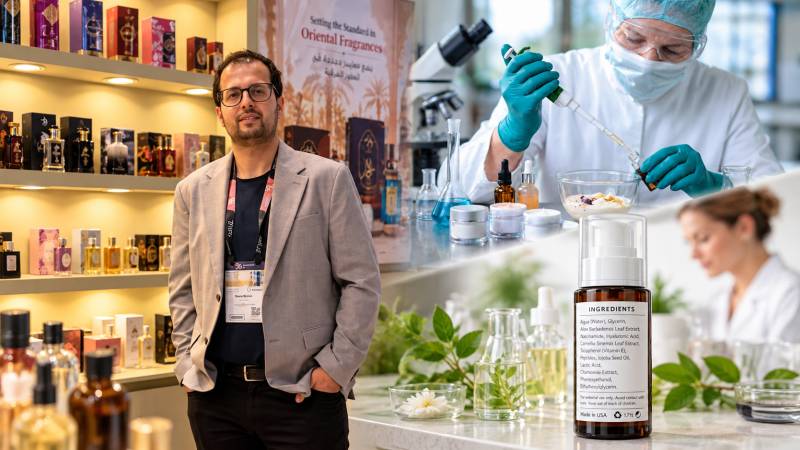
Globally, there is now a growing consumer concern about ingredients used in personal-care products, including the ones made by some of the world's leading beauty brands. It has become an important issue at the intersection of public health, environmental sustainability, consumer rights and corporate accountability. Cosmetic manufacturers may be using chemicals that are well tested and safe but the consumers are asking detailed questions about transparency in ingredient sourcing, concentrations, use of some parabens and clean-label formulations.
It is no longer enough that if a product works well, it sells well. There is now consumer concern about use of substances suspected of interfering with the endocrine system, as well as repeated exposure through skincare, makeup, fragrances and hair products. Increasing demand for sustainable packaging and waterless formulations is reflecting a broader consumer commitment to environmental impact reduction. Post Covid era, the consumers are also concerned about contamination and safe manufacturing chains including storage and shipping.
The findings of McKinsey's 2025 global beauty research, which surveyed more than 15,000 consumers across 13 markets and interviewed over 100 industry executives, suggest that interest in natural and organic ingredients had begun to re-emerge after several years in which product effectiveness was the dominant purchasing consideration. Consumers increasingly want both: products that work and ingredients they feel comfortable using. In today’s world, there is a huge market for products that combine credible safety evidence, transparent labelling along with effective performance and results.
In 2025, the Global Natural and Organic Personal Care Market was valued at $30.5 bn and it is expected to grow to an estimated market size of $48.5 bn by the year 2030. Today, plant oils, botanical extracts, herbal formulations and other nature-derived ingredients have become more attractive to consumers seeking safer product choices. However, it's worth mentioning that natural formulations still require appropriate preservation, stability and safety testing. Conversely, many synthetic ingredients have well-established safety profiles. The key is responsibly formulated cosmetics which are adequately tested.
Nature-based cosmetics can also greatly benefit the environment and help reduce climate impacts; although the benefits depend on how the ingredients are grown, processed, transported and packaged. In order to be actually environmentally responsible, manufacturers have to use natural ingredients that are genuinely more sustainable throughout their life cycle.
Perhaps the most significant thing that sets this company apart is their overall documentation and consistency across all production stages from raw material sourcing to finished goods and accurate labelling which is exactly what the modern consumer demands.
The ‘Clean Beauty movement’ and consumer choices could create incentives for more sustainable agriculture and plastic-free packaging. Consumer demands can trigger a paradigm shift for all kinds of packaging and help in combating plastic waste proliferation. In fact, all manufacturers can adopt refillable containers, recycled materials and reduced packaging. The good thing about nature-based cosmetics is that they can also be manufactured from fruit peels, seed residues and other by-products. Traditionally, fruit and vegetable peels and dried herbs have been used in personal care for centuries. For example, the use of ubtan, mehndi, amla, shikakai and hair oils have all been part of every household in the Indian subcontinent for centuries. Similarly, frankincense, musk and aromatic oils have been used all over the world up to the present day for fragrance.
Following in this tradition, Hemani Herbals, a Pakistani herbal and nature-based products company, is now one of the most recognized names in this industry. It is growing phenomenally to capture global markets and gaining international recognition for its quality products. Established in 1949, Hemani Herbals has been a pioneer in nature based personal care and cosmetics, guided by the belief that nature holds the key to a healthier life. Hemani is now manufacturing over a staggering number of 2,500 products ranging from skincare and herbal healthcare to exquisite fragrances.
The company is family-owned and started as home-based manufacturing by a herbalist, Mustafa Hemani, who believed in the wisdom of centuries-old remedies, ayurvedic and herbal medicine, and their lasting benefits for all. His strong conviction was passed on to his two sons, Zohair and Ali Hemani, who have proudly taken his work forward, improved and expanded the product line, and blended tradition with modern research and innovation to cater to the needs of the modern consumer.
The second generation of Hemanis has made their brand a world-class competitor with much bigger and older brands. Today, Hemani Herbals has its presence in over 85 countries and has won several accolades and awards as ‘Pakistan’s Best Exporter of Herbal Products’ and ‘Brand of the Year’ for its quality, safety, hygiene, and controlled handling processes across production, storage, and distribution stages for consumer-ready products.
Perhaps the most significant thing that sets this company apart is their overall documentation and consistency across all production stages from raw material sourcing to finished goods and accurate labelling which is exactly what the modern consumer demands. Hemani is paving the way and leading other manufacturers in Pakistan to cater to the needs of a new consumer base while maintaining the tradition of centuries-old knowledge, art, and craft. Hemani brings innovation to nature-based, organic products while remaining environmentally responsible. For example, one of the products Hemani produces is face wash without adding microbeads, which are harmful to the environment because they eventually end up in the ocean and damage marine ecosystems.
However, just assuming that any company using plant-based ingredients for manufacturing is low-carbon is not correct. What makes a product genuinely environmentally friendly is that it has a low carbon footprint and low emissions across the entire production chain from cultivation of its raw material to processing, packaging and transport. It also means that there is no deforestation, land degradation or damage to biodiversity. Being environmentally responsible is no longer a matter of choice, but a good business strategy for all companies.
Today, every company must genuinely invest in putting in place sustainable practices, including packaging for all their products. The era of using and discarding plastic bottles and containers should be genuinely left behind. It has harmed the planet enough and it is time to heal and reverse the damage caused by plastic waste. Biodegradable packaging should be adopted as the only sustainable option as much as possible. Companies like Hemani are genuinely paving the way and setting high standards for sustainable manufacturing, marketing and business development that all companies can learn from and follow.