

In just five years, the geopolitical landscape of our region has undergone significant changes. Once, Imran Khan was the Prime Minister of Pakistan, Ashraf Ghani ruled in Kabul, and Pakistan’s military establishment under General Qamar Javed Bajwa and ISI Chief Lt. Gen. Faiz Hameed was at the centre of the Doha peace process the process that brought the United States and the Afghan Taliban to the negotiation table. That moment was celebrated in Pakistan as a diplomatic triumph, a long-awaited vindication of strategic patience. But history, as it often does, unfolded differently.
When the Taliban took Kabul on 15 August 2021, the world watched the rapid collapse of the Afghan Republic. For some, it was a moment of liberation; for others, a collapse of fragile hope. Prime Minister Imran Khan famously remarked that the Taliban had “broken the chains of slavery.” But that day marked not freedom; it marked the beginning of a new confusion, a new misreading of power and purpose across both sides of the Durand Line.
Pakistan, once the quiet facilitator of talks, suddenly found itself at the crossroads of their consequences. The Taliban’s swift takeover violated the very Doha Agreement that Pakistan had helped midwife. What followed was a breakdown of trust, and with it, a spiral of cross-border insecurity. Within months, terrorism began bleeding back into Pakistan’s soil, claiming soldiers, civilians, and the sense of relative calm that had been painfully earned. The idea that “strategic depth” could replace genuine peace had once again proved fatal.
Today, five years later, Pakistan and Afghanistan find themselves back in Doha. This time not as architects of peace but as its survivors, trying to reassemble the fragments of an agreement betrayed by ambition and mistrust. The Pakistani delegation’s message to the Taliban was clear: if cross-border terrorism continues, the war will not be fought inside Pakistan; it will be fought against the sanctuaries that breed it. And yet, there lies the deeper truth that this conflict cannot, and must not, be won through confrontation. The language of threat has exhausted itself. It is time for the language of statecraft.
Let us confront the truth without anger and without illusion. Afghanistan and Pakistan are bound not only by borders but by blood, faith, and shared history. We have stood together and suffered together since the Soviet invasion of 1979, a war that claimed over half a million Afghan lives, displaced millions more, and set in motion the longest cycle of regional instability in modern history. After 2001, when the United States launched its “War on Terror,” an estimated 176,000 Afghans were killed, while Pakistan, caught in the crossfire of global geopolitics, lost over 80,000 of its own citizens and soldiers. Entire generations were scarred by suicide bombings, drone wars, and displacement. This region has paid its price in blood, not ideology.
Afghanistan’s stability is not just Afghanistan’s interest; it is Pakistan’s survival and Asia’s peace
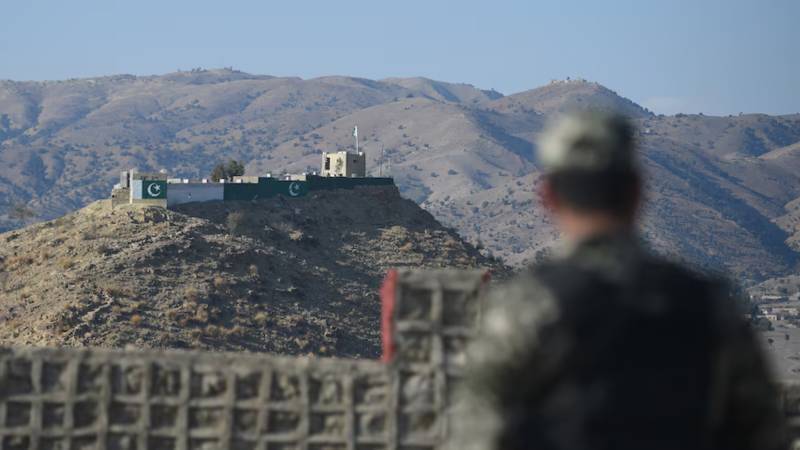
And yet, despite these shared wounds, we stand at a dangerous precipice. The border has become a fault line of mutual suspicion. The recent aerial strikes and exchange of fire between Pakistan and Afghanistan have once again raised alarms, not only in our capitals but across the entire region. This must stop. The war of words must end. The politics of hatred must be buried before it buries us.
Pakistan must pursue a policy of engagement, not escalation. We respect Afghanistan’s sovereignty and territorial integrity; we have no designs on Afghan soil. But our respect must not be mistaken for weakness, nor our goodwill for indifference. Pakistan will not tolerate any group or element using Afghan territory to attack Pakistani civilians, soldiers, or strategic assets. This is not aggression; it is a non-negotiable principle of national security. However, defending one’s security does not require abandoning diplomacy. The strength of a state is measured not only in its firepower but in its restraint, its moral clarity, and its capacity to turn hostility into cooperation.
Afghanistan must understand that its open border with Pakistan is not merely a route of trade; it is a lifeline. While Iran, Tajikistan, and Turkmenistan have all tightened their borders, Pakistan remains the only corridor through which Afghanistan connects to the global economy. Yet, this generosity has been abused. The misuse of the transit trade, where goods purchased from Dubai or elsewhere are diverted and smuggled into Pakistan, is bleeding our economy and financing illegal networks. This must end. We cannot sustain an economic arrangement that feeds corruption and funds militancy under the guise of trade. The smuggling that drains Pakistan’s revenue and fuels black markets must be stopped decisively and permanently.
Still, let us be clear: this is not a war between two nations. The people of Pakistan do not hate the people of Afghanistan. We are not adversaries in faith or heritage. We share saints and poets, language and lineage, memory and destiny. Afghanistan’s stability is not just Afghanistan’s interest; it is Pakistan’s survival and Asia’s peace.
Our Afghan brothers must also remember that history is no justification for expansionism. When some voices in Kabul speak of “Peshawar to Attock,” they forget that no Afghan ever laid claim to Delhi or Bhopal, though Afghan blood and courage once ruled those lands. Afghan history gave India some of its greatest rulers, from the Lodhis to Sher Shah Suri, yet Pakistan has never used history to justify territorial claims over Kabul. We must not turn shared heritage into a weapon of division. Respect is mutual, and sovereignty is sacred.
The recent flirtations between the Taliban and India are therefore deeply troubling. Afghanistan has the sovereign right to engage with any nation it chooses. But before seeking friendship beyond the mountains, the Taliban must first stabilise their relationships with the four countries that actually share a border with them: Iran, Pakistan, China, and Tajikistan. Three of these have already closed their borders in frustration. Friendship with distant powers cannot replace trust with neighbours. If Afghanistan alienates its neighbours, it will isolate itself from its own geography.
History will judge us not by the wars we fought, but by the peace we could have built
Pakistan, for its part, must also reflect. We are weary of endless “strategic alliances” that deliver no strategy and no alliance, only borrowed wars and broken promises. We no longer seek to be a pawn in global chess games; we seek to be a pillar of regional stability. We desire prosperity, parity, and progress, not the illusion of dominance. Our future lies not in being a frontline state but a bridge state, a nation that connects rather than confronts, that trades rather than bleeds.
But peace must never mean permissiveness. Our engagement policy must be anchored in transparency, evidence, and accountability. Any terrorist act against Pakistan must be confronted with proof, presented with credibility, and addressed with cooperation. Our military actions must be precise, our diplomacy principled, and our communication dignified. We must stop the public vilification of entire peoples, just as Afghan leadership must rein in voices that insult Pakistan’s sovereignty. Nations do not build trust by shouting across borders; they build it by standing across the table.
There was a time when light, not fire, travelled from Afghanistan to the lands that now form Pakistan. From the sacred soil of Ghazni came Hazrat Ali Hujwiri, known as Data Ganj Bakhsh, whose shrine in Lahore still radiates the fragrance of tolerance, love, and unity. From Chisht Sharif came Khwaja Moinuddin Chishti, who carried with him not weapons but wisdom, not hate but hope, spreading the message of Islam’s compassion across the subcontinent. The saints who once crossed these mountains brought with them knowledge, art, and the breath of spiritual civilisation.
And yet, what a tragic transformation we witness today. From the same valleys that once sent mystics of peace now emerge the shadows of death, men indoctrinated into believing that martyrdom means murder, and that faith can be proven through destruction. The journey that once connected Lahore to Ghazni through love and illumination has been replaced by a corridor of fear and explosives. This is not only Afghanistan’s tragedy; it is the entire region’s moral collapse. We must remind our Afghan brothers that their land was once the cradle of saints, not the training ground of suicide bombers.
It is time to reclaim that spiritual heritage, to turn those paths of hatred back into highways of harmony. If saints could cross these borders carrying messages of divine unity, surely we, as nations, can cross them today with messages of peace, trade, and cooperation. Afghanistan must rediscover its historic role as the heart of Asia, a heart that once pumped the lifeblood of faith and culture into the whole region. Pakistan stands ready to embrace that Afghanistan again — the Afghanistan of poets and saints, not the Afghanistan of terror and tears.
The lesson of five years is clear: power without wisdom leads to chaos, and victory without peace is defeat in disguise. Pakistan and Afghanistan must now rebuild a relationship that transcends paranoia and populism. We cannot allow 1979 to repeat itself in 2025. Too many lives have already been lost in wars that were not ours and in alliances that served others more than ourselves. Let this be the decade of reconstruction, not retaliation.
The time has come to choose dialogue over destruction, cooperation over coercion, and mutual survival over mutual suspicion. History will judge us not by the wars we fought, but by the peace we could have built.