

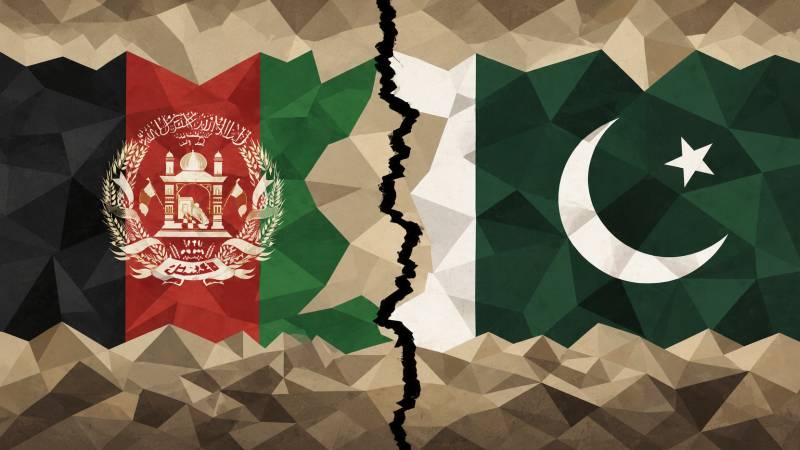
We are two Pakistanis who served in Afghanistan, and we write as peace advocates. We want a prosperous, stable Afghanistan at the heart of Asia, a country whose people live with dignity and whose land is an economic crossroads rather than a battlefield. We believe the great majority of Afghans want the same. When the Taliban took Kabul in August 2021, many in Pakistan hoped for a friendly neighbour and a quiet western frontier. The opposite has happened. The old dispute over the Durand Line, the colonial-era boundary drawn in 1893 that splits the Pashtun tribal regions between the two states, has returned. No Afghan government, the Taliban included, has ever fully and formally accepted that line, and the grievance is again feeding cross-border violence.
Yet the century-old narrative behind it is increasingly rejected by educated Afghans themselves. If a shared language were enough to merge states, the United States and Canada would be one country, more than twenty Arabic-speaking states would be one, and the eighteen Latin American republics where Spanish is official would be one. Borders are settled by treaty, trade and mutual respect, not by ethnic nostalgia. The Taliban also overlook a basic fact. Afghanistan’s Pashtuns are estimated at 15 to 26 million, while 38 to 43 million Pashtuns live in Pakistan as citizens of their own state, and most of them will never accept this model of governance.
Under the Taliban’s authoritarian, theocratic emirate, Afghanistan has become one of the gravest human rights crises in the world. More than 20 million Afghans, the vast majority of the population, depend on humanitarian aid. Girls are barred from school beyond age twelve, women are shut out of most work and cannot travel without a male guardian, and strict dress and voice codes are enforced on them. International bodies describe this as gender persecution, and many call it gender apartheid. Independent journalism has been crushed through arbitrary arrests, broadcast bans and the closure of media outlets. Shia and Ismaili Muslims face severe discrimination, new criminal codes treat non-Hanafi communities harshly, and Hazaras endure systemic marginalization and deadly attacks by Islamic State Khorasan. The regime relies on arbitrary detention, enforced disappearances, torture, and public floggings and executions, and the International Criminal Court has pursued arrest warrants against Taliban leaders. An estimated 45 to 48 million people live in what many Afghans call the world’s largest prison, where disobedience can be punished by death. No country prospers when half its talent is locked indoors and its educated class is in exile.
We therefore call on the United Nations, together with Russia, China, the United States and Afghanistan’s neighbours, to facilitate a credible, internationally supervised political process that lets Afghans choose an inclusive, enlightened leadership, with women, minorities and the diaspora at the table. The prize is large. Afghanistan is believed to hold between one and three trillion dollars in untapped mineral wealth, and with good relations with every neighbour it could become the natural transit route linking Pakistan and South Asia to Central Asia. We strongly urge the Government of Pakistan to recognize and stand with such a government when it takes the helm in Kabul.
Borders are settled by treaty, trade and mutual respect, not by ethnic nostalgia. No country prospers when half of its talent is locked indoors and its educated class is in exile.
But a quieter danger now rivals the guns, and that is climate collapse. The East Afghan Montane Conifer Forests ecoregion spans roughly 20,128 square kilometres and once acted as the monsoon-harvester of the Hindu Kush, its canopies catching moisture, holding soil and feeding the rivers that sustain both countries. Nearly seventy percent of it is gone. Deforestation in Kunar, Nuristan and Nangarhar has accelerated under poverty and predation, with timber mafias, militias and the Taliban profiting from a black market that carries ancient conifers, some more than 1,500 years old, across the border to furnish houses in Peshawar, Islamabad and Lahore. We say this plainly because Pakistan is part of the problem and must be part of the cure. The results are flash floods that kill hundreds in Kunar and Laghman every summer, droughts that now return every three to five years, and ruined harvests on both sides of the frontier. The Kabul River Basin delivers more than 17 million acre-feet of water a year to farms in Afghanistan and Pakistan, and without forests to regulate snowmelt and monsoon rain it swings between flood and drought. Afghanistan ranks 175th of 181 countries in climate resilience, and the International Organization for Migration counts more than 1.2 million Afghans displaced by climate-related causes since 2012.
Nearly a decade ago, while working in Afghanistan, one of us, Engineer Abbasi, first put forward the idea that these forests should be protected as a buffer zone, after walking through them and seeing a living shield of glaciers, rivers and life stripped bare. The idea has only grown more urgent. We propose that the remaining forest be placed under the stewardship of the United Nations, UNESCO, UNEP and the IUCN, for a period of up to a century, with a mandate to halt logging and reforest the entire 20,128 square kilometres within twenty years. The Taliban, isolated and having dismantled their own national environmental agency, cannot do this alone.
Such a zone would also serve as a buffer between Afghanistan and Pakistan, giving both countries a calmer, better-managed border under UN or US-backed supervision. History offers many precedents for buffers that kept fragile balances from collapsing, from the ancient kingdom of Judah between Egypt and Babylon, to Thailand between British India and French Indochina, to Mongolia between Russia and China, and Afghanistan itself, long a buffer between the British and Russian empires. The Korean Demilitarized Zone has shown, over seventy years, how land left free of exploitation becomes a refuge for wildlife. Today it is ecosystems rather than empires that need such protection, and a buffer of this kind does not erode sovereignty. It preserves the preconditions of sovereignty, which are water, food and stability.
The same logic applies to energy. Afghanistan has no national grid, and building one across its terrain is unrealistic. Engineer Abbasi spent years in Pakistan’s power sector, and while closely studying the power and energy sector he recommended to the Government of Pakistan that the time has come for Afghanistan to harness its largely wasted potential in solar and wind power. Micro-grids set up all over Afghanistan can meet the country’s energy security by powering villages, clinics, schools, irrigation pumps and small industry. Pakistan should extend its full support, with engineering expertise, training and finance. Once its own hydropower projects, including Dasu, Diamer-Bhasha and Mohmand, are completed, Pakistan should even be ready to export up to 2,000 megawatts of surplus electricity to Afghanistan. Energy security is the foundation of food security and of jobs.
Our wish is simple. We want to lift 48 million people out of poverty and give them a livelihood and food self-sufficiency inside their own country. Drought and hunger are what push families across borders, so restoring forests, farms and power inside Afghanistan is the surest way to prevent climate-driven migration into Pakistan, and it is as much a matter of regional security as of compassion. Pakistan’s interest and Afghanistan’s interest are the same: a stable, self-reliant Afghanistan governed by leaders its people have chosen. When that day comes, Pakistan should be the first to extend its hand.