

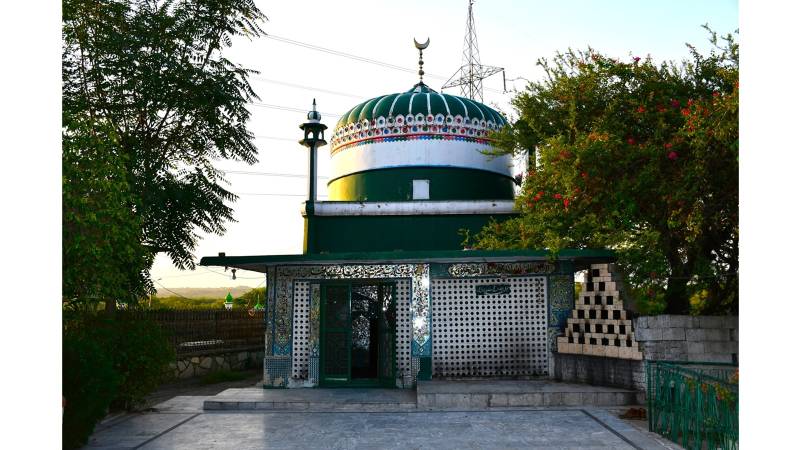
While travelling from Rawal Chowk in Islamabad towards Faizabad in Rawalpindi, one notices a shrine perched on a hill (dheri) to the left of the road. The shrine is also clearly visible to those travelling from Rawalpindi towards Rawal Chowk or turning onto the Islamabad Expressway from Murree Road. Whichever direction one approaches from, the hilltop shrine is sure to catch one’s attention.
Whenever I saw the hilltop shrine, I wondered whose shrine it was and wanted to know more about its history. I first visited the shrine in 2006 and returned several times in the following years. Locally, this shrine is called Pir Baba Bahar-e Phulan Badshah at Ojhri Khurd. Local people narrate several stories about Pir Baba Bahar-e-Phulan Badshah, but these accounts often contradict one another. The shrine actually belongs to Mian Khuda Bakhsh, who is now popularly known as Pir Baba Bahar-e-Phulan Badshah.
Spiritual Lineage and the Naushahiyya Tradition
Mian Khuda Bakhsh Qadiri Naushahi was a deputy of Mai Nawab Sahib, who was a deputy of Mir Kalan Badshah, whose shrine is located in Rokhia Sharif in Gujar Khan. Mir Kalan Badshah was an eminent deputy of Hazrat Khawaja Hafiz Qaimuddin Barqandaz (d. 1765), who was a deputy of Hazrat Pir Muhammad Sachiar Naushahi. Hazrat Pir Muhammad Suchiar (d. 1707) was born in Narali village in Gujar Khan. Later, his father migrated to Gujrat.
The shrine of Hazrat Pir Muhammad Suchiar is located at Noshahra Miana in Jalapur Jattan in Gujrat district. He was a deputy of Hazrat Haji Muhammad Naushah Ganj Bakhsh Naushah Qadiri (d. 1654), the founder of the Naushahiyya branch of the Qadiri Silsila. The shrine of Hazrat Haji Muhammad Naushah Ganj Bakhsh is located at Ranmal Sharif in Phalia tehsil, Mandi Bahauddin district.
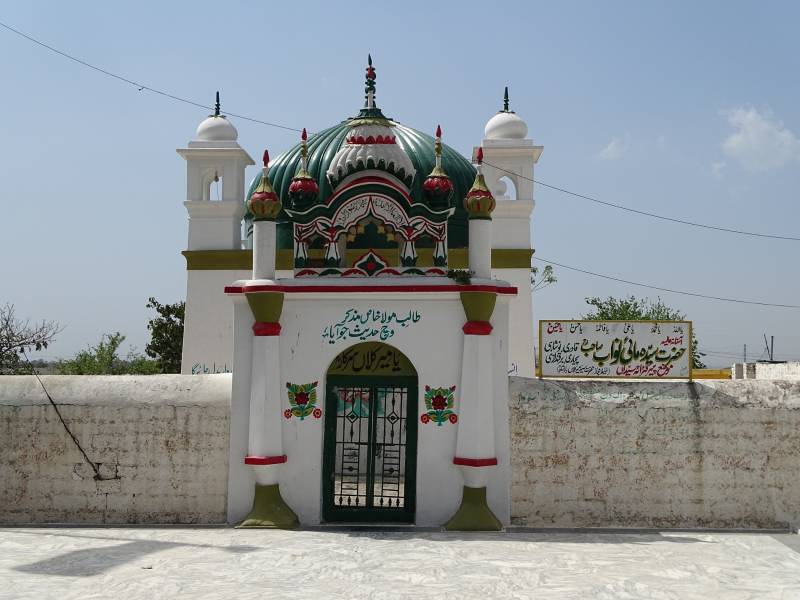
Mai Nawab Sahib was a prominent deputy of Mir Kalan Badshah. Her shrine is located in Pir Garata Syedan, Kallar Syedan tehsil, Rawalpindi district. According to Sharif al-Tawarikh (Vol 3, Part 4) by Syed Sharif Ahmad Sharafat Naushahi (1971: 163), there were seven prominent Khalifas of Mai Nawab Sahib. The khalifas included Raza Quli, Syed Gulab Shah, Sheikh Munawar, Mian Moizullah, Mian Khuda Bakhsh, Pir Ghulam Rasool, and Ram Singh Kuka of Peshawar.
Local people narrate several stories about Pir Baba Bahar-e-Phulan Badshah, but these accounts often contradict one another
Pir Raza Quli was the first Khalifa of Mai Nawab Sahib. Pir Raza Quli’s grave is also located near the tomb of Mai Nawab Sahib at Pir Gharata. Mai Nawab Sahib’s deputies and disciples spread her teachings in different villages and towns of Pothohar and beyond. The shrine of Mian Sharaf Ali Naushahi (d. 1914), a khalifa of Mian Muhammad Ji Naushahi, who was himself a deputy of Pir Raza Quli, is located in Jarmot Kalan, Gujar Khan.
According to Ruh Da Rishta by Hanif Hanfi (1999), Mian Muhammad Ji Naushahi preached the Qadiri Naushahiyya silsila in Pindigheb tehsil of Attock district. His chief deputy, Mian Sharaf Ali Naushahi (d. 1914), was a leading Naushahi saint in Jarmot Kalan village in Gujar Khan, where his shrine is located today. The son of Mian Muhammad Ji Naushahi, Fazal Illahi Naushahi (d. 1930), was also a learned and famous Naushahi saint of Duman village in Gujar Khan, where his shrine is located now. Mian Muhammad Ji travelled extensively throughout the nooks and crannies of Pothohar.
Tracing Mian Khuda Bakhsh and His Khalifa in Thoha Khalsa
Apart from Raza Quli, another prominent Khalifa of Mai Nawab Sahib was Mian Khuda Bakhsh, whose deputies and disciples also spread the Qadiri-Naushahiyya Silsila. Syed Sharif Ahmad Sharfat Naushahi (1971) states in Sharif al-Tawarikh (Vol 3, Part 4) that Mian Khuda Bakhsh was a resident of Ojhrian village. I met the late Muhammad Hanif Hanfi and travelled with him to several shrines of Qadiri Naushahi saints. He himself wrote on those saints. He told me that the shrine in Ojhhri Khurd belonged to Mian Khuda Bakhsh.
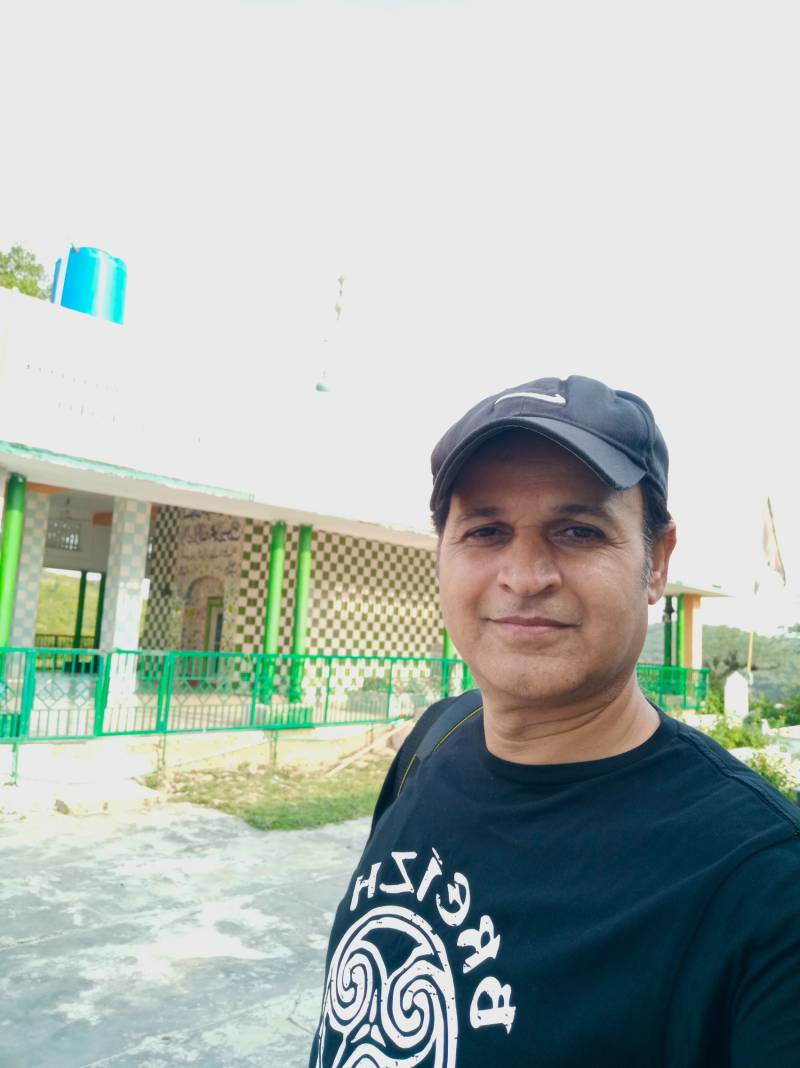
Later, when I learned that Mian Khuda Bakhsh had an eminent khalifa named Mian Tajuddin from Thoha Khalsa, I went there to gather information about Mian Tajuddin and his spiritual mentor. I met Sain Muhammad Ikhlas, the custodian of Mian Tajuddin’s shrine, as well as other people in Thoha Khalsa. Sain Muhammad Ikhlas confirmed that Pir Baba Bahar-e-Phulan Badshah is actually Mian Khuda Bakhsh, the spiritual master of Mian Tajuddin Qadiri Naushahi.
Mian Tajuddin Qadiri Naushahi’s shrine is located on a hill (dheri) in Thoha Dheri, Thoha Khalsa, Kahuta tehsil, Rawalpindi district. A beautiful tomb stands over his grave. He was a leading deputy of Mian Khuda Bakhsh, who spread his spiritual mentor’s teachings in Thoha Dheri, Thoha Khalsa, and surrounding areas. After the death of Mian Tajuddin, his chief khalifa, Mian Hayat Bakhsh Qadiri Naushahi, became the first sajjada Nashin of his darbar. He was from the Janjua Rajput family. According to Sain Muhammad Ikhlas, Mian Hayat Bakhsh had four sons—Sain Zaman Ali, Sain Reham Ali, Sain Zaman Ali, and Sain Muhammad—all known for their piety. Mian Hayat Bakhsh was known for his piety and spirituality. He played a key role in spreading the Qadiriyya-Naushahiyya silsila in his area. He died and was buried west of the tomb of Mian Tajuddin Qadiri Naushahi.
The graves of the custodians of Mian Tajuddin Naushahi’s shrine, including Sain Muhammad Ali Nauhahi; Sain Zaman Ali; Sain Muhammad Afsar Naushahi (d. 1953), son of Sain Muhammad Ali Naushahi; Sain Muhammad Aslam Naushahi (d. 1958), son of Sain Muhammad Ali; Sain Muhammad Arif (d. 1994), son of Sain Muhammad Asfar Naushahi; Sain Muhammad Banaras Naushahi (d. 2000), son of Sain Muhammad Afsar Naushahi; and others, are located in the graveyard of Mian Tajuddin Qadiri Naushahi. The graves of Sain Muhammad Ali Naushahi and the wife of Sain Muhammad Afsar Naushahi, Reshma Bibi (d. 1948), are located in the verandah of the tomb of Mian Tajuddin Qadiri Naushahi. The graves of Zaman Ali, Amir Ali, Reham Ali, and Muhammad Ali are also found in the graveyard of Mian Tajuddin Qadiri Naushahi.
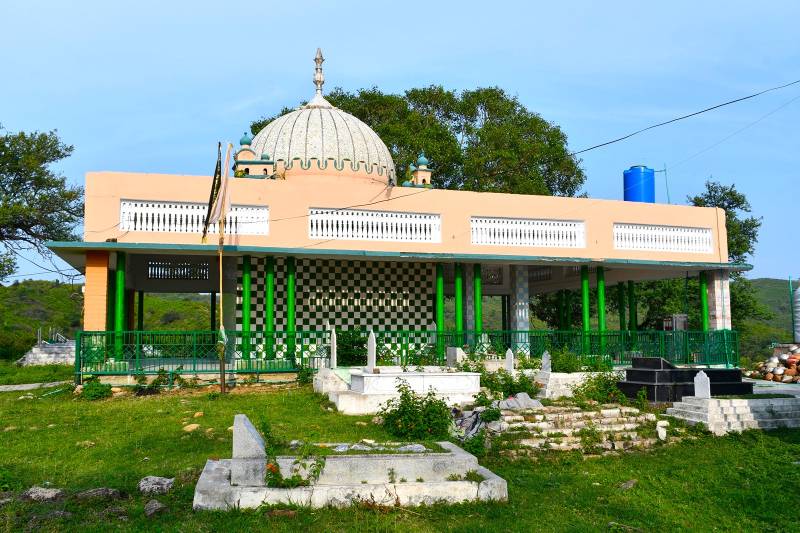
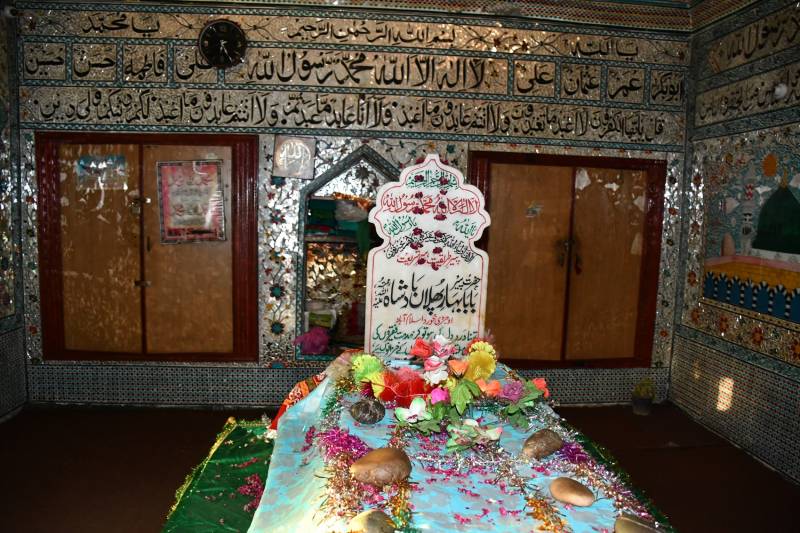
Mian Khuda Bakhsh, his leading khalifa, and their disciples spread the Qadiri Naushahiyya silsila in Rawalpindi and other districts of Punjab. After Mian Khuda Bakhsh’s death, he was buried in Ojhri Khurd village. The tomb was built much later, most probably in the early 1990s or late 1990s, and he became Pir Baba Bahar-e-Phulan Badshah to the local community. On the main entrance to the tomb, an inscription reads: Darbar-e-Aliya Qadiriyya Hazrat Baba Bahar-e-Phulan Badshah. The grave of Mai Sahiba Bibi Pak Daman is also located to the right of the main doorway of the shrine of Mian Khuda Bakhsh, alias Phulan Badshah. Many people visit the shrine without knowing much about the history of Mian Khuda Bakhsh, popularly known as Pir Baba Bahar-e-Phulan Badshah. Like Mian Khuda Bakhsh, there are several other saints in Rawalpindi and Islamabad whose original names, histories, and roles in their respective Sufi silsilas remain largely unexplored in scholarly research.