

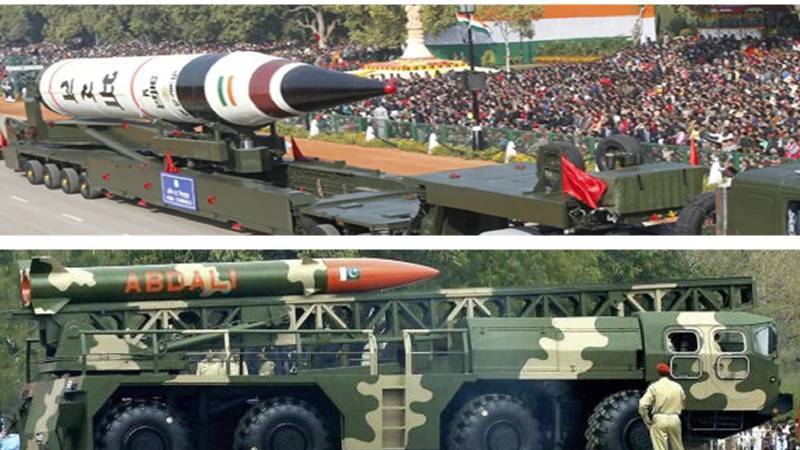
The basic Indian grievance against nuclear deterrence relations that existed between Pakistan and India before May 7, 2025, was that it facilitated Pakistan-sponsored terrorism and militancy inside Indian territory. Pakistan’s claim in the period before May 7 was that its nuclear deterrence neutralised Indian conventional superiority and prevented full-scale war in the region. The conflicting interpretations of peace that existed between the two countries in the 38 years between 1987 (when Pakistan for the first time hinted it had nuclear weapons) and 2025 (when India refused to be deterred by the fear of nuclear exchange) continued into the period when nuclear weapons apparently failed to deter the two countries from entering into a full-scale conflict.
The two sides continue to present conflicting interpretations of why and how peace exists between the two countries after an American-mediated ceasefire was announced on May 10, 2025, till today. The Indian side says that the exemplary punishment inflicted on Pakistan by the Indian military will prevent the Pakistani security apparatus from carrying out or sponsoring more terrorist attacks on Indian territory. So, in their words, deterrence has been established in this way. The Pakistani side says the Pakistani military’s conventional response to Indian aggression on the morning of May 10, 2025, inflicted severe punishment on the Indian military and hence re-established conventional deterrence against conventional attacks. The Indian side says they would again inflict even harsher punishment on Pakistan in case there is another terror attack on Indian soil. In the future, India will not distinguish between perpetrators of terror attacks and the Pakistani military, and their backers.
Happymon Jacob is an Indian foreign policy expert and strategist. He penned an article in Indian media titled ‘Deterrence by Exhaustion: Nine Elements of India’s Emerging Strategy Against Terrorism’. In this piece, he described in detail India’s new military strategy, which, according to him, has made it clear that the sub-conventional threat from Pakistan will be met by India’s conventional response. “This strategy involves publicly declaring a conventional military response to Pakistan, unlike 2016, when actions were unannounced and only acknowledged afterward, and then following through on these commitments. Through the new approach, which entails openly communicating its intentions to Pakistan and the international community, India aims to establish a well-publicised tripwire strategy, which may deter Pakistan from crossing certain red lines. India not only wants to take punitive action but also wants to be seen as doing so openly and visibly. Setting public red lines for the adversary to enhance deterrence is the objective here.”
While the conflict was going on, Pakistani retired military officials started to enunciate a unique and incomprehensible conception of deterrence which, according to them, would only be re-established after a crashing military response to Indian aggression
Mr Jacob writes that since the 2001 Parliament attack, there has been a gradual escalation in the intensity of India’s response to terrorism, culminating in the 2025 Pahalgam attacks. “The most intense Indian response to terrorism so far was seen this month which combined unprecedented degrees of kinetic and non-kinetic responses. The underlying idea is that if Pakistan uses terrorism as a cost-effective strategy to pressure India and internationalise Kashmir, India’s response should aim to make Pakistan’s strategy costly and unsustainable. Expecting Pakistan not to respond conventionally is unrealistic, but the message about assured conventional retaliation to terror strikes by India is unlikely to be missed out on in Pakistan. If you focus on Pakistan’s conventional push-back against India’s conventional response, you will miss the point; the point is the rising costs Pakistan has to pay with each iteration of this back and forth,” reads his piece.
While the conflict was going on, Pakistani retired military officials started to enunciate a unique and incomprehensible conception of deterrence which, according to them, would only be re-established after a crashing military response to Indian aggression. And after the ceasefire was announced, Pakistan's foreign office spokesman came up with an explanation that to some extent was a repetition of what retired military generals were saying: “These irresponsible remarks (Indian defence minister’s statement) reveal his profound insecurity and frustration regarding Pakistan's effective defence and deterrence against Indian aggression through conventional means. Pakistan's conventional capabilities are adequate to deter India, without the self-imposed ‘nuclear blackmail’ that New Delhi suffers.”
We are in a situation where the Pakistani and Indian states have conflicting views and notions about deterrence. Pakistanis believe that their military response on the morning of May 10, 2025, re-established deterrence—it was a conventional response when Pakistan hit Indian forward bases in border areas along the Pak-India borders—and now India would think twice before launching another strike inside Pakistani territory. This version of the deterrence model is based on the belief that deterrence briefly broke down on May 7, 2025, when India carried out missile strikes inside Pakistani territory, and when Pakistan responded with conventional missile strikes, Pakistani deterrence was re-established. The Indian version of the deterrence model says that India avenged and inflicted unacceptable punishment on the Pakistani military between May 7 and May 10, 2025, and as a result, deterrence has been established which will prevent Pakistan from sponsoring terrorism in Indian territory through its proxies.
The only thing India will have to do is to make sure that it would inflict harsher punishment on Pakistan the next time any terror attack takes place on Indian territory. Both sides are viewing the situation by keeping only one eye open. The Pakistani side refuses to acknowledge the fact that on May 7, 2025, India broke a 38-year-long taboo by using military force against nuclear-armed Pakistan across international borders. Now why would Indians fear a conventional response if it didn’t care for nuclear deterrence? The Indian side, on the other hand, doesn’t even demonstrate a basic common sense that what they are describing as their deterrence—the claimed punishment inflicted on Pakistan—was reduced to nothingness when Pakistan responded with a conventional strike on Indian bases within hours of the attack on Nur Khan Airbase.
India’s equally delusional notion that the fear of an Indian conventional response would prevent terrorism from hitting Indian territory will not work either
The amount and nature of destruction the Indian military operation has caused inside Pakistan will not even deter the Station House Officer (SHO) of Secretariat Police Station—in whose jurisdiction Pakistan’s state institutions are located—what to talk about the military and intelligence services. On the other hand, Pakistan’s delusional and blinkered view of deterrence—that nuclear weapons would prevent India from launching conventional attacks on Pakistani territory—has been buried under the debris of Indian cruise missiles and Pakistani rockets. However, India’s equally delusional notion that the fear of an Indian conventional response would prevent terrorism from hitting Indian territory will not work either.
The basic premise of this model of deterrence is flawed—India is using the threat of use of force against Pakistan's state and military in the belief that this will stop Pakistan-based militant groups from carrying out terror attacks on Indian territory. Now, Prime Minister Narendra Modi is on record saying that next time the Indian military will not differentiate between perpetrators of the terrorist attacks and their backers, by which he means the Pakistani military. Demonstrating all the stubbornness that is quintessential of the Indian ruling elite, he ignores the fact that most of these militant groups have been engaged in an armed struggle against Pakistan's state apparatus and military for the last 20 years.
Many of the suicide attacks that our society witnessed were the handiwork of Punjab-based militant groups against which the Indian state also has grievances. Any dispassionate analysis of Pakistan’s security landscape and the role these Punjab-based militant groups play in the production of this landscape will prove beyond any reasonable doubt that these militant groups have an organisational and command structure, which is distinct from the command and organisational structure of the Pakistani state and military. India is stretching the American model of retribution and its stature as a regional power to think that it can violate the sovereignty of its neighbour by harping on the allegations of cross-border terrorism. Pakistani militant groups have connections with international terror outfits like Al-Qaeda and ISIS, and Pakistani security apparatus and military forces have been engaged in their efforts to curb the activities of these national and international militant groups in this region. Remember, most of these groups have roots in several countries of the region, including Pakistan, Afghanistan, and Indian-held Kashmir.
In Pakistan, these groups don’t operate on the surface; they are underground, outlawed entities. Equating their organisational structure with the organisational and command structure of the Pakistani military and intelligence services will be a folly of the highest order, and any future military action undertaken based on this basic premise will hurt the security interests of not only South Asia but would prove to be a catastrophe for the global order. To see and perceive these militant groups as part of the Pakistani military command and organisational structures—as India seems to be doing—makes good propaganda points for the domestic consumption of a hysterical society but this premise will provide the inherently flawed basis for a military strategy—a military strategy that can prove too costly for human life in South Asia and perhaps globally.
These terror groups no doubt originated in Pakistani Punjab, but their location now is no longer restricted to Pakistani Punjab. The Pakistani state has been chasing to neutralise these groups in places as varied as Afghanistan, Syria, and Iraq. The American war against terror was not the only thing that was taking place in a globalised environment. This so-called war also globalised the groups against which this war was being fought. In 2016, American forces defeated ISIS in Syria and Iraq, and they started shifting to Afghanistan. Even before that, ISIS was attracting recruits from Pakistan, India, and Afghanistan. These recruits were then brought to Syria to fight against the Baathist regime of Bashar al-Assad. In Pakistan, these groups don’t operate on the surface; they are outlawed and illegal entities. Some of them are based in Afghanistan. So their organisational structure, their recruitment base, and their objectives all are in flux.
Nuclear deterrence, if it only deters conventional attack from the Indian side, is now unlikely to serve the security interest of the South Asian region. Only the deterrence relations which will serve the security interests of both the South Asian rivals will now work in this region. When asked whether the operation is continuing, India’s External Affairs Minister, Jaishankar, responded, "The operation continues because there is a clear message in that operation, that if there are acts of the kind we saw on April 22nd, there will be a response, we will hit the terrorists. If the terrorists are in Pakistan, we will hit them where they are. So, there is a message in continuing the operation. But, continuing the operation is not the same as firing on each other. Right now, there is an agreed cessation of firing and military action."
In such a situation, equating these groups' organisational structure with Pakistan’s state machinery or the organisational and command structure of Pakistani security apparatus will be an utterly foolish exercise. It appears what India actually wants is to compel Pakistan to take action against these groups inside its territory. Even a man of ordinary intelligence, who believes that Pakistani state machinery has been using these groups against India, would not make the foolish mistake of equating their organisational and command structure with that of Pakistani state machinery and security apparatus.
So if we assume that India wants Pakistan to go after these groups, then we are not talking here about deterrence, we are talking about compellence—which in simple words means that India is using the threat of the use of force to force Pakistan into certain things. Just like the Americans who used to coerce the Pakistani military government to take steps against the Pakistani Taliban for their role in attacking NATO forces in Afghanistan. Many in Pakistan believe that the Americans forced a war on Pakistan, which was, in actuality, an American war, not Pakistan’s war. Now, will Pakistan be willing to fight a war inside its territory, which in actuality is India’s war, for fear of a conventional attack, no matter how harsh it may turn out to be? I laugh at Indians' naïvety.
Now that we have passed the age of nuclear deterrence as an explanation of peace between Pakistan and India, and now that war looms large on the horizon, how should the two countries formulate their future strategies? First of all, open both eyes. It is better not to fall victim to your propaganda and see things from another perspective. Pakistan should realise that India is facing a genuine terrorism problem. And India should also realise that Pakistan is facing a genuine terrorism problem, for which it blames India. India should also realise that their conventional threat will not make Pakistan concede its position, no matter what the cost. Talks at the political level are a must. Talks in which the political leaders understand each other’s perspective and try to help each other come out of the difficult situation both sides find themselves in.