

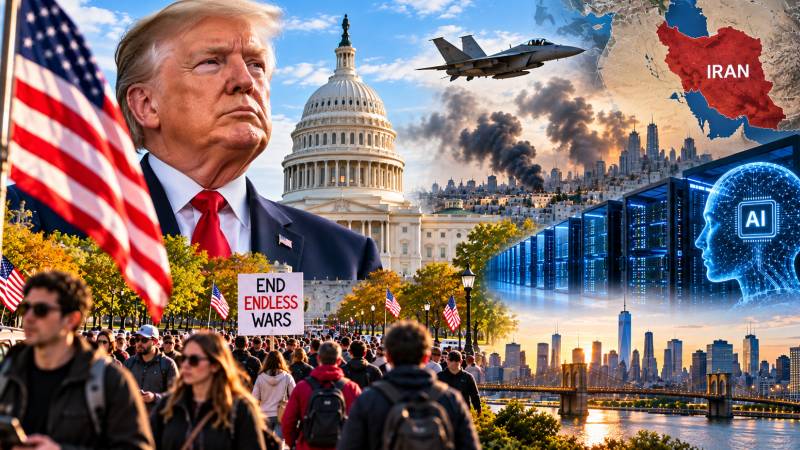
Here in the US, summer is giving way to autumn and the trees are turning colour. A growing nip in the morning air, while often a rain-soaked evening breeze blows dead yellowed leaves across the tree-bounded fields into the murmur of the nearby pond. Life runs or strolls or gallops, as your status and locale may be. In the affluent suburbs, people go about their daily business, wondering whether it is now time to get a self-driven Tesla, or trying to read the tea leaves of the stock market. Middle-class families worry about balancing the budget and paying their mortgages Elsewhere, on the busy indifferent streets of a metropolis like New York, destitute old women aimlessly wheel their entire possessions in overloaded shopping carts and tired men in oversized, frayed overcoats rest on park benches, watching the traffic while sipping from brown-bagged bottles. Life has its own rhythms and compulsions for all of them.
For someone like me, a traveller from a land that neighbors the arena of a deadly war initiated by the US, this normalcy of life here is a surprise. Indeed, it seems almost like an insult, an unexpressed declaration of the irrelevance of the deaths, devastation and turmoil that have been unleashed by this country far from its own shores. So, I think, if this war of choice that has now become a quagmire has apparently made no impact on the lives of the American people, what exactly is it that is preoccupying them in, the second year of a deeply divisive and flawed Trump presidency?
I follow the news, the talk shows, the political analysts, the podcasters, and the stand-up artists to get a sense of how people are thinking and feeling. I find undercurrents of discomfort, apprehensions, and frustration with the direction and the flow of events. Apprehensions about the fear of loss of empire, with the growing suspicion that the affluence and the way of life they take for granted may be threatened by forces that they neither comprehend nor control. These apprehensions are manifested in various ways, some of which I will describe as I feel them.
As far as the impact of the Iran war and the closure of the Hormuz goes, fuel prices have increased significantly (40-45% on average) if not overwhelmingly. General inflation is at 3.7%, up from 2.4% in February 2026. Consequently, it is no surprise that as far as reactions to the war go, there is, in general, disapproval. This does not appear to be a disapproval rooted in a principled or moralistic position; it is more of a pragmatic or realist objection.” If you didn’t have a winning strategy, you should at least have had a viable exit strategy,” they seem to be admonishing the government. The disapproval of the war is essentially as a failed enterprise, and not as an exercise in violation of international law. The Trump administration thus faces no widespread outrage on the streets or in educational institutions as in the later years of the Vietnam War, but a sullen anger at the cost that the American people have to bear in the form of higher fuel prices and a consequent uptick in inflation.
This is not to suggest that the Trump administration will not have to pay a high political price for its blunder in attacking Iran. The mid-term elections to both the House and the Senate are now about three weeks away, and the majorities in both the houses are up for grabs. All opinion polls and analysts that this scribe has heard seem to agree that the Republicans are going to lose the majority in the House of Representatives. There is no consensus on the outcome in the Senate elections, but even in this case the prospects of a Democratic majority are no longer ruled out. Even in traditionally Red states like Texas and Alaska, the Republican candidates trail significantly in the polls. In several other Republican states, the margin at this time is too close to call, nevertheless suggests a weakening of the Republican position.
Many of Trump’s own ardent supporters of yesteryear feel betrayed by his initiation of the war against Iran. It is described as a continuation of the much-criticized unnecessary Democratic involvement in Middle East affairs. Wars that they were told unnecessarily cost the US dearly, both in terms of lives and of resources much needed at home. Ex-Trump loyalists such as Tucker Carlson and Marjorie Taylor Greene are among the many prominent critics of the second coming of Trump.
Thus, an intense debate appears to be taking place internally within the American society as to why their military engagement continues in remote parts of the world for reasons that the American people neither understand nor identify with. There is a growing perception, particularly among the younger people of Generation Z and sections of the Democratic Party, that these engagements are essentially at the behest of the Israeli government and its very powerful lobbies in the US. Consequently, AIPAC, the pro-Israel lobbying group, has lately come under great scrutiny and criticism for funneling billions of dollars into the US election campaigns.
The impact of these concerns is now becoming more evident. Recently, American Israel Public Affairs Committee (AIPAC) and other such pro-Israel groups contributed millions of dollars to ward off the threat from Leftist and anti- Zionist candidates in the US Democratic primary. Despite pumping such large sums of money in what, after all, were only party Primaries and not the actual general elections, the AIPAC-supported candidates lost some very important battles at the hands of severely out financed candidates. From Michigan and Minnesota Senate Primaries to congressional races in New York, Illinois and California, several Democratic nominees prevailed in such races. The victories come amid shifting attitudes within the Democratic Party toward Israel and the war in Gaza, with several progressive candidates speaking out against the Israeli government—and scoring primary wins while doing so.
Experts like Geoffrey Hinton, often called a ‘godfather of AI’, estimates that if allowed to develop superintelligent AI would pose a 10% to 20% risk of human extinction! Similarly, other leading lights of AI such as Yoshua Bengio, Sam Altman, Dario Amodel and Elon Musk have warned that advanced machine intelligence poses profound risks to society and human survival, and have argued that mitigating the risk of AI should be treated as a global priority.
Beyond war and politics, a profound issue is being debated across a wide spectrum of society- the US government, academia, research institutions, AI developers, and the top management of AI companies; the issue of the threat of AI superintelligence to human survival. Interestingly, the most serious concern about the threat of increasingly intelligent AI to human survival comes from the pioneers of AI itself.
This view of experts while being taken seriously by US government and its policy makers, has not yet prompted any government or corporate efforts to curb or limit the growth of AI intelligence. Within the naysayers to controls on AI development, there are some who view the threat warnings as being overblown, while there are others who feel that the risk that the Chinese may move ahead of the US is sufficient reason to continue at full pace. Corporate bosses, while sharing their concerns publicly, also do not apply any brakes on AI development. In this case, fears of being overtaken by their corporate rivals mirror the inertia of the government due to its AI rivalry with the Chinese. In the words of Sen. Ted Cruz, Chairman of the Senate Commerce, Science and Transportation Committee, if advanced AI or "killer robots" become a reality, he would "rather they be American killer robots and not Chinese killer robots".
Meanwhile, in another issue emerging in US public concerns, one notices that the exponential development of AI has triggered a sharp public and political backlash across the United States due to its massive environmental footprint. This is particularly with regards to the massive amounts of water required for cooling the high processing units of AI, on the one hand, and the enormous electrical power they consume, on the other. As grids scramble to accommodate the massive energy loads, local residents are facing surging electricity and water bills. While tech giants race to expand infrastructure, local communities, environmental groups, and lawmakers are increasingly pushing back against the strain these facilities place on natural resources. Nearly 160 data center projects, one learns, have been paused or canceled due to community opposition and pending restrictive legislation. In rural Georgia, residents near Meta’s data center reported severe water pressure loss, prompting national lawmakers to highlight the issue. Similar pushbacks have occurred across Arizona, Texas, and Virginia. Activists argue that the localized air pollution and noise from these backup generators disproportionately impact Black, Brown, and low-income communities. Voters are pushing back against bearing the financial brunt of the infrastructure expansion.
Concluding, US society and economy are facing serious challenges as the world enters new, uncharted territory: the era of Chinese emergence as a full-fledged economic rival to the US, and secondly, the rapid development of the age of AI. Both of these developments appear to be unsettling the US people and society in ways that have not yet crystallized sufficiently to enable predicting their outcome. Will the US try to maintain international dominance and economic superiority through military means or seek a more equitable international power distribution? Will the development of superintelligent AI be controlled through an understanding between the two economic and technological giants, US and China, or will this race lead to an eventual catastrophic outcome? The jury is still out, as the Americans are fond of saying in such situations.