


Click here for the previous part in this series
Some cities grow in circles, others in straight lines. Peshawar grew in stories - told over rooftops, whispered across courtyards, carried in the steam of chai (tea) and the hush of azan (Muslim prayer call). Nowhere is this more evident than in its old city.
If you haven’t walked its Mohallahs (town neighbourhoods), you haven’t known Peshawar. You haven’t seen wooden balconies hanging like thoughts left unsaid, or doors carved with peacocks and flowers - now cracked, but still standing with dignity. Each alley twists like a tale halfway through, and every turn has a name: Mohalla Jhangi, Mohalla Sethian, Ander Sheher, Gunj, Karimpura, and the famous Qissa Khwani Bazaar - the Street of Storytellers. Yes, you read that right.
Mohallas as Boutiques of Faiths
Once, it is said, camel caravans from Central Asia would rest here. Merchants from Samarkand and Kabul, carrying silks, spices, and salt, would sit cross-legged and sip green tea. While their camels were watered, they told stories - of love, war, and honour - to pass their time. The chai khanas were their stages. The bazaar their audience; and Peshawar listened and remembered.
As a young lad, my mother would send me to fetch bangles or betel leaves. I’d linger - staring at the clock tower, eavesdropping on old men talking politics, or catching sight of a Hindu shopkeeper in starched dhoti sitting beside a bearded Pathan. They didn’t share gods. They shared the price of almonds and the shade of the awning. That was Peshawar.
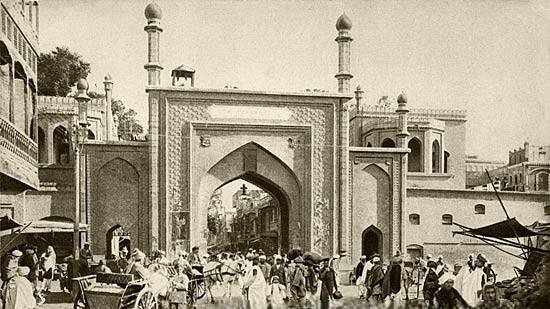
The old city also hid its wounds. Chowk Yadgar, the memory square, has witnessed more blood and betrayal than most capital cities. It was once the hub of protests, the site of massacres, and now a place where pigeons rest while old men sell coins from forgotten empires.
And in between it all stand the mosques.
The grandest is the Mahabat Khan Mosque, built in white marble with floral motifs and slender minarets. I once prayed there after Asr (late afternoon prayer), my back to the cool stone, watching the fading sun paint its dome in hues of saffron and lavender. The Imam recited softly, and for a fleeting moment, I felt the past and present collapse into one breath.
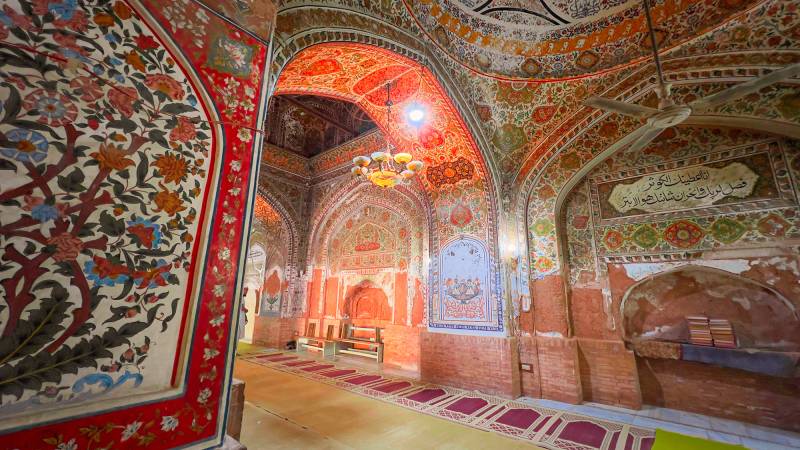
Other mosques lie tucked away - each a world of its own. In one, the Imam is a scholar. In another, a storyteller. In a third, just a kind man who gives bread to stray cats.
My mother would send me to fetch bangles or betel leaves. I’d linger - staring at the clock tower, eavesdropping on old men talking politics, or catching sight of a Hindu shopkeeper sitting beside a bearded Pathan
In these Mohallahs, life isn’t fast. It is deliberate. We knew our neighbours. We knew their voices. And even today, when I walk through the old city, the walls still remember my childhood.
They nod, quietly.
Hindu Peshawar: Forgotten Threads in the City’s Fabric
Once upon a time, Peshawar wasn’t just the City of Flowers - it was a bouquet of faiths. Hindu, Sikh, Muslim - separate mohallas, yes — but lives lived close enough to share fragrance and festivity.
If the Muslim mohallas echoed with the call of the muezzin, the Hindu quarters answered with temple bells. Not a clash. A chorus.
They lived mostly in the interior city, down its widest street near Andar Sheher, where once stood magnificent Havelis with ornate wooden jharokas, stucco work, and echoing courtyards. Rajan Nanda, of Escorts Group fame, lived in one of those houses - the kind where sunlight filtered through coloured glass, and news travelled faster through balconies than through telegrams. Not Gul Bahar, as often misremembered, but right in the teeming heart of the old city, where culture brewed in brass samovars and whispered through courtyards.
Nearby stood a haveli that cinema lovers might recognise - the Raj Kapoor Haveli - ancestral home of the Kapoor family, pioneers of Indian cinema. Prithviraj Kapoor, patriarch of the dynasty, lived there. Though partition would sweep them across the Radcliffe Line, it was here that the seeds of theatrical legacy were sown. Raj Kapoor once said, "Peshawar is in my blood - I can never forget it."
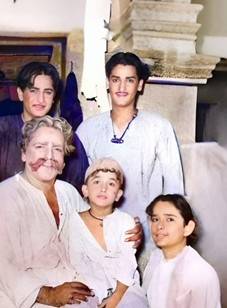
The Hindu mohallas may have been separate, but they were never alien. There was a respectful distance, but rarely disdain. My mother used to say, “We knew which door not to knock on for meat - and which ones would always have sweets at Diwali.” That was the understanding.
They ran schools, banks, grain shops, jewellery stores. The Ashraf-Nanda Bus Service, co-owned by Muslim and Hindu families, could take you from Peshawar to Delhi. Before barbed wire, there were bus tickets. Borders were lines on maps, not between hearts.
In August 1947, the streets that once rang with Ramleela chants and Eid hugs fell silent. Trunks were packed in haste. Families fled. Keys handed over to neighbours - not in surrender, but in hope. “Take care of our home,” they said. “We’ll be back.”
They didn’t return. But many never let go either.
I once met Ramesh Nanda, a relative of Rajan. In his hand was a photo of his childhood haveli — black-and-white, grainy, but alive in his eyes. “I still remember the smell of samosas near the Qissa Khwani chowk,” he said. “Even your city’s dust is sacred to me.”
To walk through Mohalla Sethian or Andar Sheher today is to walk through half-erased memories. You might spot a Ganesh carved above a doorframe, or a locked-up mandir, still coloured with faded saffron. These are not ruins, they are reminders; of a Peshawar that was more plural, more confident in its multi-hued soul.
We lost more than people in Partition. We lost textures of belonging — shared metaphors, joint rituals, small courtesies.
But memory is a tenacious weed. It cracks through the concrete of forgetting.
And sometimes, in the quiet of Chowk Yadgar, or from a breeze through the Kapoor Haveli, you might hear it again — the whisper of a lost harmony, waiting to be retold.