

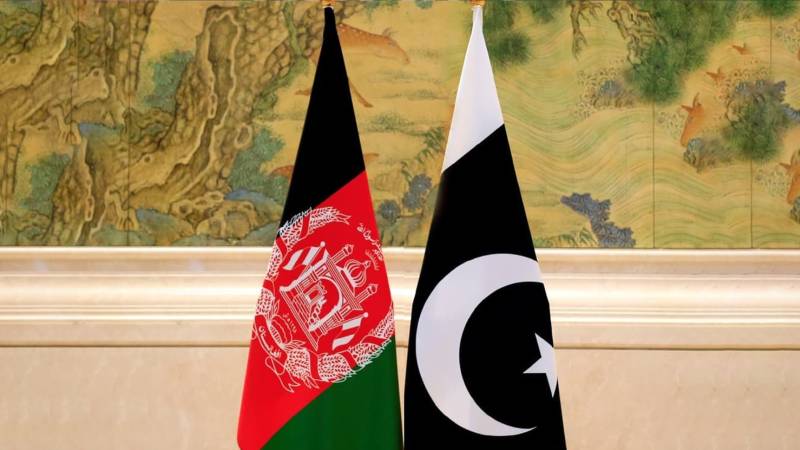
In a mere span of less than a week, the Pakistan Military and Afghan forces have been embroiled in a ferocious exchange of skirmishes, attacks, and counter-attacks, leaving the vast majority of their shared border scarred and tense. This perpetual state of conflict is, regrettably, nothing new for these two neighbouring Muslim nations of South Asia, which have been locked in a seemingly intractable cycle of violence since Pakistan's inception. What is striking, however, is the sheer intensity of this recent conflagration, which stands out as one of the deadliest episodes in the post-Taliban takeover era. The Taliban's assumption of power in Kabul, precipitated by the abrupt withdrawal of US and NATO forces in 2021, has apparently created a power vacuum that has reignited age-old animosities and triggered this latest bout of bloodletting.
The conflict has been under the microscope of global and regional powers, with Arab and Turkish leadership taking a proactive stance, as they have consistently demonstrated a willingness to facilitate dialogue and broker peace between Pakistan and Afghanistan. These nations are not only pivotal strategic partners in fostering regional cooperation but also crucial allies in the fight against the scourge of violence and terrorism that plagues the region. In a significant diplomatic breakthrough, Qatar – with Turkey's backing – hosted pivotal talks in Doha, culminating in the signing of an immediate ceasefire agreement between the two embattled nations. Furthermore, the parties have pledged to engage in ongoing deliberations in Istanbul, to devise a robust mechanism to ensure lasting peace and stability along the Pak-Afghan borders, thereby ushering in a new era of tranquillity and prosperity in the region.
Afghanistan's strategic culture is shaped by its history of resisting foreign occupation, geographical location as a buffer zone, and influence of external actors. It includes a guerrilla warfare tradition and scepticism towards external authority, fuelled by experiences like the Soviet-Afghan War. The country's geography makes it a contested territory, leading to external control attempts and a culture of resistance to protect sovereignty. There's an emphasis on asymmetric tactics like guerrilla warfare to counter advanced adversaries. Tribal and local power structures prevail, clashing with centralised state-building efforts and manifesting resistance to foreign control. Foreign interventions often miscalculate Afghan dynamics, exacerbating conflict and instability.
Pakistan's strategic culture is shaped by its history, religion, geography, and military establishment. The perceived existential threat from India drives its security-focused approach, fostering vigilance and mistrust. Key factors include historical grievances, territorial disputes (Kashmir), nuclear deterrence, and a dominant military establishment. This results in a culture of insecurity, military preparedness, and mistrust of India, evolving amidst regional geopolitics.
Afghanistan's culture enables resilience but hinders state-building, while Pakistan's perpetuates insecurity and mistrust, fuelling regional tensions
Afghanistan and Pakistan exhibit starkly different strategic cultures, with Afghanistan's rooted in resistance, decentralisation, and scepticism towards external authority, emphasising guerrilla warfare and local power structures. In contrast, Pakistan's is security-centric, driven by India's perceived threat, with a dominant military establishment and reliance on nuclear deterrence. These cultures reveal contradictory tendencies, with Afghanistan's flexibility and Pakistan's rigidity, and opposing outcomes from external factors. Afghanistan's culture enables resilience but hinders state-building, while Pakistan's perpetuates insecurity and mistrust, fuelling regional tensions.
Afghanistan's resistance-rooted culture has enabled the Taliban to consolidate power, but Pakistan views this as a threat, fuelling its security-centric approach and perpetuating insecurity and mistrust. Pakistan's rigidity and emphasis on nuclear deterrence further complicate relations, while the Taliban's decentralised governance and local power structures challenge Pakistan's centralised authority and strategic interests. These tensions have significant implications for regional security and geopolitics, with recent border clashes and the TTP resurgence exacerbating existing complexities. China has offered to mediate, urging both nations to resolve concerns through dialogue and maintain calm.
When Pakistan's top spy agency chief, Lt-Gen (Rtd) Faiz Hameed, visited Kabul's Serena Hotel soon after the Taliban takeover in August 2021, he appeared calm and reassuring, saying, "Don't worry, everything will be okay." At that time, Pakistan's "Serena swagger" in Kabul gave it a sense of security on its western border, with some Indian hypernationalist media outlets suggesting Pakistan no longer viewed Afghanistan as a headache.
For over a decade, Pakistani security officials had suspected Indian intelligence agency RAW and Afghan security service NDS of orchestrating terrorist attacks in Pakistan, particularly in tribal areas, despite denials from both countries. This suspicion stemmed from Kabul's tendency to blame Islamabad for its security challenges and alleged support to the Taliban, leading Afghanistan to retaliate with India's help allegedly. However, concerned quarters and regional peace watchers expressed increased concerns back in 2021, anticipating a surge in terrorism and violence within Pakistan.
New Delhi emphasises its engagement with Kabul doesn't imply endorsement of Taliban governance, instead focusing on soft power, humanitarian aid, and investments
Today, these concerns are evident due to the failed strategy to deal with Tehreek-e-Taliban Pakistan (TTP), which has crippled the western districts of Khyber Pakhtunkhwa, from Laki Marwat to Khyber Agency, as they allegedly operate from bordering hideouts and safe sanctuaries inside Afghanistan, supported by the Afghan Taliban.
A high-level Afghan government delegation led by Foreign Minister Molavi Amir Khan Muttaqi visited Delhi this month, coinciding with Pakistan's military raids inside Afghanistan, dubbed "strikes against terrorists" by Pakistan. Muttaqi flew in from Russia, the only country recognising the Taliban-led government, to consolidate relations and cooperation with India. He held meetings with top Indian leadership, resulting in India's decision to reopen its Kabul embassy, four years after shutting it down, putting Pakistan, India's arch-rival, on high alert. Muttaqi met Indian FM S Jaishankar, discussing upgraded diplomatic, political, and trade links. India committed to Afghanistan's sovereignty and stability.
Pakistan and India have a long history of rivalry since their independence in August 1947, having fought three wars and several conflicts, including a recent one in May 2025, which Pakistan claims as a victory. Amidst this tense backdrop, India made a strategic move, announcing the reopening of its embassy in Kabul, upgrading its technical mission established in 2022. This diplomatic shift marks India's attempt to reassert its influence in Afghanistan, countering Pakistan's and China's growing presence. New Delhi emphasises its engagement with Kabul doesn't imply endorsement of Taliban governance, instead focusing on soft power, humanitarian aid, and investments. However, Pakistan views India's return as a threat, reigniting anxieties over its dwindling influence in Afghanistan and potentially escalating border tensions.
Afghanistan, being a landlocked country with rich natural resources, including critical minerals, is heavily dependent on its neighbouring nations, like Iran and Pakistan, the only two nations to have consistently supported it during times of war and armed conflict, besides facing high poverty, and denial of education to girls. Afghanistan needs well-negotiated cooperation and interdependence in the region, rather than continuing on the destructive path of wars and terrorism. Similarly, Pakistan also needs to focus on its internal peace with the help of neighbours instead of conflicts on all three borders – India in the east, Afghanistan in the west, and Iran in the southwest. This is an era of interdependence and connectivity instead of wars and conflicts, a pathway to sustainable growth and progress.