

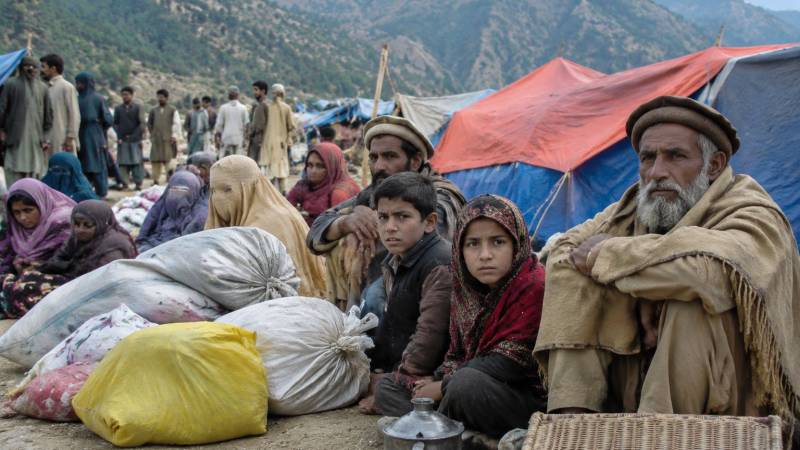
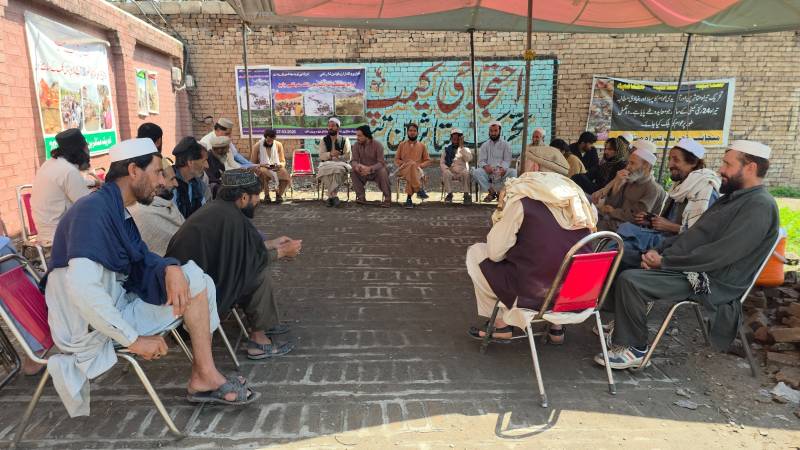
Families displaced from Pakistan’s Tirah Valley have waited ten months to return home, despite an initial expectation that they would be able to do so within two. District authorities have now set November 11 as the latest date for their return. But many displaced residents remain sceptical. A large number of families gathered in Bara, in Khyber district, hoping to hear details of the return plan from a 24-member committee representing local tribal elders. But none of the committee’s senior members was present.
Rahmat Shah Afridi, chairman of the Tehreek-e-Mutasireen (Displaced Persons’ Movement), said families had gathered expecting the committee to explain the arrangements for their return. Instead, only one committee member turned up. He said the committee had announced on social media that the return process would begin on Wednesday, November 11, but there was still no certainty that displaced families would be allowed to go back to their homes.
“Several dates have been announced in the past, but none has been followed through,” he said. “We have remained patient and are waiting once again. But if the return process does not begin this time, the movement will decide what to do next.” Under the committee’s latest proposal, traders would return on Sunday, followed by 100 people from each of the six tribes every day from Wednesday — a total of 600 people a day. The announcement has done little to reassure displaced residents. Attempts to obtain confirmation from several committee members were unsuccessful.
Sher Afagan Khan, president of the Insaf Traders Association in Lar Bagh, Tirah Valley, said the business community had neither been consulted nor informed about the latest decision. He said a traders’ delegation had met the deputy commissioner of Khyber district two days earlier and had been told that traders would be allowed to return a few days before the general population. “Decisions have been made from the outset without taking the affected traders into confidence,” he said. He added that, during an earlier meeting, the assistant commissioner of Bara had declined to accept a list of traders, instructing them instead to submit it through the 24-member committee. The traders had consequently been compelled to hand over their list to the committee.
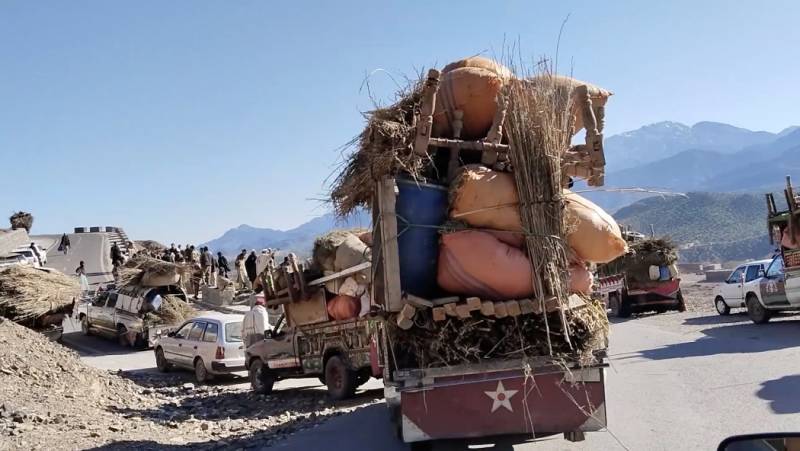
Tirah Valley, a remote area of Khyber district about 130km west of Peshawar, saw its population begin to leave in January this year amid renewed insecurity and fears of a possible military operation. Families moved to the plains of Khyber district, as well as to Peshawar and Nowshera. The displacement was governed by an agreement comprising more than 30 points, reached between a 24-member committee of local elders, the district administration and security officials. The agreement has not been made public. Its provisions included the registration of displaced families, transport expenses, a one-off payment of Rs240,000, monthly assistance of Rs50,000 for two months, and the return of residents to their homes after that period. But complaints about the implementation of these arrangements remain unresolved.
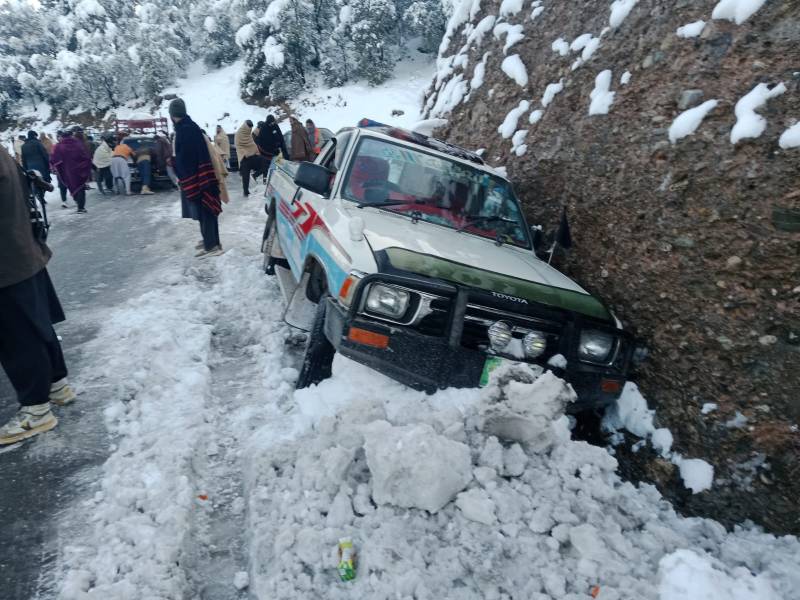
Khushal Khan, a member of the Bar Qambar Khel tribe who attended the gathering, said displaced residents had assembled to learn about the decision announced the previous day. He warned that sending back only 600 people a day, with the process starting another week later, would deepen their difficulties. Heavy snowfall is expected in the coming days, he said, while crops in the fields are at risk. Their homes have been empty for nine months and have suffered damage from rain. If snowfall begins, repairs could be delayed by another five months. “We want the return process to start as soon as possible, and the daily limit of 600 people to be increased,” he said.
Each of the displaced tribes has submitted lists of people wishing to return to the district authorities. Officials, however, say no formal return plan or arrangements have yet been prepared. The 24-member committee has submitted a proposal, but no final decision has been taken. Zafar Khan, a 50-year-old trader, has spent the past ten months displaced and living in rented accommodation. He said his family had left Tirah in the depths of winter and endured considerable hardship in the plains, where basic facilities were lacking. He had not started a business in Bara because he expected to return to Tirah within two months, once armed groups had been cleared from the area. Ten months later, he said, the situation remained uncertain.
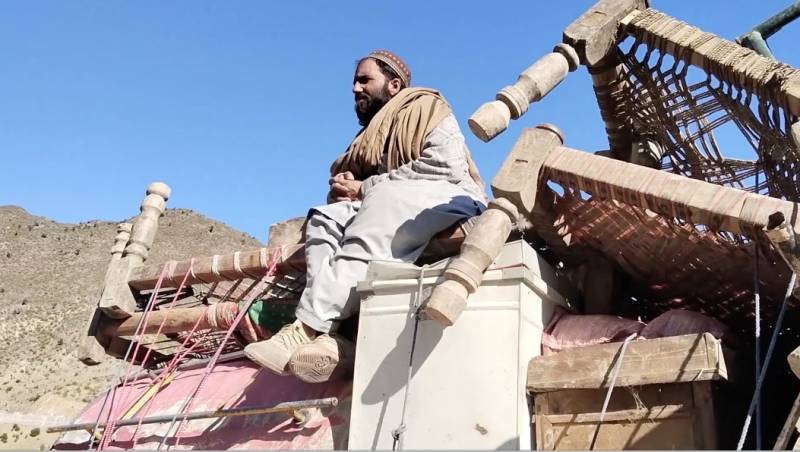
According to the Tehreek-e-Mutasireen Tirah, more than 170 people were killed and over 200 injured between 2023 and January 2026 as a result of insecurity, violent incidents and displacement. Most of the victims, it says, were women and children. Sohbat Khan Afridi, the movement’s spokesperson, said the government had failed to provide compensation to the families of those killed and to people injured in the violence. He said a compensation package of Rs10m had been allocated for the families of those killed and Rs2.5m for injured people. But, according to him, district authorities were paying only Rs1m to bereaved families and between Rs30,000 and Rs50,000 to those injured — amounts he described as unacceptable.
Syed Muhammad, a farmer from the Malik Din Khel tribe, said negligence during the registration process had left many displaced residents unregistered. He said families had received Rs35,000 a month for two months, rather than the Rs50,000 stipulated in the agreement, despite having spent ten months away from their homes. He also questioned how the authorities intended to manage the return of widows and women responsible for supporting their households, many of whom depend on farming and livestock for their livelihoods. “The decision is to send back 600 people a day. But what will happen to women who have lost their husbands and are responsible for their household expenses?” he asked. He criticised the 24-member committee, saying it had failed to take the problems of displaced families seriously from the outset, allowing their difficulties to grow rather than diminish.
Repeated attempts to contact committee members for comment on the November 11 return announcement were unsuccessful. The Provincial Disaster Management Authority (PDMA) says it has verified 22,710 families. They have received a one-off payment of Rs240,000, including transport costs, as well as monthly payments of Rs35,000 for two months through a SIM-based system. District records, however, contain registration details for more than 40,000 families. Verification of many of them remains incomplete, with officials citing various problems that have persisted over the past ten months.
Emergency rule and a new council
Following the imposition of governor’s rule in the province and an emergency in 12 districts, including eight former tribal districts, powers previously exercised by elected public representatives have been transferred to the Regional Representation and Development Council. Haji Shireen Afridi, a member of the council from Khyber district, said the 24-member committee remained responsible for addressing problems arising from the displacement of Tirah’s population. He said that, at the council members’ first meeting with Field Marshal Syed Asim Munir, the prime minister and other senior officials at the Governor House on October 22, the return of displaced residents to Tirah had been discussed. The meeting decided that one person from each family would be allowed to return as a priority to harvest crops and repair homes. But, he said, no clear decision had been made on the return of the entire displaced population.
How insecurity returned to Tirah Valley
After the Afghan Taliban seized power in August 2021, Pakistan began negotiations with the Tehreek-e-Taliban Pakistan (TTP), with the Afghan Taliban acting as mediators. The talks resulted in a temporary ceasefire and the release of some prisoners, but no lasting peace agreement was reached. By late 2021, armed groups had begun reappearing in Tirah Valley. Initially, they operated in the mountainous areas near the border before moving into local settlements. They stayed in hujras — traditional communal guest rooms — and mosques, conducted armed patrols and pressured residents to provide food.
Civilians consequently found themselves caught between pressure from militant groups and difficulties involving the security agencies. Syed Muhammad, from the Lindwar area of Tirah, was arrested on March 25 2024, along with his uncle and cousin, on allegations that they had provided food and shelter to militants. He was released after about 40 days. He said local residents had little power to prevent armed men from entering their villages, while reporting their presence to the authorities could put them in danger. Local accounts suggest that the armed groups included fighters from Tirah, other tribal districts and Afghanistan. The involvement of local young men also increased over time. Clashes between security forces and armed groups led to further civilian casualties and damage to property.
What is the 24-member committee?
On February 4 2025, the bodies of Haji Sher Muhammad Afridi, president of the Tirah Traders Union, and his cousin Abrar were found in Bhutan Sharif, in the Bar Qambar Khel area. They had been abducted by an armed group about a week earlier. The killings heightened anxiety among local residents. Sher Muhammad was regarded as an influential figure in the area and was considered close to the security forces and the government. Large jirgas, or tribal gatherings, were held after his burial to discuss the situation. To address the problems arising from the presence of armed groups and the security response, representatives of the Afridi tribe’s seven sub-tribes — Bar Qambar Khel, Shalobar Qambar Khel, Malik Din Khel, Kamar Khel, Adam Khel, Akakhel and Zakha Khel took steps to establish a representative body.
On March 20 2025, the six tribes other than Akakhel each nominated four elders, forming an empowered 24-member committee. The committee agreed on three key public commitments: there would be no further displacement; residents would not form an armed lashkar, or tribal militia, against militants; and abuses by either security forces or militant groups against the local population would not be tolerated. More than 80 meetings have reportedly been held between security officials and armed groups in efforts to establish lasting peace in the valley.
When will displaced residents return to Tirah?
Since November last year, residents of remote areas of Tirah Valley in Khyber district have begun a second, largely unannounced displacement amid renewed insecurity, violent incidents, civilian casualties and clashes between armed groups and security forces. Under an agreement involving the 24-member committee, senior security officials and the civil administration, registration began on January 5 this year at a government school in Painda Cheena, about 30km east of Tirah’s main centre.
The agreement contained more than 30 points but has not been made public. One provision stipulated that displaced residents would begin returning on April 10. Yet, as November began, there was still no clear indication of when a full return might take place. Since April 10, several return dates have been announced: August 5, August 10, October 10, November 3 and, most recently, November 11.
Registration has become a major problem for displaced families, partly because of disputed population estimates and what residents describe as inadequate planning before the evacuation began in the depths of winter. Before the latest displacement, district officials had estimated that 19,100 households lived in Tirah Valley, based on figures collected with the help of local government representatives.
Sohbat Khan Afridi said the authorities and the 24-member committee had underestimated the number of households living in the valley. He claimed that 76,000 families had been registered during the return process following the 2013 displacement. According to a report issued by the International Organization for Migration (IOM) on May 1 2013, sectarian conflict and the arrival of armed groups from other areas had worsened insecurity in Tirah. A military operation triggered the displacement of local residents from March 23 2013.
The report said 11,404 families, comprising 55,194 people, had been registered. After security conditions improved, the phased return of displaced residents began in December 2014. The PDMA says 94,000 displaced families from different parts of Khyber district were registered between 2009 and 2013. Pakistan’s sixth population census recorded Khyber district’s population at 1,146,400, while Tirah Valley’s population was listed as 100,400. Figures obtained from health and polio officials indicate that 24,890 households were living in the valley before the latest displacement.
Cannabis cultivation: a major source of income in Tirah
Cannabis cultivation has long been an important source of income for residents of some areas of Khyber, Orakzai and Kurram districts in Khyber Pakhtunkhwa. The crop is used to produce hashish, which is consumed domestically and smuggled abroad. The cannabis plant also has potential industrial and medical applications. In 2021, the Khyber Pakhtunkhwa government commissioned a survey involving departments at the University of Peshawar to examine cultivation, production and the potential uses of the crop in the three districts.
The survey proposed establishing six factories to produce medicines, cannabidiol (CBD) oil and industrial products from cannabis-derived materials. The facilities were expected to create about 6,000 jobs. But delays in implementing the plan have left open the question of whether cannabis can be converted into a legal and profitable industrial crop for local farmers. No government department has published verified figures on current cannabis cultivation in Khyber, Orakzai and Kurram.
Professor Fazal Nasir of the University of Peshawar’s Department of Pharmacy, however, claimed that, based on modern technology and local market data, cannabis was being cultivated across 200 sq km, or 49,000 acres, in the three districts, producing up to five million kilograms of hashish annually. Orakzai ranks first in terms of cultivated area, followed by Tirah and then Kurram. Tirah, however, produces the highest-quality crop, he said. According to Professor Nasir, half an acre of land can yield five kilograms of hashish in Tirah, 3.5kg in Orakzai and between 2kg and 2.5kg in Kurram.
Pakistan’s Tirah Valley displacement crisis has exposed the human cost of prolonged insecurity, administrative failures and broken promises. Ten months on, thousands of families remain uncertain about returning home, while compensation, registration and rehabilitation concerns remain unresolved. Repeatedly postponed return dates and inadequate consultation have further eroded public trust. A credible response must prioritise civilian safety, transparent planning, fair compensation and a timely, dignified return for every displaced family.