

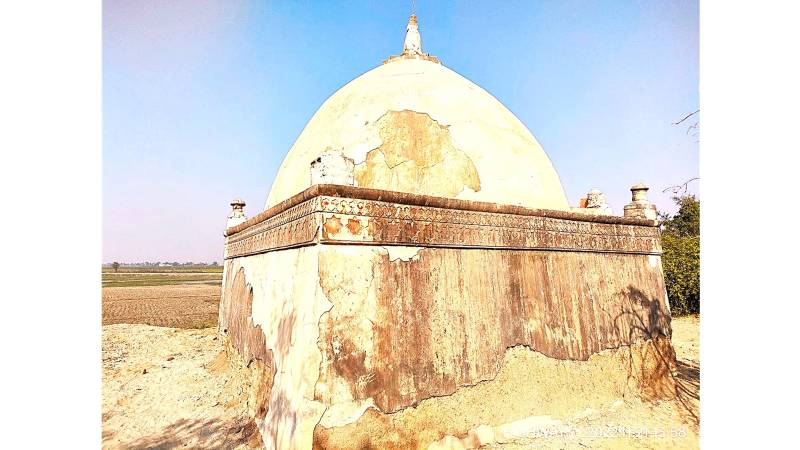
I had delayed writing about Veernath without a definitive reason. Frankly, my personal memories of the site, the oral stories I had heard, and the revenue records I had collected were all intertwined. This material required a structured format so that readers could read it with both clarity and understanding. Consequently, I have ordered the entire text under a series of logical sub-headings. Despite this effort, a meticulous reader may still propose suggestions regarding the optimal placement of certain texts under alternative topics. Nevertheless, it seems essential that I first unveil the sharper edges of my childhood memory concerning Veernath.
I distinctly recall the radhnno, a traditional Sindhi kitchen, in our home at Boriri village. During the late winter season, my cousins and I huddled closely near the fire. A penetrating cold had gripped us that night. My phuppi (paternal aunt), Khadija, spoke a lament: “Cold days have returned.” Nani Noor Khatoon immediately responded: “Winter won't recede without the completion of the shiv ja sat para (seven frozen days of shiv).” She further explained that only after Veernath’s seva concludes would the weather become normal.
I also vividly remember a childhood trip I took with my father to Radhan and Shikarpur. My father, Wali Muhammad Junejo, was a Primary School Teacher. We all—Badal Faqir Bughio, my father, and I—travelled to Radhan. There, we met with a group of people. Badal Faqir succeeded in raising Rs. 250/-. One of the individuals then gave us a chit (a handwritten slip) containing contact information for Shikarpur. Subsequently, Badal Faqir departed for Khairpur Nathan Shah.
We then proceeded to Shikarpur and stayed with nano Ali Nawaz Junejo (maternal-grandfather of my mother, Gulshad Begum). The next morning, we went to the temple. Some Hindu gentlemen attentively listened to our request and read the chit. As we prepared to leave, a man placed a bundle of notes into my father’s hand. Baba counted the amount, which totalled Rs 750/-. He immediately recorded the entire sum on a chero (a small, informal paper strip, where income and expenditure is written or intended purchases are mentioned).
The following day, we returned and met Badal Faqir at the Khairpur Nathan Shah bus stop. Over tea, Baba handed him the money, insisting that he count it himself. Badal Faqir counted the Rs. 750/- with visibly trembling hands. Although he was a mason who ordinarily earned a higher daily wage, this sum was the largest single amount he had ever received. I believe the year of this event was 1972.
Allow me to establish the fundamental context of this research article by presenting the site's identity and geographic placement and stories around it, using logically ordered headings.
Name, Location and Revenue Records
The ancient site of Veernath exists in Taluka Khairpur Nathan Shah, District Dadu, situated along the Khairpur Nathan Shah–Boriri Road. The precise location is approximately 4.5 kilometres from Khairpur Nathan Shah when traveling south toward Boriri (it lies on the right) and only 2 kilometres from Boriri when traveling north toward Khairpur Nathan Shah (it will appear on the left).
Dr Shafiq Junejo, a professor in the Department of Geography at the University of Sindh, posits that the Veernath Temple is an old structure. The reasons behind its location could be understood through the lens of physical geography. His core argument rests on the generic principle that, historically, most human settlements, including temples and other places of worship, were established either on the banks of or around natural water bodies.
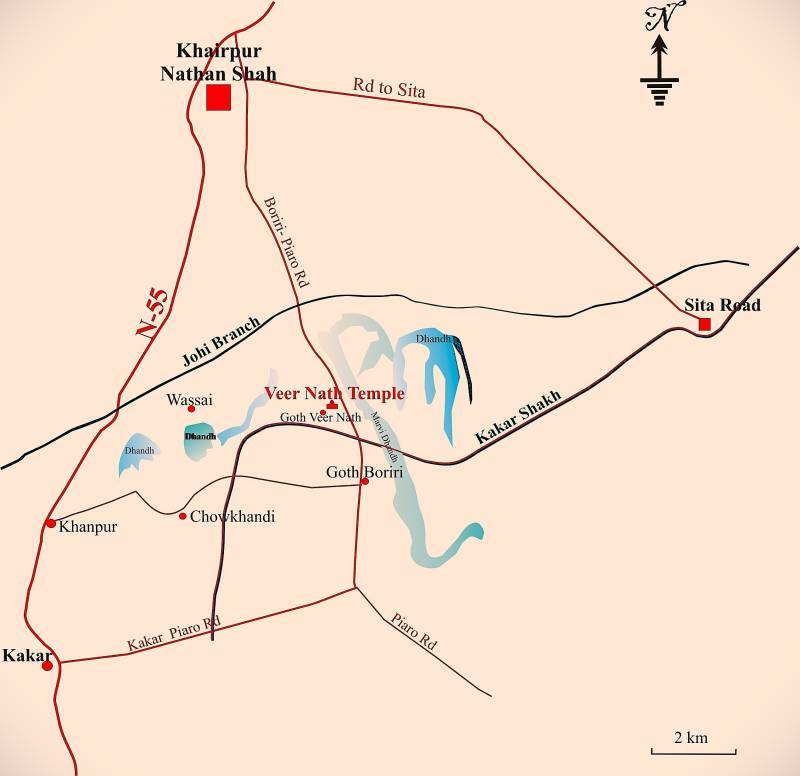
Applying this principle to the Veernath Temple, he suggests a strong correlation between its location and the physical geography of the area. He emphasises the role played by specific geomorphological and hydrological elements, namely the presence of the Marvi dhand and Waiji dhand. In addition to this, before barrages, the east-southward inclination of the entire area’s natural drainage was the Indus River. He concludes that these physical factors are vital to understand the site selection for the Veernath Temple.
No doubt, these hard factors establish that temple is an old structure, but around 1978, some local people began calling it Veeral Shah. However, the earlier name, Veernath, remains popular and is still officially in use.
Local tales speak of the grave of Veernath: from a shape-shifting tomb and a gold cauldron guarded by a cobra to the legacy of jewellery entrusted to the bavo during Partition
The original name retained and gained prominence for several important reasons: the name of the temple was Veernath, and an old settlement that is mentioned as an abandoned village in revenue records also bears the name Veernath. The Barrage Office (Dadu) record for Village Form-7A for Deh Boriri notes that the total area of the abandoned village is 18 acres and 1 ghunta.
Professor Muhammad Ibrahim Jatoi writes in his article ‘Veernath’ that after the Partition, the devotees of the Veernath temple appointed custodians Ganga Nath, Jamna Nath, and Beja Nath to carefully look after the mandir. Only one entry in the Village Form-7A of Deh Boriri matches with a similar name: bavo Gulab Nath Ganga Nath, who, according to Professor Jatoi, was made a custodian of Veernath Mandir. However, the official revenue record mentions that bavo Gulab Nath Ganga Nath also migrated to India. Until now, it is not entirely sure when the village Veernath was deserted and who owned that huge land measured 18 acres and 1 ghunta. Was it private property or the property of Veernath Mandir? Notably, I have visited the area numerous times and have never come across any signs of an abandoned settlement.
The Revenue Officer, in 1954, sanctioned the transfer of proprietary rights among the five sons of Ghulam Muhammad Arain through Order No. 364 (dated May 22, 1954). These new settlers also retained the old name, Veernath. Later, around 1950, the Sindh Government opened a Primary School with the name of Veernath. This institution was initially operated within the village. Soon, it was shifted from the village to the abandoned quarters of the bavas at Veernath. Professor Jatoi in his article has shown concern that some people with unknow motives have started to call it, Veeral Shah rather than Veernath.
Dr Haji Khan Mangi, an old student, studied Class 5 and Class 6 at the Primary Schools of Buthi and Veernath. The tuition time was carefully divided: in the morning till recess, Master Mahmood Mangi taught their class at the Government Boys Primary School Buthi, and afterwards, Master Wali Muhammad Junejo taught them at the Government Boys Primary School, Veernath. Although he and other students were officially admitted to Niaz High School Taga, near to Piaro Goth Railway Station. He told this scriber that after the closure of the school, the wooden benches, the teachers’ attendance register, and the class attendance register were kept in the rooms. He recalled that these rooms were famously known as bavan ja kamra (rooms of bavas). He remembers that the rooms were rectangular in shape, built with a pakki perrh (solid foundation) of kiln bricks. He also recalled an old well with an approximate diameter of 20 meters, but it was not in use. He continued his tuition with that arrangement for two academic years: 1968-69 and 1970-71. He endorsed the opinion of Professor Jatoi that original name of the site is Veernath not Veeral Shah.
Architecture of Veernath Mandir
Eminent archaeologists Syed Hakim Ali Shah Bukhari and Muhammad Usman Memon meticulously document this fascinating site, identifying it as a historic Shiv Temple in their authoritative work, ‘Directory of Archaeological Sites of Sindh’. The book precisely notes that the main building’s form presents a square base; however, the ingenious construction immediately utilises squinched techniques to gracefully transition the internal space into a circular form at the summit. Crucially, these squinches continuously extend from the sturdy base to the elevated roof. Consequently, the structure conspicuously lacks a traditional neck, since the elegant dome is directly constructed atop the four supporting walls. The interior floor is ornately decorated with vibrantly coloured ceramics, but many decorative pieces are noticeably diverged in sizes.
The single entrance section prominently extends outward and contains a narrow inlet—an arch-type door—devoid of wooden planks. The massive walls of this protruding entrance carefully measure four feet thick, whereas the thickness of the main building’s enclosing walls registers only two feet. Additionally, the authors vividly add that on the eastern side, a natural pond exists. To the south, directly in front of the old, rectangular rooms, stands a venerable Pipal tree and an ancient well.
Estimation of the Mandir's Age
Syed Hakim Ali Shah Bukhari and Muhammad Usman Memon forthrightly assert in their aforementioned book that the temple’s precise age remains stubbornly unverified. Nevertheless, a more reliable age estimate, significantly, can be determined by carefully evaluating the majestic Pipal tree (Ficus religiosa) situated on the east of the well and in front of bavas’ rooms.
I recently consulted a knowledgeable botanist friend, who expertly explained that while trunk circumference offers a preliminary estimate, ring-counting nonetheless provides the most authoritative date. Field scholar Amin Joyo, in his researched book, Tahqeeq Gi Bhari, meticulously measured the tree’s girth at 24 feet (731.52 centimeters). My botanist friend candidly stipulated that a Pipal tree of this grand dimension likely falls within the expansive age bracket of 290 to 730 years. However, he warned that this calculated range unfortunately remains broad because Pipal trees, while exhibiting vigorous growth when young, experience a pronounced slowdown in diameter expansion as they fully mature.
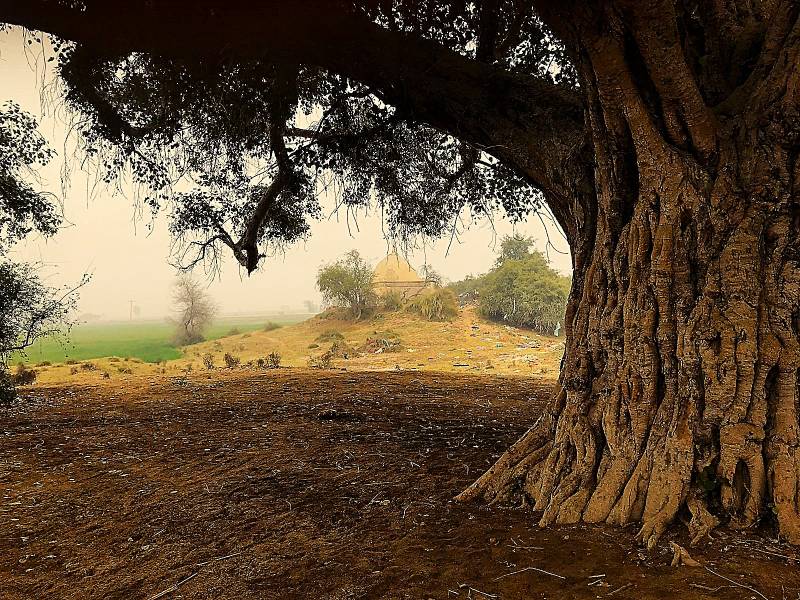
If we calculate reservedly and accept that the Pipal might have been planted around 550 years ago, then the estimated year of the plantation could be approximately 1575 AD. Intriguingly, this period directly coincides with the Samma Dynasty's dominance in Sindh, specifically during the influential reign of its last major ruler, Jam Nizamuddin II (Jam Nindo).
Dandh of Veernath
A small pond lies immediately east of Veernath Mandir. It lacks any inlet for fresh water from nearby agricultural lands. It is presumed to receive its supply from rainfall and the underground water table.
People with skin ailments visit this pond. They immerse themselves in the water or cleanse their dead skin using the pond water. After the ritual wash, they discard their old clothes or hang them on bush twigs, don new attire, and depart. Neighbouring villagers maintain a belief that the pond water possesses curative properties.
Ghulam Muhammad Arain, who, along with his family, settled in Veernath village in 1952, attested to its healing power. He asserted that he personally witnessed the pond's efficacy and ascribed it to the spirituality of Veernath. He further noted that people from Mado, Gozo, Faridabad, Sita, and Taga journeyed there. They came with copper pots or glass bottles to collect the pond water and transport it to their villages. Undoubtedly, a female, an elder, or a child in their household was afflicted with a skin disease.
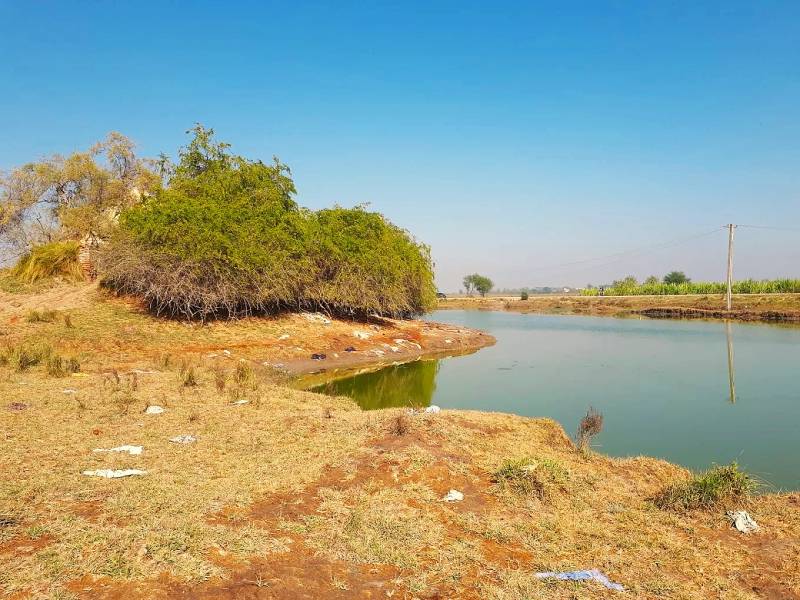
The local residents perpetuate various tales about the pond. Some have termed it the ‘Tears of Veernath.’ Others subscribe to a local myth: they believe that fairies play and bathe in the full moonlight, which has imbued the pond with magical power.
I consulted Dr Mansoor Bughio, who has a PhD in Climate Change Mitigation in Agriculture from the China Agricultural University, Beijing. I solicited his professional assessment of the Veernath pond. He stated that there is no specific research conducted on the Veernath pond. Nonetheless, studies on similar bodies of water have indicated that the perceived skin-curing effect stems from a potent combination of antimicrobial, anti-inflammatory, and exfoliating minerals. These include sulfur, silica, magnesium, and salts such as Sodium Chloride. He explained that this beneficial effect is magnified by the concentration of clay muds and the pond's unique physical environment. Crucially, he cautioned that the pond's natural minerals may only offer temporary symptom relief but do not constitute a medical cure. Therefore, professional advice from a doctor is invariably recommended.
Pilgrimage of Sonaras of Hala and Tando Adam
I met with Lalchand, a resident of Hala. I had learned that his family became involved in Veernath's affairs around the mid-1970s. I inquired how they commenced this participation. He paused to list the individuals who were active: Kesoram (Lalchand’s father), Delaram alias Bejomal (Lalchand’s brother), Lachhman (Lalchand’s father-in-law), Dasanmal (Lachhman’s brother), and Vishnumal (Lachhman’s father-in-law). After naming these key actors, he proceeded to set the context for his family's interest in Veernath. He explained that Vishnumal's family resided in India. They were ardent devotees of Babulnath Mandir in Bombay (Mumbai). Interestingly, Vishnumal lived in Tando Adam but frequently visited his family.
Perhaps in 1972 or 1973, Vishnumal travelled to Mumbai. He paid a visit to the Babulnath Mandir. During his devotional trip, a sadhu encountered him. The sadhu asked him about his origins. Vishnumal informed him he had come from Sindh to pay homage. The sadhu welcomed him, but offered this advice: “There exists a sacred ‘Nath’ temple called Veernath in Dadu district; how have you neglected it?”
Upon returning from India, Vishnumal sought information regarding the temple’s location. Through his connections with Gianchand Rajani of Radhan Station, the existence was confirmed. There was indeed a temple named Veernath. It was situated alongside the Khairpur Nathan Shah-Boriri Road. Immediately, Kesoram and Lachhman departed to pay homage to Veernath. They met with Badal Faqir and Wali Muhammad Junejo, who was a schoolteacher at the Government Boys Primary School at Veernath. Lalchand recalled that the main discussion focused upon holding shiv jo melo.
Shiv Jo Melo at Veernath
Subsequently, it became a ritual for Lalchand and his family to arrive at Veernath three or four days early to perform seva (service). They used to stay at Khairpur Nathan Shah or Radhan and typically hired a Willeys Jeep to reach Veernath. Their purpose was to perform puja and oversee the arrangement of the seva. Lalchand added that this pilgrimage proceeded smoothly until 1975. However, one year—which Lalchand places around 1976—the pilgrimage was disrupted by a shocking act of violence. He narrates that they arrived at Veernath before dawn, while the light was still dim. The driver stopped the jeep at a maidan (open ground) north of the shrine. After performing puja, they started down the staircase. At halfway down, four masked figures suddenly appeared. The assailants neither spoke a word nor demanded any object. They lashed the family with thin, lengthy, and elastic sticks for about two to three minutes. These resh and elastic sticks were cut from khabarr (the toothbrush tree) that grew on the west and north side of the temple building. Afterwards, they vanished into the nearby maize crop belonging to the Arain Zamindars of Veernath village.
Stunned and terrified, the family concealed the attack. The next day, they offered excuses to Badal Faqir and hastened back to Hala. The following year, their fear was amplified when Badal Faqir casually mentioned the murder of Photo Kori from Boriri village. Though unrelated, the news compounded their dread of the anonymous attack. Consequently, unable to muster the courage, they skipped the next seva. After a gap of one year, Badal Faqir contacted them. Lalchand guesses that this might have been the year of 1978. The same party attended the seva. Amid the event, Delaram alias Bejomal (Lalchand's brother), who was already a chronic patient of asthma, complained of troubled breathing. He endured the distress until around midnight. Then, unfortunately, he could not sustain it and died.
Lalchand became too sad to continue telling about the fateful night when his younger brother died. He paused, then recalled that repair work had started that same year, before the 1978 seva. He continued that in previous years' visits, damage from the 1973 and 1976 monsoon rains was observed. Furthermore, prevailing weather conditions accelerated the deterioration of the main structure and outer walls. Specifically, sun rays and humidity from the nearby sugarcane, rice, and wheat crops contributed to this decay. Large sheets of plaster had already peeled off the walls. The entire exterior displayed significant dilapidation. Considering this extensive damage, Keshoram and Lachhmandas hired Ustad Shafi, a mason from Hala, to execute the most critical repairs. Shafi completed the renovation around 1978.
Stories About the Grave of Veernath
I am from Boriri village. In my childhood, I listened too many stories about the Veernath tomb. I have recalled three tales that remain vivid in my memory. One story I heard at the shop of Mama Pandhi of village Boriri. His actual name was Pandhi, but we children affectionately called him Mama. Therefore, his shop was renowned as Mama Pandhi jo dukan (shop of Mama Pandhi). Two regular activities defined his shop: the navtan game and free smoking from the hukko/chillim (a traditional pipe). The villagers, who were haris (tenant farmers) of ZA Channa, always exchanged some intriguing stories there.
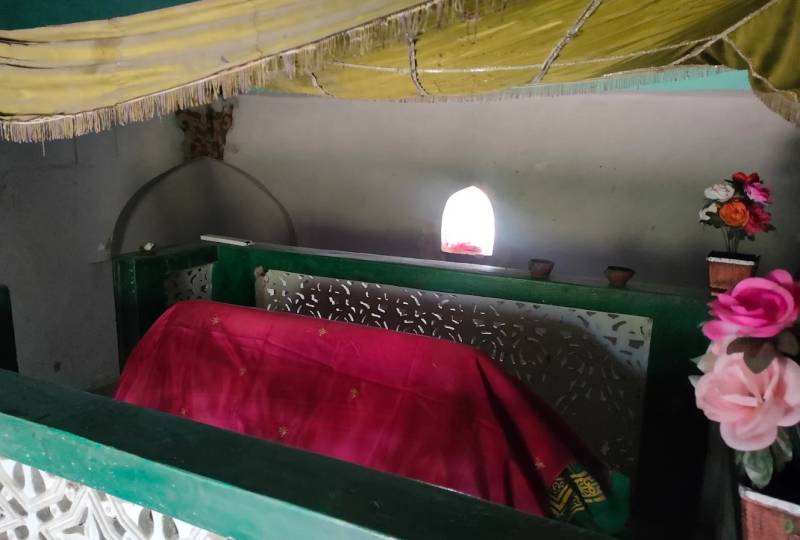
One day, Allah Dino Junejo shared a particular anecdote he had learned. He claimed that the original grave of Veernath was square-shaped, like samadhi of a sadhu. However, one day, its length had extended, took a rectangular shape. He speculated that, perhaps, this entombment was actually the grave of a Muslim saint, and by the will of God, it took the shape of a traditional Muslim grave.
A story about a cauldron of gold buried beneath the Veernath grave was widely believed by many residents in Boriri and adjacent settlements. This tale frequently reemerged as a common topic following the annual wheat harvest. The tale claimed that a gold cauldron was interred beneath the grave. A black cobra reportedly rested on the lid, acting as its guardian. Furthermore, the cauldron was said to shift its location and only remain in a fixed position during a specific phase of the full moon. The chief proponent of this legend was Muhammad Chakarkoti Soomro, who hailed from a village in Johi taluka. He would regularly arrive with his team after the harvesting period of wheat crop. One of his companions, known as parrho, a term for a person who had memorised religious texts, was believed to possess the knowledge to divine the precise location of the cauldron. Consequently, in the 1980s, Muhammad Chakarkotai with the assistance of parrho made a few attempts to dig around the mound of Veernath and rooms of bavas, but nothing was ever found.
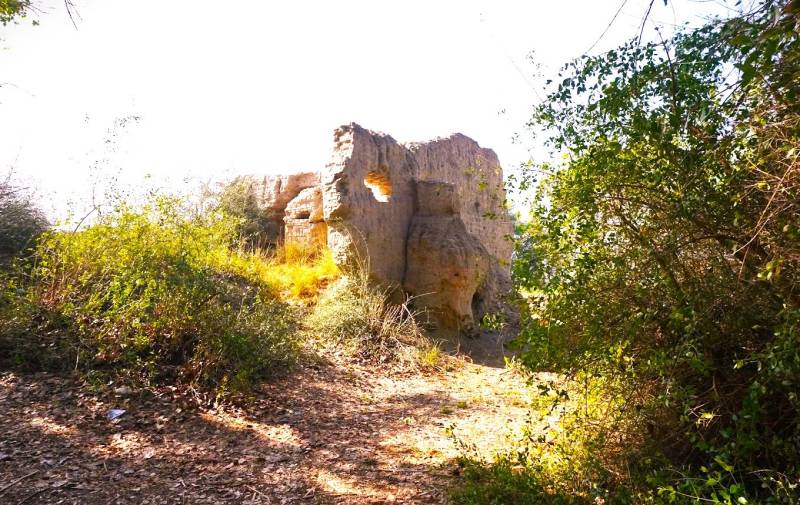
Much later, in 1999, I visited Veernath with Gulsher Mangi. We found the grave had been excavated, and its blocks lay scattered. Subsequently, in 2024, Tariq Imam Junejo and I revisited Veernath and observed the grave in the same condition. However, this year, Comrade Nisar Ahmed Junejo informed me that some devotees has repaired it.
Another popular story circulated about the grave concerning the Partition of India in 1947. The narrative asserted that all Hindus, particularly the residents of nearby villages, gathered at Veernath and entrusted their silver and gold ornaments to the bavo of Veernath. This handover of jewellery occurred with the explicit understanding that they would return to reclaim their valuables once the political situation normalised.
This account was always embellished with exaggerated descriptions of the sizes and beauty of jewellery that was decorative with pearls and rubies. The jewellery most praised included: tiko (forehead ornament), duhri (a large necklace with layers of gold beads), paso (side hair ornament), nath (large nose ring), phuli (nose stud), kanphul (ear flower), jhumka (bell-shaped earring), wala (earrings), kangan (bangles), bazuband (armlet), mundi (ring), and pazaib (anklet). Interestingly, this gossip and longing to possess these beautiful gold items was common among older women. Their conversation would often transition to recollecting their childhood days, remembering how they played with their Hindu friends and were cared for by their friends’ mothers and aunts, even receiving sweets during diyari.
Legends of an Encounter: Shah Latif and Veernath
During a recent field visit, I engaged in a fascinating conversation with Lalchand Sonaro in Hala. He clearly explained the venerable Adinath tradition, asserting that Lord Shiva himself is revered as the original Nath (Master/Lord). He further elaborated that the iconic yogis, Gorakhnath and Matsyendranath, are regarded as the primary founders and propagators of this ancient tradition. Specifically, Gorakhnath is widely credited with systematically formalizing its profound philosophy and rigorous practices. The fundamental term nath itself signifies ‘Lord’ or ‘Master,’ and all initiated followers subsequently receive the honorific suffix nath appended to their names.
Lalchand vividly recounted several compelling stories linking Gorakh Nath to Veernath. He specifically mentioned a common anecdote concerning Gorakh Nath’s alleged visit to Veernath during his extensive journey to Karoonjhar and Khirthar. He then transitioned, telling me that he had distinctly heard from local Faqirs and wandering Jogis that Shah Abdul Latif Bhittai had once met with Veernath. When I expressed my immediate skepticism and carefully repeated his surprising statement, “Shah Latif visited Veernath,” Lalchand candidly raised his finger and responded in Sindhi: “Iho bhudho aa, wadek khuda khe khabar, sach chhahe?” (I have heard this; God knows better what the truth is).
Having previously encountered similar apocryphal anecdotes regarding Shah Abdul Latif’s supposed reverence for Kali Mata, the Nath tradition, and Siva within the oral tradition of Jogis. I instantly took this new claim as simply a folk story. It was clearly an unbelievable narrative that he had just overheard. However, this unverified account highlights the rich intermingling of Sufi and Yogi traditions in Sindh’s cultural landscape.
Veernath’s multifaceted existence demands our immediate action, not mere curiosity! This sacred site is far more than an aging temple; it is a tangible bridge to Sindh’s spiritual heritage and a testament to the syncretic culture that once flourished here. We must embrace the responsibility: let us resolve to prioritize this historical and cultural landmark through immediate preservation, thorough academic documentation, and sensitive restoration to passionately safeguard its enduring legacy for future generations.