

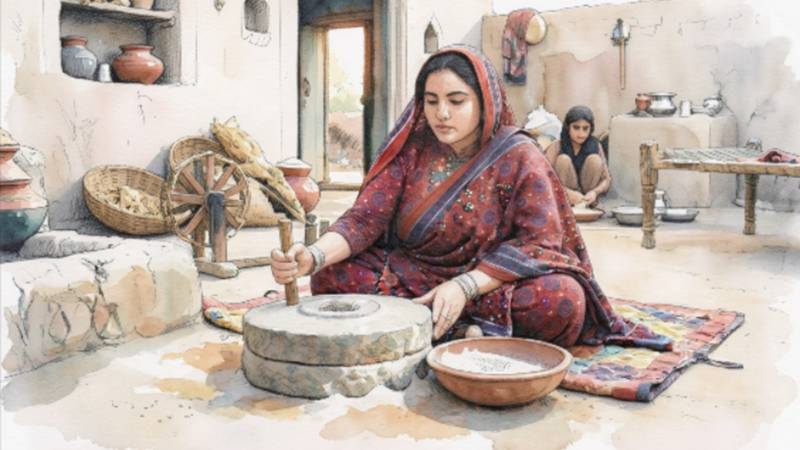
The history of the Sindhi press finds its roots in the high standards set by the pre-Partition journal Sarsvati (1890). When the dust of 1947 finally settled, Hyderabad city in Sindh reclaimed its place on the literary map with the birth of Aftab. Guided by the veteran scholar Ghulam Mohammad Grami and backed by the Muslim Adabi Society, this landmark publication became the first to speak to a new nation, carrying forward a centuries-old tradition of Sindhi scholarship.
Historical resources indicate that between 1947 and the 1980s, a total of 122 registered magazines and 131 book serials were produced. These publications emerged from Badin, Bheendo Sharif, Dadu, Hala (old), Garhi Mori, Hala (new), Jamshoro (University of Sindh, Hostels/Colony), Karachi, Khairpur Mirs, Kandhkot, Larkana, Nawabshah, Ratodero, Shahdadkot, Shikarpur, Sukkur, Tando Muhammad Khan, Tango Bago, and Pir Jo Goth. The focus of these publications shifted over time. During the 1950s and 1960s, the texts remained largely focused on literary themes and social reform. However, in the 1970s, politics began to merge with literature. By the 1980s, political discourse occupied most of the pages of magazines and periodicals.
Tehreek began its publication as a monthly magazine in October 1972. Issued from Hyderabad under the name 'Tehreek Publication', its inaugural issue defined its mission. The editors noted that the magazine relied on the financial support of local patriots and friends of the people. Consequently, Tehreek rejected profit-making motives and high cover prices. The editorial staff pledged to ignore the interests of landlords and "public enemies." Instead, the content championed the poor, the middle class, and revolutionaries. The magazine highlighted public-oriented national politics and sought to accelerate the Sindhi struggle to match global movements. Furthermore, Tehreek supported progressive trends in Sindhi art and literature while opposing conservative traditions. Finally, the editors actively invited public criticism and suggestions.
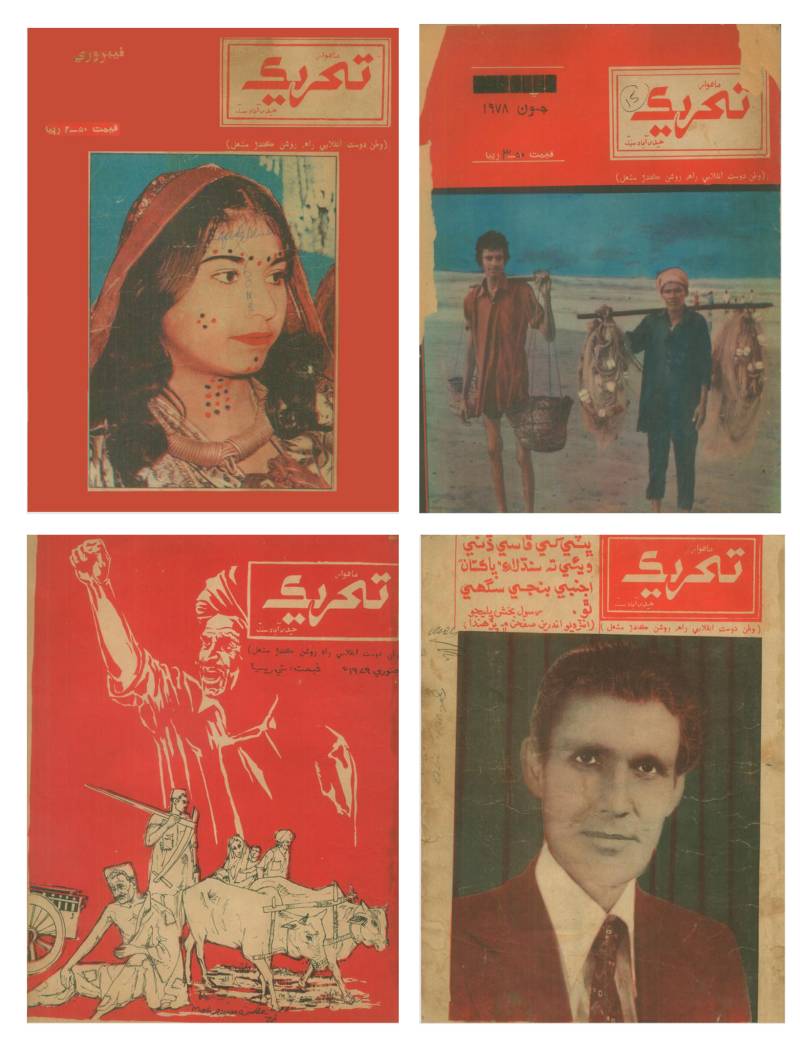
As editors, Qasim Pathar and Alam Shah were instrumental in establishing Tehreek as a cornerstone of political discourse. While the magazine was an organ of the Sindhi Awami Tehreek and bound to the party line, it prioritised the broader issues of Sindh. Throughout the 1970s and 1980s, its editorials highlighted the Sindhi people’s grievances. These writings fostered a deep political consciousness, helping the people understand and advocate for their own rights.
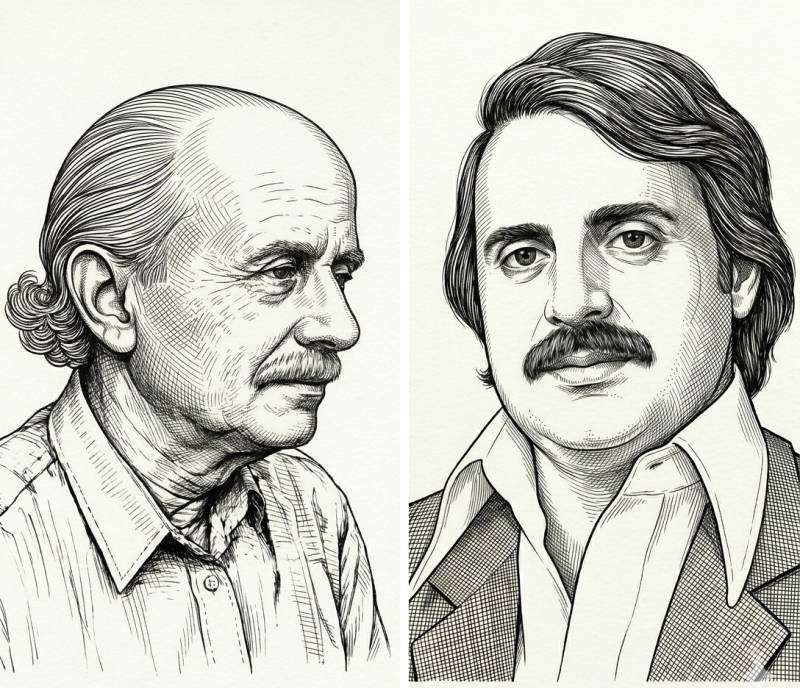
Qasim Pathar served as the magazine’s first editor. Born in 1937 in Kathore, he later moved with his family to Mirpur Bathoro, where he worked as a tailoring apprentice. In 1956, he met with Iben-e-Hayat Panhwar and joined national politics. He also worked with Salam Bukhari, and in 1968, he joined the Awami Tehreek. He continued to edit Tehreek until his arrest. Much later, he left the Awami Tehreek to found the Sindh National Congress, which he eventually merged into the Jeay Sindh Mahaz, remaining active there until his death on the 18th of December 2007 because of cardiac arrest.
The publication challenged elite historical narratives, demanding a new focus on peasant rebellions and inter-provincial solidarity to expose the betrayals of the local landed class
Following the arrest of Qasim Pathar in 1975, Alam Shah assumed the editorship of Tehreek. Shah was born in 1942 in Matiari’s Essa Pota paro. Shah joined the Sindhi Awami Tehreek in 1966. By 1969, he served as a Central Committee member and President of the Thatta district. His editorial role carried significant risks. In 1979, the martial law authorities targeted the magazine and arrested Shah. He was confined for two years, split between Hyderabad’s Central Jail and a military camp.
Shah’s political leadership expanded over the following decades. In 1986, he was elected President of the Awami National Party in Sindh. He later returned to leadership roles within the Awami Tehreek, serving as General Secretary in 1988 and Senior Vice President in 2009. Today, he lives in Qasimabad, Hyderabad, and remains active with his political comrades.
Archival issues of Tehreek reveal that Khalid Sindhi and Panah Jagar Sindhi served as essential members of the editorial team. Although the martial law of General Zia-ul-Haq banned the magazine in 1978, it re-emerged in 1979, demonstrating significant resilience. Throughout its publication history, the magazine utilised several Hyderabad-based printers, including Perfect Printers, Firdous Press, Suheni Press, and Sardar Press.
Recognising the importance of the editorials, Rasool Bakhsh Palijo compiled them into an anthology in 1974 titled dhararran ja dhak (Strikes of the Shepherds).
This article presents a content analysis of the editorials published from 1972 to 1979. The selection adheres to two primary criteria: first, the inclusion of two editorials per year to ensure chronological consistency; and second, a focus on pieces with enduring relevance to contemporary Sindhi, federal, and regional politics. This analytical framework highlights the historical continuity of the political discourse championed by the magazine.
The following analysis offers a structured synthesis of editorials, organised by year and month to reflect the historical progression of that period. These headers and narratives represent an analytical interpretation of the magazine's content rather than the original titles or verbatim text published by the editors.
1972: The Dissolution of Provincial Trust and the Rise of Resistance
The editorials document a transformative period of disillusionment, illustrating a time when the initial promise of provincial governance was replaced by a sense of systemic betrayal. Within the observations of October, the analytical lens reveals a provincial government perceived not as a guardian of its constituency, but as an active conspirator against its own voters. In the aftermath of language-based riots across Karachi, Hyderabad, and other urban centres, the content suggests that the police and bureaucracy facilitated disorder rather than maintaining peace. This institutional hostility was most visible in the targeted transfer of Sindhi officials, a move interpreted as a calculated purge intended to dismantle provincial autonomy and leave the population vulnerable.
A primary antagonist in this narrative is the wadero (landlord) class. Historical parallels are drawn between these contemporary feudal lords and the authoritarian legacy of figures such as Ayub Khuhro. The analysis suggests that these elites sacrificed local interests to secure the favour of the federal government. This ‘compromised policy’ allegedly emboldened criminal elements, leading to a direct assault on the Sindhi intelligentsia and middle class. The tragic murder of Abdul Razaque Soomro at Hyderabad Technical College and the bombing of a political gathering at Muslim College are framed as deliberate strikes against the collective dignity and intellectual future of the province.
The perspective shifted towards a more radical, global outlook in December, adopting a defiant tone regarding the establishment’s hesitation to recognise the newly formed nation of Bangladesh. By characterising the central authorities as ‘bandits and butchers’, the narrative argues that historical justice is a prize won through the sacrifices of the oppressed, rather than a gift granted by those who presided over the plunder of East Pakistan. This critique served as a stern warning that liberation is seized through struggle, not bestowed by an exploiter.
Domestically, the period saw an intensification of state repression through the 'Gunda Act' and the weaponisation of legal codes to silence dissent. Mass arrests in Larkana and the imprisonment of prominent figures such as GM Sayed, Hafeez Qureshi, and Ghulam Qadir Palijo are highlighted as efforts to terrorise political activists. The year concluded with a transition from grievance to mobilisation, issuing a "wake-up call" to the masses. Asserting that the government had disregarded the hopes of the people, the analysis concludes that the only viable path forward was one of self-defence and a unified, uncompromising political struggle for liberation.
1973: Strategic Realism and the Defence of Sindh’s Sovereignty
The editorial landscape of this year reveals a movement transitioning from raw defiance to a more calculated, strategic form of nationalism. Within the observations of March, the narrative centres on a fierce intellectual assault against the Constitution of 1973. Through a critique of the emerging legal order, the magazine rejected the constitutional document of the time as a vehicle for centralisation. The editor argued that any framework failing to recognise the national rights of distinct provinces constituted a violation of democratic principles. From this perspective, the constitution was viewed not as a social contract, but as a tool of exploitation designed to suppress the self-determination of smaller federating units.
This defence of provincial rights in the early months of the year extended into a complex narrative regarding the Sindh-Balochistan alliance. While the magazine expressed deep solidarity with the Baloch people suffering under the Pakistan Peoples’ Party’s repression, it simultaneously sounded a warning against perceived betrayals from within. The editor identified factions that allegedly compromised the Sindhi-Baloch fraternity for local political gain. The editorial critiqued certain organisational launches, such as specific student federations and publications; the magazine sought to protect what it termed the 'natural alliance' between Sindh and Balochistan while attempting to purge it of perceived conspiracies or territorial claims.
Under the dark shadow of martial law, the magazine celebrated the immense sacrifices of journalists and activists fighting the systemic and brutal evictions of rural labourers
The narrative reached a peak in November with a warning over what the editors described as a multi-staged strategy to detach Karachi from Sindh. The staff described a camouflage of political demands designed to isolate the city, tracing a path from the demand for a separate province to the declaration of Karachi as a "free port". These moves were interpreted as a plan to surrender Sindhi sovereignty to global powers and were framed as the ultimate injustice, a systematic dispossession of the Sindhi people from their own economic and historical heartland.
The year concluded with a profound call for strategic introspection. In the final assessments of the year, the editors demonstrated political realism by explicitly differentiating the Sindhi situation from the historical precedent of Bangladesh. They argued that because the geography of Sindh and its representation in the civil bureaucracy and military differed significantly from East Pakistan, the movement had to move beyond ‘heroism and irrationality’. This era of reporting thus defined the struggle not just through the willingness to sacrifice, but through the urgent necessity of developing sophisticated, practical techniques for the pursuit of liberation and autonomy.
1974: The Shift Towards Agrarian Mobilisation and Class-Based Struggle
The selected editorials of 1974 shifted focus towards class-based nationalism. The magazine attacked feudal structures, urging the youth to move beyond student protests towards an agrarian struggle.
Within the assessments of March, the narrative provided a sobering reassessment of the student-led movements that had previously defined the political landscape. Through a retrospective look at the ‘4th March’ legacy, the magazine argued that while student activism set new standards of sacrifice, it remained inherently temporary and reactionary. The editors posited that students, divided by social strata and lacking a unified political strategy, could not serve as the primary engine of revolution. Instead, they asserted that only a struggle led by a peasant-labourer alliance possessed the revolutionary capacity required for the genuine liberation of the people. This shift urged the youth to move beyond isolated academic protests and align themselves with the rural working class.
This call for agrarian mobilisation became even more urgent in June with a fierce critique of the widespread dispossession of the peasantry. The narrative attacked the provincial government’s failure to protect the haris (peasants), exposing official ‘revolutionary’ claims regarding land reforms as hollow deceptions. The analysis noted that despite government rhetoric, the zamindars (landlords) maintained actual possession of the land, utilising state bureaucracy and ‘fake’ Hari Committees to keep the peasants in a state of bondage.
The reporting in June further broadened its critique to include disconnected urban leftist leaders, accused of ignoring the national dimension of the hari's exploitation while focusing on international ideological trends. For the magazine, the rights of the peasant were not only an important issue but a cornerstone of Sindh’s economic resources and national survival. The editorial concluded with a powerful call to action: to expel parasitic elements such as corrupt officials and the landed elites and return the soil to the tiller.
1975: Inter-Provincial Solidarity and the History of the Oppressed
The editorials of February and March represent a significant intellectual shift towards class-based historiography and a cross-provincial call for democratic rights. During this period, the magazine moved beyond immediate political grievances to challenge the foundations of Sindh’s history and social hierarchy.
Within the observations of February, the narrative addressed the assassination of Aftab Sherpao in the NWFP (Khyber Pakhtunkhwa) to articulate a vision of inter-provincial solidarity. By equating the suffering of political victims in Bengal, Punjab, and Balochistan with those in Sindh, the magazine positioned the local struggle within a broader national movement against state repression. The editors demanded an impartial inquiry and the release of political prisoners, framing state-sponsored violence as a collective trauma for the ‘poor people’ across the entire federation.
The narrative took a radical, academic turn in March with a scathing critique of the international seminar, Sindh Through the Centuries. While acknowledging the event as a modest achievement, the editorial attacked it for being superficial and one-sided. The analysis accused traditional historians of acting as brokers for the wadero (landlord) class, erasing the history of the oppressed masses while praising foreign exploiters. This reporting served as a manifesto for a new, anti-feudal history that highlighted the betrayals committed by local landlords who collaborated with outsiders to facilitate land grabs. The narrative concluded with a call for a fundamental reorientation of Sindhi identity through an investigation into the ‘history of the oppressed’. The editors specifically named marginalised groups like the Meds, Meerbahars, and Kholis, demanding a historical focus on peasant rebellions and guerrilla warfare rather than the glorified chronicles of the elite. By framing the local landed class as a ‘fifth column’ for outsider interests, the magazine sought to spark an intellectual revolution, redefining the Sindhi nation through the enduring resistance of its rural workers.
1976: The Revolutionary Manifesto and the Call for Unity
The editorials of October and December reflect a profound culmination of a political journey, transitioning from specific policy critiques to a universal, revolutionary manifesto. Under the direction of the period, the magazine moved towards a broader demand for justice that linked local issues with the wider anti-imperialist struggle of the subcontinent.
Within the observations of October, the magazine utilised the release of veteran Pashtun leader Khan Abdul Ghaffar Khan as a catalyst to demand a nationwide amnesty for all political prisoners. By framing Ghaffar Khan as a symbol of national liberation, the editors argued that the pursuit of civil liberties in Sindh was inseparable from the wider movement for justice across the federation. The narrative highlighted a stagnant state of legal affairs where high-profile figures were freed while countless peasants, students, and writers, like Rasool Bakhsh Palijo and GM Sayed, remained incarcerated. This demand for emancipation was rooted in the rule of law, framing political imprisonment as a collective trauma for the poor.
The rhetoric shifted from legal appeals to an explosive, ideological manifesto in December titled ‘Unite Amongst Yourselves!’ This text served as a visceral call to arms, addressing those living in a state of oppression. The editorial identified wadera-shahi (feudalism) and kamora-shahi (bureaucracy) as the twin pillars of local tyranny, depicting them as forces utilising repressive tactics to maintain a system of bondage. In a landmark move, the manifesto recognised the double burden faced by women, signalling a progressive worldview that viewed gender justice as a cornerstone of national liberation.
This period defined the struggle as an urgent quest for a fundamental upheaval, urging marginalised groups to set aside ideological nuances in favour of a shared goal. The year concluded with a vision of a magnificent social order where honour and dignity would be birthrights, warning that without a unified revolution, the lives of the common people would remain wasted within the structures of a fascist state.
1977: The Collapse of Democracy and the Revolutionary Prophecy
The editorials of April and October–November (a double issue treated as a single magazine) capture a period of intense disillusionment, documenting the transition from civilian democratic hopes to the onset of a new era of authoritarianism. Under the leadership of the period, the publication provided a scathing analysis of the betrayal of the masses, shifting from a call for accelerated democratic rights to a revolutionary post-mortem of the feudal-political alliance.
Within the observations of April, the narrative centres on an urgent plea to speed up the struggle for democratic rights. The editors framed this period as a critical junction where the province, already scarred by years of exploitation, faced a fresh wave of state repression. The magazine exposed official slogans of prosperity as ‘cruel deceptions’, arguing that the government practised authoritarianism through the imposition of Section 144 and mass arrests. A central demand was the restoration of civil liberties and an immediate halt to the Hyderabad Conspiracy Case, which was viewed as a judicial tool to suppress national rights. The editors argued for a federation based on genuine federalism, where local natural resources would serve the people rather than being plundered under the guise of national unity.
The tone shifted from protest to a profound ‘revolutionary prophecy’ in the reporting for October–November, following significant political upheaval and military intervention. The narrative offered a bitter critique of the 'National Unity' movement, arguing it yielded nothing for the common man. Instead of promised emancipation, the analysis suggests the public was trapped between the ‘highwaymen’ of the bureaucracy (kamora-shahi) and entrenched wadera-shahi (feudal lords). The magazine described the dominant political leadership as having undergone a ‘complete transformation’, merging with the landed elite to form a predatory force.
The imagery used in late 1977 was visceral and dark, depicting a society gripped by a monstrous hunger for exploitation where people were looted of their homes and livelihoods. The authors utilised metaphors of a blind patronage system that excluded labourers while enriching political brokers. Despite this grim reality, the year’s narrative concluded with a defiant vision of historical inevitability. Asserting that the ‘political death’ of the capitalist and feudal classes was certain, the magazine envisioned the rise of an awakened consciousness among the masses that would finally dismantle the mansions and prisons of the elite to build a magnificent social order.
1978: The Pen Versus the Sword and the Systematic Evictions of Haris
The editorials record a harrowing chapter of the martial law authorities’ repression and feudal oppression under the shadow of martial law. Under the leadership and overall policy of the Sindhi Awami Tehreek, the magazine focused on structural analysis and the defence of the peasantry and the intelligentsia.
Within the observations of February, the narrative centres on systemic evictions in rural Sindh. The reporting exposes an ‘unholy alliance’ between waderas (landlords) and the bureaucracy that had turned the dispossession of haris (peasants) into a lucrative business. The magazine provided a robust defence of the peasantry as the backbone of the economy, arguing that 80% of the population was being treated as ‘traitors’ in their own land. By framing the peasant issue as the most fundamental national and democratic concern, the publication sought to bridge the gap between rural labour and urban political workers. This month also marks a dark turn in ethnic relations, recording ‘racial prejudice and hatred’ directed against Sindhis in urban centres like Karachi and Hyderabad, where state-sponsored terror was allegedly used to crush peaceful dissent.
The focus shifts to the frontline of intellectual resistance in the reporting for May–June. The magazine celebrates a ‘face-to-face confrontation between the pen and the sword’, documenting a period where journalists were subjected to lashes, imprisonment, and the gallows. This golden chapter of sacrifice is framed as a struggle for the freedom of the mind and conscience, utilising powerful historical and religious imagery to compare truth-seeking journalists to the sacrifice of Husayn against tyranny. This period also records a widespread surge in the arrests of national activists and student workers, such as Fazil Rahu and Sher Khan Lund, whose imprisonment was denounced.
The narrative concludes with a defiant warning to the authorities. The editors argue that the people of Pakistan, having previously rejected the dictatorships of Ayub and Yahya, would not tolerate the current state of fascism for long. The call to action is explicit: the restoration of democratic rights, the immediate holding of elections, and the return of the military to its professional duties. Despite state attempts to silence the magazine through legal cases against its publisher, Sardar Press, the publication remained a resolute voice for provincial autonomy and class struggle, saluting those who provided light in what it described as the ‘pitch darkness’ of the era.
The following analysis synthesises the 1979 editorials, illustrating a year defined by global revolutionary fervour and a deepening domestic crisis within Pakistan. These narratives are structured as an analytical interpretation based on the reporting of those months rather than original verbatim titles.
1979: Global Revolutions and the Domestic Breaking Point
The editorial narrative of this year presents a world and a nation at a definitive breaking point. In the reporting for December–January (a double issue, treated as a single issue), the magazine connects the local Sindhi struggle to a global tapestry of anti-imperialist revolutions. The victory in Iran is viewed as proof that even the most entrenched forts of oppression can be demolished by a disciplined public. This period is characterised by a defiant call for the people of Sindh to unite and organise. The publication situates the local movement alongside armed struggles in Palestine and Latin America, arguing that social revolution requires the struggle of oppressed classes to merge with the struggle of oppressed nations for provincial rights.
The narrative shifts towards a grave domestic crisis surrounding the death sentence of Zulfikar Ali Bhutto in the March issue. The editorial warns that executing Bhutto would push the country towards a point of no return. It exposes the bias of the Pakistan National Alliance ministers, who allegedly bypassed the rule of law by pronouncing their own verdicts before the Supreme Court could act. The magazine likens the public's silence to an outwardly quiet volcano, suggesting that ignoring global appeals for mercy would lead to a catastrophic eruption capable of dissolving the remaining credibility of the state.
Institutional suffocation across Sindh remains a primary focus of the publication’s critique throughout the year. The magazine condemns the closure of Sindh University and medical colleges, labelling it a sheer injustice designed to destroy the future of the nation's children. It demands the immediate release of students and political activists, framing these arrests as a symptom of a terminal illness within the unelected regime. The narrative describes the country as a prison where any peasant or worker fighting for fundamental rights is trapped by the Sindh Crimes Control Act.
Agrarian tyranny and 'systematic evictions' highlight an unholy alliance between feudalism and the police. In the editorial 'Stop Forced Evictions!', the magazine describes how peasants are uprooted from ancestral lands while being slandered by landlords. The publication asserts that being unfaithful to the hari, who constitutes eighty percent of the population, is the ultimate act of betrayal against the country. Despite the legal harassment of the Sardar Press and the exorbitant bails demanded for patriotic literature, the magazine remains a steadfast voice of resistance. The year concludes with a comprehensive demand for the restoration of democratic rights and the immediate release of leaders like Rasool Bakhsh Palijo and Jam Saqi, framing the Sindhi struggle as a movement moving significantly closer to its revolutionary goal.
Let me end the article with a concluding note that the editorials of Tehreek remain clear and courageous even fifty-four years later. These writings exposed the alliance between feudal lords and exploitative stakeholders. They highlighted the systematic exploitation of peasants and the theft of local resources. The editors rejected the lack of provincial power in the Constitution of 1973. The editorials linked the Sindhis' struggle to global movements for justice. The publication called for unity between workers across different provinces. These texts focused on the history of the masses rather than the elite. Even under martial law, the magazine refused to stay silent. These editorials remain relevant to the current democratic crisis. The writings remind us that autonomy and resource rights are still missing. They taught that liberation comes only through organised struggle. This message carries great urgency for all of Pakistan.