

War is hell. Only the dead have seen the end of it.
This war in the Middle East has killed thousands, including senior political and military leaders and high-ranking nuclear scientists of Iran. The dead included over 300 children, as reported by UNICEF. Some 180 young children perished in the first specific and intense airstrikes of the USA and Israel on a school in Minab. For them, the war was over the moment they were hit and killed. Iran was subjected to grief, pain, loss and infrastructural destruction.
Earlier, the 12-day war with Iran in June last year wreaked havoc in terms of human lives. However, the Persian nation stood like an unshakeable and unbreakable rock, demonstrating an indomitable national resolve for survival. This took the world by surprise and drove its adversaries to frustration and impotent anger.
The war shook the USA out of delusion and confronted it with the bitter reality that it was no longer the gun-wielding superpower masquerading as the global policeman, bullying, intimidating and forcing small nations to follow its dictates. The world has moved beyond the balance of power that underscored the Cold War, or the subsequent unilateralism after the collapse of the Soviet Union.
This new era is underpinned by evolving multilateralism with new geopolitical and geoeconomic dynamics. The USA leadership was shocked to see its close allies in Europe and the Middle East distance themselves from the war. The enormous reputational damage, in terms of military power and political outreach, suffered by the USA as a global leader weighs heavily in any review of the regional and global consequences of the war.
Prime Minister Netanyahu chose the war to implement his longstanding dream of a Greater Israel controlling the territories and economic resources of Arab lands from the Levant to the Euphrates. He boasted on 1 March 2026, “This coalition of forces allows us to do what I have yearned to do for 40 years: smite the terror regime hip and thigh. This is what I promised – and this is what we shall do.” He did not know he was destined for a different outcome.
He was met with the biggest shock of his life. The intense airstrikes of over 40 days did not humble Iran, despite the criminal assassination of its senior political and military leadership. Rather, Iran caused extensive damage to Israel, targeting its urban centres, military bases and economic assets, rendering its modern defence system ineffective. There was no relent in the Iranian missile and drone attacks. The Jewish nation, though steadfast, came to experience the horrors of war for the first time.
The bullying, bellicosity, belligerence and vituperation of Donald Trump could frustrate mediators’ efforts to rearrange the stage for direct engagement
The failure of the initial intense airstrikes to subdue Iran was a watershed moment in the sense that President Donald Trump lost his appetite for the war, which he realised was not going his way and had driven a wide wedge between Washington DC and its NATO and Middle Eastern allies.
The closure of the Strait of Hormuz, threatening the imminent collapse of the global economy, and President Trump’s falling popularity, triggering massive anti-war demonstrations in over 3,000 cities and towns, created the spectre of a humiliating loss in the midterm elections and a tremendous boost to Iran’s regional power.
He showed signs of desperation for an off-ramp to exit the war. In the subsequent four weeks, he forgot all his war objectives and remained obsessed with the reopening of the Strait of Hormuz, as countries and shipping companies began negotiating with Iran for the safe passage of their ships, ready to pay tolls. His adviser told him that Iran would earn over 70 billion dollars in this way.
The likelihood of Iran emerging as the naval controller of this chokepoint, and as the new superpower of the region, was deeply unsettling for the USA-Israel coalition. This added to the frustration and impotent anger of the USA leadership, driving it to profanity-laden threats.
This background shows that the war was waged to remove Iran as the last barrier in Netanyahu’s trajectory towards expansionism, destroying the clerical regime, dividing and disintegrating the country, and reducing it to a client state.
The war failed to achieve any of the coalition’s political, economic and military objectives and headed towards a stalemate, with Iran retaining the capacity for asymmetrical defensive attacks on Israel and USA military bases in Gulf states for months, if not years.
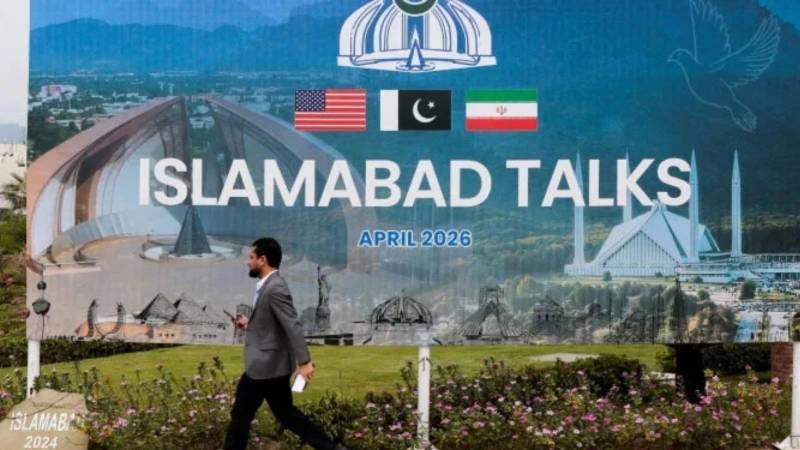
The USA leadership, by this time, had fully realised the futility of the war. This forced it to agree to a ceasefire and talks based on the Iranian ten points. This served as a face-saving measure, facilitated by Pakistani leadership.
Iran has all along been willing to engage in dialogue and pursue peace. The conclusion of the Joint Comprehensive Plan of Action with the Obama administration stands as historic testimony to its responsiveness to dialogue.
Iran responded to diplomatic overtures not out of weakness. The military confrontations of June last year, combined with the current 40-day intense airstrikes, demonstrated its resolve and capacity to defend itself.
The backchannel talks have not stalled. While leaving Islamabad, J.D. Vance spoke of suggestions left on the table for the other party to consider. Similarly, the Iranian Speaker, Mr Ghalibaf, questioned whether the Americans would seriously bridge the trust deficit.
The Iranian Foreign Minister, Abbas Araghchi, stated that they were only inches away from an Islamabad Memorandum of Understanding when the other side changed its goalposts. President Donald Trump claims that a deal was imminent but was stalled by differences over the nuclear issue.
The USA leadership has neither the time nor the appetite for restarting the war. It is now more preoccupied with the estrangement of allies in Europe, the likelihood of defeat in the midterm elections, the potential loss of a majority in Congress and the Senate, and the resulting political consequences.
The ceasefire, though fragile, is likely to hold unless the backchannel talks collapse. The bullying, bellicosity, belligerence and vituperation of Donald Trump could frustrate mediators’ efforts to rearrange the stage for direct engagement. There remain reservations regarding the timing and venue. Pakistan should continue its constructive efforts.
Every challenge presents opportunities. This war also carries dividends for Iran and Pakistan. The manner in which Iran fought its defensive war, foiling the aggression of two powerful states, has persuaded regional countries that Iran is a power to reckon with. Iran is now positioned to promote a new political, economic and strategic equilibrium in the region.
Gone are the days of the dazzling power of Israel as the security provider in the Middle East under the shadow of the Abraham Accords. Instead, Pakistan has emerged as an alternative security provider in the Gulf states, particularly after signing a defence pact with Saudi Arabia. This augurs well for the country.