

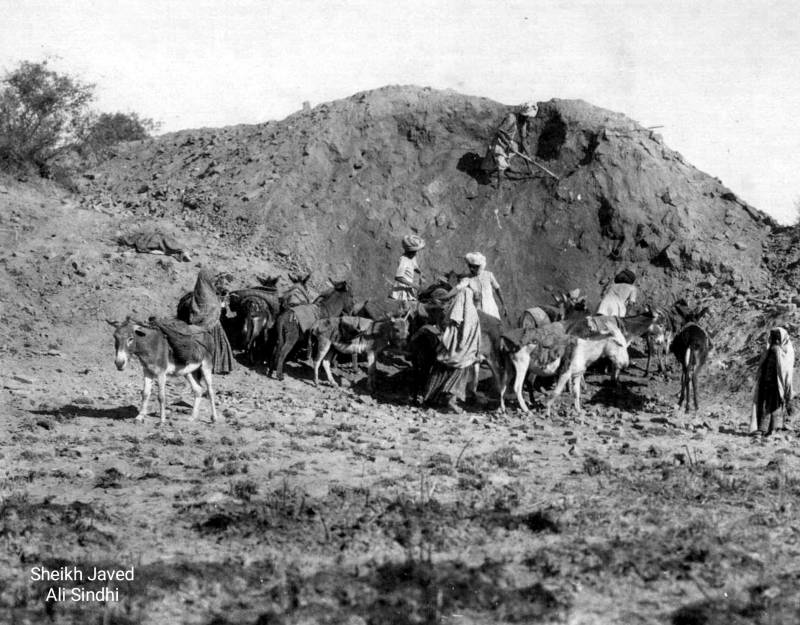
Pandit Madho Sarup Vats was born on the 12th of April 1896 in the Punjab Province of British India. He belonged to the Gaur Brahmins (also spelled Gor, Gour, Gaud, or Gauda), a community of Brahmins in India. They live north of the Vindhyas, in West Central India. Very little is known about his family background or early childhood. Madho Sarup Vats received his higher education from the University of the Punjab, Lahore. He earned his MA in Sanskrit around 1918, with expertise in ancient Indian languages and scripts. He started his career in the Patna Museum, State of Bihar, where he prepared the impressions of the inscriptions found in Bihar and Orissa.
In March 1920, Vats received a Sanskrit Scholarship from the Archaeological Survey of India, which was extended until 1923. It supported his training in epigraphy and related fields. He also deciphered 'The Unpublished Votive Inscription from the Chaitya Cave at Karle, Maharashtra' in 1923. These inscriptions, dating to the early centuries CE, provided insights into Buddhist devotional practices and were meticulously edited and published by MS Vats in Epigraphia Indica (Volume XVIII, 1925–26), where he analysed their palaeography, language, and historical context. Later on, from the 22nd of March 1937, he was appointed as the Deputy Director General up to 1948. In 1949, he became the Joint Director General of Archaeology in India, and finally, the Director of Archaeology in 1950.
Madho Sarup Vats was elected a Fellow of the Royal Asiatic Society of Great Britain and Ireland. In 1953, he attended the International Council of Museums in Italy. During this tour, he also visited France, Holland, and the UK. He was also nominated a Member of the Central Advisory Board of Archaeology. Madho Sarup Vats also remained an Honorary Numismatist to the Punjab Government for working on Hindu Period Coins. Madho Sarup Vats passed away on the 7th of December 1955.
When Mr Rakhaldas Banerji proceeded on medical leave in the summer of 1923, the Assistant Superintendent of the Western Circle, GC Chandra, was the man appointed to officiate for Banerji. In place of Chandra, Vats was asked in early July 1923 to officiate as Assistant Superintendent. The VS Area was first explored by Madho Sarup Vats (MS Vats) in 1923–24. He sank a 10-foot trial trench in the centre of the mound running east and west, and a second trench at right angles to the first running north and south. In 1924–25, similar trial excavations were carried out by Mr KN Dikshit at the eastern and western extremities of the mound.
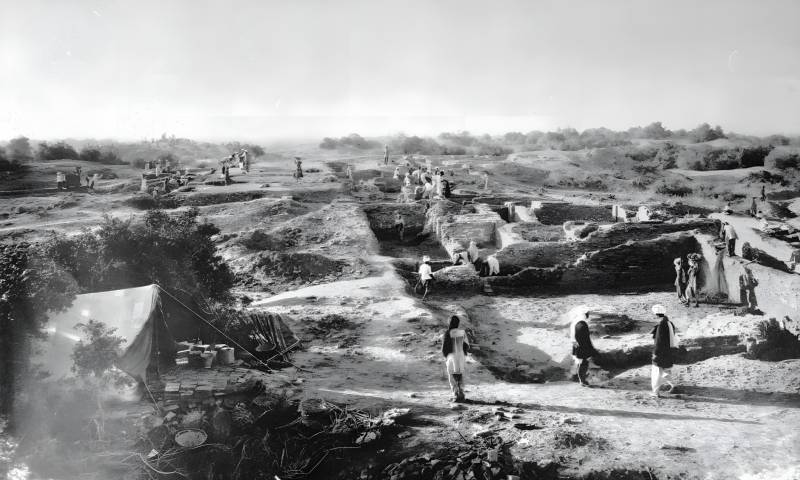
Extended-scale excavations were again carried out in this area by Mr MS Vats in 1925–26, when Sir John Marshall was himself in charge of the Mohenjo-Daro excavations. Rai Bahadur Daya Ram Sahni started excavating the Mohenjo-Daro Mounds from the 17th of November 1926 to the 8th of March 1927. He worked in both the HR and VS areas during this operation. He remained at Mohenjo-Daro up to the close of May 1927. Sahni discovered many seals and tablets, a lump of Mica, and a small quantity of charred date seeds from the VS Area at Mohenjo-Daro. In 1933–34, Madho Sarup Vats explored the granary and cemetery regions at Harappa. He provided his and Rai Bahadur Daya Ram Sahni’s (1920–21) opinions in a two-volume book, Excavations at Harappa, which was published by the Archaeological Survey of India in 1940.
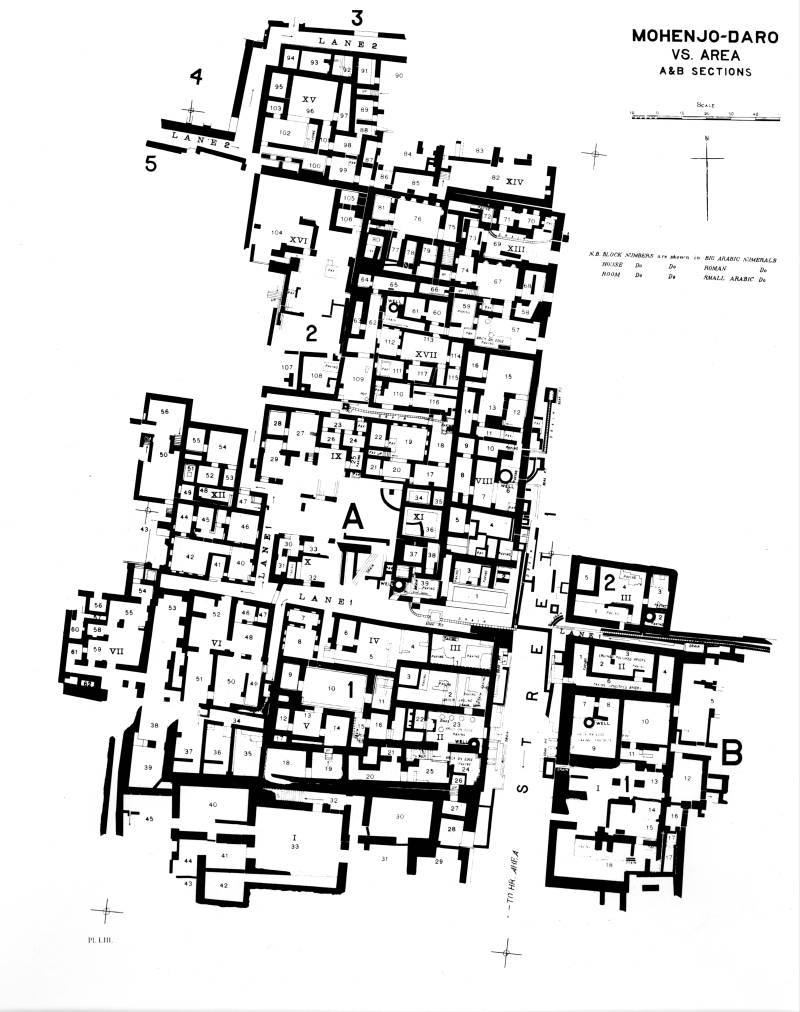
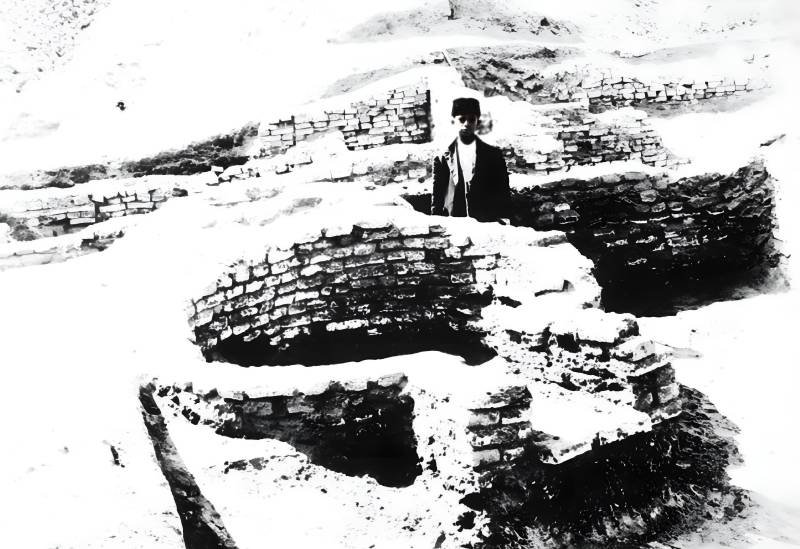
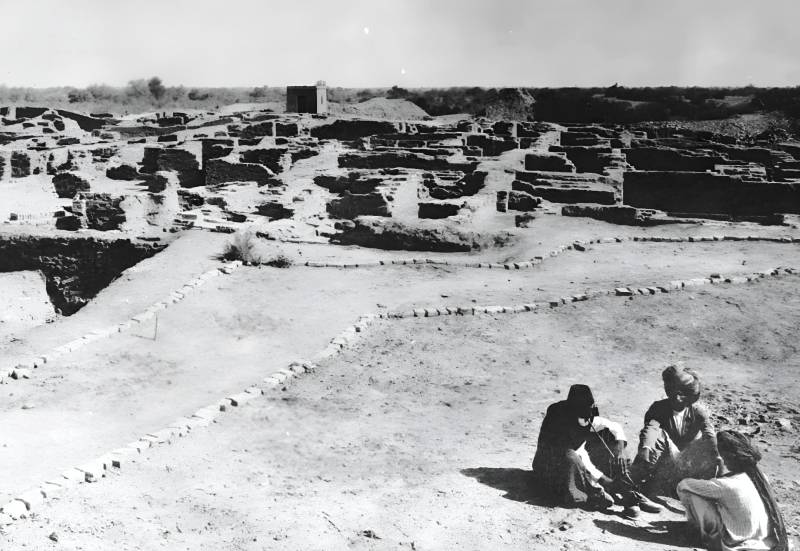
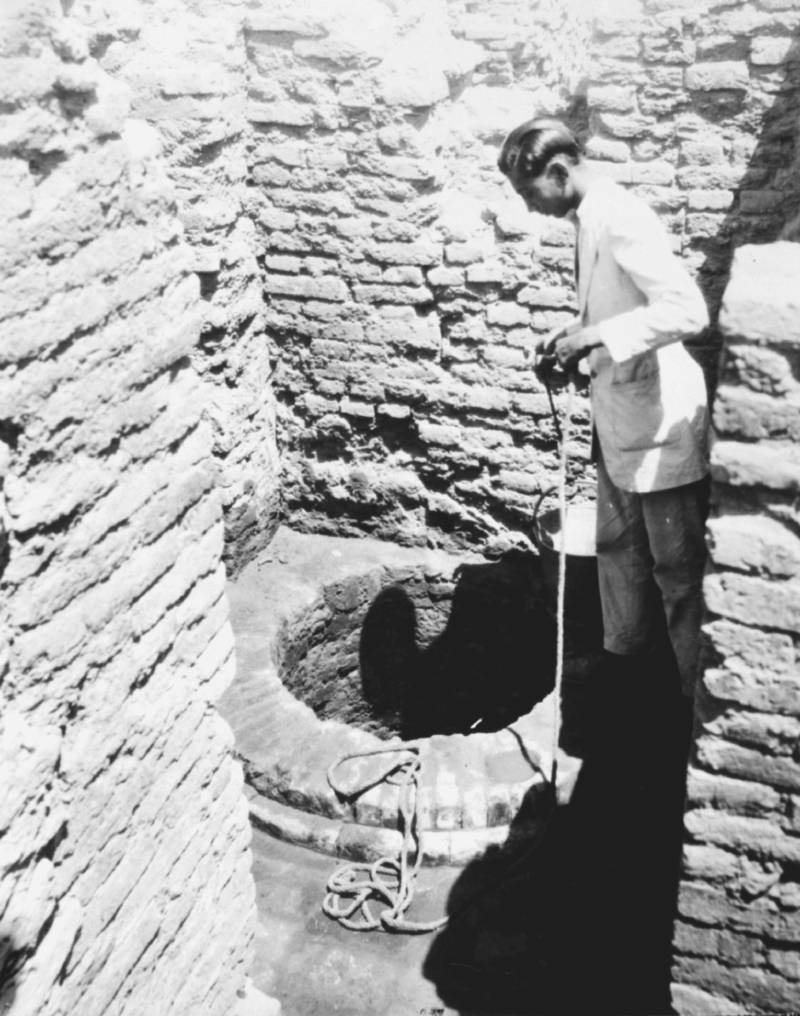
The VS Area is situated on a 7-metre-high plateau. It extends about 150 m east-west and 170 m north-south. According to Dr Michael Jansen (2004), a surface of 13,000 m² was excavated in the VS Area. The outline of the area is L-shaped. VS Area, A Section contains seven blocks separated by five lanes. Around 38 houses were identified with fine wells. VS Area, Section B has only two houses which contain heavy and thin walls. The important architectural buildings and structures of the VS Area are the houses, rooms, courtyards, corridors, kitchens, store-rooms, wells, bathrooms, guard rooms, apartments, drains, pavements, and staircases. There were also windows, ventilators, brick door sockets, tall rectangular niches, houses of an intermediate period, a thin wall to give privacy to the inmates, a corbelled arch, three ante-chambers, a flight of steps, water chutes, and niches etc.
VS Area: A Section
VS Area, Section A has five blocks which have many house buildings, such as House I, House II, House III, House IV, House V, House VI, and House VII.
There are 62 rooms in Block 1. House I is an important building of the Intermediate Period. It measures 144 feet from east to west. In Rooms 28 and 30, a lump of mica (VS 3528) was found between 7 and 10 feet below the surface.
Dates were a crucial dietary component for the people of the Indus Valley Civilisation thousands of years ago, with charred seeds providing crucial botanical evidence for their cultivation and dietary habits
There were series of deep niches in the inner walls of Rooms 7 and 8. From Room 10 were recovered a copper chisel broken into two pieces, a cubical stone weight, several beads of faience, a fragmentary chessman-shaped linga of faience, and a broken terracotta dog etc.
An oblong seal, a chert knife, terracotta sealing with a rhinoceros and pictograms, a copper seal, and other antiquities were also recovered during the excavation. A terracotta female figurine from Room 31, and a broken copper chisel, were also recovered from Room 43. A rectangular copper seal was discovered from the middle of Room 32, 7 feet below the surface. Rooms 30, 33, and 40 are of considerable size. A vase with a pointed base (height 2 feet 3 inches), along with a large collection of interesting pottery vases, was excavated from Rooms 35, 36, and 37.
These objects were found 6 feet below the surface. Room 37 yielded two bottle-shaped bulbous-bodied vessels of fine clay with red slip, two fragments of flat dishes with low rims, a large bowl blackened round the edge, a pot-bellied terracotta figurine (VS 3633), four chert knives, a copper rod broken into three pieces, a quantity of decayed date seeds (VS 3627), four terracotta bangles, 10 miniature vases of fine clay, three jug-shaped vases, three miniature vases found within a large jar, and two animal teeth etc. Other antiquities discovered were a curious barrel-shaped hollow pottery object made from sandy clay, a round copper pin or nail with a very fine point, three shell dice with various patterns, and a grey steatite seal with a boss with pictographs and a unicorn. A black stone bead was found in Room 39, and a copper hook was found in Room 44.
Mica is a mineral found from the earth in the shape of crystals. The people of the Indus Valley Civilization extensively used this mineral for thousands of years in traditional medicine, cosmetics, and art. Mica was also used for ornamental, religious, and ritualistic purposes in ancient times. A lump of Mica was found 7 to 10 feet below the surface from Room 30, House I, Block 1, VS Area, Section A, in 1925–26.
Discovery of Decayed Date Seeds
Dates were a crucial dietary component for the people of the Indus Valley Civilization thousands of years ago. Some badly carbonized date seeds were excavated at well-known Indus Valley sites like Harappa, Mohenjo-Daro, and Nausharo. These date seeds were also unearthed in the VS Area (House I, Chamber 37 and near Lane 1) during the 1925–26 excavations at Mohenjo-Daro. These charred seeds provided crucial botanical evidence for the cultivation and dietary habits of the Indus people. The date palm tree was a common motif on Harappan painted pottery and potsherds. This motif is also frequently found on the walls of Kalhora and Talpur period tombs along with other scenes.
Up to the British conquest of Sindh in 1843, villages in Sindh were beautifully decorated with groves of date palm trees. The groves of date palm trees provided shade and fruits to the caravans passing through Sindh, Balochistan, and the Punjab.
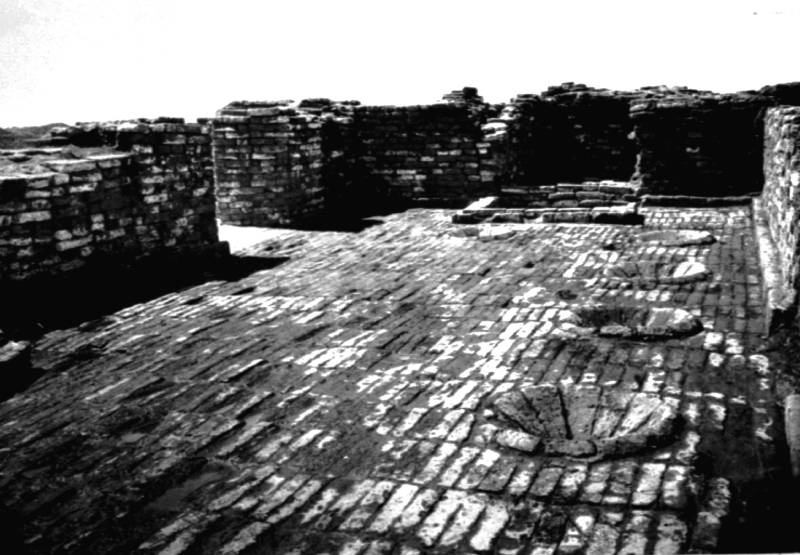
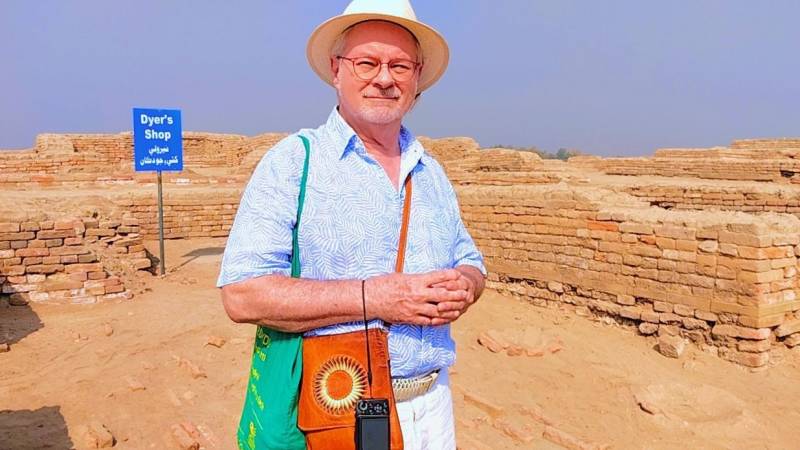
A Dyer’s Workshop or a Public Restaurant in Block 2?
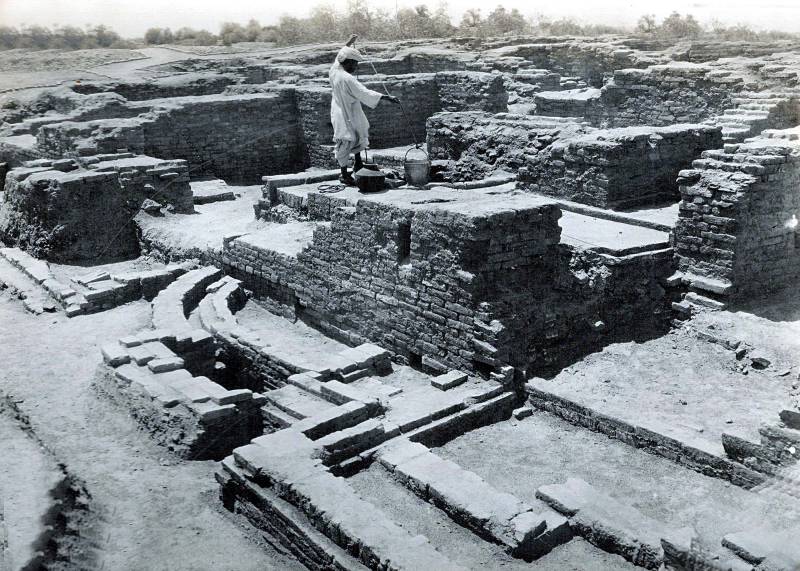
The most important building of the VS Area is known as the Dyer’s Workshop. This building is located in VS Area, Section A, Block 1, House II, Room No. 23. Rai Bahadur Daya Ram Sahni gave the following description regarding House II and its Room 23 at Mohenjo-Daro:
“No. II.-Houses Nos. II to V would appear originally to have all belonged to one and the same house which was partitioned off, as shown in the plan, in the second or first period. The door sills of these structures are some 11’ higher than those in House I. No. II has in its middle a large oblong chamber (23) communicating with a large room (2) on the north and another (25) on the south. The main entrance was from Street I into room 23 and a flight of steps has survived in front of it. All these rooms were neatly paved with brick on edge and the paving is in perfect preservation in room 23, which is also provided with five conical shaped basins lined with wedge-shaped bricks, apparently meant to hold the pointed bases of large storage jars. In the south-east corner of this room is what might prove to be a very narrow well. A staircase led up to the top of the house from room 25, and a small narrow chamber (21) behind it, which was covered with charcoal and ashes, may have been a kitchen. The upper part of a seal with a line of pictographs (VS 3359) was found in room 22, 4’ 6 ‘below the surface and a short-horned bull seal (VS 3503) in room 23, 6’ below the surface.” (See: Annual Report of the Archaeological Survey of India 1926-27, edited by Sir John Marshall, Calcutta 1930, Page 87)
Sir Mortimer Wheeler wrote in The Indus Civilization (London) 1953:
"Of another kind is a building fronting upon one of the main streets, 'First Street', in VS Area (Mohenjo-Daro). Its outside dimensions are 87 by 64.5 feet, but within that considerable framework are included not only residential quarters around the courtyard but also, towards the street, industrial or commercial premises of some note: in particular, three rooms neatly paved with bricks on edge, one room with five conical pits or holes sunk in the floor and lined with wedge-shaped bricks, apparently to hold the pointed bases of large jars. In a corner of the room is a well, and nearby is the usual brick staircase. The premises may have been a public restaurant, but it is alternatively possible that the implied jars were, rather, dyeing vats." (51)
According to Dr Jonathan Mark Kenoyer:
"This room in VS area was made with bricks set on edge to create a watertight floor. A small well was located in the southeast corner (top right) and circular brick depressions were set into the floor, presumably to hold pottery vessels. The early excavators suggested that the room might have been a dyer's workshop”.
While early excavators hypothesized it was a dyer's workshop, modern archaeologists debate its purpose, suggesting it could have alternatively been a public restaurant or a communal cooking area.
Buildings of Houses III, IV, V, VI, and VII
House III had only two rooms, of which the one in front (1) was paved with burnt brick. A chute in the thickness of the east wall discharged itself into a rectangular cesspool in Street I. A square unicorn seal and an ivory cube were recovered from this house 4 feet below the surface. A copper spearhead was found in Room 1. The House IV structure was mostly excavated in 1925–26. It yielded no important objects.
In the inner wall of Room 7 are five niches, and seven in those of Room 8. House V comprises 11 rooms (9 to 19). The entrance was from the eastern side of a narrow lane. Room 10 was an open court, and the area represented by Rooms 18 and 19 was also possibly left open to the sky. House VI was presumably open on three sides and had an entrance from the north. The rooms of the house were commodious and airy. House VII was built in a very poor style. A tiny stone weight was recovered.
Earthenware Jar with Funerary Goblets, Vessels, and Other Objects Inside
Rai Bahadur Daya Ram Sahni discovered an earthenware jar (VS 3454) along with six goblets with funerary vessels and other objects from Block 1, Section A, House V, Room 15. These terracotta goblets with pointed bases contained an oblong seal with five pictographs (VS 3454), a vertebrae of a fish, a well-shaped miniature vase, a shell palette for mixing colour, a round ball (weight), and a broken terracotta animal.
Mr Hargreaves recovered another bowl which was similar in shape to the silver bowl discovered at Nal, Balochistan. Room 15 has pavement and a drain which seems to be a bath. A terracotta wheel was also discovered from the same room. Sir John Marshall discussed this jar on page 217.
A Stone Sphinx and a Pottery Jar Recovered from Lane 3
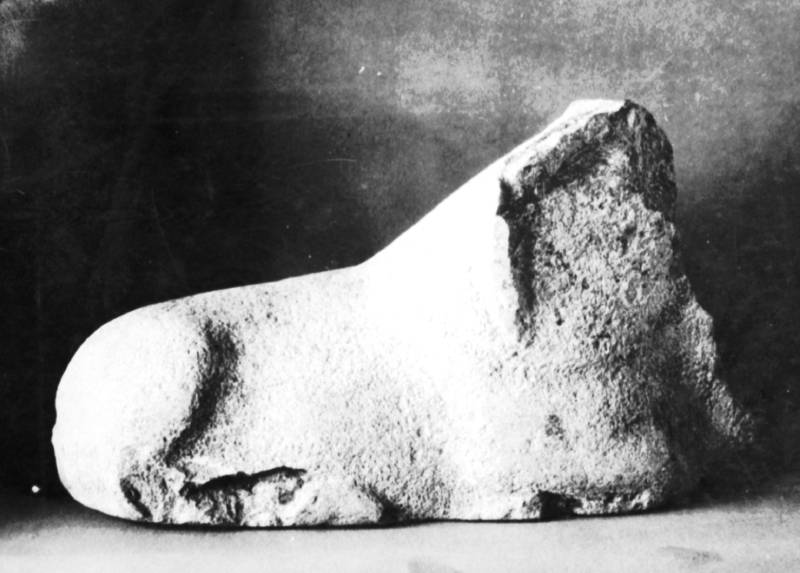
VS Area, Section A, Block 3, House XIX, Lane 3: A jar in situ in Lane 3 to the south of House XIX was excavated which contained funerary objects. Sir John Marshall (1931) writes about a stone sphinx or theriomorphic stone sculpture that:
“Mention may also be made of a large pottery jar, 3 ft. 3 in. high which was lying in lane 3 beneath the mouth of the drain issuing from the south wall of Room 25. It contained four pottery goblets with pointed basses, a tall cylindrical vase of the same material, a round faience bead, fragments of a coarse limestone platter, terracotta bangles, etc which were lying on the top of a mass of bricks near the bottom of the jar, some charcoal and a few animal bones. Close by the jar was lying a limestone sphinx like recumbent figure carved in the round (VS 116). The face of the figure has disappointed, and it is not possible to determine its precise character.” (223)
The word theriomorphic means having the form of a wild beast or animal. It combines the Greek language words thērion (wild beast) and morphē (form or shape). People use this word most often in art, religion, and mythology to describe gods, spirits, or creatures shown with animal bodies or animal features. The people of Mohenjo-Daro probably believed in theriomorphism.
A Screen Wall to Hide Inmates being seen from the Street
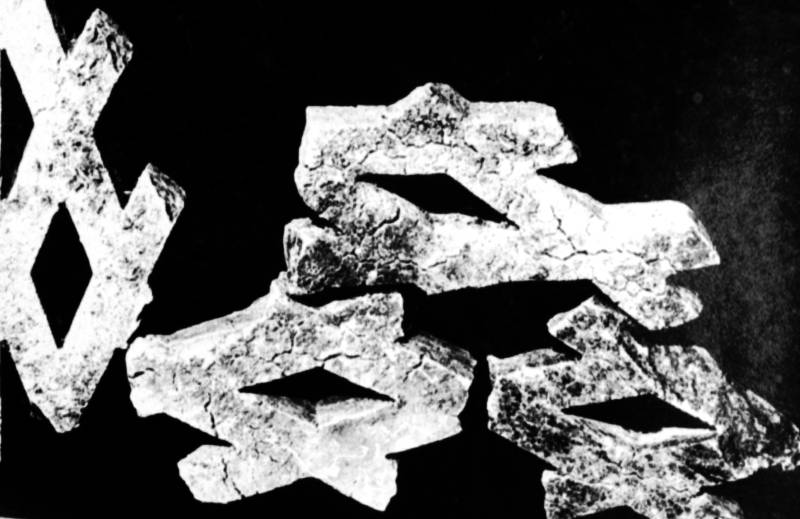
There is a screen wall in House XVIII, Block 3, Section A in the VS Area at Mohenjo-Daro. House XVIII is 90 feet long and 27 feet wide. It appears to be rectangular in shape. The house comprises 12 rooms along with a bath, pavements, and stairs. It has three entrances from Lane 4 in the west to enter the house court and Rooms 4 to 9 respectively. Screen walls referred to the architectural elements that provided a fascinating glimpse into the advanced aesthetic and functional planning of the Indus Valley Civilization. Archaeologists discovered alabaster and marble lattices with complex geometric patterns from Mohenjo-Daro City.
Sir John Marshall writes that:
” The thin screen wall behind the entrance leading into the courtyard may have been meant to prevent the inmates being seen from the street or may have served to support the back wall of a verandah, while the little brick paved chamber in the S.W. corner of Room 4 did duty as a bath.” (Page 222).
On the floor of Hall 76, several fragments of alabaster trellis or lattice-work (VS 2766) were found which probably came from the top of ventilators or windows high up in the south wall. According to Sir John Marshall:
“Perforated screens with geometric pattern have been met with before in Kushan and Gupta buildings. It is now patent that perforated lattices were known and employed in the Indus Valley in the prehistoric period.” (Page 219)
The function of the window and ventilator grills was to let in light and air while maintaining privacy. These lattices were made from different materials, for example, wood, stone, reeds, and matting etc. Such lattices were found in the houses of wealthy rulers, governors, priests, and merchants, set into brick walls in major Indus Valley sites like Mohenjo-Daro and Harappa. Lattices in houses were also used to keep away animals and birds such as cats, dogs, monkeys, and crows etc. Dr Jonathan Mark Kenoyer believes that Mughal Era marble screen designs were probably influenced by such early geometric patterns.
Vase of Clay Showing Ibexes
Mentioning this beautiful vase of clay discovered from House XVIII, Sir John Marshall writes:
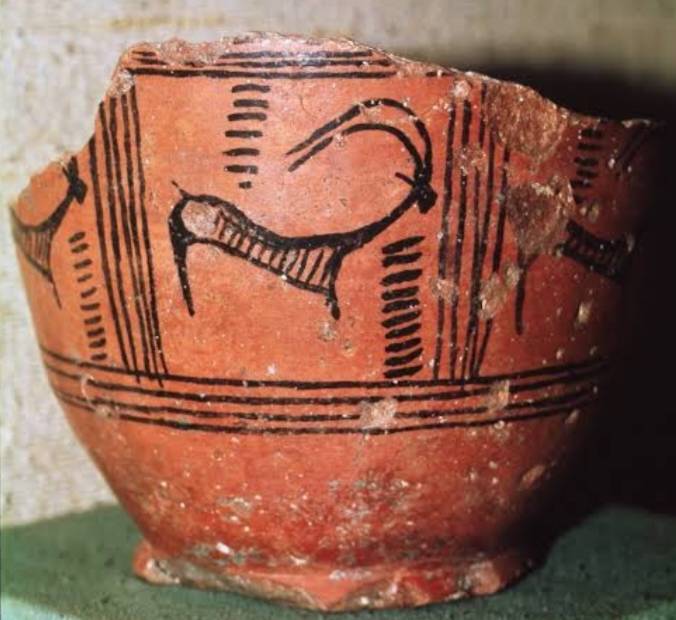
“Among the minor antiquities secured from this structure, the most noteworthy were a copper bangle (VS 779), the lower half of a flat-bottomed vase of fine red clay painted with a row of seven ibexes with long horns reaching back over their bodies (VS 1107, Pl. XCII, 20), a square seal of steatite (VS 505, Pl.CIX, 243) with a line of pictographs above and a unicorn in the lower field, and three oblong copper seals”. (Page 222)
Again under the title of Animal Designs, Sir John Marshall writes that:
“Ibex. 20. This design is painted in black on a light red slip on a broken jar found 4 feet below the surface of the ground. The ware is light red in colour, and its clay has a little lime mixed with it. It is very thin for the size of the jar, a very unusual feature in the Mohenjo-Daro pottery. The animal represented is obviously an ibex and the two series of marks without doubt represent bushes or trees. A file of similar animals is a very common motif in primitive Mesopotamian art. The ibex must have been well known to the inhabitants of Mohenjo-Daro, as it is still found in the Kirthar Range some 50 miles to the west of that place. See also Pl. LXXXIX, 1, from which the drawing is taken.” (322)
Mr EJH Mackay (1927–31) discovered a bronze statue figurine of an ibex (DK6593) which was worn by the owner as an amulet.
I myself believe that the Indus people, including the Amri and Mohenjo-Daro dwellers, liked the flora and fauna of their country; that’s why they have depicted such animals, birds, reptiles, plants, and trees on their house pottery and vases. It shows their love and affection for their animals, birds, and the land. The Sindh ibex or Turkmen wild goat is commonly found in Pakistan and Iran. According to the surveys of 2019 and 2022, the Sindh ibex population is found in Khuzdar, Lasbela, and Hingol National Park. The total population of Sindh ibex has risen to 20,000 by the year 2022. The average weight of an adult Sindh ibex (Capra aegagrus blythi) ranges from 45 kg to 90 kg (100 to 200 pounds).
Seal with Device of Half Man, Half Bull of Babylonian Appearance
Sir John Marshall writes: ”Many seals were excavated from different parts of VS Area." Describing these seals unearthed from House XVIII, Sir John Marshall writes as follows:
"One of these (VS 888) was lying on the threshold to Room 7, 5 feet below the surface. It depicts an elephant feeding at a trough on one face and a line of pictographs on the other (cf. with Pl. CXVII, 11).
The seal with the device of a half man, half bull of Babylonian appearance was found in House XV. Sir John Marshall writes:
“The only find of note was a seal (VS 1574, Pl. CXI, 357) resting a few inches below the broken pavement of Room 91. Three of the corners of the seal are broken but the main part of device is fortunately entire. It portrays a horned and tailed creature attacking a mythical horned tiger. The hybrid creature, half man, half bull, has a strikingly Babylonian appearance and calls to mind the hero Eabani wrestling with wild beasts.” (Page 320).
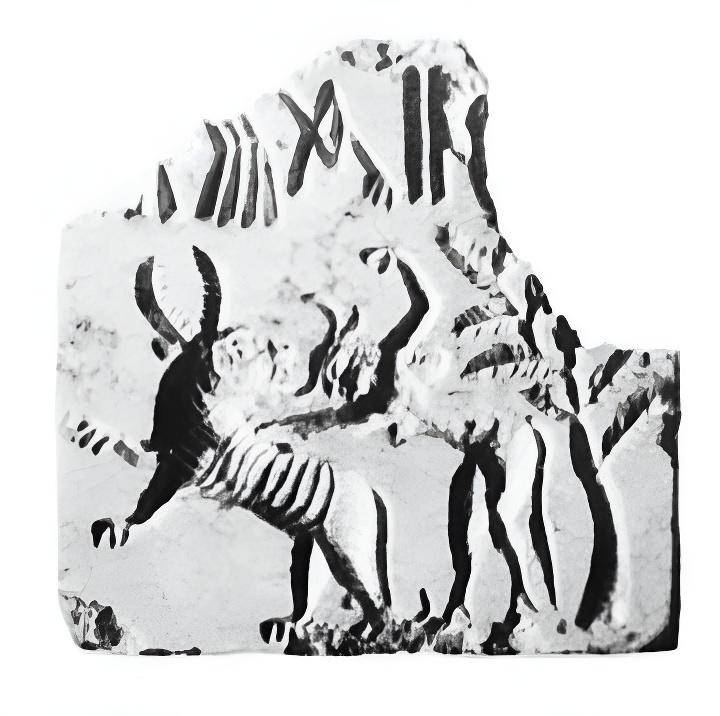
Mr EJH Mackay believes that it is a horned male figure like the Babylonian Gilgamesh. This type of description can be found in LW King’s (1869–1919) A History of Sumer and Akkad, 1910, p. 77. Many vases with human-headed bulls had been excavated at Tello in Ancient Mesopotamia. Such examples were used for religious and decoration purposes in the Sumerian society. These examples are closely identified with the story of Eabani and Gilgamesh. Eabani strived with lions and other animals. A convex panel of shell from the side of a cup, engraved with a scene representing a lion attacking a bull, was found from Mesopotamia, which dates back to the Early Sumerian Period (6500–4100 BC).
The Epic of Gilgamesh is an epic from Ancient Mesopotamia which was written around 2100 to 1200 BC. This epic consists of 12 incomplete Akkadian language tablets found in the 1850s by Hormuzd Rassam at Nineveh (Iraq) in the Library of the Assyrian King Ashurbanipal (668–627 BC). The epic story gives details of Gilgamesh's tyranny, his friendship with Enkidu, and his quest for eternal life. The discovery of this seal from Mohenjo-Daro shows that legends resembling the Epic of Gilgamesh were common here.
Copper Tablet with the Figure Reminiscent of a Babylonian Deity
The second copper tablet (VS 1406, Pl. CXVII, 16), which was discovered in Room 1, is engraved with a figure reminiscent of a Babylonian deity. It is horned and holds a bow in the right hand, and is clothed in a costume suggestive of leaves. The third copper seal (VS 1736) was found in Room 2.”
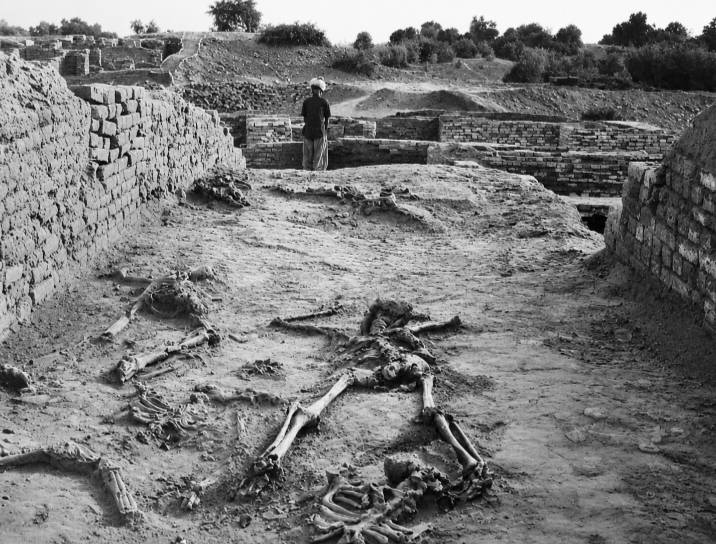
Discovery of Six Skeletons from Lane 4
A 130-foot-long Broad Street with lanes had cesspits, sinks or cesspools, and receptacles for rubbish. In 1925–26, a second group of human skeletons was discovered from a death site, probably due to a tragedy or an accident. This group included the remains of six individuals found lying in one of the streets. These skeletons are named as follows: Skeleton No. 20, Skeleton No. 21, Skeleton No. 22, Skeleton No. 23, Skeleton No. 24, Skeleton No. 25, and Skeleton No. 26. Skeleton No. 23 was the tallest, measuring more than 5 feet 11 inches in length. Vertebrae of some large animals were also excavated beside Skeletons 24 and 25. Colonel Swell, Director of the Zoological Survey of India, examined these skeletons in the following year. No important objects were found beside these skeletons except for a small shell ball and three pieces of inlay.
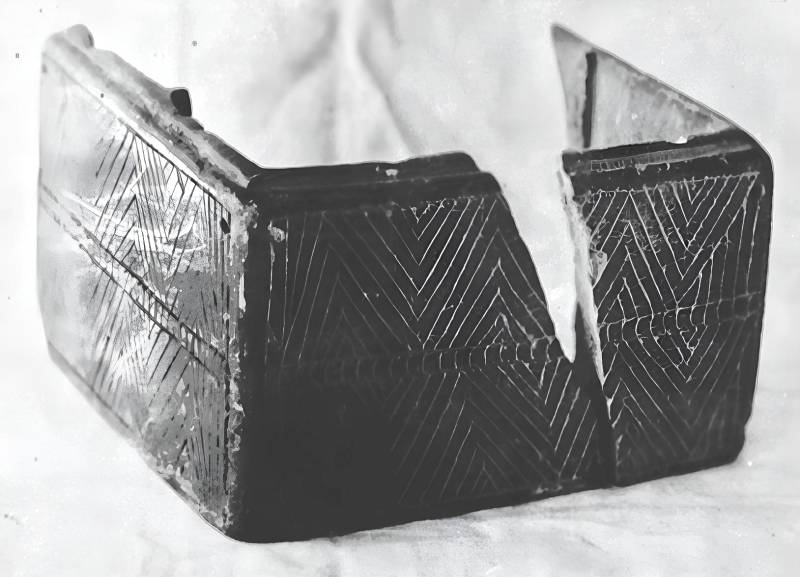
These human skeletons were found between House XVIII and House XXXIII in Lane 4. The young Indian Camp Medical Officer did his best to measure the bones under the supervision of Mr Hargreaves. Some of the animal remains, the antlers of a stag, cremated remains, and the shell of a tortoise were also found. Also found were a human skull and finger joints, human bones, animal bones, and charcoal and ashes, charred date seeds, decayed date seeds, a fragmentary linga, perforated lattices, a slate box with compartments, and some chaff of a cereal in a broken vessel.
Unearthing a Probable Kitchen
Sir John Marshall’s team excavated a kitchen from House XIX, Room 13. The room was surrounded by a court and stairs. This kitchen contained a layer of ashes.
Sir John Marshall (1931) wrote:
”The small circular structure with a projecting mouth (Pl. LVIII, b) on one side in the closed lane to the east of the building described above appears, as stated in connection with a similar structure uncovered in House VII in Section B of the HR Area, to have been a pottery kiln. It is circular in shape with a diameter of 6 feet and differs in this respect from the one in the HR Area which has an oval plan. The surrounding wall, which like that of its analogue in the HR Area consists of a single course of bricks, is now standing to a height of 1 ft.9 in. A square tablet of copper (VS 1182) was found a little distance to the north of this structure.” (Page 226)
House XXVII is a large building lying between House XXV and XXVI on the one side and Lane 5 on the other. It covers a space of 112 feet from north to south by 67 feet wide from east to west. It has a number of rooms and a spacious open court. This building belongs to the Intermediate III Period. Sir John Marshall dug a trial trench 30 feet long by 17 feet wide which is marked as DD1 in maps and plans to examine the earlier strata lying underneath. The excavation revealed the existence of a deep infilling of sun-dried brick structure. At the depth of 18 feet below, some objects were found from the virgin soil. These were the terracotta animal figure, a terracotta cone, and a molar tooth.
A brick-lined paved cesspit (in front of Room 72) with a funerary deposit was found from the courtyard of House XXVII. The cesspit was 3 feet 9 inches long by 2 feet 9 inches wide. This was originally meant to receive the wastewater from the well located nearby. Many various sized vases, jug-shaped vases, a plate, kamandalu-shaped vase, a pedestalled cup, a reel-shaped ring stand, and 68 rings for supporting vases were found from this area. The cesspit also yielded some terracotta animals, including a dog, a bird, two beads, a piece of copper, chert pieces, and a basketful of human bones.
Discovery of a Seal Showing a Human-Headed Monster with Animal Limbs
Giving details of a seal discovered from Houses XXV and XXVI, Sir John Marshall writes:
“Of the minor antiquities found in this House the most interesting was a fragmentary square boss seal (VS 1753 Pl. CXII, 381) with a line of pictographs and the figure of a complex, composite monster with human head, horns and ears of a bull, trunk and tusks of an elephant, neck and forelegs of a goat, and the hind part with legs and claws of a tiger. It was found in Room 39.” (Page 226-7)
VS Area: B Section
According to Rai Bahadur Daya Ram Sahni, in the area to the east of Street I, two or three structures were excavated and Lane 1, the western section of which had been unearthed in 1925–26, was followed up for a considerable distance beyond Street I towards the east. A deep covered drain runs through this lane. VS Area, Section B has same features like VS, A Section. Sir John Marshall’s team excavated here; houses, rooms, wells, pavings, stairs, soak pits, drains, and polished bricks. Following is the detail of excavated houses called House I and House II in Block 1.
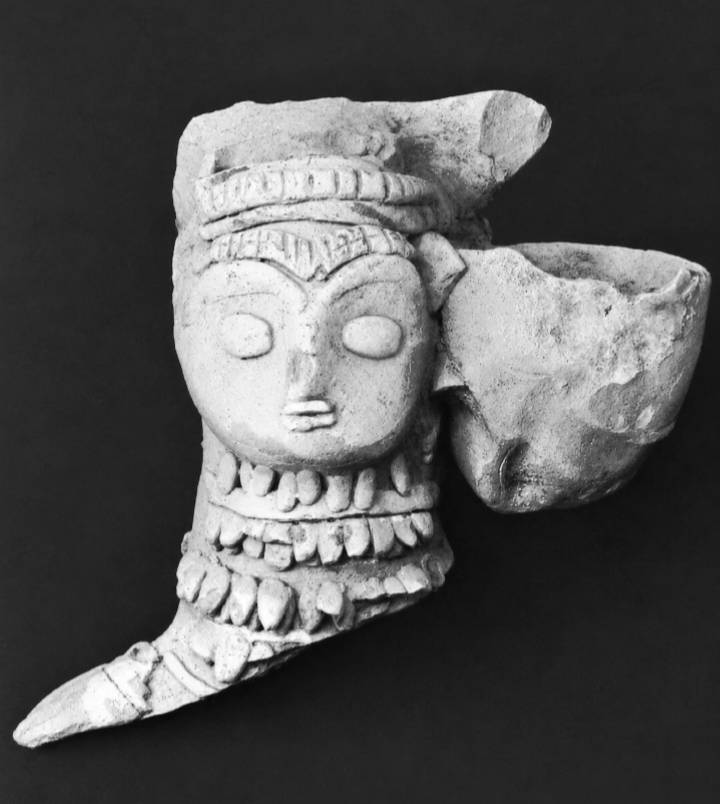
House I and House II originally belonged to one and the same building which was entered from the main street. The southern portion of this building was damaged by rainwater running down the mound into a gulley. Rooms 9 and 10 were paved with brick on edge like Rooms 23 and 24 in House II in the west side of the street. A brick socket (VS 3400) and terracotta wheel were found in Room 11 about 4 feet below the surface. Room 15 yielded a copper seal in two pieces and the painted neck of a vase. Room 12 yielded a terracotta female figurine (VS 3401) with a bowl-shaped adjunct on either side of the head, a dog figurine, and a miniature solid vase with a bulbous body.
There is only one house called House III in Block 2 of VS Area, Section B. It is situated in the north of Lane 1. It originally consisted of a large room paved with rubbed or polished bricks. There is a well and bath in Room 2 built 4 feet above the level of the floor. A corbelled window in the south wall of Room 1 deserves attention. The important antiquities excavated from here are: a neatly cut brick door socket was found in Room 2, a fragmentary shell bangle, a chert knife, a mother-of-pearl object, a seal with an animal device and legend, a cubical stone weight, a fragmentary ivory rod etc.
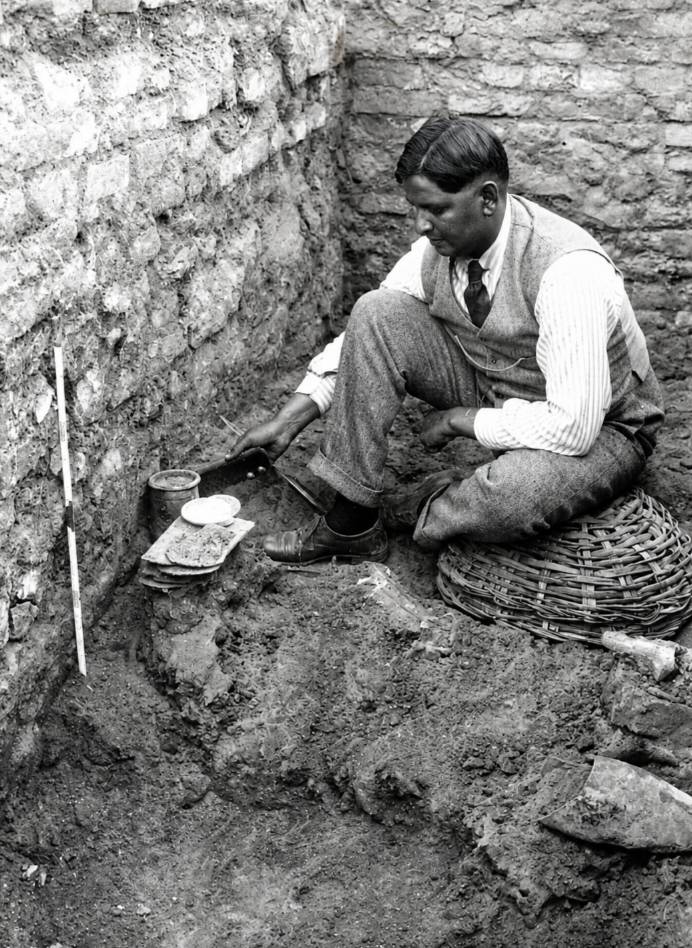
Sir John Marshall (1931) has discussed in detail regarding the following structures and objects:
- Block 1: Vase with painted base, decayed date seeds, deep niches in walls, earthenware jar with funerary vessels and other objects inside, and fragmentary linga.
- Block 2: Plan of house disproportionately narrow, description of building, perforated lattices, weights and slate boxes with compartments, shells used for bangles, seal with device of half man, half bull of Babylonian appearance, inscribed seals of steatite and copper, seals and stone weights, faience hare, unfinished seal and whetstone of Jaisalmer stone, squirrels of faience, polychrome red, white, and black pottery.
- Block 3: Screen wall to hide inmates, vase of clay showing ibexes, six skeletons found, length of skeletons, death probably due to tragedy, probable kitchen, remains of several strata, and animal remains.
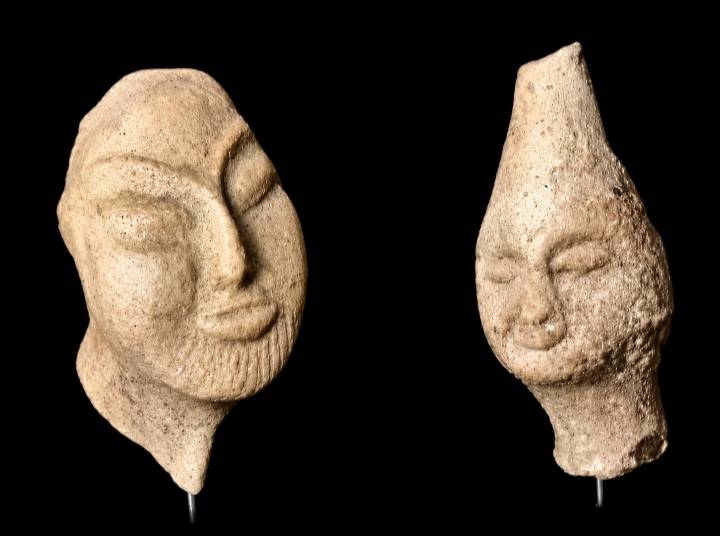
- Block 4: Human remains, probably cremated remains, terracotta head with basket-like ornaments, direction of script, stone for grinding out dishes, pottery kiln, houses built on foundations of other structures, seal showing human-headed monster with animal, house remodelled at a later date, artistic figure of humpless bull, charred bones found in vessels, spouted jars rare, example of fractional burial?, shell of tortoise, brick-lined, paved cesspit with funerary deposit?, sealing of yellow faience showing male deity on couch, and funerary urns.
- Block 5: Copper axes and dishes and similar axes found elsewhere.
- Block 6: Fragmentary structures of moulding bricks and a pottery jar fixed in the floor of the lane.
- Block 7: Peculiar construction of well, walls twice rebuilt, stratification of minor antiquities, houses of Intermediate Period, large earthenware vase, and horned male figure.
Following antiquities including pottery, utensils, and shell items were also excavated from the VS Area: large cylindrical jars, large storage jars, vases with pointed bases, ritual offering stands, polychrome red, white, and black pottery, a large earthenware jar with funerary vessels, a vase of clay showing ibexes, spouted jars, funerary urns, a pottery tumbler, painted vases, miniature vases, oval vases filled with clay, pottery bowls, bottle-shaped vessels, flat dishes with low rims, large bowls, terracotta potsherds. Copper seals, copper sealings, copper tablets, and terracotta etc were also unearthed from this area.
The following statues were discovered: a sphinx-like composed animal, a horned male figure like the Babylonian Gilgamesh, copper statuettes in the round, a statue of a dancing girl (2 inches), a limestone head, a terracotta head with basket-like ornaments, an interesting terracotta bust, an artistic figure of a humpless bull, terracotta female figurines, a pot-bellied terracotta figurine etc.
Jewellery and personal ornaments included a thin fillet of gold, a convex disc of ivory decorated with a concentric series of circles, beads of faience, paste, carnelian and agate, button-shaped faience ear-tops, incised ivory bars, chessman-shaped objects probably phallic emblems, an ivory cylinder, a faience nose-ring, reel-shaped beads of faience, faience bangles, broken bangles, shell vases, shell bangles, ivory rods, conch bangles, an ivory baluster, shells used for bangles, ivory cubes, a scent bottle with a cover (VS 2671), copper bangles etc.
The following stone and copper objects were also excavated: stone weights, a shallow copper lamp, rectangular copper pieces, a spearhead, axes, celts, dishes, a rod with a sharp point, a broken copper ring, an object of lead, a polished tablet of basalt, a stone for grinding out dishes, a fragmentary needle, a whetstone of Jaisalmer stone, a phallic emblem of marble, a pierced screen of alabaster, a ring stand, graving tools, stone plates, square slate caskets, chert knives, a headless stone quadruped, the handle of a large spoon, a pierced finial-shaped object of ivory, and a basalt adze. A charming little squirrel of faience, a shell ball, a terracotta dog, a floating toy or flesh rubber, terracotta balls, and a faience hare etc.