

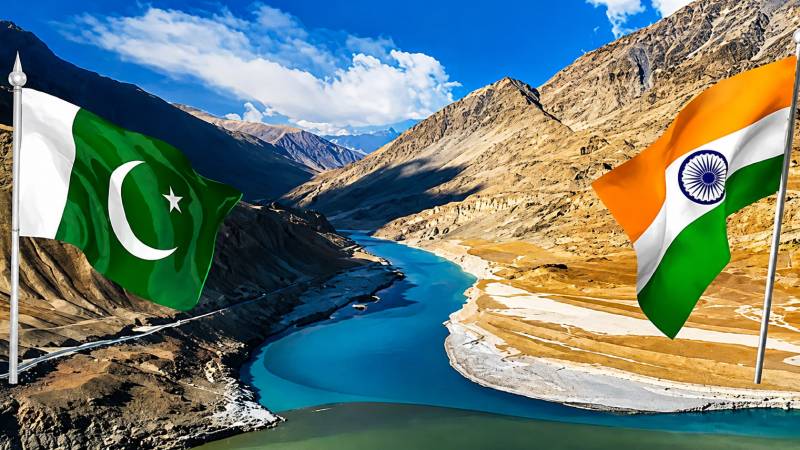
On 31 August 2026, the Permanent Court of Arbitration (PCA) issued a landmark Award on the status of the Indus Waters Treaty (IWT) and an Order on interim measures concerning India’s Ratle Hydro-Electric Plant (RHEP). This ruling followed India’s unilateral declaration in April 2025 that the Treaty would be held “in abeyance” until Pakistan renounced alleged support for terrorism. The PCA unanimously rejected India’s claim, affirming that the Treaty remains fully in force and binding. The decision has brought renewed attention to the sanctity of international agreements, the limits of sovereignty, and the future of cooperative water governance in South Asia. For Pakistan, the ruling is a justification of its insistence on lawful conduct and cooperative management of shared rivers.
India’s prayer of sovereignty and terrorism allegations as grounds for suspension raises critical questions. Was this truly a matter of national security, or a calculated attempt to bypass treaty obligations and accelerate hydroelectric projects on the Western Rivers? The PCA noted that terrorism, however grave, is not addressed in the Treaty, which governs only water rights. Moreover, India has continued to construct hydroelectric projects despite its allegations, undermining its claim that terrorism impeded its rights. If India’s intention was to leverage security narratives to justify unilateralism, then the credibility of its motives must be questioned. Why suspend a treaty that has survived wars, demographic shifts, and technological change? Why now, and why in this manner? These questions expose the breakability of India’s justification.
Globally, water-sharing treaties are designed to withstand political shocks because they safeguard human survival. The Nile Basin Agreement, Mekong River Commission, and Danube River treaties emphasize cooperation even amid conflict. The PCA itself observed that the IWT survived multiple wars between India and Pakistan since 1960. This resilience reflects a broader principle: water treaties are not ordinary agreements; they are lifelines. India’s attempt to suspend the IWT contrasts sharply with international practice, where states seek dialogue rather than unilateral withdrawal. For example, despite tensions in the Mekong Basin, member states continue to negotiate rather than abandon cooperative frameworks. Similarly, the Columbia River Treaty between the United States and Canada has endured despite political differences. India’s unilateralism thus appears as an outlier, inconsistent with global norms of cooperative water governance.
The PCA’s ruling exposes several challenges that must be addressed. The first is legal and treaty compliance. The Court found that the IWT contains no provision for unilateral suspension or termination. Sovereignty does not override pacta sunt servanda, the principle that agreements must be kept. India’s claim of abeyance was legally baseless. The Court examined possible grounds such as material breach, fundamental change of circumstances, armed conflict, and countermeasures, and rejected them all. Pakistan’s objections in the Indus Commission and its pursuit of dispute settlement were found legitimate, not breaches. Even terrorism allegations, taken seriously by the Court, were deemed irrelevant to the Treaty’s scope.
The second challenge is technical and hydrological risk. The Ratle Hydro-Electric Plant’s design raises concerns about compliance with Treaty provisions. The PCA’s interim measures prohibiting concreting above certain levels until 90 days after the Neutral Expert’s decision reflect the technical difficulty of reversing non-compliant designs once built. If India proceeds unchecked, modifications could be extraordinarily costly and disruptive. A third challenge is climate change and demographic pressure. Both countries face escalating water stress due to climate change, population growth, and urbanization. Reduced flows threaten Pakistan’s agriculture, groundwater recharge, and Indus delta ecosystems. India’s unilateral actions exacerbate these vulnerabilities, undermining regional resilience.
The fourth challenge is institutional credibility. India’s refusal to participate in the PCA proceedings raises concerns about future compliance. International adjudication depends on respect for institutions. If one party disregards rulings, the credibility of dispute resolution mechanisms is weakened. Finally, there are economic and social impacts. Over 240 million Pakistanis depend on the Indus Basin for drinking water, irrigation, and energy. Any disruption threatens food security, rural livelihoods, and economic stability. The stakes are not merely legal; they are humanitarian.
The PCA unanimously rejected India’s claim, affirming that the Treaty remains fully in force and binding. The decision has brought renewed attention to the sanctity of international agreements, the limits of sovereignty, and the future of cooperative water governance in South Asia.
Pakistan’s approach of seeking arbitration rather than escalation offers a model of lawful dispute resolution. The PCA’s ruling affirms that disputes must be settled through established mechanisms, not unilateral declarations. Moving forward, several solutions can strengthen cooperation. India must share hydrological data, load curves, and construction schedules. The PCA’s Measure C requiring India to notify changes to the RHEP schedule is a step toward transparency. Both countries should establish joint technical committees to oversee compliance, similar to the Mekong River Commission’s monitoring framework. The IWT could be supplemented with provisions addressing climate change impacts, drawing lessons from cooperative frameworks in the Danube and Rhine basins. Third-party mediation by the World Bank, the United Nations, or other neutral actors could facilitate dialogue, ensuring disputes are resolved peacefully. Domestically, Pakistan should invest in water efficiency, groundwater management, and renewable energy to reduce vulnerability. India, too, must recognize that unilateralism undermines its credibility and long-term interests.
The PCA’s Award is a decisive affirmation of international law: treaties cannot be suspended by unilateral fiat. For Pakistan, it is a justification of its insistence on lawful conduct and cooperative water governance. For India, it is a reminder that sovereignty does not override pacta sunt servanda. Importantly, the Court’s interim measures highlight the role of the Neutral Expert, a technical authority appointed under the Treaty to resolve disputes about dam design and operation. His final decision on the Ratle Hydro-Electric Plant is expected in July 2027. Until then, India has been prohibited from completing certain irreversible construction works, such as concreting the dam wall and power intake above specified levels. This safeguard ensures that if the Neutral Expert finds the design non-compliant, necessary modifications can still be made without extraordinary cost or damage. In simple terms, the Neutral Expert acts as the technical judge of whether India’s project respects the Treaty’s rules, and the PCA has ensured that his decision will not be rendered meaningless by premature construction.
As the Neutral Expert prepares his final decision, both states face a choice: continue down a path of confrontation, or embrace the cooperative spirit that has sustained the Indus Waters Treaty for over six decades. The future of regional stability, food security, and climate resilience depends on the latter. The PCA’s ruling is not merely a legal victory for Pakistan; it is a call to recommit to cooperation, transparency, and respect for international law. In a world where water scarcity is intensifying, the Indus Waters Treaty remains a beacon of resilience. Its survival through wars and crises demonstrates that cooperation is not optional; it is imperative. The challenge now is to modernize the Treaty for the twenty-first century while preserving its core principles. Only then can South Asia secure a future where water is a source of life, not conflict.