

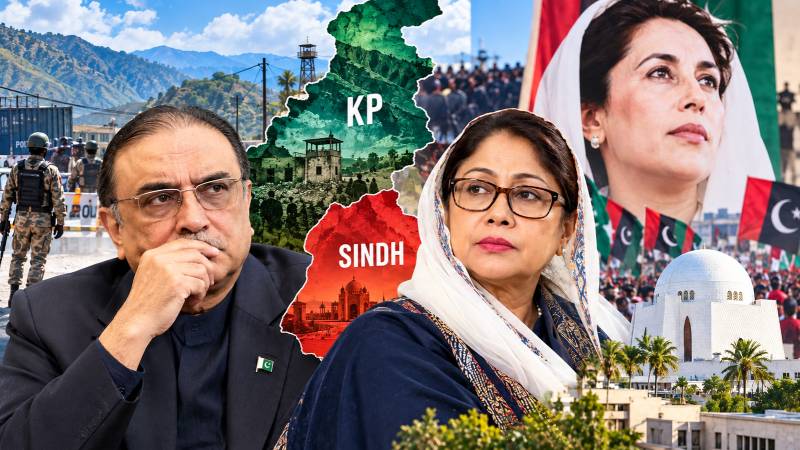
The federal government’s decision to suspend the elected government in Khyber Pakhtunkhwa and place the province under emergency and governor’s rule may have consequences far beyond KP. President Asif Ali Zardari approved the move after the federal cabinet recommended it, citing security failures and the provincial government’s alleged disengagement from counterterrorism efforts. PTI, which governed the province, condemned the decision as a “disguised coup.” (apnews.com)
The central political question is whether this extraordinary step was necessary and legally justified. Critics argue that the KP Assembly and cabinet were still functioning, and warn that using federal power to remove an elected provincial government could undermine provincial autonomy and deepen political conflict. The Human Rights Commission of Pakistan also cautioned that emergency rule could further strain democratic processes. (dawn.com) The federal government, meanwhile, must show that its stated security reasons—not political rivalry justify the action.
For the Pakistan Peoples Party, the decision carries a particular burden. PPP has long presented itself as a defender of democracy, federalism, and the rights of the provinces. If the party supports suspending an elected government in KP, voters in Sindh will reasonably ask whether those principles apply only when PPP is in power or also when its political opponents govern elsewhere. That is the challenge behind the question addressed to Faryal Talpur: “Your brother, Asif Ali Zardari, has imposed governor’s rule and an emergency on KP’s elected government. How will you face Benazir now?” It is a sharp political rebuke, invoking Benazir Bhutto’s democratic legacy. The deeper question is whether PPP’s present actions match the principles associated with that legacy.
If the party supports suspending an elected government in KP, voters in Sindh will reasonably ask whether those principles apply only when PPP is in power or also when its political opponents govern elsewhere.
This could change Sindh’s politics by giving voters a clearer test for judging the ruling party. They can ask whether PPP protects elected governments consistently, respects provincial autonomy, and accepts political competition—or whether its commitment to democracy shifts with convenience. Sindh’s opposition parties can raise those questions, but they will need more than criticism: they must offer credible plans for jobs, education, health care, water, local government, and accountable public services.
The crisis may also strengthen public demand for cross-party rules: elected governments should not be removed through exceptional measures unless constitutional conditions are clearly met, publicly explained, and open to independent legal review. Political parties should defend those standards even when the government under pressure belongs to a rival.
PPP may argue that the KP action was required for security. It now bears the responsibility to explain the evidence, the constitutional basis, and the plan for restoring elected government. If it cannot answer those questions convincingly, the decision may cost its trust in Sindh. If it can, it must still show that the same democratic standards would apply when another party holds power in Sindh. Sindh’s politics will change not through slogans alone, but when voters demand consistency and judge every party by the same democratic principles. The most powerful way to honor Benazir Bhutto’s legacy is to defend the people’s mandate even when it belongs to political opponents.