

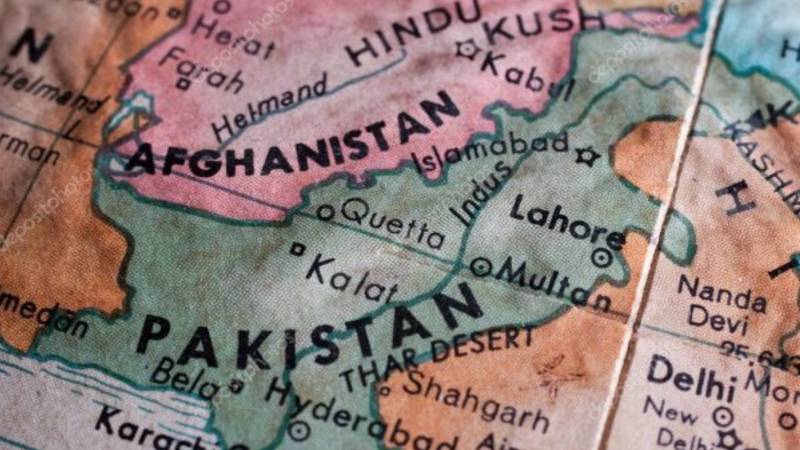
If you are wondering what polezni durak is, it is Russian for a “useful fool” or “idiot.” Useful fools are people who take up a cause without fully appreciating the consequences of their actions or, as often happens, given the history of the term, without realising that they might be getting played by an adversary. For the most part, they don’t consciously bat for the adversary; many might even have good intentions. But they end up being useful fools for the adversary nonetheless.
So, who are our polezniye duraki for the Taliban?
They can be identified by certain statements. Let me list them.
- Pakistan’s Afghanistan policy is a failure.
- Pakistan must talk to the Taliban. Fighting won’t get us anywhere.
- Pakistan has been interfering in Afghanistan’s internal affairs. It’s time we stopped it. Our concept of “strategic depth” was a blunder.
- Pakistani Taliban are either our misguided brothers or they were left with no option because the state chose to get involved in America’s war.
Let’s explore these points to see if they have any merit.
The statement that Pakistan’s Afghanistan policy has been a failure relies on the usual evidence: Afghanistan remains hostile; the border issue still hangs fire bilaterally; violent groups operate in the area; lives are getting lost; extremism and sectarianism thrive; and drugs and guns have proliferated. The net result has been that we are where we started.
All these assertions are empirically correct. However, they make a basic logical error. They assume that Pakistan’s policy has followed a linear trajectory and has unfolded in a vacuum — i.e., that the merits or demerits of the policy inhere in the policy itself without any reference to external stimuli. Put another way, the assertion lazily seems to imply that Afghanistan has been a passive actor in the 78 years of the operation of Pakistan’s Afghanistan policy.
This is obviously incorrect both historically and logically. States operate in an interactive environment and act and react to the policies of external actors within that environment. The environment itself can have three ecosystems: bilateral, regional and international.
Islamabad supported the interim government in Kabul, advised them on changing course internally and becoming more inclusive, helped them with refugees and trade, and pleaded their cause regionally and internationally
In other words, Pakistan’s Afghanistan policy cannot be divorced from Afghanistan’s Pakistan policy, or Pakistan’s India policy, or Afghanistan’s India policy, or Afghanistan’s internal developments, or its partnership with the defunct Soviet Union, or the reaction of the United States to the Soviet Union’s policy within the Cold War contest. Pakistan’s policy necessarily responded to the logic of these complex, multivariate relationships. Any assessment must, therefore, be rigorous in tracking the ebbs and flows of Pakistan’s responses.
Pakistan must talk to the Taliban. Fighting won’t get us anywhere.
Which Taliban should Pakistan talk to — Afghan or Pakistani? Unlike the first assertion, which at least has some evidence, this one is a pure assertion fallacy because Pakistan has talked to both. Not once, not twice, but multiple times. The erstwhile agencies of the Federally Administered Tribal Areas, however, were not liberated by talking to the Pakistani Taliban but by counterterrorism military operations. An earlier analysis from October 2021 explains this in detail.
The other problem with “let’s talk our way out of it” is the same as “let’s war our way out of the problem.” Counterterrorism operations are not about pendulum swings. They require a multitude of strategies at the tactical, operational, and politico-strategic levels. Those strategies — talking and fighting — depend on how the situation is panning out. Ebbs can get talks; flows can get use of force.
Pakistan was the first country to reach out to Afghanistan after the American withdrawal: bilaterally, regionally, and multilaterally. Islamabad supported the interim government in Kabul, advised them on changing course internally and becoming more inclusive, helped them with refugees and trade, and pleaded their cause regionally and internationally. Pakistan had only one demand: rein in the TTP. The AIG has constantly and consistently lied and dissembled about the issue and reneged on its promises (the details are all out there).
At the AIG’s request, Pakistan also held several rounds of talks with the TTP inside Afghanistan. Nothing came of those talks for a simple reason: the TTP doesn’t want to negotiate. It wants the state to surrender. The problem is that if a state surrenders, it loses its sovereignty — essentially, its raison d’être.
Pakistan needs strategic depth not just in the west but also in the east, north, and southwest
The third point is about “strategic depth” and Pakistan’s interference in Afghanistan’s internal affairs. For the charge of interference, my article in Dawn explains how it began and who started it. Those voicing this view need a crash course in history.
Let’s get to “strategic depth,” a term bandied about most irresponsibly, even by the educated. What does it mean? Militarily, it refers to a state’s ability to deal with an offensive through elastic, multi-layered defences, absorb the initial thrust, stress the enemy forces, and inflict attrition on the enemy through multiple counter-strikes that would lead to the offensive petering out and falling short of its objectives.
At a basic level, it is a rather simple calculation of distances between the frontlines and/or any forward battle sectors and a state’s strategic assets: industrial areas, key urban and population centres, communications lines, military production centres — in effect, the state’s heartlands or, to put it another way, all the soft and hardware whose agglomeration makes a state viable.
The current confusion is owed to the “brilliance” of former army chief Mirza Aslam Beg, who posited it in relation to Afghanistan. No serious military planner entertained it even when he was the chief. No one thinks of placing military and other assets in Afghanistan to acquire strategic depth while losing Pakistan’s heartland. Afghanistan never offered any such possibility outside of the heat-oppressed brain of General Beg. But just because Beg’s formulation was nonsense doesn’t make the idea of strategic depth nonsensical.
This is where we get to what the term means in politico-strategic terms. Strategic depth is the ability of a state to reduce threats through a combination of strategies, which includes improving relations with neighbours to try and bring the possibility of an armed conflict to zero and thereby creating space for economic development and projection. In that sense, Pakistan needs strategic depth not just in the west but also in the east, north, and southwest.
Pakistani Taliban are our misguided brothers, et cetera. This balderdash can only be peddled by those who never saw the war up close. If they had seen what the TTP did to soldiers and civilians, they would not be trotting out this tripe. If anything, they shouldn’t have forgotten the innocent children murdered in cold blood by the TTP goons. And yes, I did see the war up close, in case any reader wants to know if I were east of Attock or west of it.
In any case, here’s the litmus test. Why is the TTP attacking the state now if the issue were merely about the presence of Americans in Afghanistan? The Americans left in August 2021. What’s driving the khwarij now? It’s simple, and it inheres in their demand that Pakistan reverse the merger of FATA. That’s the belt they want to rule. It’s strategic. It allows the Afghan Taliban a strategic toehold in Pakistan, and it allows their Pakistani proxies a slice of the salami from where they can continue to trouble Pakistan and gain ideological depth.
Corollary: let’s get the facts right; read some history; understand how states operate when they consider security to be scarce and how they deal with such threats. It’s good to be infused with the milk of human kindness, but it’s stupid to be a polezni durak. Cheers!